
Post-doctorate certified acupuncture outperforms basic dry needling for chronic pain because it diagnoses the systemic cause of the pain instead of chasing the muscle knot that hurts. Both approaches use thin filament needles. That surface similarity is where the resemblance ends. Basic dry needling is a mechanical technique aimed at releasing a localized trigger point. It is usually taught through short-form certification courses built around one narrow skill. Post-doctorate certified acupuncture is post-doctorate training beyond the chiropractic degree, focused on diagnostic assessment, anatomy, and the connected systems that produce pain in the first place. That training teaches a practitioner to ask why a muscle is in distress, not just where it hurts. Chronic pain rarely stays in one place. It shows up as a downstream symptom of postural compensation, nerve irritation, or systemic imbalance somewhere else in the body. A practitioner trained only to needle a trigger point can quiet that one point for a while. A practitioner trained to read the whole system can trace the pain back to its real origin and address that instead. The outcome difference follows directly from the training difference. Symptom-chasing produces short-term relief that tends to return, because the underlying mechanism was never identified. Root-cause diagnosis produces outcomes built to hold, because the plan reflects what is actually driving the pain. The gap is not the needle. It is the training behind the hand holding it.
Articles in this cluster
- Acupuncture Regulate Nervous System Overdrive — How Does Certified Acupuncture Regulate Nervous System Overdrive?
- Calm Nervous System Hypervigilance — Why Dry Needling Fails to Calm Nervous System Hypervigilance
- Trigger Points: A Neurological Comparison — Stimulating Anatomical Meridians vs. Trigger Points: A Neurological Comparison
- Why Does It Matter — What Is a Post-Doctorate Acupuncture Certification and Why Does It Matter?
- Certifications Put Patients at Risk — Why Weekend Dry Needling Certifications Put Patients at Risk
- Chiropractor's Clinical Acupuncture Credentials — How to Verify Your Chiropractor's Clinical Acupuncture Credentials
- Rest Are Critical After Acupuncture — Why Hydration and Rest Are Critical After Acupuncture
- Overcoming Needle Anxiety — Overcoming Needle Anxiety: Why Clinical Acupuncture Is Actually Painless
- Dry Needling Flare-Ups — Post-Acupuncture Soreness vs. Dry Needling Flare-Ups: What Is Normal?
- Resolving Chronic Pain Without Medication — Acupuncture vs. Muscle Relaxers: Resolving Chronic Pain Without Medication
- Certified Acupuncture for Nerve Pain — Why Physical Therapy Patients Turn to Certified Acupuncture for Nerve Pain
- Patients Who Are Skeptical — Is Clinical Acupuncture Safe for Patients Who Are Skeptical?
Same Needle, Different Discipline: What Sets These Two Approaches Apart
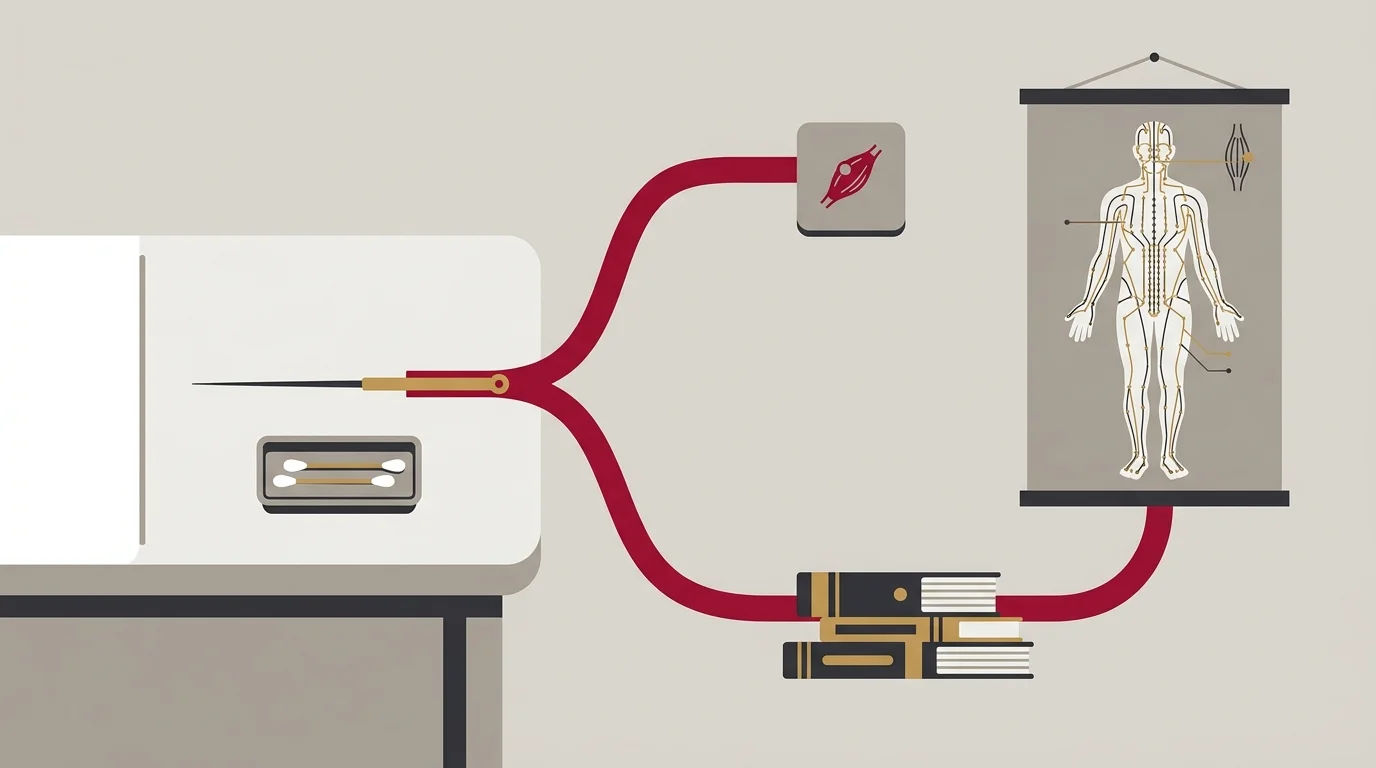
Two therapies that use the same thin filament needle can look identical to anyone comparing them from the outside. That confusion is understandable. It is also where most patients stop looking, right at the surface.
Dry needling is a Western technique built to release one localized muscle knot, nothing more. Post-doctorate certified acupuncture is a diagnostic discipline built to find why that knot formed in the first place. For a deeper look at how this office approaches root-cause diagnosis, the page on our approach to spinal treatment walks through the broader framework behind it.
Where Dry Needling Certification Actually Comes From
Two practitioners can hold the very same thin filament needle. But only one of them trained specifically to read the whole system that needle enters.
The other picked up the technique somewhere else entirely. Certification for dry needling does not trace back to a diagnostic discipline at all — it traces back to a state regulatory board deciding what a physical therapist may add to an existing scope of practice.
The Weekend-Course Pathway
And that decision swings wildly from one state to the next. Idaho draws one of the clearer lines in the country, asking physical therapists to complete a minimum of 27 hours of in-person instruction before they pick up a needle, with at least 16 of those hours spent on hands-on application. Idaho's dry needling guidance reports must complete a minimum of 27 hours of in-person instruction to practice dry needling, with at least 16 of those hours being hands-on application of dry needling techniques.
Though — that hour count is the exception, not the rule. Plenty of states set no minimum at all, leaving the pathway wide open to whatever a weekend course provider decides to teach.
What a Short Certification Actually Covers
Some states don't even agree the technique belongs in a physical therapist's hands to begin with. Washington State's Attorney General took the question head-on. As Washington's Attorney General opinion reports, dry needling does not fall within the scope of practice for licensed physical therapists under state law.
No short course settles a disagreement that basic. When regulators can't agree the technique belongs in the scope of practice at all, the training behind it was never built to answer the deeper diagnostic question a chronic pain case demands.
Inside a Diagnostic Acupuncture Curriculum
Diagnostic acupuncture training is not a longer version of a weekend course. It is a different kind of education entirely.
A weekend certification teaches one skill. Diagnostic acupuncture training builds a full diagnostic framework around it — and that framework is what separates locating a point from understanding why the point exists at all.
Why a Weekend Course Cannot Replace Diagnostic Training
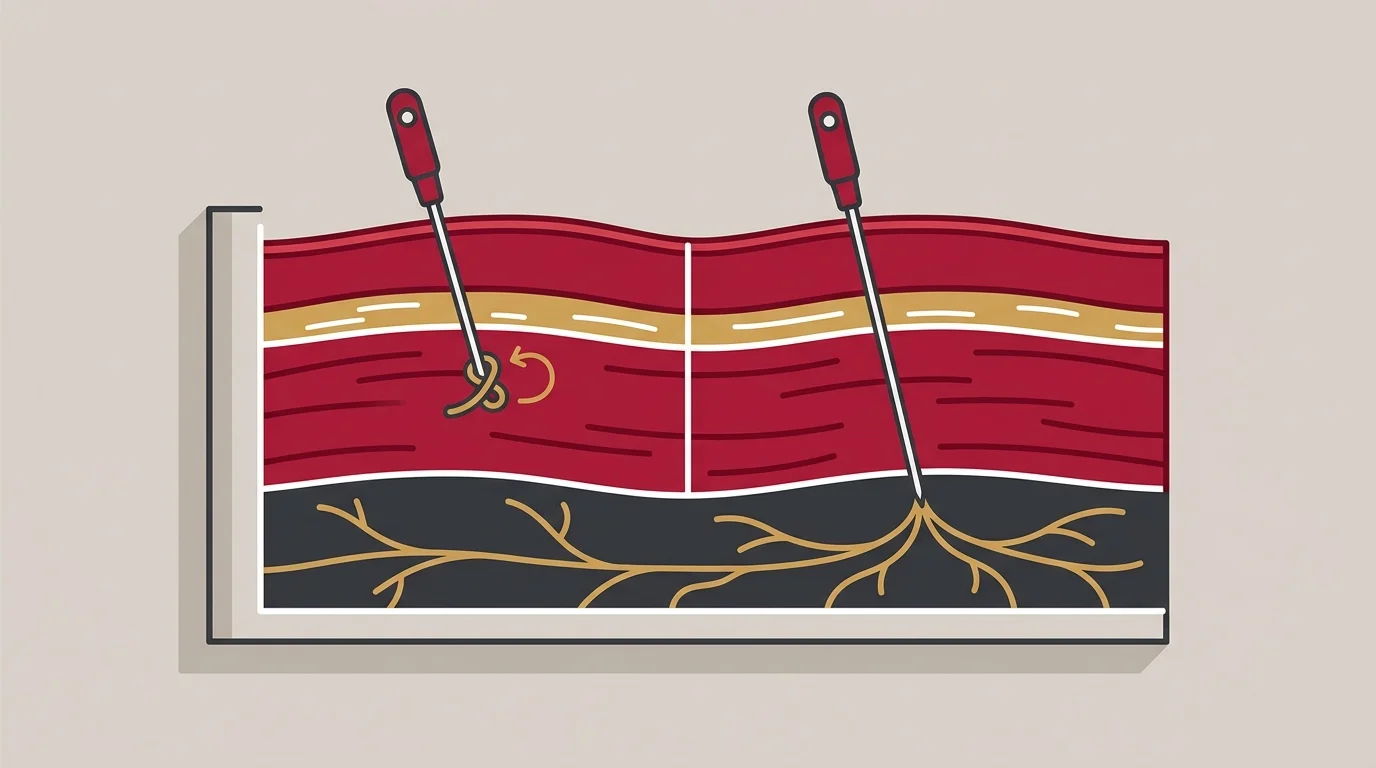
Two paths, two very different endpoints. One teaches a single technique for releasing a localized muscle knot. The other stacks diagnostic judgment on top of that same needle.
That is the real difference, and it is not the needle. It is the depth of diagnostic and anatomical training behind the hand holding it. A weekend course cannot compress that depth of clinical reasoning into a handful of practice hours. What it produces instead is technical competence without the diagnostic depth chronic pain actually requires.
How Inconsistent Oversight Lets Undertrained Needling Continue
Regulatory disagreement is not confined to one state. It stretches internationally, and the same gap in oversight shows up wherever certification is left to individual boards or private academies rather than a standardized diagnostic credential.
| Jurisdiction | Training Requirement | Regulatory Finding |
|---|---|---|
| Washington State | No state-mandated hour minimum established | Attorney General found dry needling does not fall within the scope of practice of a licensed physical therapist |
| Idaho | Minimum 27 hours in-person instruction, 16 hands-on | State permits dry needling within physical therapy scope of practice under defined hour thresholds |
| Belgium | Training courses range from no medical background required to extensive private academy instruction | Case series from a university hospital documented pneumothorax in 4 patients following dry needling of the shoulder and neck region |
What Happens When Depth of Training Is Skipped
Skip the depth of training and the consequences stop being theoretical. PubMed Central reports pneumothorax occurred in 4 patients following dry needling of the shoulder and neck region in a case series from a Belgian university hospital — one expert assessment rather than a study finding. That outcome traces straight back to training pathways where the requirements swing wildly, some asking for no medical background at all.
Measuring the Two Approaches Against Chronic Pain
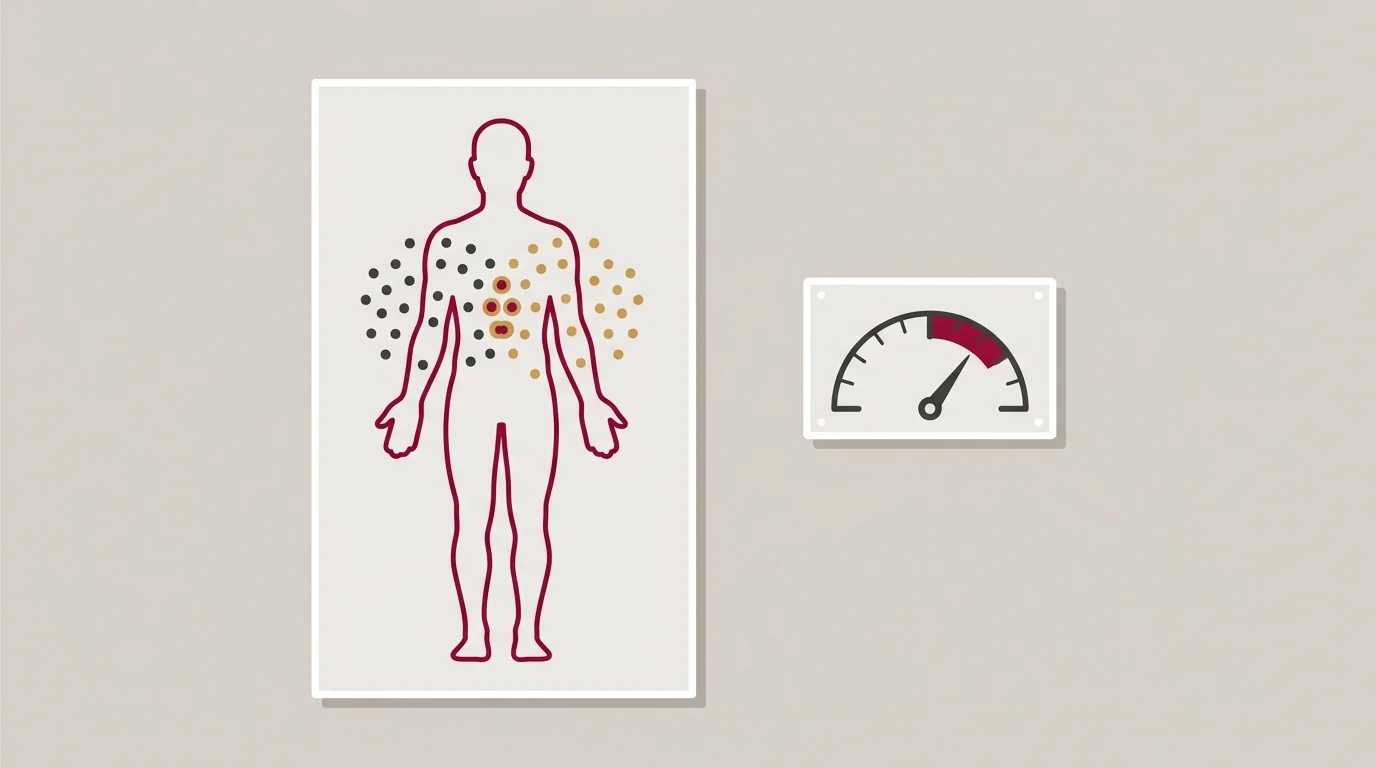
Training pathways only tell half the story. Chronic pain outcomes are where that training gap actually shows up, measured rather than argued.
| Measure | Immediate Result | Follow-Up Result |
|---|---|---|
| Pain Intensity and Functional Disability, Chronic Low Back Pain | Dry needling more effective than acupuncture | Effectiveness equal to acupuncture |
| Long-Term Outcome, Chronic Low Back Pain | Short-term edge favors dry needling | Efficacy on pain and disability only equal to acupuncture |
| Trigger Point to Acupuncture Point Correspondence | 71% spatial and pain pattern correspondence found | Correspondence reflects a shared underlying map, not a separate discovery |
| Diagnostic Step | What It Establishes |
|---|---|
| Trigger point location | Identifies where the muscle knot sits and confirms it as a localized point of tenderness. |
| Systemic pattern review | Traces whether the painful point is an isolated event or a downstream symptom of a pattern elsewhere in the body. |
| Imaging and lab interpretation | Establishes what structural or physiological findings are contributing to the pain, beyond what a hands-on exam can show. |
| Integrated differential diagnosis | Combines acupuncture point mapping with biomedical findings to identify the actual driver of the chronic pain cycle. |
| Treatment plan targeting | Directs care at the identified root cause rather than at the muscle knot the pain happens to be surfacing through. |
Reading the Trigger Point and Acupuncture Point Overlap
Trigger points and acupuncture points overlap far more than the two-technique framing wants to admit. The journal Pain reports 71% of myofascial trigger points corresponded spatially and in pain pattern to classical acupuncture points for pain. Dry needling didn't chart new ground. It borrowed a map acupuncture had already drawn, then taught practitioners to read only a sliver of it.
How a Systemic Diagnosis Gets Built, Step by Step
A systemic diagnosis begins right where a trigger point map runs out. It pulls in imaging, lab findings, and a biomedical differential before a single needle goes in — the same clinical reach this article already traced through diagnostic training. Here, that reach is the whole difference between treating a point and treating the pattern feeding it.
Where State Licensure Requirements Diverge
State licensure requirements diverge sharply once outcome data enters the picture. As The journal Medicine reports, dry needling was more effective than acupuncture at relieving pain intensity and functional disability immediately after treatment, though its effectiveness at follow-up was equal to acupuncture. A short-term edge that fades to parity by follow-up is not proof of a superior technique. It is proof that symptom relief and root-cause resolution run on two different clocks.
Frequently Asked Questions
A handful of questions surface again and again once the training gap is on the table. Here are the straight answers to the ones that actually matter.
Is dry needling just a modern, scientific form of acupuncture?
No. Dry needling borrows a needle and a handful of trigger points from a much older diagnostic system. It skips the diagnostic training that taught practitioners why those points work in the first place.
Why can a physical therapist perform dry needling after a weekend course, while acupuncture requires dedicated training?
Because state boards treat dry needling as an added skill inside an existing scope of practice, not a discipline of its own. Post-doctorate acupuncture is its own certification, earned through training beyond the chiropractic degree instead of a single technique.
If both use the same needles, are the risks the same?
Not necessarily. Risk tracks the depth of training, not the needle itself. A practitioner with few hands-on hours and no medical background requirement carries a different risk profile than one shaped by a chiropractic doctorate and post-doctorate training.
Can dry needling address the root cause of chronic back pain, or just the muscle knot?
On its own, it tends to quiet the muscle knot rather than the reason it formed. Root-cause work takes the systemic diagnostic assessment that dry needling training was never built to teach.
What does a licensed acupuncturist evaluate that a dry needling session typically does not?
A licensed acupuncturist reads the broader pattern behind the pain, pulling in imaging, lab findings, and a full biomedical differential diagnosis. A dry needling session usually stops at locating and releasing the point itself.
How does state regulation of dry needling differ from acupuncture licensure?
Dry needling regulation shifts from state to state, since it lives inside physical therapy's scope of practice and gets defined board by board. Acupuncture licensure runs through a standardized national credentialing process instead, independent of any other profession's scope.
What This Means
Same needle, different hands. That is the whole comparison, stripped down to what actually matters.
One pathway trains a practitioner to quiet a point. The other trains a practitioner to find why that point exists in the first place. For chronic pain, only one of those pathways was built to hold.
That gap in training is not a detail to weigh later. It is the whole decision. If you are studying which path fits a chronic pain case, talk it through with us.