
A post-doctorate acupuncture certification is a formal credential earned by a Doctor of Chiropractic after completing extensive, specialized training in acupuncture theory and clinical practice beyond the standard chiropractic degree. It matters because it establishes a verified, standardized depth of education in a skill that carries real risk when performed by an undertrained practitioner. The certification typically covers needle safety, point location, meridian theory, and clinical application, followed by a passing score on a national board examination. This structured pathway distinguishes a board-certified practitioner from one who has completed a much shorter course, sometimes lasting only a weekend, that teaches a narrower technique often called dry needling. Both approaches involve inserting thin needles into the body, but the depth of underlying clinical education differs substantially between the two paths. A post-doctorate certification also typically includes ongoing continuing education requirements, meaning the credential reflects sustained competency rather than a single completed course. According to the American Chiropractic Association, chiropractic acupuncture is defined as the insertion of acupuncture needles at specific points to correct soft tissue components contributing to spinal dysfunction and related physiological or mechanical abnormalities. This formal definition anchors the practice within a recognized clinical framework rather than treating it as an informal add-on service. Regulatory requirements for this training vary by state, with some jurisdictions mandating a specific minimum number of instructional hours before a chiropractor may perform acupuncture at all. The certification exists to close that gap in oversight, giving patients a consistent standard to look for regardless of where they are treated. Understanding what the credential actually requires is the first step toward evaluating whether a given practitioner has met that standard.
What a Post-Doctorate Acupuncture Certification Actually Requires

A post-doctorate acupuncture certification works like a depth gauge. It measures exactly how far a practitioner's training actually goes, rather than simply confirming that training happened.
Some practitioners fill that gauge with dedicated post-doctorate study. Others fill it with a single weekend course. The gauge itself never lies about which is which.
The Curriculum Behind the Credential
The coursework behind a legitimate certification covers needle safety protocols, precise point location, meridian theory, and clinical application across a range of patient presentations. It is built as a structured academic sequence, not a standalone workshop.
That structure matters most when the alternative is a much shorter path. A separate credential known as certified acupuncture vs dry needling explained teaches a narrower technique in a fraction of the time.
The National Board Exam Standard
But coursework alone doesn't finish the pathway. A candidate still has to pass a national board examination before anyone recognizes the certification as valid.
That exam functions as a checkpoint, confirming the hours of training translated into real clinical competency. A passing score is the difference between attending a course and earning a credential, and that difference is becoming increasingly important for patient safety and outcomes.
Why Weekend Dry Needling Courses Cannot Match This Standard
Here's the problem with a weekend course: it can't stand in for dedicated post-doctorate study, no matter how impressive the certificate reads afterward. The depth gauge still measures what actually happened in that classroom.
And that gap isn't theoretical. You see it in how a practitioner locates a point, reads what a patient is actually presenting, and reacts when something falls outside the expected pattern.
| Training Model | Typical Format | Depth of Clinical Preparation |
|---|---|---|
| Post-Doctorate Acupuncture Certification | Structured postgraduate coursework spanning needle safety, point location, meridian theory, and clinical application, completed alongside a national board examination | Deep and sequential, building diagnostic judgment across a wide range of patient presentations before the credential is awarded |
| Weekend Dry Needling Course | A single short-form workshop teaching one narrow technique, with no board examination requirement | Shallow and technique-specific, limited to a small set of musculoskeletal complaints with little room for differential diagnosis |
| Ongoing Continuing Education Track | Required renewal coursework that follows the initial post-doctorate certification, sustaining competency over time | Reinforced and cumulative, reflecting continued clinical exposure rather than a single completed course |
How Dry Needling Training Is Structured
Short-form needling courses are typically built around a single technique applied to a narrow set of musculoskeletal complaints. There is little room in a weekend format for meridian theory, differential diagnosis, or broader clinical context.
Per published trade reporting, registered physiotherapists, chiropractors and osteopaths in Australia can use dry needling after completing training that usually involves a short weekend course — one expert assessment rather than a study finding. That pattern holds far beyond any single region. It reflects how short-form training is built wherever it exists, no matter what credential it hands out at the end.
Where the Gap Actually Shows Up in Practice
The gap shows up most clearly at intake, when a practitioner has to decide whether needling is even the right tool for the complaint sitting in front of them. One weekend of instruction doesn't build that kind of judgment.
For the full scope of risk tied to shallow certification, including how it can slip past notice until something goes wrong, look at Certifications Put Patients at Risk. The credential's depth is the patient's protection, and a shallow one offers very little of it.
How Regulatory Requirements Expose the Training Divide
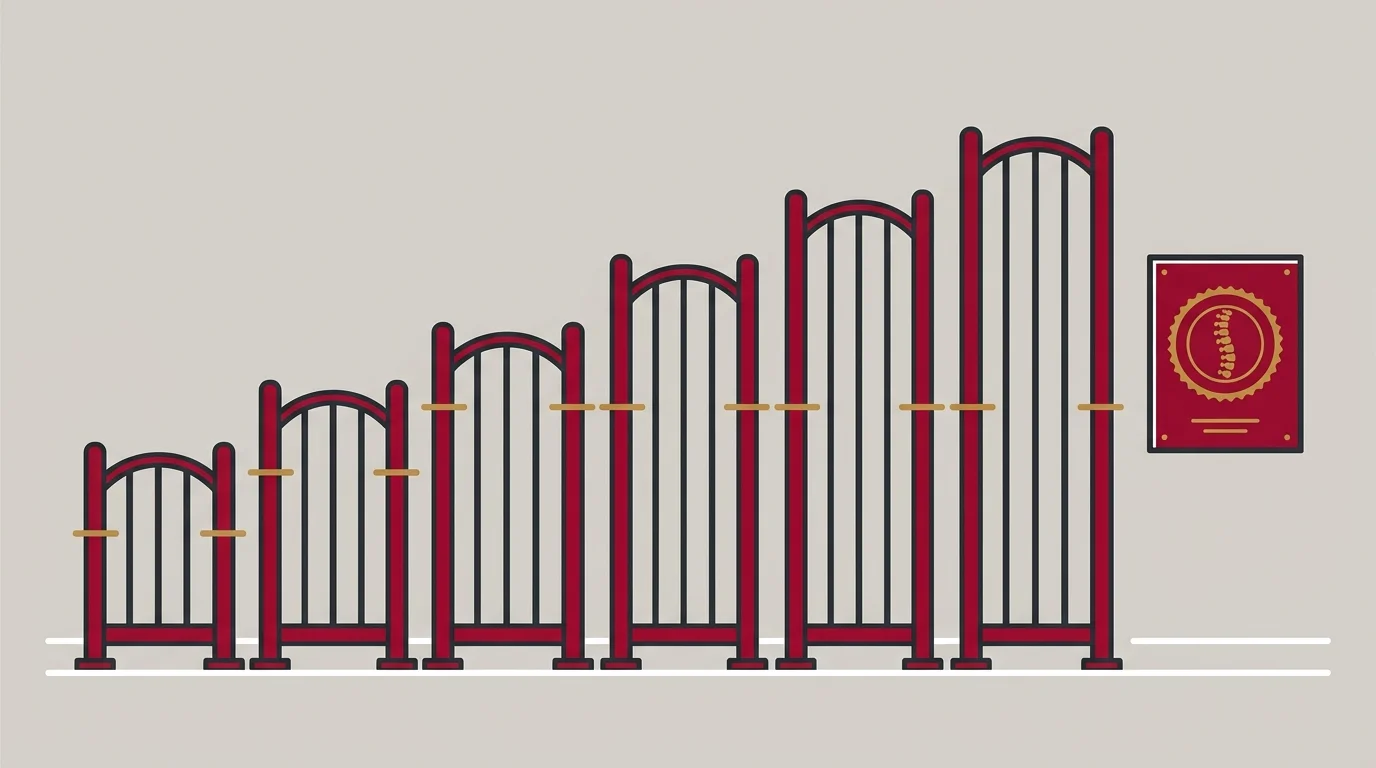
The depth gauge isn't just a metaphor. It shows up in actual regulatory text, written straight into state law.
| Requirement | Minimum Standard | Practical Hands-On Portion |
|---|---|---|
| North Carolina Practical Training Threshold | Hands-on component set as a fixed share of total instruction | At least 30 percent of those hours being practical, hands-on training |
| Chiropractic Acupuncture Clinical Definition | Insertion of acupuncture needles through the skin at specific points as a chiropractic methodology | Not specified in the formal definition |
State-Level Hour Requirements in Practice
North Carolina sets its threshold directly, requiring a minimum hour count before a license permits the practice, with a fixed share of that instruction spent hands-on rather than in a lecture seat. North Carolina's administrative code reports North Carolina requires chiropractors to complete a minimum of 200 hours of instruction in acupuncture, with at least 30 percent of those hours being practical, hands-on training. That threshold reflects what regulators consider necessary before a needle should ever touch a patient.
Other states set their own hour requirements, and the exact number shifts by jurisdiction. What never shifts is the principle underneath it: a real credential demands a verifiable minimum, not a single weekend. And if you want to know what to look for on a practitioner's actual paperwork, that's covered in Chiropractor's Clinical Acupuncture Credentials.
How the Chiropractic Profession Formally Defines This Specialty
The chiropractic profession has its own formal language for this specialty, separate from any state hour requirement. Published government guidance reports chiropractic acupuncture is the insertion of acupuncture needles through the skin at specific points used as a chiropractic methodology to correct soft tissue components contributing to subluxation and accompanying physiological or mechanical abnormalities. That definition plants the specialty inside a recognized clinical framework, not an informal add-on service.
Sustaining the Credential After Certification
Passing the exam doesn't close the book on a legitimate certification. Continuing education keeps the credential current, and it keeps the depth gauge from quietly draining back down toward zero.
What Continuing Education Actually Covers
Ongoing coursework reinforces needle safety, updates clinical technique, and keeps a practitioner sharp on presentations that a single course years earlier never covered. That is a different commitment than a certificate framed on a wall. For a broader look at how this training fits into everyday treatment, ongoing chiropractic services outlines the wider scope of care a certified practitioner typically provides.
Verifying a Practitioner's Acupuncture Credentials Step by Step
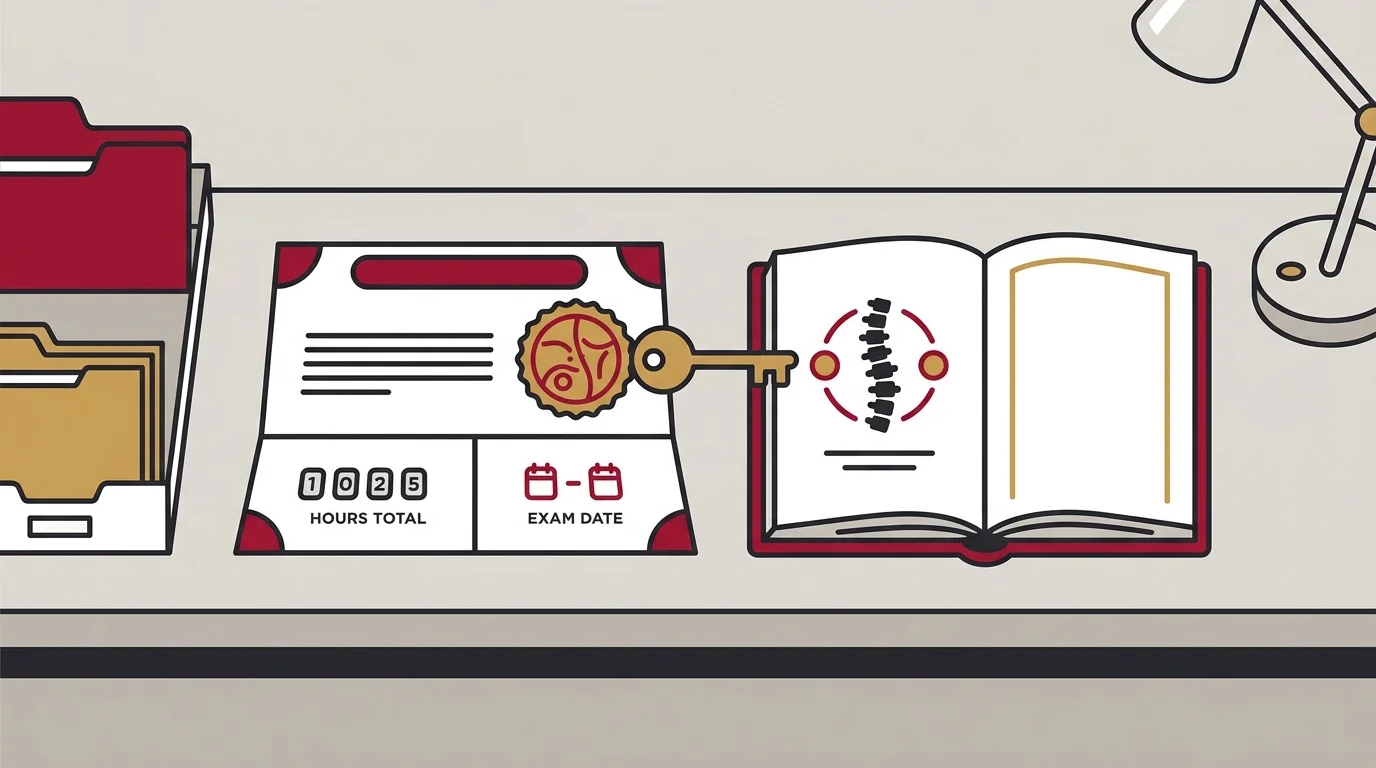
A standard only earns its keep when someone can actually check it. Verification is where you leave the depth gauge as an idea and walk over to the paperwork sitting in a practitioner's office.
| Verification Step | What to Look For | Where to Confirm It |
|---|---|---|
| Ask for the credential name | A specific post-doctorate acupuncture certification, not a generic reference to needle training | The practitioner's printed certification or a direct verbal answer during intake |
| Confirm the issuing body | A recognized chiropractic or acupuncture credentialing organization tied to postgraduate coursework | The certificate itself, or the organization's own practitioner directory |
| Check for a passed board examination | Language confirming a national board exam was completed, not just coursework attendance | State licensure board records or the credentialing body's verification tool |
| Review the state license record | Any additional certifications or endorsements listed alongside the base chiropractic license | The state chiropractic licensing board's public lookup |
| Ask how continuing education is maintained | Ongoing coursework tied to the certification, not a single completed course years earlier | Direct conversation with the practitioner or their posted credentials |
Reading a Certification Document Correctly
A real certification document names the issuing body and the coursework completed, not just a generic title. Look for language tied to post-doctorate training and a passed board examination, not a lone course completion date.
Cross-Checking Against State Board Records
State board records exist to confirm what a document claims. Many boards publish licensure status and any additional certifications attached to a practitioner's name. Cross-check that record against the paperwork, and you've got the fastest way to see where the training actually sits on the gauge.
Frequently Asked Questions
A handful of questions come up more than the rest whenever this topic surfaces. Here are the answers, straight and without the metaphor.
What is the difference between a chiropractor with an acupuncture certification and a licensed acupuncturist?
A licensed acupuncturist (L.Ac.) trains exclusively in acupuncture as a standalone discipline, often through a multi-year graduate program. A chiropractor with a post-doctorate acupuncture certification adds that specialty on top of a full Doctor of Chiropractic education, treating it as one tool within a broader clinical practice.
How many hours of training does a post-doctorate chiropractic acupuncture certification require?
The exact number of required hours varies by state, since each jurisdiction sets its own minimum before licensure. Regardless of the specific threshold, a legitimate credential requires dedicated postgraduate training beyond the chiropractic degree, not a single weekend.
Is dry needling the same as acupuncture performed by a board-certified chiropractic physician?
No. Dry needling is a narrower technique focused on a limited set of musculoskeletal complaints, taught through short-form courses. Acupuncture performed under a post-doctorate certification draws on a much wider clinical framework, including meridian theory and broader diagnostic training.
How can a certification document be verified as legitimate?
Ask to see the document itself, and check that it names the issuing body and the coursework completed. A legitimate one points to post-doctorate training and a passed national board examination, not just a course completion date.
Does every state allow chiropractors to perform acupuncture under the same rules?
No. Each state sets its own rules for whether and how a chiropractor may perform acupuncture, and the required hours differ from one jurisdiction to the next. What never changes is the principle: a real credential demands a verifiable minimum of training, not a shortcut.
What does the national board exam for chiropractic acupuncture actually test?
It tests whether the classroom hours turned into real clinical competency. The exam checks point location, needle safety protocols, and clinical judgment across varied patient presentations, standing as the checkpoint between coursework and a recognized credential.
Where the Depth Gauge Points
The depth gauge doesn't bend to reputation, marketing, or how confident a certificate sounds when it's read aloud. It measures two things only: hours in the classroom and a passing score on a national board examination.
Dedicated post-doctorate study and one weekend course produce two very different practitioners, even when both hold a needle the same way. That gap is the entire point of this article, and it does not close just because a patient never asks about it.
Where a practitioner's training actually sits on that gauge is knowable, and it is worth checking before treatment starts. If you are weighing acupuncture as part of your care, schedule a visit with Touch of Wellness Chiropractic and ask to see where the training stands.