
Anatomical meridians and myofascial trigger points represent two distinct diagnostic frameworks for needle-based therapy, differing primarily in scope and neurological intent. Anatomical meridians, as understood in Traditional Chinese Medicine, form a complex network of pathways believed to influence the body's entire physiological function, including organ systems, hormonal regulation, and nervous system balance. Trigger points, by contrast, are a modern Western anatomical concept describing hyperirritable spots located within the fascia surrounding skeletal muscle. Stimulating a meridian point is intended to regulate systemic nervous system activity, addressing patterns that may manifest across multiple areas of the body. Stimulating a trigger point is intended to release a localized muscular knot, targeting the immediate site of tension or pain. Both approaches use fine needle insertion as the therapeutic mechanism, and both can produce a local twitch response or sensation of release. The critical distinction is not the tool but the target. Meridian-based stimulation treats the nervous system as an interconnected regulatory network, while trigger point release treats a muscle as an isolated mechanical structure. This means meridian work can be applied to conditions extending well beyond musculoskeletal pain, while trigger point release is generally confined to the specific muscle group being addressed. Practitioners trained in acupuncture diagnose according to meridian theory and systemic patterns. Practitioners trained in dry needling typically diagnose according to localized muscle palpation and biomechanical assessment. Understanding this difference clarifies why two needling techniques that appear similar on the surface can produce very different therapeutic outcomes depending on the underlying diagnostic model guiding the treatment.
What Anatomical Meridians and Trigger Points Actually Map
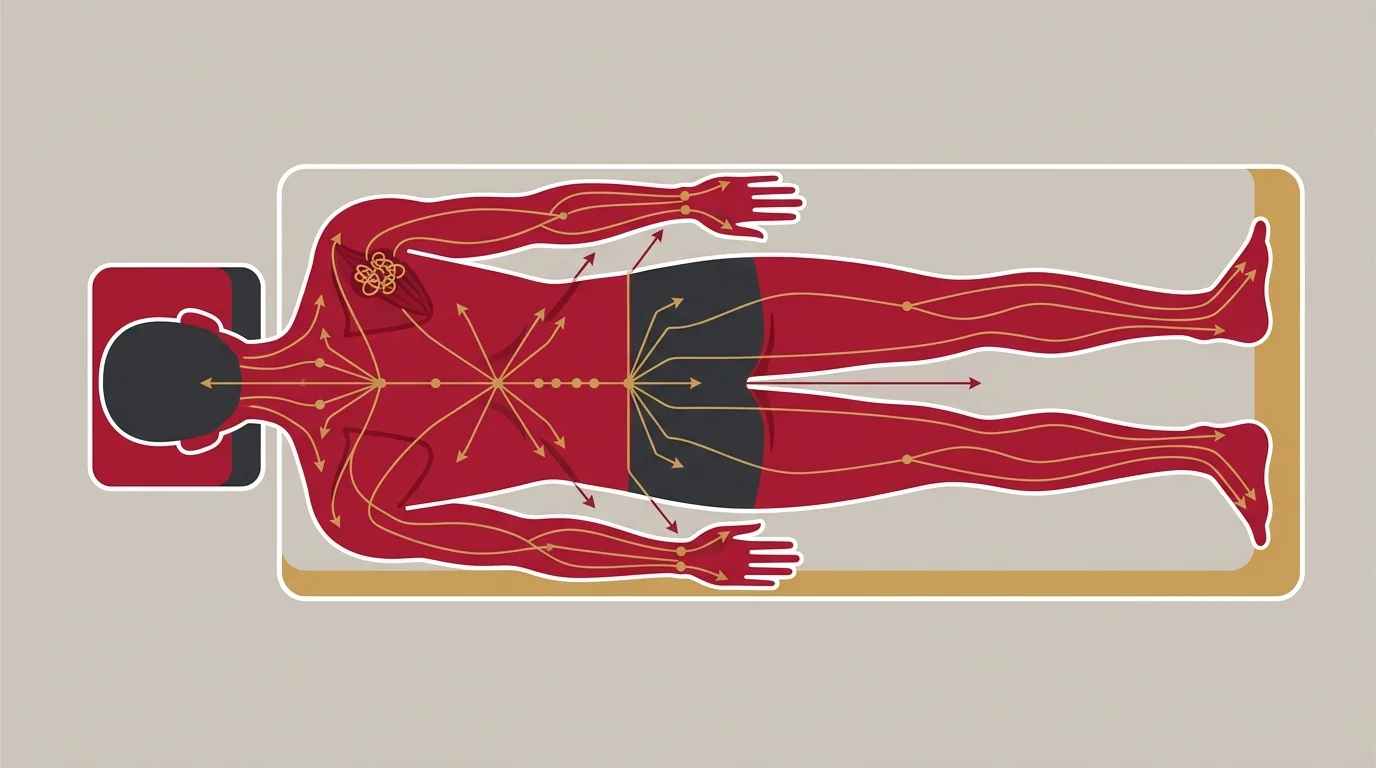
Before you can compare outcomes, you have to separate the two maps guiding the needle. Acupuncture and dry needling both put fine needles into the body. But what each insertion can actually accomplish is decided by the diagnostic model behind it.
Think of the nervous system as the body's master switchboard, routing signals to every organ, muscle, and hormonal pathway at once. One map treats that switchboard directly. The other only quiets a single line ringing off the hook.
| Diagnostic Model | What It Maps | Primary Therapeutic Goal |
|---|---|---|
| Anatomical Meridian Theory | A network of pathways linked to organ systems, hormonal regulation, and nervous system balance | Regulate systemic nervous system activity across interconnected patterns |
| Myofascial Trigger Point Model | Hyperirritable spots within the fascia surrounding a single skeletal muscle | Release a localized muscular knot at the immediate site of tension |
| Diagnostic Approach Behind Each Map | Pattern-based assessment following meridian pathways versus direct palpation of muscle tissue | Guide needle placement toward either a systemic pattern or an isolated mechanical structure |
The Traditional Chinese Medicine Meridian Network
Traditional Chinese Medicine describes anatomical meridians as a complex network of pathways that influence the body's entire physiological function. This network extends beyond muscle tissue into organ regulation, hormonal balance, and nervous system activity. A meridian point is never isolated from the rest of the switchboard it belongs to.
And that systemic reach is exactly what sets meridian theory apart from a purely local model. Stimulate one point, and you can influence patterns spread across several regions of the body. This is the diagnostic foundation behind post-doctorate acupuncture training, and it's why the same needle gets placed for reasons a muscle-only framework never sees.
The Myofascial Trigger Point Model
Myofascial trigger points come from a more modern, Western anatomical concept. They are defined as hyperirritable spots in the fascia surrounding skeletal muscle. The model is mechanical, not systemic.
A trigger point gets diagnosed by palpation, not by pattern. The goal is releasing one knot in one muscle, not regulating a network. For a closer look at how that narrower model holds up against chronic conditions, see why acupuncture training depth matters for chronic pain.
Why Needling a Local Knot Rarely Calms a Dysregulated Nervous System
Under a needle, a local knot can go quiet for a while. But quiet isn't the same thing as regulated.
The critical distinction is treating a local symptom instead of addressing the systemic neurological pattern that gave rise to it. Silencing one line on the switchboard does not reset the routing behind it.
The Mechanical Release Ceiling
Trigger point release runs into a mechanical ceiling because it was never built to reach past the muscle. It answers palpation with pressure, not a network with a pattern.
That ceiling is why a knot comes back, or why relief stays stuck in one region. Systemic regulation asks a different question entirely, and that question is explored in Acupuncture Regulate Nervous System Overdrive.
What the Research Actually Shows About Needling and Chronic Pain
Mechanism tells you what each approach aims at. Measurement asks the harder question: does hitting that target actually change anything for a person in pain?
| Review Detail | Figure | Scope |
|---|---|---|
| Guideline body | National Institute for Health and Care Excellence | Chronic primary pain in people aged 16 and over |
| Trial pool examined | Randomised controlled trials covering acupuncture and dry needling | Pain outcomes only, not diagnostic mechanism |
| What the trials measure | Whether pain intensity changes under controlled conditions | Symptom-level outcome, not systemic regulation |
| What the trials do not measure | Whether meridian-based or trigger point diagnosis explains the result | Mechanism remains outside the scope of pain-outcome trials |
Trial Evidence on Chronic Primary Pain
NICE's chronic pain evidence review reports a guideline published in April 2021 that examined 32 randomised controlled trials of acupuncture and dry needling for managing chronic primary pain in people aged 16 and over. Those trials sit right behind the mechanism argument above. They put needle-based therapy under controlled conditions instead of one-off observation, and ask whether it holds up.
Where the Nervous System Fits Into the Evidence
But none of those trials sort mechanism from switchboard talk. They measure whether pain changes, not which diagnostic map explains the change. That gap is exactly where the nervous system argument earns its keep. For a direct look at whether local needling can settle systemic overdrive, see Calm Nervous System Hypervigilance.
How Regulatory Scope Separates Meridian-Based Practice From Dry Needling

Mechanism and evidence tell you how each needle works. Neither one settles who's legally allowed to place it. That line gets drawn by licensing boards, not by diagnostic theory.
| Jurisdiction | Practitioner Type | Training or Scope Requirement |
|---|---|---|
| Illinois | Licensed acupuncture practitioner | Must refer patients whose conditions fall outside acupuncture's defined scope to a licensed physician or dentist |
| Nevada | Physical therapist performing dry needling | At least 150 hours of didactic education and training required before performing the procedure |
Illinois Scope of Practice for Acupuncture
Illinois law governs acupuncture practice through scope-of-practice rules tied to training and certification. Research published through Illinois's acupuncture practice statute found acupuncturists licensed in Illinois must refer patients whose conditions fall outside the scope of acupuncture practice to a licensed physician or dentist. An Illinois-licensed acupuncture practitioner who encounters a condition outside that defined scope must refer the patient onward rather than continue treatment. That referral duty keeps meridian-based practice inside a defined regulatory lane, distinct from general medical or dental treatment.
Training Hour Requirements Across Needling Disciplines
Dry needling sits under a separate licensing track, and the hour requirements behind it vary by state and profession. Nevada's administrative code reports physical therapists in Nevada must complete at least 150 hours of didactic education and training in dry needling before performing the procedure. Nevada sets its own floor at 150 hours of didactic education and training before a physical therapist may perform dry needling. That figure describes one state's minimum for one profession, not a national standard for needling of any kind. For a broader look at chiropractic scope and training, see treatment approaches built around the nervous system.
How a Nervous-System-First Framework Is Built and Credentialed
Once the diagnostic model itself has to be verified, regulation moves from outside law to internal credentialing. And that means proving meridian theory was studied at a systemic level, not tacked on as one more technique.
Board Certification as a Diagnostic Framework, Not a Technique Add-On
Board certification exists to test that systemic diagnostic depth directly. Research published through the American Chiropractic Association found recognizes the American Board of Chiropractic Acupuncture Diplomate (DABCA) as a board certification for doctors of chiropractic. That recognition treats meridian-based practice as its own diagnostic framework, not a supplemental skill layered onto adjustment work.
Device Classification and Why It Matters for Meridian Work
The needle itself carries its own layer of federal oversight, separate from who is licensed to place it. Research published through the FDA found acupuncture needles (single use) are classified by the FDA as Class 2 medical devices regulated under FDA regulation number 880.5580. A single-use needle regulated as a Class 2 device under FDA rule 880.5580 meets a defined manufacturing and sterility standard before it ever reaches a meridian point.
Reading a Meridian-Based Treatment Plan Step by Step
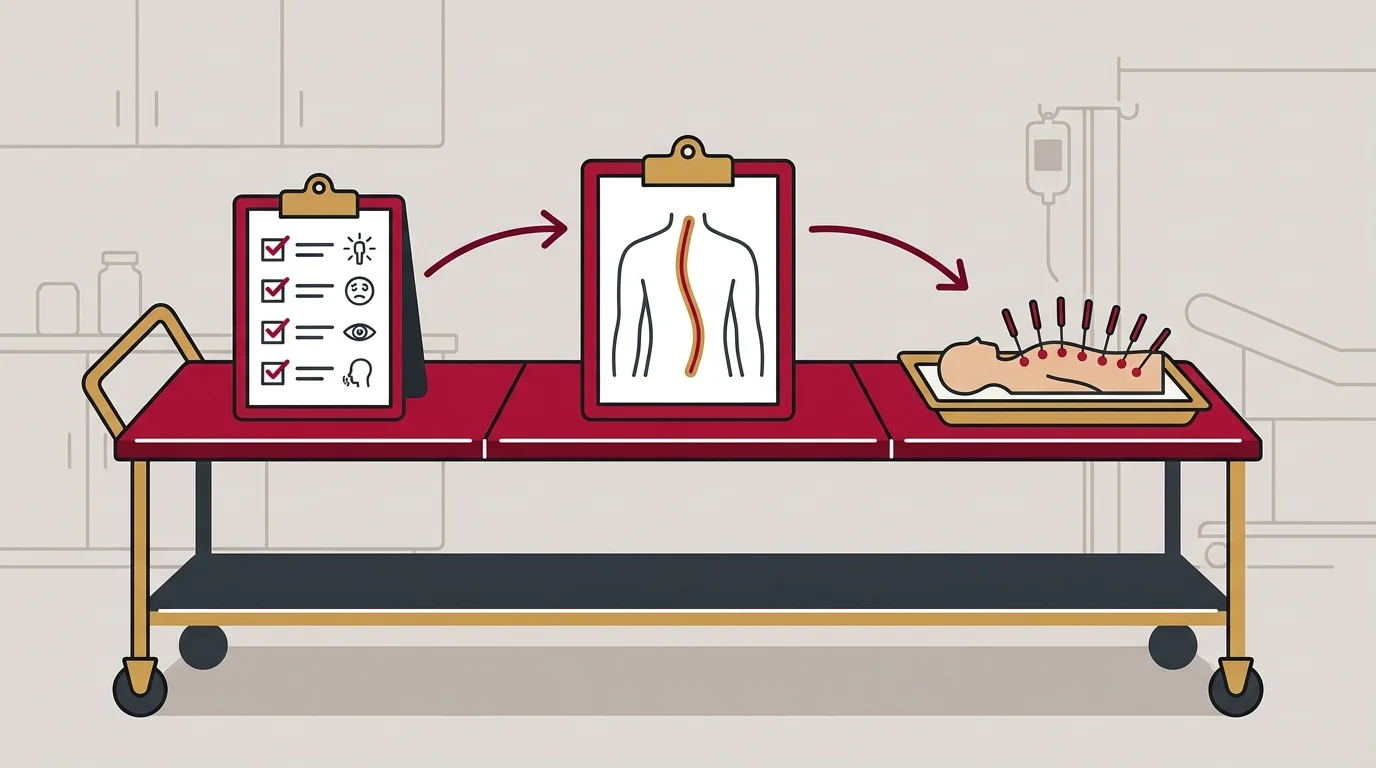
Architecture only earns its keep when it changes what happens at the table. So a meridian-based plan starts with a different question: where does this symptom sit inside the switchboard, not just where does it hurt? That question decides which points get chosen, and in what order.
| Step | What Is Assessed | Diagnostic Focus |
|---|---|---|
| Initial Intake | Symptom location alongside broader patterns across sleep, digestion, mood, and energy | Systemic nervous system regulation rather than the sore site alone |
| Pathway Tracing | Which meridian passes through or near the affected region | Network connections between the painful area and distant physiological function |
| Point Selection | Points chosen for their position along a relevant meridian, not just proximity to pain | Regulating the switchboard pattern feeding the symptom |
| Needle Placement and Response | Systemic response such as shifts in tension, breathing, or overall regulation across the session | Whether the nervous system pattern is settling, not just whether one muscle released |
| Reassessment | Change in the original symptom alongside change in the broader pattern it was tied to | Confirming systemic regulation has held, rather than confirming a single knot stayed quiet |
Mapping Symptoms to Meridian Pathways Versus Isolated Points
A symptom read through meridian theory gets traced along its pathway, not just palpated at the sore spot. Pain in one region can point to a meridian passing through an entirely different area. A trigger point map skips that step entirely. It stops at the tissue that hurts, because the model was never built to follow a pathway past the muscle.
Frequently Asked Questions
Once the switchboard distinction lands, a handful of questions come up more than the rest. Here are the direct answers, no theory attached.
What qualifications should I look for in an acupuncture vs a dry needling practitioner?
Look for training that names a diagnostic system, not just a technique certificate. Post-doctorate acupuncture training and board-level credentialing test systemic diagnostic depth. A dry needling certificate, by contrast, typically confirms hours logged, not a diagnostic framework.
Can stimulating a meridian point help with issues that aren't muscle pain, like anxiety or digestion?
Meridian theory frames the nervous system as a network reaching organs, hormones, and muscle alike. Stimulating a point along that network can influence patterns outside the muscle it sits near. Trigger point work has no mechanism for that reach, since it never targets the network to begin with.
Is it possible for dry needling a trigger point to make my nervous system more agitated?
A local knot can feel sore or reactive right after a session, since the area was just mechanically disrupted. That's a tissue response, not proof of systemic agitation. But it also means the underlying nervous system pattern was never touched, so the same knot can come back.
Which is better for chronic, widespread pain: targeting meridians or individual trigger points?
Widespread, chronic pain rarely traces to one muscle acting alone. Meridian-based stimulation was built to address a distributed pattern, not a single point. Targeting individual trigger points one at a time treats the symptoms as they appear, not the pattern producing them.
Does stimulating an anatomical meridian feel different from needling a local muscle knot?
Yes. A trigger point needle targets a palpated knot and stops there, producing a localized release. A meridian point is selected for its place along a pathway, so the sensation and the intent behind the placement differ even when the needle itself looks the same.
Are the safety regulations and needle standards the same for both practices?
The needle itself is regulated the same way, no matter who places it. Single-use acupuncture needles are classified as Class 2 medical devices under federal rule 880.5580. What differs is the licensing and scope-of-practice rules governing who may use that needle, and why.
Where This Leaves You
The switchboard image was never decoration. It was the whole argument in miniature.
A symptom is one ringing line. The nervous system is every line running through the switchboard at once.
Trigger point release answers the ring. It quiets that one line and stops there.
Meridian-based stimulation goes to the switchboard itself and resets how the lines are routed. That is the difference between suppression and regulation.
Real answers, real care, real outcomes start with treating the network, not the noise. A nervous system running in overdrive was never going to settle because one muscle went quiet.
If a pattern keeps returning no matter how many knots get released, the diagnostic model is the problem, not the muscle. That question is worth asking directly, and answering it starts with talk it through with us.