
Certified acupuncture regulates nervous system overdrive by stimulating specific anatomical meridians that signal the autonomic nervous system to shift out of chronic sympathetic activation and into a parasympathetic, restorative state. The autonomic nervous system functions as an internal control panel with two opposing controls: a sympathetic branch that acts as a gas pedal, driving heart rate, muscle tension, and alertness upward during stress, and a parasympathetic branch that acts as a brake pedal, slowing those same systems back toward baseline. When a person experiences prolonged or repeated stress, the sympathetic branch can remain engaged well past the point where a threat has passed, producing a state commonly described as nervous system overdrive. Needle placement at defined meridian points is understood to influence neural pathways connected to the hypothalamus, amygdala, and related brain structures that govern the stress response. This differs mechanically from approaches that target isolated muscular trigger points, which primarily address localized tension rather than the broader neurological signaling that keeps the sympathetic branch engaged. Because meridian-based stimulation interacts with the regulatory network itself rather than a single muscle group, its effects extend beyond momentary relaxation toward a recalibration of the body's baseline stress response over a course of sessions. This process involves post-doctorate training beyond a standard chiropractic curriculum, since accurate meridian selection and needle technique require specialized study of the meridian system and its relationship to autonomic function. The result, according to this mechanism, is a nervous system that returns more readily to a calm, parasympathetic-dominant baseline rather than remaining locked in a heightened alert state.
What Nervous System Overdrive Actually Looks Like
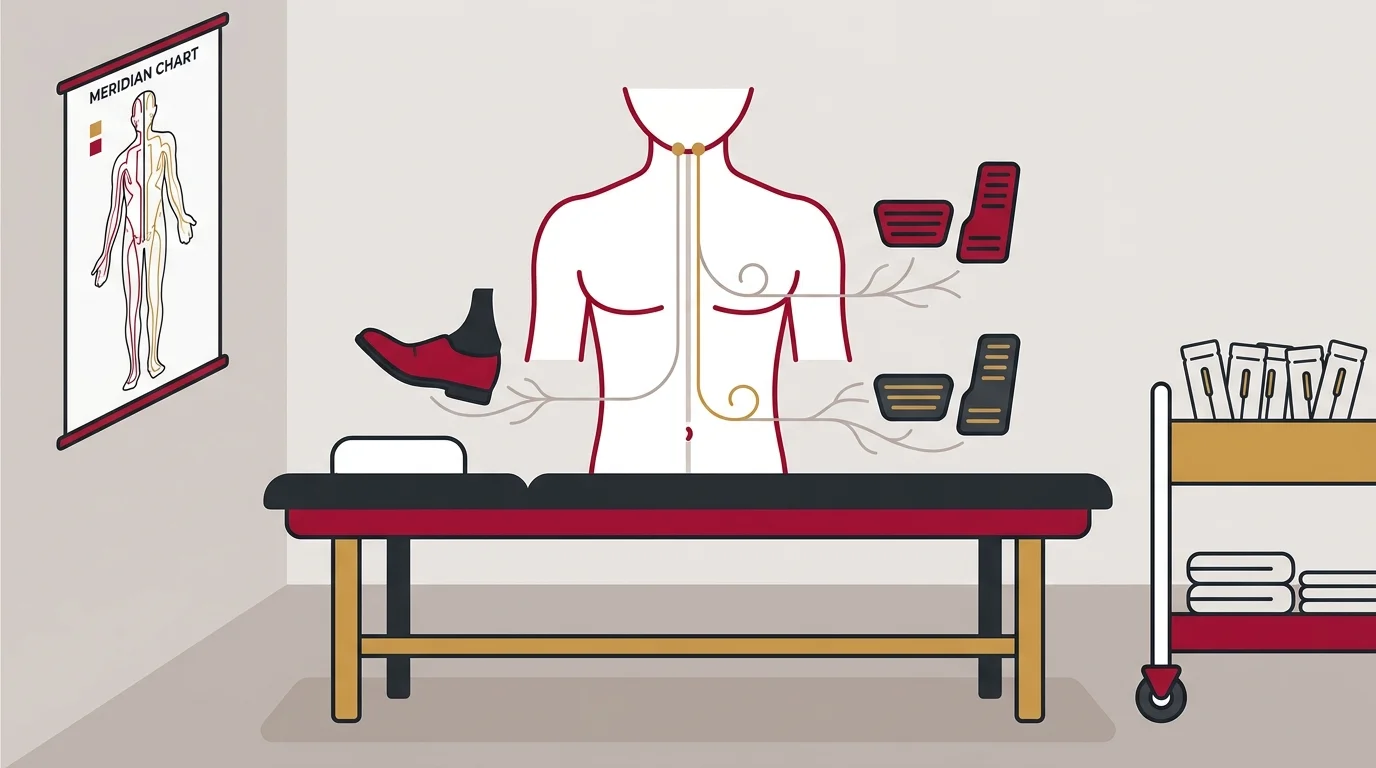
Picture the nervous system as a control panel with two pedals. One is the gas, one is the brake.
In today's hyper-connected world, many people operate in a state of chronic fight or flight, where the nervous system is perpetually on high alert. That's not a mood. That's a body stuck with the gas pedal pinned down.
The Gas Pedal and the Brake Pedal
The sympathetic branch is the gas pedal. The second stress shows up, it drives heart rate, muscle tension, and alertness higher.
The parasympathetic branch is the brake pedal, and it's supposed to ease those systems back down once the stressor passes. Most approaches to physical tension, like how certified acupuncture compares with dry needling, work on the muscle the gas pedal tightened. They never touch the foot still pressing it.
Why Symptom Management Leaves the Signal Running
Here's what most stress treatment gets wrong: it goes after the symptom and ignores the signal. It quiets the tight shoulder, the racing heart, the shallow breath, while the neurological signaling that keeps the system in overdrive keeps right on running.
That's the problem with easing tension and calling it regulation. True regulation isn't about simply feeling relaxed for an hour. It's about retraining the body's baseline response to stress, not just cutting the alarm's volume for a while. Calm Nervous System Hypervigilance requires resetting the panel itself, not just tapping the brake once.
What the Research Shows About Acupuncture and the Stress Response
The mechanism sounds right. But it isn't just theory. The research backs it with measurable biology.
Two kinds of evidence matter here. What happens to your stress hormones, and what happens inside the brain during treatment.
| Study Focus | Population or Model | Key Finding | Measured System |
|---|---|---|---|
| Hormonal stress response | Stressed rats | Acupuncture reduced protein expression of corticotrophin releasing hormone and adrenocorticotropic hormone receptor | Hypothalamic-pituitary-adrenal signaling |
| Brain activity during needling | fMRI studies of acupuncture at ST36 and LI4 | Modulated activity in the amygdala, hippocampus, anterior cingulate cortex, insula, and hypothalamus | Limbic and subcortical stress-regulation network |
| Anxiety symptom outcomes | Generalized anxiety disorder treatment | A 2022 review of 27 randomized controlled trials found acupuncture relieved anxiety symptoms better than comparison treatments, with fewer side effects | Sympathetic nervous system and anxiety response |
Hormonal Signaling Under the Needle
Stress isn't just a feeling. It runs on a hormonal cascade. And that cascade is where the gas pedal actually lives.
Per PubMed Central, acupuncture reduced protein expression of corticotrophin releasing hormone and adrenocorticotropic hormone receptor in stressed rats — a finding from animal research. That finding was measured in stressed rats, not people, so it points toward a mechanism rather than a settled human outcome. Still, it shows the hormonal signaling behind the gas pedal responding directly to needle stimulation.
What Brain Imaging Reveals During Treatment
Hormones tell part of the story. Brain imaging tells the rest of it.
Findings published through Frontiers in Human Neuroscience show fMRI studies show that acupuncture at specific points such as ST36 (Zusanli) and LI4 (Hegu) modulates activity in brain regions including the amygdala, hippocampus, anterior cingulate cortex, insula, and hypothalamus. Those regions govern threat detection and emotional regulation, the exact control-panel functions locked in overdrive during chronic stress. A 2022 review of 27 randomized controlled trials found acupuncture relieved anxiety symptoms in generalized anxiety disorder better than the comparison treatments, most of which were medications, with fewer side effects, though the authors noted more high-quality trials are needed. That is a different mechanism entirely from working a sore muscle. Trigger Points: A Neurological Comparison lays out why stimulating a trigger point never reaches the signaling this section describes.
How Meridian Stimulation Differs From Trigger Point Release
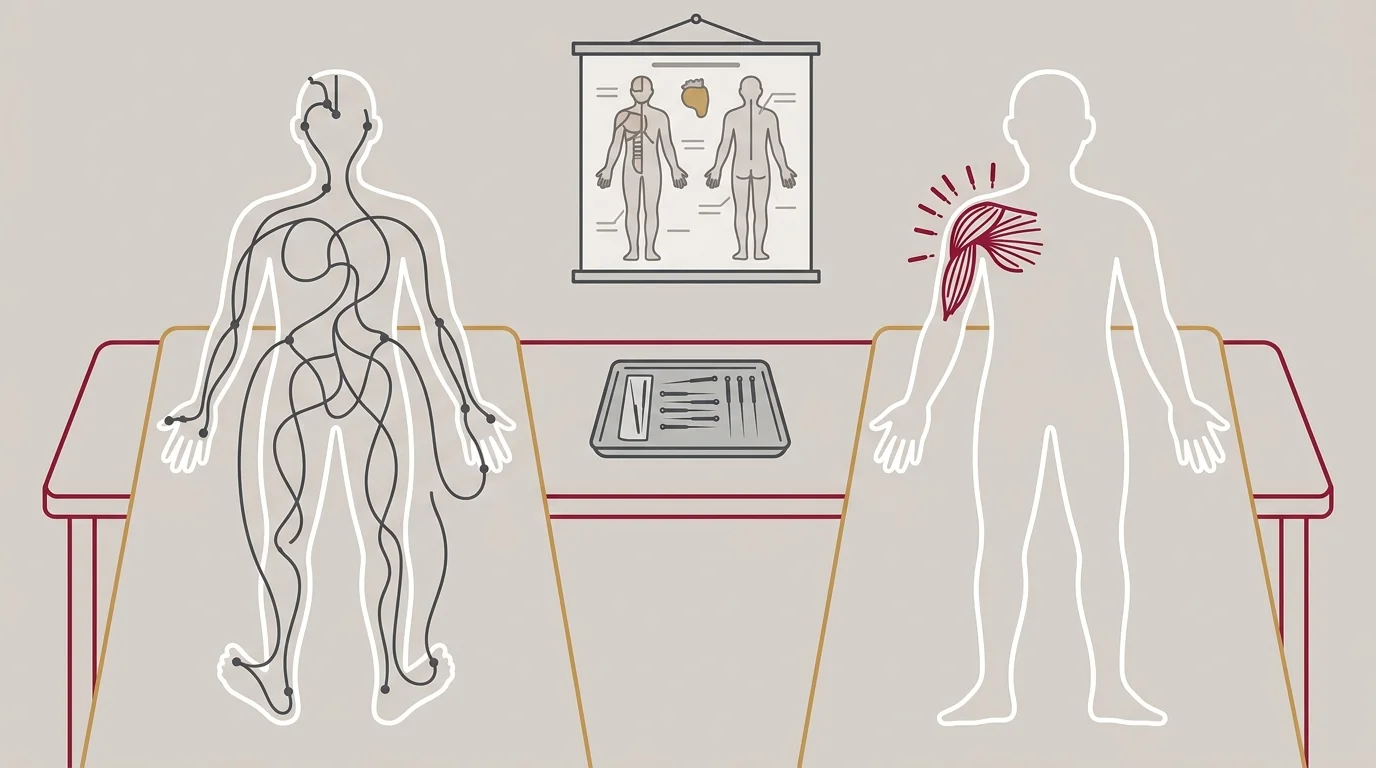
Two systems can both claim to touch the body's stress response, yet only one actually reaches the panel that controls it. Meridian stimulation and trigger point release are not variations on the same idea.
| Characteristic | Meridian-Based Acupuncture | Trigger Point Release |
|---|---|---|
| Target of Stimulation | A network of meridian points connected to autonomic pathways governing the sympathetic and parasympathetic branches | A fixed site within a single muscle, mapped for localized tension |
| Scope of Effect | Systemic, reaching the regulatory signaling that keeps the gas pedal engaged across the body | Local, easing tightness in the specific muscle where the point sits |
| Training Required | Post-doctorate study of the meridian system and its relationship to autonomic function | Training focused on muscular anatomy and manual trigger point location |
| Underlying Goal | Recalibrating the nervous system's baseline response to stress over a course of sessions | Releasing muscular tension that resulted from a stress response already underway |
| What It Cannot Reach | Not applicable within this framework, since the approach addresses the regulatory network directly | The neurological signaling that keeps the sympathetic branch engaged after the muscle relaxes |
Two Maps of the Same Body
Meridians run as a network across the whole body, wired into the autonomic pathways behind the gas and brake pedals themselves. Trigger points are something else entirely: fixed spots inside a single muscle, mapped for local tension, not systemic signaling.
One map traces the wiring behind the dashboard. The other marks a sore spot on the seat.
Why Trigger Point Protocols Stall at the Muscle
Working a trigger point can ease the muscle the gas pedal tightened, but it never touches the foot still pressing down. That is the ceiling on what trigger point protocols can accomplish, no matter how precisely the point is located. For a broader look at what the practice offers beyond this comparison, the page on in-office chiropractic treatment options outlines the full scope of care. Neuropathy care protocols run 8 to 12 weeks.
Where Symptom-Chasing Protocols Break Down
Symptom-only protocols do not just plateau. They relapse.
Easing a tight muscle or a racing heart rate for an afternoon leaves the sympathetic branch fully wired the next time a stressor appears, because nothing about the underlying signaling ever changed.
The Relapse Pattern in Symptom-Only Approaches
The pattern looks like this: tension builds, a technique targeting the muscle or the symptom brings temporary relief, and within days the same tightness returns in the same place.
That cycle repeats because the gas pedal was never addressed, only the muscle it strained.
Each relapse reinforces the same baseline overdrive instead of retraining it toward a calmer resting state.
How a Recalibration Protocol Is Actually Structured
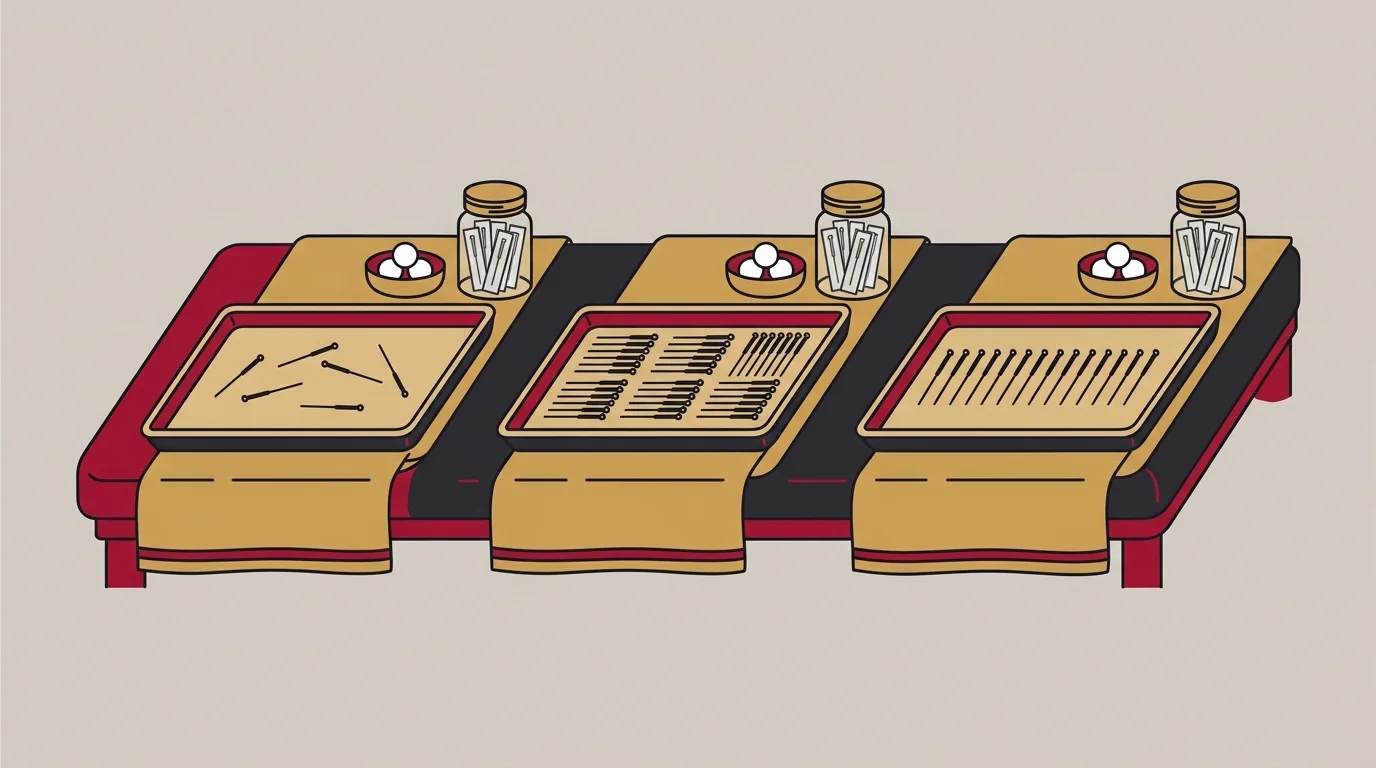
A protocol built around meridian stimulation is not a single fix applied once. It is a sequence, because the gas pedal was pinned down over time and the panel resets on that same timeline. Recalibration means each session builds on the last, moving the baseline instead of just tapping the brake again.
| Protocol Phase | Primary Focus | Typical Duration |
|---|---|---|
| Early Sessions | Identifying which meridian points produce a measurable shift away from constant sympathetic engagement | Opening phase, before any baseline change is expected to hold |
| Mid-Protocol Sessions | Reinforcing the sympathetic shift so the parasympathetic branch begins holding calm without prompting | Middle stretch, once initial responses are established |
| Later Sessions | Consolidating the new baseline so the panel rests in a calmer state between sessions | Closing phase, spaced to match how the individual nervous system holds the shift |
Sequencing Sessions for Lasting Change
Early sessions establish which meridian points respond and begin shifting the sympathetic branch away from constant engagement. Later sessions reinforce that shift until the parasympathetic branch starts holding the calmer baseline on its own. This is not some catch-all protocol applied the same way to every nervous system. Spacing and sequencing are what separate lasting regulation from a temporary dip in the gas pedal's pressure.
Frequently Asked Questions
A handful of questions come up in almost every conversation about this. Here are the straight answers.
How long does it take for acupuncture to calm an overactive nervous system?
Most people feel a shift inside the first few sessions, as the brake pedal starts responding more readily. But a lasting change to the baseline takes the full sequence, not one visit.
What is the difference between certified acupuncture and dry needling for nervous system regulation?
Dry needling works a muscular trigger point to release local tension. Certified acupuncture reaches the meridian network wired into the autonomic pathways, hitting the signaling behind the tension instead of just the muscle.
Can acupuncture help with physical symptoms of stress like digestive issues or muscle tension?
Yes. Digestive issues and muscle tension are both downstream effects of a sympathetic branch stuck in overdrive, so recalibrating that branch tends to ease them alongside the nervous system itself.
Is nervous system regulation through acupuncture a permanent change?
Regulation is a trained baseline, not a permanent switch. A recalibrated nervous system holds its calmer state more readily, but ongoing stressors still call for maintaining that baseline over time.
How many treatments are typically needed to reach lasting nervous system balance?
There's no set number, because every nervous system got pinned in overdrive on its own clock. What moves the baseline is a sequence of sessions, spaced out and building on each other.
What does the autonomic nervous system actually regulate in the body?
The autonomic nervous system runs heart rate, digestion, muscle tension, and alertness through its sympathetic and parasympathetic branches. Those two branches are the gas pedal and brake pedal driving the whole stress response.
Where the Evidence Points From Here
Two pedals, one panel. That's the whole picture of nervous system overdrive, and it's why easing the muscle a gas pedal tightened was never going to reset the pedal itself.
Certified acupuncture works because it stimulates the meridian network wired into that panel, not a sore spot mapped onto a single muscle. That's a mechanical difference, not a marketing one, and the evidence on stress hormones and brain activity backs the distinction. Post-doctorate training exists precisely because finding the panel takes more than finding the tension.
Recalibration is a sequence, not a session. If a nervous system stuck in overdrive is the real problem, the next step is scheduling a visit to start the process.