
Normal post-acupuncture soreness is a mild, short-lived ache right at the needle site, usually fading within a day or two, while a dry needling flare-up brings sharper, more intense pain that can spread past the treated area and linger without improving. The difference comes down to three things: intensity, location, and how the discomfort moves over time. Therapeutic soreness follows a predictable curve. It shows up soon after treatment, peaks early, then steadily eases as the tissue settles. A flare-up breaks that curve. Instead of easing, the discomfort climbs, radiates outward, or brings new sensations like numbness, sharp shooting pain, or swelling that was not there right after the session. Needle technique drives much of this difference. Acupuncture tends to use finer, more superficial insertion aimed at a broader nervous system response, while dry needling reaches deeper muscular trigger points with more mechanical stimulation, which can trigger a stronger local reaction in some people. Mild bruising or a dull ache at the insertion point sits well within the expected range and does not, on its own, signal a problem. Warning signs are different: pain that worsens rather than improves after 48 to 72 hours, new weakness, spreading numbness, fever, or swelling that keeps expanding. Any of those patterns points to a reaction outside the expected therapeutic range and calls for a follow-up evaluation instead of a wait-and-see approach. Reading the difference between the body's expected adaptive response and a genuine adverse reaction is what allows for accurate self-monitoring during the recovery window after either treatment.
What Counts As Normal Soreness After A Needle Goes In
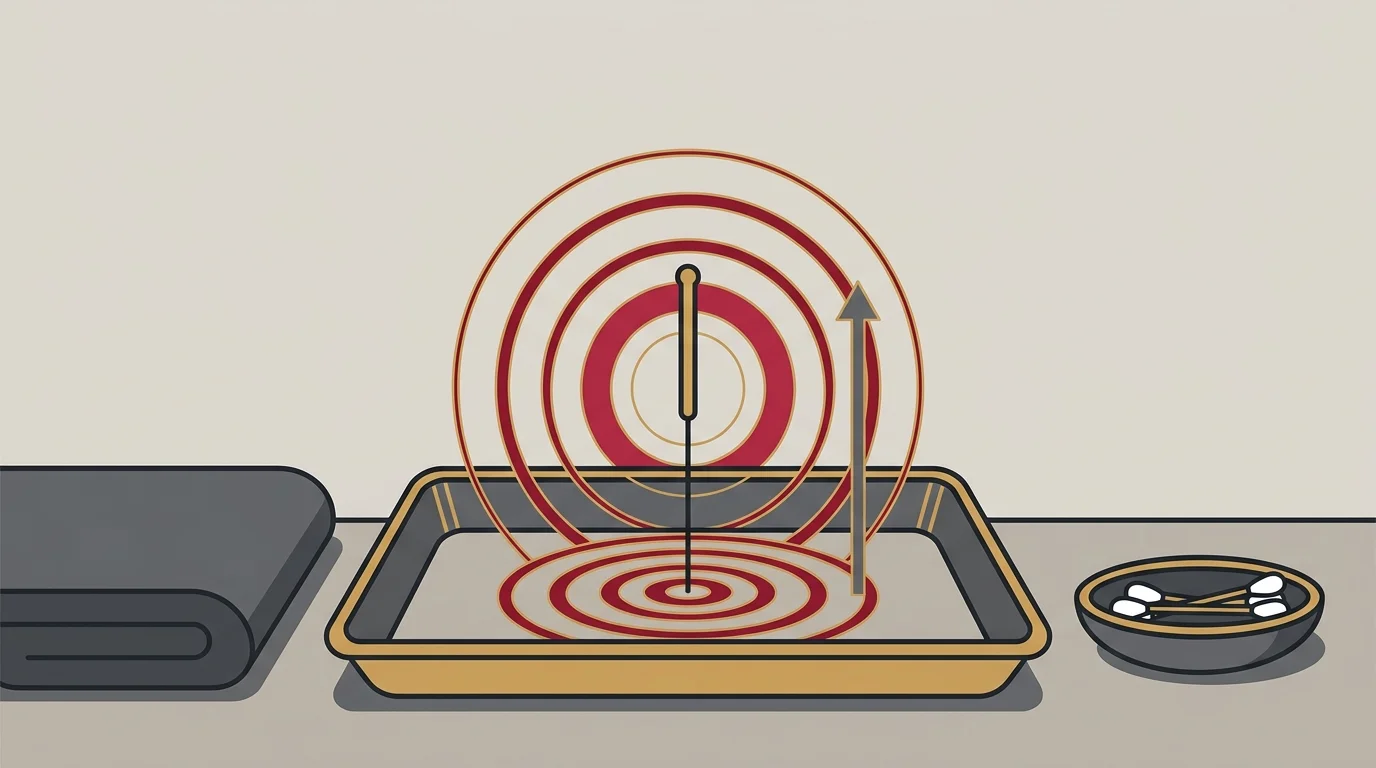
Every needle produces a sensation. The question a researcher must answer is what that sensation means.
Some level of soreness after acupuncture or dry needling is a common part of the body's response to treatment. That response is not noise — it is signal, and reading it correctly is the diagnostic task.
How strong that signal gets, and how long it lasts, depends on the technique used, the area treated, and one person's sensitivity. Two people can sit through the same session and feel two different things, with neither result being abnormal.
So this is exactly where telling a therapeutic response apart from a true flare-up matters, a distinction covered further in acupuncture and dry needling, compared properly.
Why Vague Reassurance About Soreness Falls Short
Ask about post-treatment soreness and the answer most people get is "it's normal." That phrase tells a researcher nothing about mechanism, timeline, or threshold.
Vague reassurance treats every ache as identical. And that erases the exact distinction that matters for trigger point dry needling treatment.
Findings published through PubMed Central show post-needling soreness is recognized as the most common minor adverse event after dry needling and can reduce patient willingness to continue treatment by causing dissatisfaction and lower adherence — one expert assessment rather than a study finding.
That pattern matters because generic reassurance can quietly reduce a patient's willingness to continue care rather than clarify what the sensation means. Sorting signal from flare-up requires a standard, not a shrug, a distinction explored further in Rest Are Critical After Acupuncture.
How Acupuncture And Dry Needling Produce Different Sensations
Two needles can enter tissue and produce two entirely different signals. The reason lives in technique, depth, and intent, not in the patient's tolerance for discomfort.
Understanding that mechanical difference is what separates a diagnostic framework from a shrug. A researcher who knows the technique can predict the sensation before the needle ever goes in. Before comparing recovery timelines, it helps to understand why the needle itself rarely feels threatening, a point covered in Overcoming Needle Anxiety.
| Modality | Needle Technique | Typical Sensation | Mechanism |
|---|---|---|---|
| Acupuncture | Fine, superficial insertion aimed at broader nervous system response, sometimes paired with a warm needling technique using a heated needle at the painful spot | Mild, diffuse ache or warmth localized to the insertion point | Thermal and placement input working together to shift the sensory profile of the treatment |
| Dry Needling | Deeper insertion targeting muscular trigger points, frequently aimed at provoking a local twitch response | Sharper, more mechanical sensation with a brief jolt often followed by release | Mechanical stimulation of a taut muscle band, without an established thermal component |
The Warm Needling Distinction
Acupuncture includes a warm needling technique where a heated needle is inserted directly into the painful spot. This approach draws on thermal input alongside placement, which changes the sensory profile of the treatment. Findings published through The journal Medical Acupuncture show acupuncture includes a warm needling technique where a heated needle is inserted into the painful spot, whereas this technique is not established in dry needling.
Dry needling carries no equivalent thermal step in its standard practice. That missing variable is a large part of why the two modalities can produce such different sensations from what looks like the same tool.
The Local Twitch Response Explained
Dry needling often aims to trigger a local twitch response — an involuntary muscle contraction right at the needle site. That reflex is the mechanism, not a malfunction.
The twitch tells you the needle reached a taut band inside the muscle. It usually brings a brief, sharp sensation followed by a release, which is why the two modalities rarely feel identical.
What Happens When A Flare-Up Is Mismanaged
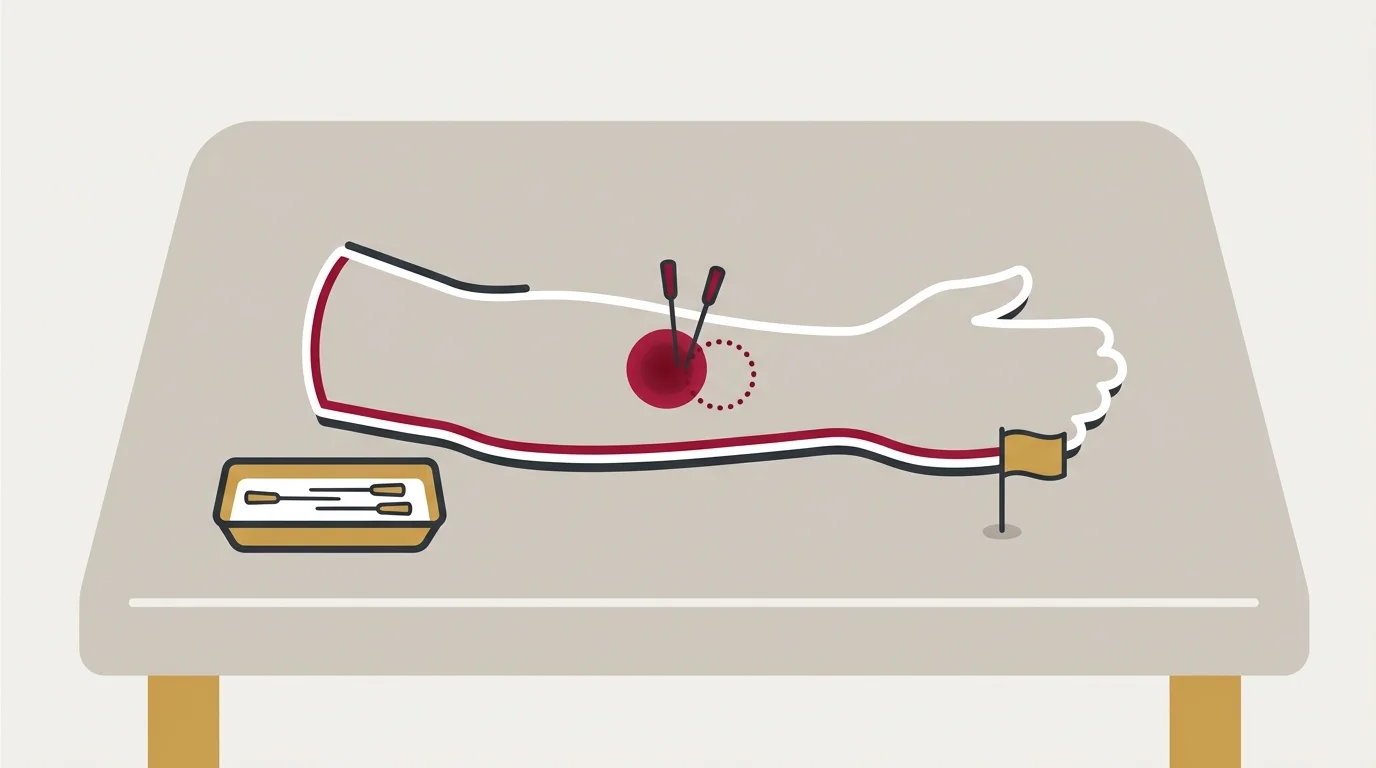
A mismanaged flare-up rarely stays contained to the needle site. Left unaddressed, the signal the body sent gets overridden by generic reassurance, and the window for early correction closes.
The mechanism is simple. A worsening pattern read as ordinary soreness delays the follow-up evaluation that would have caught it. So the tissue keeps reacting under a diagnosis nobody actually made.
| Reaction Type | Reported Frequency | What It Indicates |
|---|---|---|
| Localized bruising or bleeding at the needle site | Common, within documented adverse-event range | A visible but expected tissue response, not a signal of mismanagement on its own |
| Soreness that intensifies rather than eases past 48 to 72 hours | Uncommon when technique and aftercare are appropriate | A flare-up pattern that has moved outside the therapeutic curve and needs evaluation |
| Spreading numbness or new sharp shooting pain | Rare, and never part of the expected response | A neurological signal that the original treatment area has been exceeded |
| Swelling that continues to expand rather than plateau | Uncommon and inconsistent with normal tissue settling | An unresolved reaction that generic reassurance can mask instead of catch |
| Fever following a needling session | Rare and outside any expected therapeutic response | A systemic signal unrelated to localized muscular soreness, warranting prompt follow-up |
The Documented Rates Of Bruising And Bleeding
Bleeding and bruising sit inside the range a researcher should expect to see, not outside it. Among patients who experienced adverse events, needle-site bleeding occurred in 37.84% and subcutaneous bleeding occurred in 25.68%, which places both well within documented, common outcomes rather than rare complications.
According to The journal Trials, needle-site bleeding occurred in 37.84% of acupuncture patients with adverse events, and subcutaneous bleeding occurred in 25.68% of those with adverse events. That context matters when a flare-up is being mismanaged, because visible bruising on its own gets mistaken for a warning sign the surrounding data doesn't support. Chiropractic adjustment recovery runs on the same logic, where a system for tracking response is what separates a root-cause chiropractic treatment framework from guesswork.
How Recovery Timelines Typically Unfold
Recovery timelines follow a curve, not a switch. Soreness rises, plateaus, and fades in a sequence that a researcher can track against a clock rather than a guess.
Hydration is often cited as the variable that determines how fast that curve resolves. The data tells a different story.
According to published research data, subjective muscle soreness was not altered by hydration status during a 72-hour recovery period following muscle-damaging exercise.
Subjective soreness held steady across hydration conditions in that recovery window, which means hydration status alone does not explain why one person's ache fades faster than another's.
| Recovery Window | Expected Sensation | Self-Care Factor |
|---|---|---|
| Immediate to 24 Hours | A mild, localized ache or dull soreness at the needle site, sometimes paired with a brief twitch response from dry needling. | Gentle movement over strict rest, keeping the treated area active without pushing it into strain. |
| 24 to 48 Hours | Soreness typically plateaus or begins easing, with any bruising already visible and stable rather than spreading. | Consistent, ordinary hydration and normal daily activity rather than any special protocol tied to fluid intake. |
| 48 to 72 Hours | Sensation should be clearly fading toward baseline. Discomfort that intensifies instead of easing breaks the expected curve. | Continued gentle movement and attentive self-monitoring, watching for new numbness, spreading pain, or swelling. |
| Beyond 72 Hours | Little to no residual soreness in a therapeutic response. Persistent or worsening symptoms at this point fall outside the expected range. | A follow-up evaluation rather than continued self-management, since the timeline itself has become the warning sign. |
What Actually Speeds Recovery And What Does Not
Gentle movement and proper post-treatment care play a significant role in managing soreness and supporting the treatment's benefit. Neither claim requires that hydration be the deciding factor.
What actually moves recovery is activity level, tissue response, and technique — not water intake on its own. A researcher tracking the curve should weight those variables above hydration, not in place of it.
Reading The Signals Correctly After Your Session
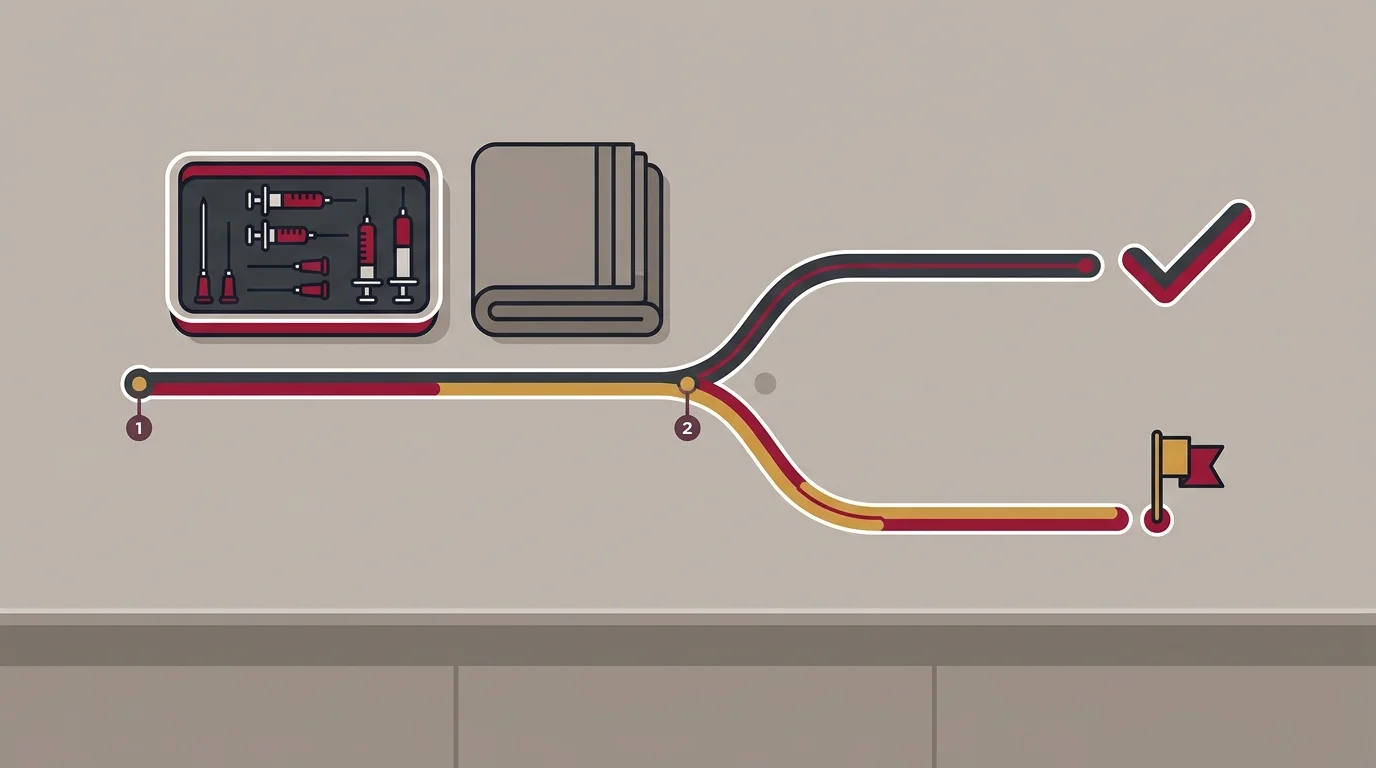
Every mechanism and timeline in this article points to one job: reading the signal correctly once the session ends. Telling a normal therapeutic ache apart from a true adverse reaction is what makes a recovery confident instead of anxious.
| Sequence Step | What To Check | What It Tells You |
|---|---|---|
| Check Timing | Note when the sensation appeared and whether it followed the expected early peak | Confirms whether the response is following a therapeutic curve or breaking from it |
| Check Location | Determine if the ache stays at the needle site or spreads beyond the treated area | Contained sensation points toward normal response; spreading points toward a flare-up |
| Check Trajectory | Compare how the sensation feels now against how it felt a day earlier | Easing suggests resolution in progress; worsening suggests a signal that needs follow-up |
| Check Character | Identify whether the sensation is a dull ache or a sharper, new sensation such as numbness or shooting pain | A dull ache fits the expected range; new sensations suggest the reaction has moved outside it |
| Check Context | Weigh the technique used, the area treated, and individual sensitivity against the observed response | Sets the right threshold for that specific case instead of applying one fixed standard to everyone |
Distinguishing A Flare-Up From A Normal Ache Step By Step
Start by checking trajectory against the clock, not against how the sensation feels in isolation. Location, intensity, and whether the ache is easing or spreading tell a researcher more than the sensation itself. The technique used, the area treated, and individual sensitivity all shape what a normal signal looks like, so the sequence has to account for that variation rather than apply one fixed threshold to every case.
Frequently Asked Questions
A few questions come up again and again once the mechanism is clear. These answers stay narrow and specific, built to close the gaps the main sequence leaves open.
How long does muscle soreness typically last after acupuncture or dry needling?
Soreness typically peaks early and tapers over a short window, easing steadily as tissue settles. If discomfort is still climbing past 48 to 72 hours instead of fading, that trajectory breaks the expected curve.
Is bruising at the needle site a sign that something went wrong?
No. Needle-site bleeding and subcutaneous bruising sit inside the documented range of common minor reactions, not outside it. Bruising on its own, with no spreading pain or new numbness, isn't a warning sign.
What can I do at home to relieve post-treatment soreness?
Gentle movement supports the treatment's benefit and helps manage the ache as it resolves. Water intake alone won't decide how fast soreness fades, so pair movement with normal activity rather than rest by itself.
When should I be concerned about soreness and contact my practitioner?
Contact a practitioner if pain worsens instead of improving after 48 to 72 hours, or if new weakness, spreading numbness, fever, or expanding swelling shows up. Those patterns fall outside the therapeutic range and call for evaluation.
Why do I feel so tired after a needling session?
Fatigue after a needling session is the nervous system responding to the input, not a malfunction. It usually settles inside the same window as the muscular soreness itself.
What causes the local twitch response during dry needling?
The local twitch response is an involuntary contraction that fires when the needle reaches a taut band inside the muscle. It signals accurate placement, bringing a brief sharp sensation followed by release.
Reading The Body's Report Card
So it all comes back to the signal every needle sends. Read together, the mechanism, the timeline, and the threshold form a report card a researcher studies once the session ends.
An ache that stays mild and eases on schedule is a passing grade. Pain that spreads, sharpens, or refuses to fade past 72 hours is a failing one, and it calls for evaluation, not a shrug.
Post-doctorate diagnostic standards exist to make that read consistent instead of guesswork. Touch of Wellness Chiropractic applies that same standard to every case that walks through the door, so if a recent session left a signal worth reading, schedule a visit to have it evaluated.