
Chiropractic care can support the restoration of neurological sleep architecture and parasympathetic recovery by correcting spinal misalignments that interfere with autonomic nervous system function. The spine houses the nerve pathways that carry signals between the brain and the rest of the body, and when vertebral segments shift out of their normal position, they can create interference along this communication line. This interference can keep the sympathetic nervous system, the body's high-alert response, in a state of prolonged activation. A body stuck in sympathetic dominance struggles to shift into parasympathetic function, the internal setting responsible for digestion, tissue repair, and deep restorative sleep. Chiropractic adjustment targets these spinal shifts directly, aiming to remove the physical interference and restore clearer neurological signaling between the brain and body. Once that signaling pathway is functioning without obstruction, the autonomic nervous system regains its capacity to move fluidly between alert and recovery states, rather than remaining locked in tension. Sleep architecture refers to the structured pattern of sleep stages, including light sleep, deep sleep, and REM sleep, that the body cycles through each night. Each stage serves a distinct physiological purpose, and disruption to autonomic regulation can prevent the body from progressing through these stages normally. Restoring proper nervous system communication through spinal correction addresses a root mechanical and neurological cause of sleep disruption, rather than only masking symptoms. This approach differs from interventions that sedate the nervous system without resolving the underlying signaling interference. By reducing spinal-level nerve interference, chiropractic care supports the body's own capacity to regulate its transition into restorative, structured sleep.
Articles in this cluster
- Am I Tired But Wired — Why Am I Tired But Wired? How Spinal Tension Mimics Chronic Stress
- Tension Blocks Melatonin Production Pathways — How Physical Spinal Tension Blocks Melatonin Production Pathways
- Activating Parasympathetic Sleep Transitions Naturally — The Vagus Nerve Connection: Activating Parasympathetic Sleep Transitions Naturally
- Chiropractic Adjustments vs. Sleeping Pills — Chiropractic Adjustments vs. Sleeping Pills: Addressing the Neurological Root Cause
- System Is Locked in Fight-or-Flight — Why Sleep Hygiene Apps Fail When Your Nervous System Is Locked in Fight-or-Flight
- Pharmaceutical Sleep Aid Dependency — How Chiropractic Care Breaks the Cycle of Pharmaceutical Sleep Aid Dependency
- Sleep and Deep Recovery Cycles — How Chiropractic Care Restores Slow-Wave Sleep and Deep Recovery Cycles
- Rate Variability and Sleep Restoration — How Spinal Alignment Impacts Heart Rate Variability and Sleep Restoration
- Sleep Fragmentation — What Is Sleep Fragmentation? How Spinal Dysfunction Disrupts Your Nightly Sleep Architecture
- Maximize Parasympathetic Sleep in 2026 — The Best Post-Adjustment Evening Protocols to Maximize Parasympathetic Sleep in 2026
- Coeruleus and Reduce Nighttime Arousal — How Upper Cervical Chiropractic Adjustments Calm the Locus Coeruleus and Reduce Nighttime Arousal
- Fails Without Spinal Mechanoreceptor Reset — Why Your Evening Wind-Down Routine Fails Without Spinal Mechanoreceptor Reset
What Sleep Architecture Actually Means for a Nervous System Under Load
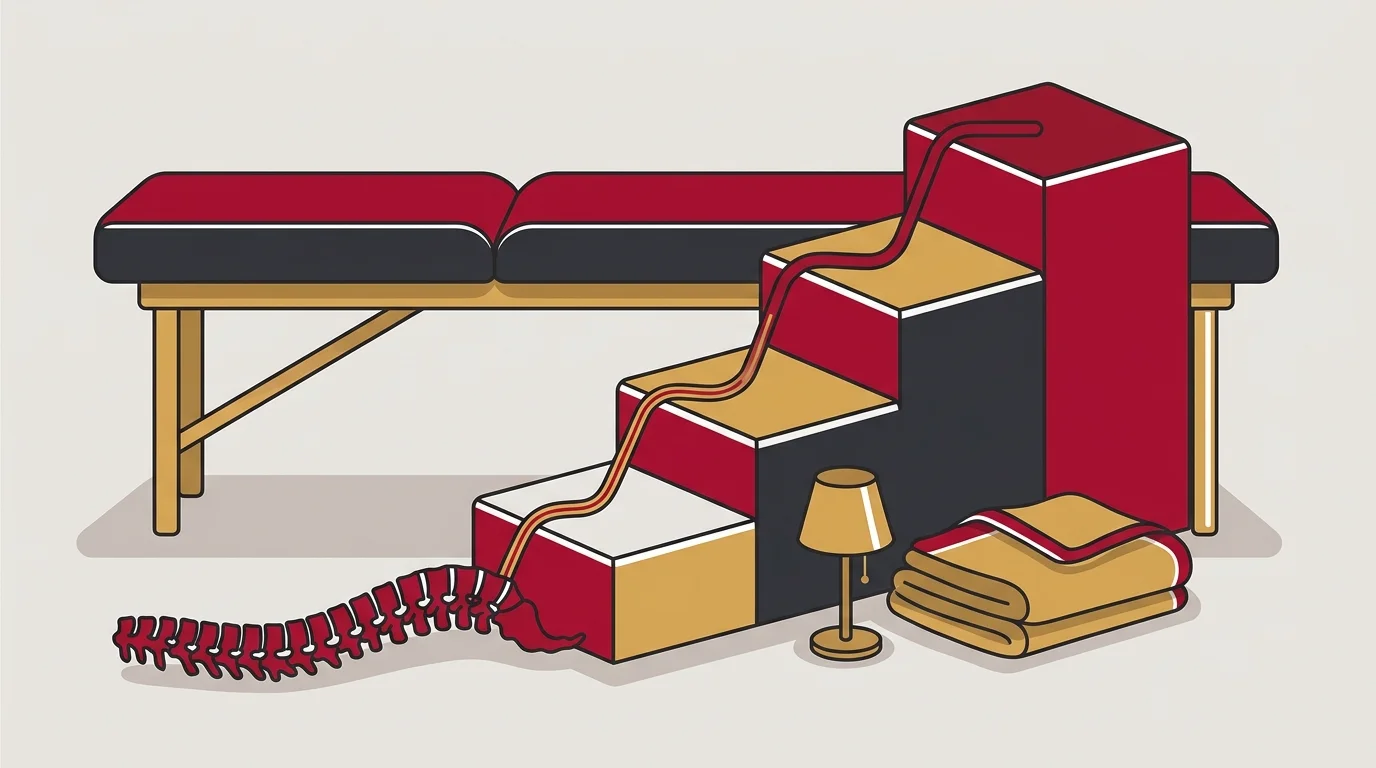
Restorative sleep isn't just feeling rested. It's a neurological process. That process runs your healing, your recovery, and how clearly your brain works.
And that process depends on structured cycling through distinct sleep stages. Hours logged unconscious don't count. When the nervous system stays under load, the cycling breaks down before it ever finishes.
Where the Standard Sleep Conversation Breaks Down
The link between spinal health and neurological function gets missed constantly. But the spine is the primary conduit for the nerve signals that orchestrate sleep.
Most conversations about sleep stop at habits: screen time, caffeine, mattress quality. None of that addresses whether the underlying signaling pathway can even carry the message. For a fuller picture of how that pathway is restored, see our approach to spinal treatment.
Why Sedation-First Sleep Strategies Miss the Cause
Sedation-first strategies treat sleep as a switch to flip off. Many modern sleep aids focus on sedation, which can mask underlying issues without restoring the body's natural ability to regulate its own sleep cycles.
That approach quiets the nervous system chemically instead of correcting what kept it activated in the first place. The signaling interference stays exactly where it was.
How Sedation Masks Signal Instead of Restoring It
Sedation suppresses the alertness a compromised nervous system keeps churning out. It doesn't touch the spinal interference generating that alertness.
So the body still cannot complete its normal cycling through sleep stages. It simply stops registering the disruption while chemically sedated, which is not the same as restored sleep architecture.
What Gets Missed When the Nervous System Stays Unaddressed
Sedation buys quiet, not recovery. The underlying nerve interference keeps the sympathetic system primed even while consciousness is dulled.
Nothing shifts the command line back toward parasympathetic control. The spine still carries the same disrupted signal, night after night, regardless of what's sedating the response to it.
How the Autonomic Nervous System Decides Between Alert and Recovery
Think of the body as a two-way switch, not a dimmer stuck on one setting. The sympathetic branch runs alert and defense. The parasympathetic branch is the body's built-in calm-down command, pulling it out of high-alert stress and into deep recovery.
| System State | Nervous System Branch | What the Body Prioritizes |
|---|---|---|
| High Alert | Sympathetic | Threat response, muscular readiness, and suppressed digestion take priority over rest |
| Transitional | Mixed signaling | The body attempts to downshift, but unresolved nerve interference can stall the shift toward recovery |
| Recovery | Parasympathetic | Digestion, tissue repair, and the structured cycling through sleep stages take priority |
The Vagus Nerve and Cervical Spine Connection
But that calm-down command doesn't fire at random. It routes through the vagus nerve, which exits the brainstem near the upper cervical spine before branching down through the neck and chest.
So when upper cervical vertebrae shift out of position, they sit close enough to that pathway to change the signaling environment around it. Correcting the shift is part of how chiropractic adjustment supports vagal tone, and with it, the body's access to parasympathetic recovery.
What Happens When Chronic Pain Keeps the Body in High Alert
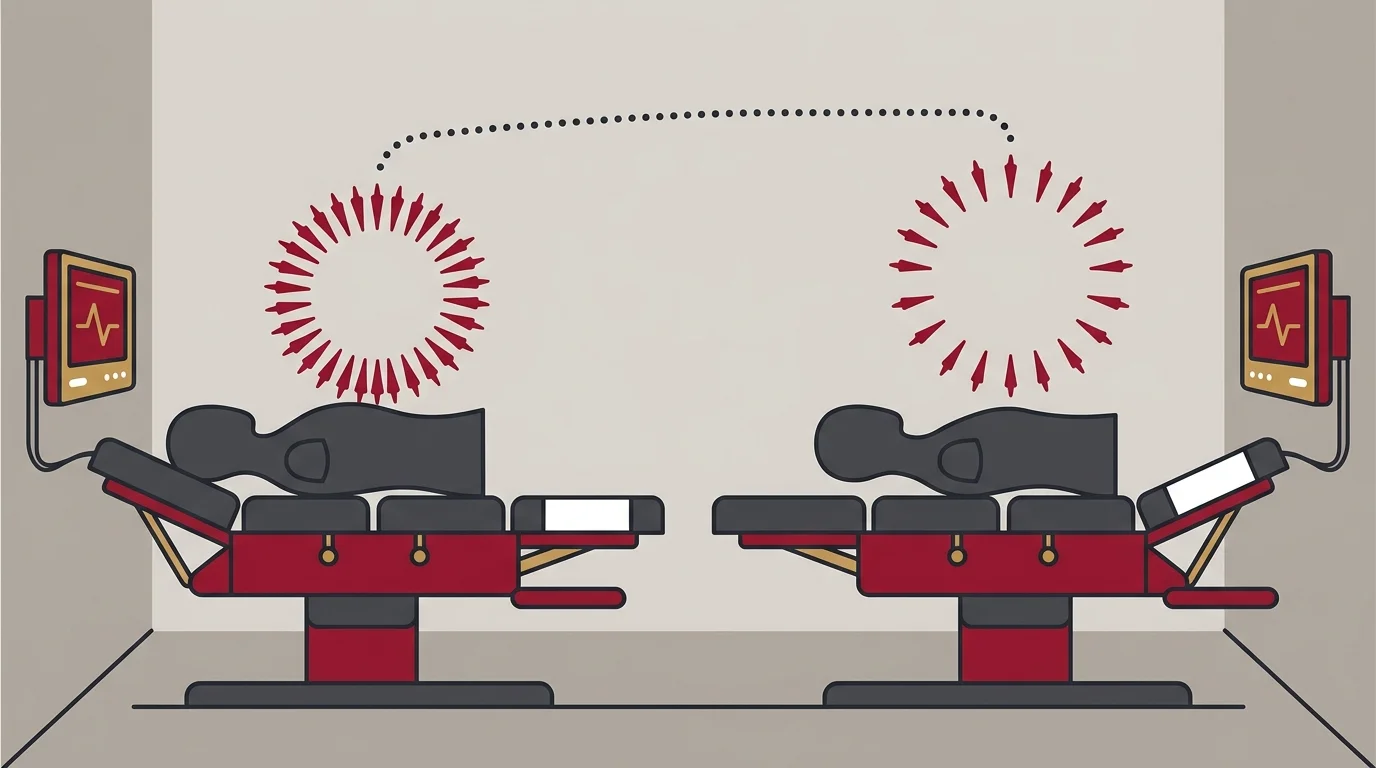
Chronic musculoskeletal pain does not stay confined to the tissue where it originates. It keeps signaling the nervous system that a threat is still present.
| Population Studied | Autonomic Finding | Comparison to Healthy Controls |
|---|---|---|
| People with chronic musculoskeletal pain | Autonomic dysregulation appears at a markedly elevated rate, consistent with a nervous system stuck signaling threat | Occurs far more often than in populations without chronic pain, pointing to sympathetic dominance as a common pattern rather than an isolated case |
| Healthy controls without chronic pain | Autonomic balance shifts fluidly between alert and recovery states without persistent dysregulation | Serves as the baseline against which the chronic pain population's disrupted signaling is measured |
| People with chronic pain and reported sleep disruption | Dysautonomia coincides with fragmented or shallow sleep stages, suggesting the same signaling interference disrupts both systems | Shows a pattern distinct from healthy sleepers, whose autonomic regulation supports normal progression through sleep stages |
The Measurable Cost of a Body Stuck in Sympathetic Dominance
And that signaling pattern shows up in the data, not just in what patients report.
Findings published through PubMed Central show 64% of people with chronic musculoskeletal pain had dysautonomia, more than twice the rate observed in healthy controls.
A rate that high means dysautonomia is the norm wherever chronic pain lingers, not the exception. That matters, because it points to a nervous system problem sitting underneath the pain itself.
What the Research Shows About Chiropractic Care and Sleep Stages
So dysautonomia sits underneath chronic pain. That raises a direct question: what happens to sleep once spinal-level care reaches that same group of people?
| Study Focus | Duration | Documented Change |
|---|---|---|
| Chronic low back pain, chiropractic group | 4 weeks | Significant improvements in light sleep stage |
| Chronic low back pain, patient-reported outcomes | 4 weeks | Significant improvements in light sleep stage |
Sleep Stage Improvements Documented in Chiropractic Care Studies
One study tracked people with chronic low back pain across a 4 week course of chiropractic care. Per The journal Brain Sciences, chiropractic care in people with chronic low back pain produced significant improvements in light sleep stage after 4 weeks of treatment. The finding centered on light sleep, one of the structured stages the body cycles through nightly. A separate account of that same patient group reported the identical pattern after 4 weeks of care. Per The journal Brain Sciences, patients receiving chiropractic care reported significant improvements in light sleep stage after 4 weeks of treatment.
How a Course of Chiropractic Care Is Structured to Support Nervous System Recovery

Evidence of change in sleep stages raises an operational question. How does a course of chiropractic care actually get structured to produce that kind of neurological shift?
The Assessment-to-Adjustment Sequence
Care begins with an assessment of spinal alignment and nervous system function, not a generic protocol applied to every patient. That assessment identifies where interference sits along the spine before any chiropractic adjustment is delivered. Adjustments then target those specific segments, aiming to restore clearer signaling rather than treat symptoms in isolation.
Tracking Change Over a Defined Course of Care
A single adjustment rarely resolves interference that built up over time. So care is delivered across a defined course, with progress tracked as the nervous system responds. That tracking looks at function and signaling, not some catch-all protocol applied without regard for how a particular spine is responding.
Frequently Asked Questions
A few mechanical questions come up once the spine-to-nervous-system connection is clear. Here are the direct answers.
How does a spinal adjustment specifically influence the 'rest and digest' nervous system?
The upper cervical spine sits right where the vagus nerve leaves the brainstem. Correct the shifts there, and you support vagal tone. That's the signal that tells the parasympathetic branch to switch on.
Can chiropractic care help if my sleep problem is caused by anxiety and not pain?
Yes. Anxiety keeps the sympathetic system fired up the same way chronic pain does. And that activation runs through the same spinal pathway chiropractic adjustment addresses.
What is 'sleep architecture' and how can you tell if it's improving?
Sleep architecture is the structured pattern of light, deep, and REM stages the body cycles through every night. Improvement shows up as fuller progression through those stages. It's not about more hours logged unconscious.
Are there specific types of chiropractic adjustments that are better for sleep restoration?
Care is not some catch-all protocol applied the same way to every spine. Adjustments target whichever segments an assessment identifies as carrying interference, which is often concentrated around the upper cervical region for sleep-related cases.
How long does it typically take to notice improvements in sleep quality after starting chiropractic care?
Published findings tracked measurable change in light sleep stage after a 4 week course of chiropractic care. Individual timelines still depend on where interference sits and how long it has been building.
What role does heart rate variability play in measuring nervous system recovery?
Heart rate variability reflects how freely the nervous system shifts between sympathetic and parasympathetic control. Higher variability generally signals a system that can access recovery, rather than one locked on high alert.
What This Means for Spinal Health and Sleep Restoration
The spine is the body's command line for the nervous system. Correct the neuro-structural shifts along that line, and you remove interference itself, not just the symptoms it throws off.
Clear that command line, and the autonomic nervous system can finally do what it was built to do. It drops out of sympathetic dominance, powers down into parasympathetic recovery, and rebuilds the structured sleep architecture that recovery runs on.
That switch is exactly what chiropractic care is built to reach. If your disrupted sleep keeps tracing back to a nervous system stuck on high alert, the next step is finding where that interference sits along your spine, and scheduling an evaluation is how that starts.