
Upper cervical chiropractic adjustments calm the locus coeruleus by correcting structural misalignment at the top of the spine. That correction reduces mechanical interference near the brainstem and lowers the nerve signaling that keeps this arousal center overactive at night. The locus coeruleus is the brain's primary alarm system. It generates the noradrenaline output responsible for wakefulness and vigilance. When it fails to power down properly, that persistent signaling produces nighttime arousal, disrupted sleep onset, and shallow, easily interrupted sleep cycles. The upper cervical spine, particularly the atlas vertebra, sits in close anatomical proximity to the brainstem structures that house the locus coeruleus. Misalignment in this region can alter the sensory information transmitted by mechanoreceptors located in the surrounding discs and facet joints, including Ruffini corpuscles, Pacinian corpuscles, and Golgi tendon organs. These receptors relay proprioceptive data that helps regulate autonomic nervous system balance, including the sympathetic activity linked to hyper-arousal. Vagus nerve tone also plays a role in this regulation, since parasympathetic input helps moderate the firing rate of norepinephrine-producing neurons in the locus coeruleus. A precise upper cervical adjustment targets this specific structural relationship rather than addressing general spinal alignment. By restoring proper joint mechanics and reducing aberrant sensory signaling at this level, the nervous system receives more accurate information about head and body position. This improved communication supports a shift away from sympathetic dominance and toward the parasympathetic state necessary for deep, restorative sleep. The result is a calmer neurological environment overnight, allowing the brain's arousal center to reduce its activity and permit uninterrupted sleep architecture rather than remaining locked in a heightened, wakeful pattern.
What the Locus Coeruleus Actually Does While You Sleep
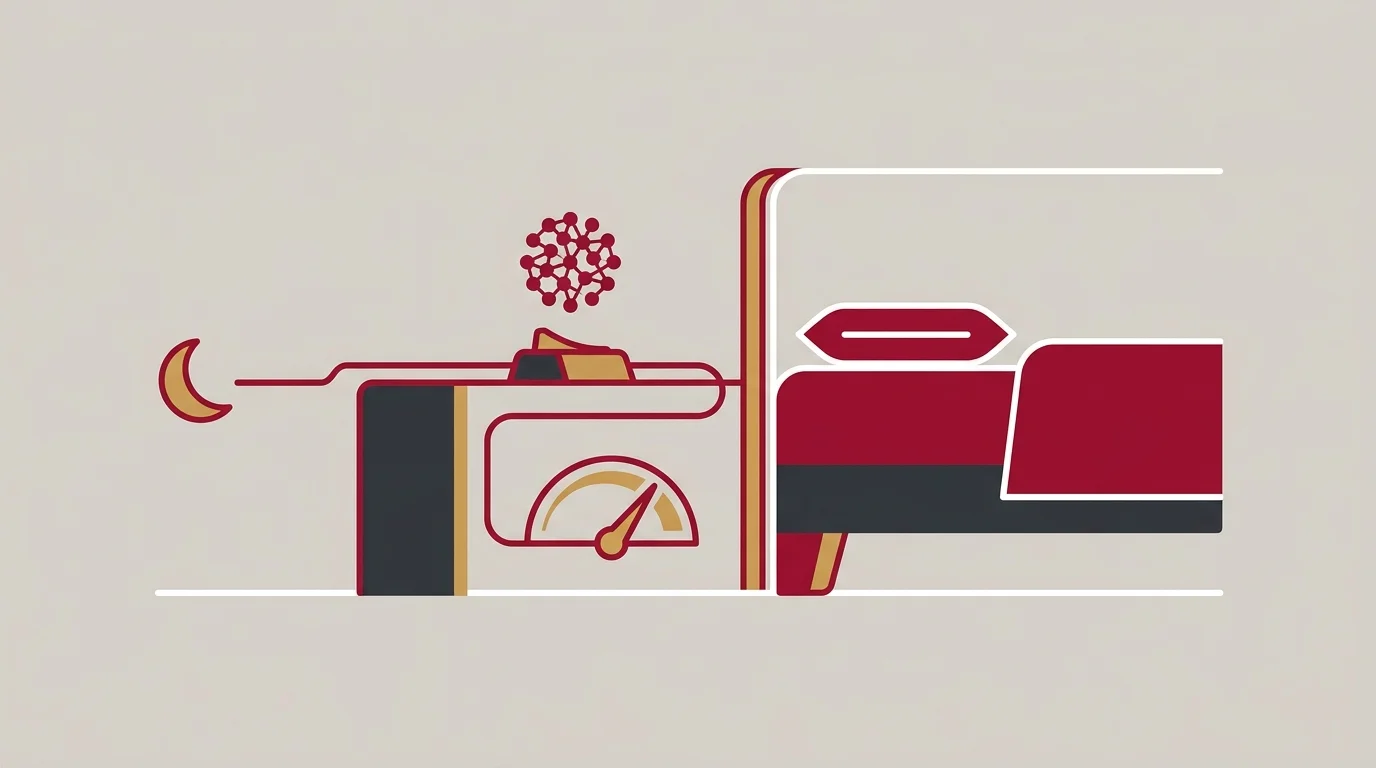
So what does this alarm system actually do at night? The locus coeruleus keeps firing during non-REM sleep, just at a lower rate than full wakefulness. This baseline hum is normal. The problem starts when that hum never quiets down.
PubMed Central reports the locus coeruleus maintains elevated unit activity during non-REM sleep compared to REM sleep, though lower than during wakefulness — one expert assessment rather than a study finding. That matters because it tells you the locus coeruleus is meant to ease off, not switch off entirely. So when it stays cranked up past that baseline, the brain treats a quiet bedroom like a threat worth watching.
An alarm that never powers down holds the body in readiness instead of recovery. That readiness shuts the door on the deep sleep cycles the brain needs to repair itself. For a fuller picture of what recovery should actually look like, see why sleep problems trace to nervous system overdrive.
Why the Alarm System Won't Power Down
So why doesn't the alarm system just quiet down on its own? Structural interference near the brainstem keeps feeding it signals it shouldn't be getting. The locus coeruleus can't tell the difference between a real threat and a misaligned atlas vertebra pressing on the wrong sensory pathway.
That sustained hyper-arousal doesn't stay contained to sleep quality. It ripples outward into cardiovascular strain over time. As The American Journal of Physiology reports, sleep disorders and insufficiencies are accompanied by heightened sympathetic nervous system activity and dysfunction, which are known contributors to increased cardiovascular disease risk. That's the cost of an alarm system stuck in the on position night after night.
Why Masking Nighttime Arousal With Sedation Fails
Now, about sedation. It doesn't power the alarm system down. It only turns down the volume on the reader's awareness of it.
Underneath the sedative, the locus coeruleus keeps firing at that same elevated rate. Nothing about the structural signaling driving the arousal has actually changed. So much of conventional sleep care masks the symptom this way, instead of touching the root cause of the neurological hyper-arousal.
That's a mask, not a resolution. A precise upper cervical Chiropractic adjustment works the other way, correcting the structural signaling instead of sedating the response to it. For evening habits that support that calmer neurological state, see Maximize Parasympathetic Sleep in 2026.
The Structural Link Between the Upper Neck and the Brainstem
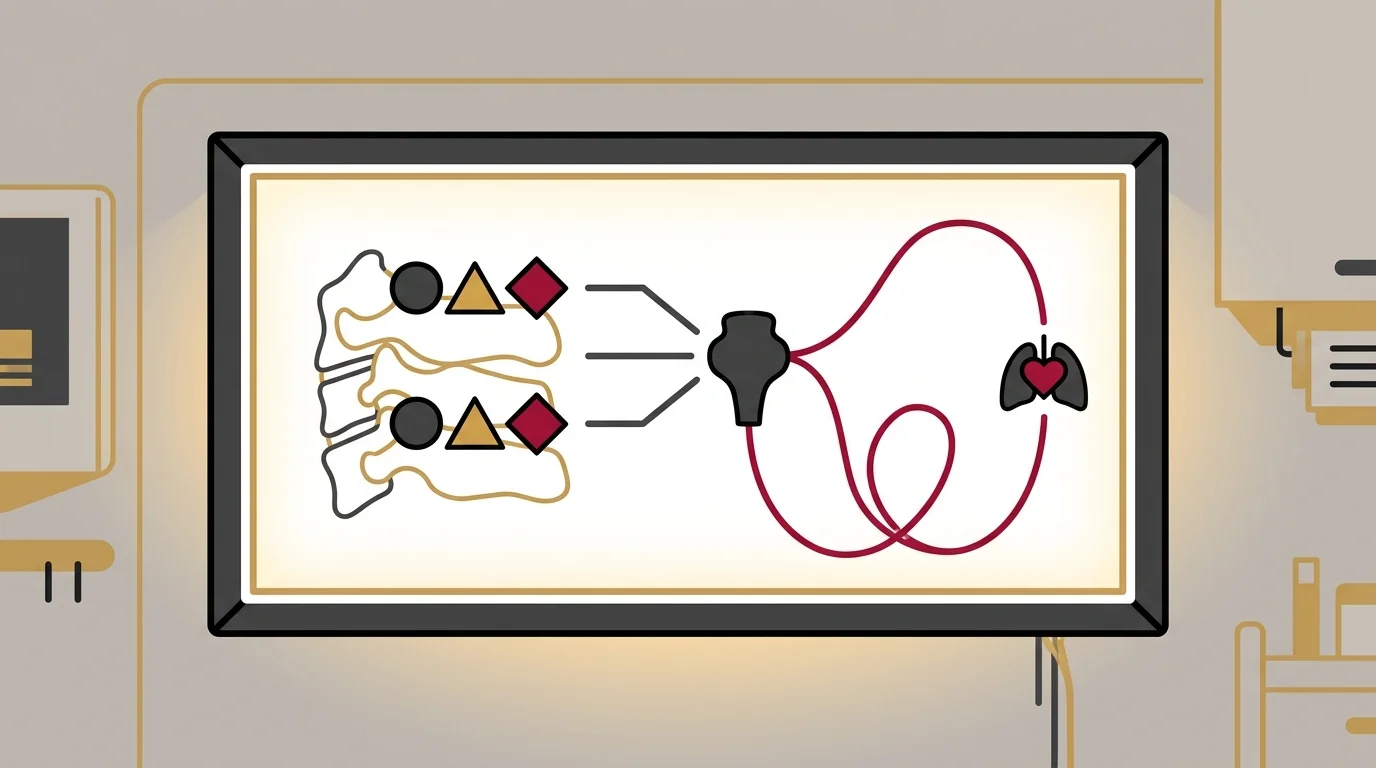
So why does the upper neck matter more than any other part of the spine? Because of pure proximity. The atlas vertebra sits closer to the brainstem than any other joint in the body, which means misalignment here has a direct line to the structures housing the locus coeruleus.
That's not a general spinal issue. It's a location problem, and it explains why a precise upper cervical Chiropractic adjustment targets this junction specifically rather than treating the spine as one uniform column.
| Receptor Type | Location | Signal Sent to Central Nervous System |
|---|---|---|
| Ruffini Corpuscles | Cervical facet joints | Sustained pressure and joint position, feeding steady postural data to the central nervous system |
| Pacinian Corpuscles | Cervical discs and facet joints | Rapid changes in joint movement, alerting the central nervous system to sudden shifts in head orientation |
| Golgi Tendon Organs | Cervical connective tissue near facet joints | Tension changes in surrounding tissue, helping regulate full-body posture through the central nervous system |
How Cervical Mechanoreceptors Talk to the Brainstem
Here's something most people never think about: the neck is packed with sensory receptors. Ruffini corpuscles, Pacinian corpuscles, and Golgi tendon organs live in the cervical discs and facet joints, feeding position data to the central nervous system without a pause.
That data controls head position, head orientation, and full-body posture. When the joint mechanics at the top of the spine shift out of place, those receptors send distorted signals instead of accurate ones. As The journal Pain and Therapy reports, mechanoreceptors including Ruffini corpuscles, Pacinian corpuscles, and Golgi tendon organs in cervical discs and facet joints transmit proprioceptive information to the central nervous system to control head position, head orientation, and full-body posture. That's why restoring proper mechanics at this specific junction matters so much for accurate signaling.
The Vagus Nerve Pathway to the Locus Coeruleus
So how does calmer signaling in the neck reach a calmer alarm system in the brain? Through vagal tone. Parasympathetic input traveling along the vagus nerve helps moderate how fast the norepinephrine-producing neurons in the locus coeruleus fire.
Published academic reference reports acute vagus nerve stimulation increased the firing rate of norepinephrine neurons in the locus coeruleus in preclinical studies — a finding from animal research. That's animal research, not a settled finding in people, and it should be read that way. Still, it points toward the same mechanism this practice targets: calming the pathway that keeps the alarm system firing. Fails Without Spinal Mechanoreceptor Reset walks through what happens when that reset never occurs.
What Happens When Upper Cervical Alignment Breaks Down
So what happens when that upper cervical junction stays misaligned instead of getting corrected? The alarm system doesn't just idle at its normal nighttime hum. It stays locked at an elevated firing rate, and the body pays for that in ways that show up long before someone notices they're sleeping poorly.
The body doesn't wait for a diagnosis to start reacting. Sympathetic dominance shows up gradually, in small physical signals most people write off as stress or aging. Recognizing those signals early matters, because they trace back to the same structural interference driving the arousal in the first place.
Reading the Signs of Sympathetic Dominance
So what does sympathetic dominance actually feel like? Racing thoughts at bedtime, a resting heart rate that never quite settles, and waking up tired even after a full night in bed are common markers. None of that is random.
That's the nervous system stuck in a readiness posture instead of a recovery one. For a deeper look at what's driving that posture, see in-office chiropractic treatment options. The pattern rarely resolves on its own because the structural signaling behind it hasn't changed.
How an Upper Cervical Adjustment Is Actually Performed
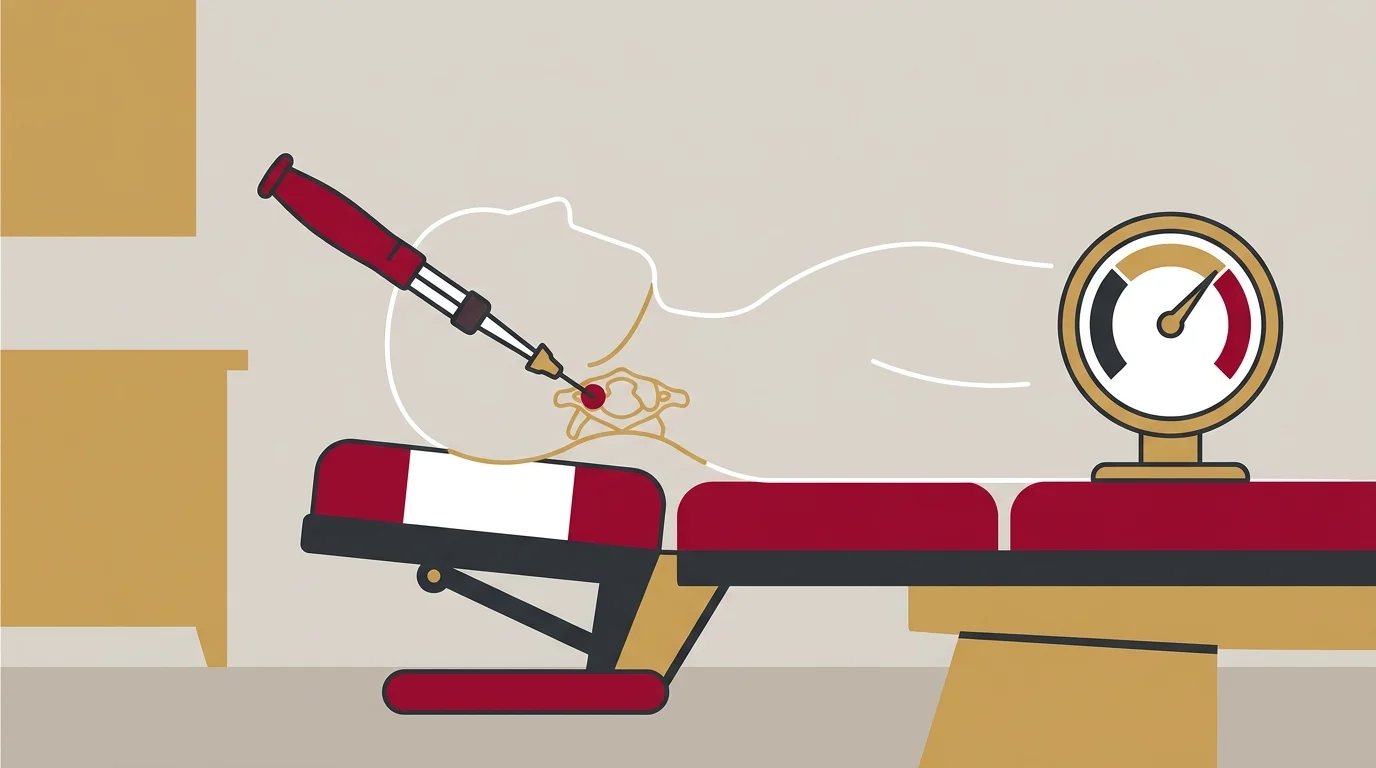
So what does the correction actually look like? Nothing about it resembles a general spinal adjustment. Upper cervical chiropractic care is a precise, neurologically-focused discipline built to restore clean communication between the brainstem and the body.
That precision starts with locating the exact position of the atlas vertebra relative to the skull and the rest of the spine. A low-force, specific correction follows, applied to that single junction rather than the neck as a whole. Nothing about this is a generalized crack-and-go approach to the spine.
| Stage of Care | Focus | What Is Assessed |
|---|---|---|
| Initial Assessment | Locating the precise position of the atlas vertebra relative to the skull and spine | Postural alignment, head position, and structural indicators of nervous system interference near the brainstem |
| Structural Analysis | Identifying the specific direction and degree of misalignment at the upper cervical junction | Joint mechanics in the surrounding discs and facet joints, plus any signs of distorted mechanoreceptor signaling |
| Correction | Applying a low-force, specific adjustment to the atlas rather than treating the spine as a uniform column | Precision of contact and the immediate response of the surrounding neurological structures |
| Post-Adjustment Monitoring | Confirming a shift in autonomic balance following the correction | Changes in sleep onset patterns, nighttime waking, and overall autonomic nervous system balance |
| Ongoing Care | Reinforcing accurate signaling at the upper cervical junction over successive visits | Consistency of joint mechanics and sustained parasympathetic tone rather than a single isolated response |
Measuring the Shift From Alarm to Rest
So how does anyone know the alarm system actually calmed down? The markers that matter are the measurable ones, not how someone happens to feel right after a visit.
What confirms the shift from readiness to recovery is the data: changes in autonomic balance, faster sleep onset, fewer nighttime wakings. That's the difference between muting an alarm and actually quieting it.
Frequently Asked Questions
So a few questions keep surfacing once the mechanism clicks into place. Here are the straight answers.
What is the locus coeruleus and what does it do for sleep?
It's the brain's alarm system, tucked in the brainstem. It's built to quiet down at night, not stay locked at an elevated firing rate.
How can a neck adjustment possibly affect the brain's arousal center?
Because the atlas vertebra sits directly on top of the brainstem. Correcting its position changes the sensory signals feeding into that alarm system, not just the joint itself.
Is an upper cervical adjustment the same as a general chiropractic adjustment?
No. A general adjustment addresses the whole spine, while a precise upper cervical Chiropractic adjustment targets one junction near the brainstem specifically. That precision is the entire point.
How many adjustments does it typically take to notice a change in sleep quality?
That depends on how long the structural interference has been there and how the nervous system responds. The real story shows up in objective markers like sleep onset and nighttime waking patterns, not how someone feels after a single visit.
What risks are associated with targeting the upper cervical spine?
A precise upper cervical Chiropractic adjustment uses a low-force, specific correction rather than a general spinal thrust. This isn't a crack-and-go approach applied to a sensitive area.
What does sympathetic dominance feel like and how does it relate to poor sleep?
Racing thoughts at bedtime, a resting heart rate that won't settle, and waking up tired despite a full night in bed. That's the nervous system stuck in readiness instead of recovery.
Where the Evidence Points
So where does the evidence actually point? Chronic nighttime arousal gets treated like a purely psychological problem, when it frequently has a deep neurological and structural foundation instead. That one distinction changes everything about how it should be addressed.
Sedatives mute the alarm. They never quiet it. Correcting the structural signaling at the atlas junction is what actually calms the locus coeruleus, restoring the brainstem communication that lets the body drop into recovery instead of staying braced for a threat that isn't there.
That's the whole point of a precise upper cervical Chiropractic adjustment: quiet the alarm at its source, not just turn down the volume. If nighttime arousal has been running the show, schedule an evaluation at Touch of Wellness Chiropractic to find out what's actually driving it.