
Chiropractic care restores slow-wave sleep by correcting spinal misalignments that keep the autonomic nervous system locked in a heightened, sympathetic state. Think of that nervous system as the body's electrical wiring. Slow-wave sleep is the deepest stage of the cycle, when the body handles the bulk of its physical repair, locks in memory, and flushes metabolic waste from the brain. Reaching it requires the nervous system to shift fully into parasympathetic, rest-and-recover mode. Misalignments in the spine, especially in the upper cervical region, can scramble the neurological signaling that drives that shift. When the spine is out of alignment, the nervous system can throw off persistent, low-level stress signals, static on the line, and that static blocks the deep relaxation needed to reach and hold slow-wave sleep. A chiropractic adjustment targets these misalignments directly, working to quiet the interference and restore clearer communication along the spinal column. That process links to measurable increases in heart rate variability, a recognized readout of how well the nervous system can move between alert and restorative states. As heart rate variability rises, the body shows a greater ability to leave fight-or-flight patterns behind and settle into the parasympathetic dominance deep rest demands. Better autonomic balance after spinal correction has also been tied to changes in brainwave activity during sleep, including shifts that reflect a more restful, less fragmented sleep architecture. Rather than masking the symptoms of poor sleep, this approach addresses an underlying neurological mechanism that governs whether the body can reach and sustain its deepest recovery cycles. The result is a physiological pathway to slow-wave sleep restoration, distinct from interventions that manage sleep symptoms without touching the nervous system function that produces them.
What Actually Happens To Your Body During Slow-Wave Sleep
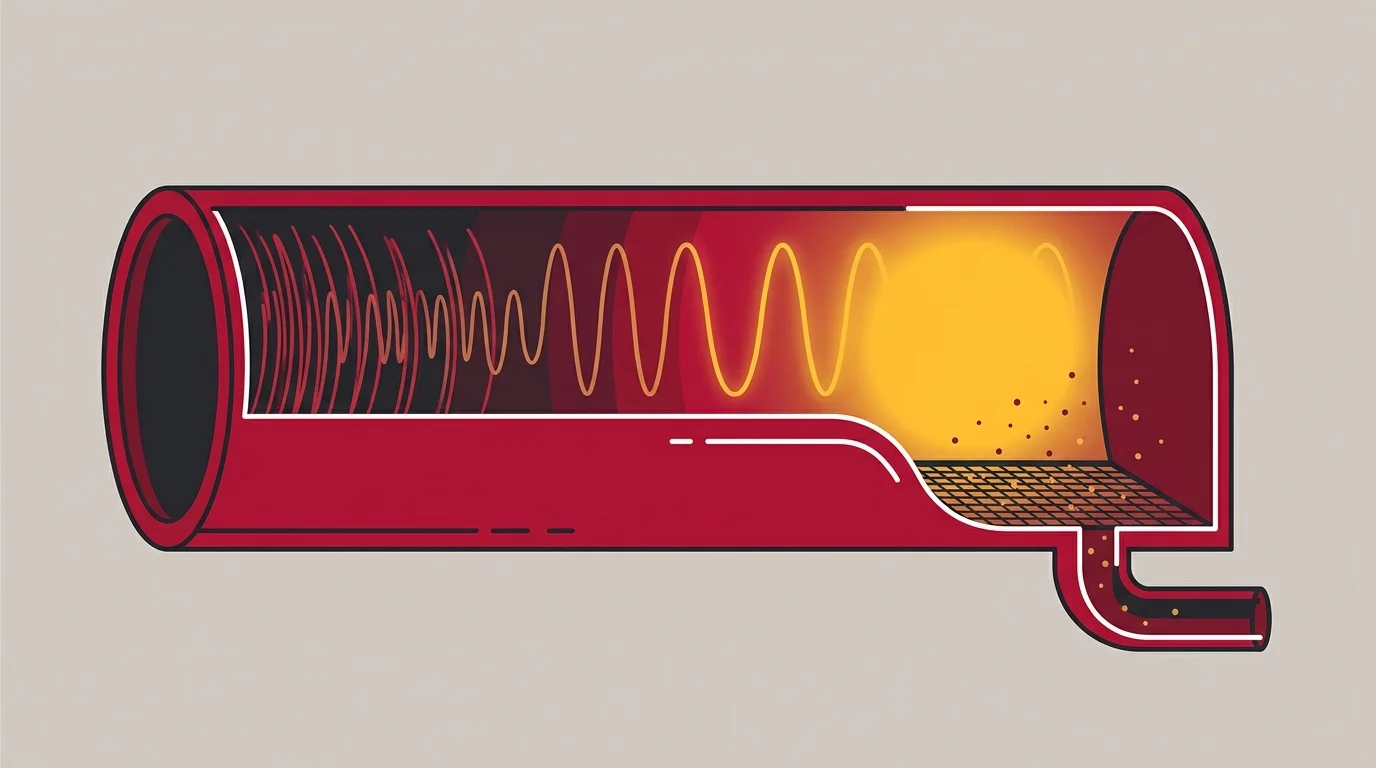
Slow-wave sleep is the deepest stage of the sleep cycle, and it is where the body does its heaviest lifting. This is when physical tissue repair peaks, memory consolidation occurs, and the brain clears its own metabolic waste.
That waste-clearing function depends on the brain reaching genuinely slow brain activity, not just unconsciousness. why sleep repair starts with the nervous system explores this mechanism in more depth.
Findings published through published trade reporting show anesthetics that do not induce slow brain activity result in diminished glymphatic system activity — a finding from animal research.
That finding was observed in anesthetized mice without slow brain activity, not in a clinical human trial. Still, it points to the same principle at the center of this article: sleep quality is not just about the appearance of rest. It depends on whether the nervous system actually reaches the deep state where recovery happens.
Why the Bedroom-Only Approach to Sleep Keeps Falling Short
So once you know what slow-wave sleep actually does, the real question surfaces: why does it stay out of reach for so many people? Most sleep advice points outward. A firmer mattress, a darker room, a cooler thermostat.
Those factors matter, but they treat sleep as a bedroom problem. Sleep is not produced by the environment around the body. It is produced by the nervous system inside it.
The Problem With Treating Sleep as a Separate System From the Spine
Here's where the outward focus falls short. Pillows and mattresses get all the attention, while the internal system that actually runs the sleep cycle goes ignored: the nervous system. The spine is the central conduit for that system, and structural misalignments throw off persistent, low-level static that scrambles the signals deep rest depends on.
No pillow adjustment quiets that static. The interference sits upstream of the bedroom entirely, inside the spinal column itself.
How a Locked Nervous System Blocks the Signal for Rest
Picture the nervous system as the body's electrical wiring. Static on the line, thrown off by spinal misalignment, can keep the 'lights out' signal from ever reaching the brain — no matter how quiet the bedroom gets.
Heart rate variability reads that wiring like a clean-signal gauge. Rate Variability and Sleep Restoration traces exactly how the readout shifts once the static clears.
What Heart Rate Variability Reveals About a Calming Nervous System
Heart rate variability is the clearest window available into whether the static has actually cleared. It measures the tiny variations between heartbeats, and higher variability signals a nervous system that can move freely between alert and restorative states.
Research on upper cervical spinal correction gives that readout a shape you can point to. In healthy volunteers, the standard deviation of normal-to-normal heartbeat intervals rose to 105.41 from 83.54, and the normalized high-frequency marker of parasympathetic activity climbed to 46.08 from 40.18. As PubMed Central reports, upper cervical spinal manipulation was associated with increased heart rate variability, with the standard deviation of average normal to normal R-R intervals increasing to 105.41 ± 20 from 83.54 ± 22, and normalized high frequency units indicating parasympathetic activity increasing to 46.08 ± 14 from 40.18 ± 9 in healthy volunteers. Those shifts describe a nervous system stepping out of alert mode and into recovery.
| Measurement | Before Adjustment | After Adjustment | What It Indicates |
|---|---|---|---|
| SDNN (heartbeat interval variability) | 83.54 ± 22 | 105.41 ± 20 | Greater capacity to shift out of fight-or-flight and into restorative rest |
| Normalized high-frequency units (parasympathetic marker) | 40.18 ± 9 | 46.08 ± 14 | Rising parasympathetic dominance needed for slow-wave sleep |
| EEG Delta power (deep sleep brainwave marker) | Elevated | Decreased | A shift away from the specific slow-wave signature disrupted by nervous system static |
| EEG Theta, Alpha and Beta power | Lower | Increased | Calmer, more organized brain activity consistent with reduced nervous system interference |
How Chiropractic Adjustment Data Lines Up With Sleep-Stage Measurements
Heart rate data is not the only signal that moves. Brainwave activity recorded during sleep studies tells a parallel story.
In one chiropractic intervention group studied for chronic low back pain, resting EEG spectral analysis showed Theta, Alpha, and Beta power increase while Delta power decreased. As The journal Brain Sciences reports, spectral analysis of resting EEG in the chiropractic group showed a significant increase in Theta, Alpha and Beta power, and a significant decrease in Delta power after intervention. That pattern lines up with the same shift toward calmer, more organized brain activity that Sleep Fragmentation examines from the opposite direction — what happens when the static never clears.
How the Spine Architecture Connects to the Brain's Sleep Command Center
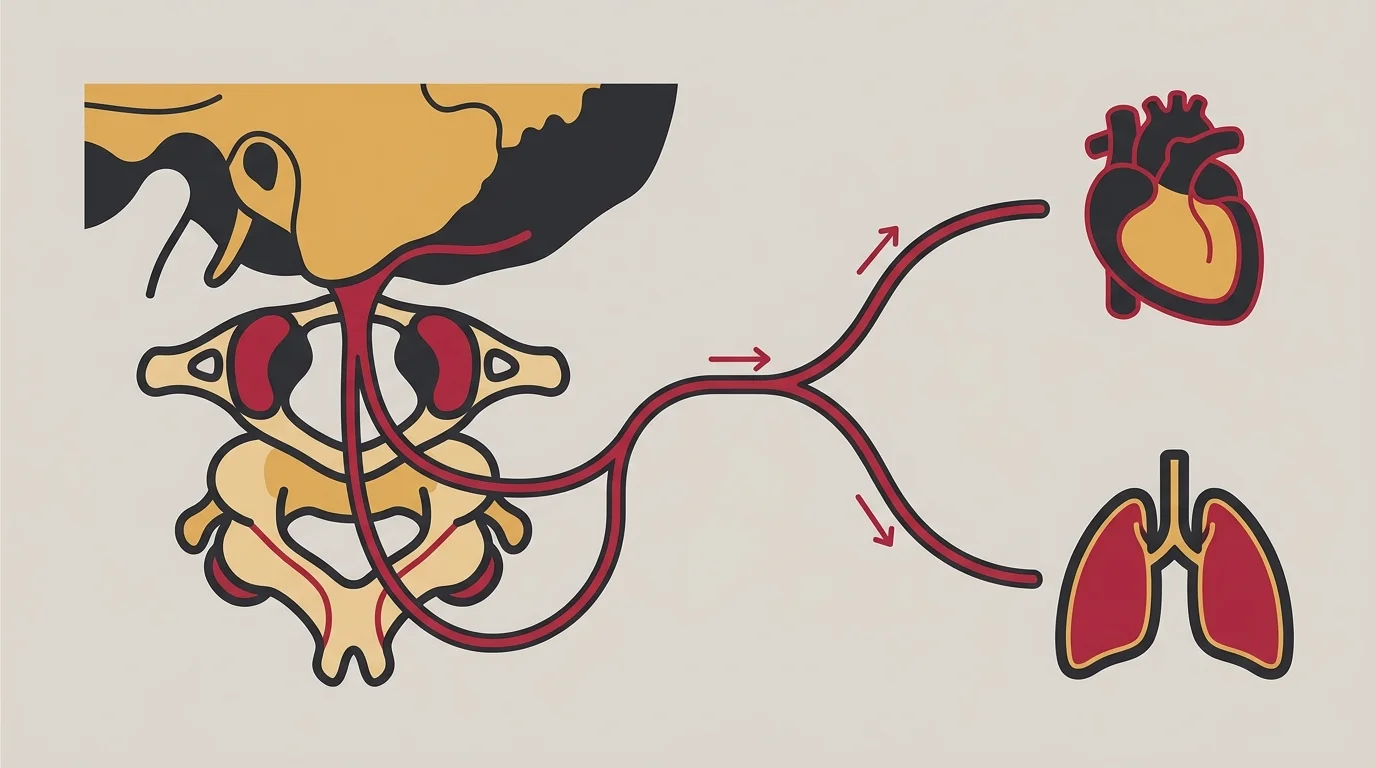
That brainwave shift begs a structural question. Why does correction at the spine, and not anywhere else in the body, move brainwave activity and heart rate variability together?
| Spinal Region | Primary Nervous System Role | Connection to Sleep Regulation |
|---|---|---|
| Upper Cervical Spine | Sits nearest the brainstem, functioning as the relay point for core autonomic regulation. | Governs the sympathetic-to-parasympathetic shift required to enter slow-wave sleep. |
| Mid Thoracic Spine | Connects to nerve pathways influencing heart and lung function. | Supports steady breathing and heart rhythm patterns that sustain uninterrupted sleep cycles. |
| Lower Lumbar Spine | Feeds nerve signaling tied to muscular tension and physical comfort. | Reduces low-level discomfort that can fragment sleep before deep stages are reached. |
The Upper Cervical Region as the Nervous System's Relay Point
The upper cervical spine sits closest to the brainstem, where core autonomic regulation begins. Misalignment there carries outsized weight. This segment acts as the relay point for the signals that govern heart rate, breathing, and the sympathetic-to-parasympathetic shift sleep depends on.
Static introduced at that relay point travels outward to every system it feeds. For a broader view of how correction at this level supports nervous system function, a closer look at how these adjustments work traces the mechanism further.
What Assessing Spinal Function for Sleep Actually Involves
Assessing spinal function for sleep starts by finding where the static originates. That means looking at spinal alignment, especially the upper cervical level, alongside how the nervous system is responding under load right now.
Reading the Signs That Sleep Disruption Traces Back to the Spine
Sleep disruption often shows up as one signal among several, not an isolated complaint. Findings published through Chiropractic & Manual Therapies show sleep disturbance improvement mediated 17% of the total effect of chiropractic care on outcomes in active-duty military personnel with low back pain at 52 weeks. That mediated effect places sleep alongside fatigue and pain as part of one interconnected recovery pattern, not a separate issue treated on its own.
What a Sleep-Focused Chiropractic Visit Actually Looks Like
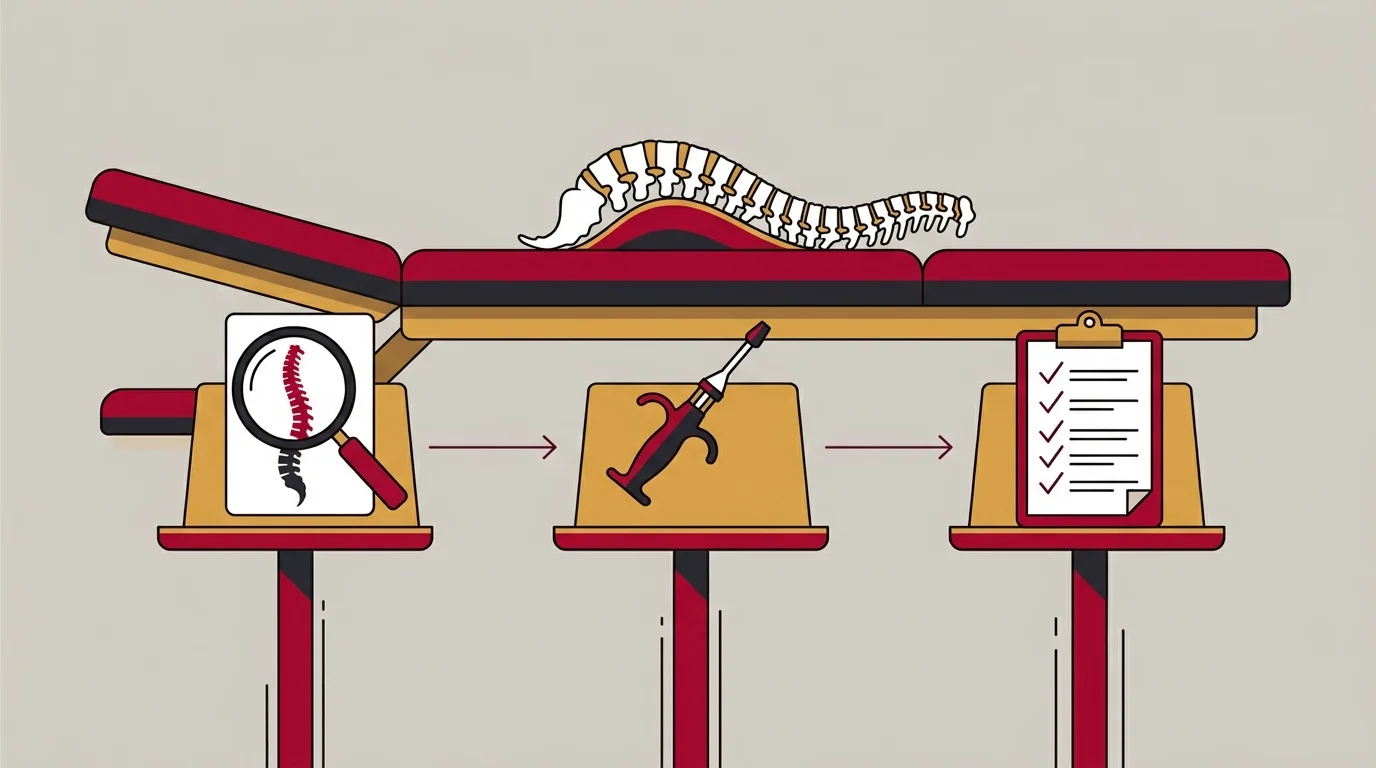
A sleep-focused visit does not begin with a mattress questionnaire. It begins with locating where the static originates along the spine, then addressing it directly.
| Visit Stage | What Happens | What Gets Measured |
|---|---|---|
| Assessment | Spinal alignment is checked with particular attention to the upper cervical region, alongside how the nervous system is currently responding under load. | Where static originates along the spinal column, and how the body is presently balanced between alert and recovery states. |
| Chiropractic Adjustment | A chiropractic adjustment is applied to the specific segments identified as producing interference, rather than a catch-all protocol run the same way for every visit. | Which segments received correction, and how the adjustment was targeted to the interference found in assessment. |
| Recheck | Alignment is reassessed to confirm whether the signal has actually cleared, instead of assuming improvement based on how the patient slept that night. | Whether the nervous system response has shifted since the adjustment was made. |
| Outcome Tracking | Fatigue, pain, and sleep quality are tracked across multiple visits as connected markers, since a single night rarely tells the full story. | Patterns across visits, not a single session, showing whether the wiring is settling over time. |
The Sequence From Assessment to Adjustment to Recheck
Assessment comes first. It checks alignment and how the nervous system is responding under load right now. Then a chiropractic adjustment follows, aimed at the segments throwing off the interference, and a recheck confirms whether the signal actually cleared instead of assuming it from how quiet one night felt.
How Outcomes Get Tracked Across Multiple Visits
Outcomes get tracked across visits, not judged from a single night. Fatigue, pain, and sleep quality tend to move together as connected markers, echoing the interconnected recovery pattern already described. A single visit rarely tells the full story of whether the wiring has settled.
Frequently Asked Questions
Once the mechanism is clear, specific questions tend to follow. Here are the ones that come up most.
How many chiropractic sessions does it take to see an improvement in sleep?
Most people notice a shift within a handful of visits, though the timeline depends on how long the static has been present. Nervous system regulation happens gradually, not on a single night.
Can chiropractic adjustments make my sleep worse at first?
Some people report lighter, more restless sleep for a night or two as the nervous system recalibrates. This is typically short-lived and tends to settle as the signal stabilizes.
Is spinal care only relevant if sleep problems come with back pain?
No. Pain is one signal the nervous system sends, not the only one. Static at the spinal level can scramble sleep architecture with no pain in the picture at all.
What's the difference between a sleep aid and correcting spinal function for sleep?
A sleep aid works on the symptom, sedating the brain toward unconsciousness without addressing what disrupted the signal in the first place. Correcting spinal function targets the interference itself, aiming at the mechanism that governs whether deep rest is reachable at all.
Does sleeping position affect how long a spinal adjustment holds?
Sleeping position shapes comfort more than it shapes the underlying nervous system signal. A chiropractic adjustment answers the source of interference at the spine. That holds no matter which side someone favors overnight.
Are certain types of chiropractic adjustments better for improving slow-wave sleep?
Upper cervical correction carries particular weight, sitting so close to the brainstem's autonomic control center. But this is not some catch-all protocol. The segments addressed depend on where each individual's static actually starts.
Where This Leaves You
The static was never in the bedroom. It was in the wiring itself, and no amount of quiet ever silences a signal problem at its source.
A calmer nervous system beats a masked one, every time. Sleep aids and better pillows manage the symptoms, but they can't touch the interference sitting upstream in the spinal column. Correcting the misalignment answers the mechanism of rest, not the appearance of it.
That distinction is the whole case for spinal care as a sleep intervention, not a sleep aid. If the static has been running the show for longer than anyone realized, the next step is finding out where it starts. talk it through with us.