
Your evening wind-down routine fails without a spinal mechanoreceptor reset because relaxing the mind does not relax the body along with it. Mechanoreceptors are sensory nerves in and around the spine, and they report tension, posture, and position back to the brain without pause. When the spine holds restricted or stressed segments, these receptors keep firing signals that look like physical alert activity, even in the middle of a calm bedtime routine. So the nervous system runs two separate conversations at once heading into sleep: a mental one, where thoughts slow down, and a physical one, where mechanoreceptors report ongoing tension. Meditation, herbal tea, and blue-light-blocking glasses answer only the mental conversation. They do nothing to quiet the physical signals still arriving from a spine under mechanical stress. That is why a person can feel mentally settled and still lie awake, restless, unable to drop into deep sleep. The autonomic nervous system governs this handoff, moving the body between an alert state and a rested state based on the combined signals from both channels. A true state of rest asks both conversations to fall quiet at the same time. Without a mechanoreceptor reset, the physical channel stays active and keeps the nervous system partly alert, no matter how well the mental techniques are done. Resetting spinal mechanoreceptors lowers the volume of physical stress signaling reaching the brain, which lets the nervous system shift more completely toward the parasympathetic state tied to restorative sleep. This physiological requirement is why standard relaxation advice, however carefully followed, often comes up short for people whose nighttime restlessness starts in ongoing spinal tension rather than racing thoughts alone.
Why Your Wind-Down Routine Keeps Failing
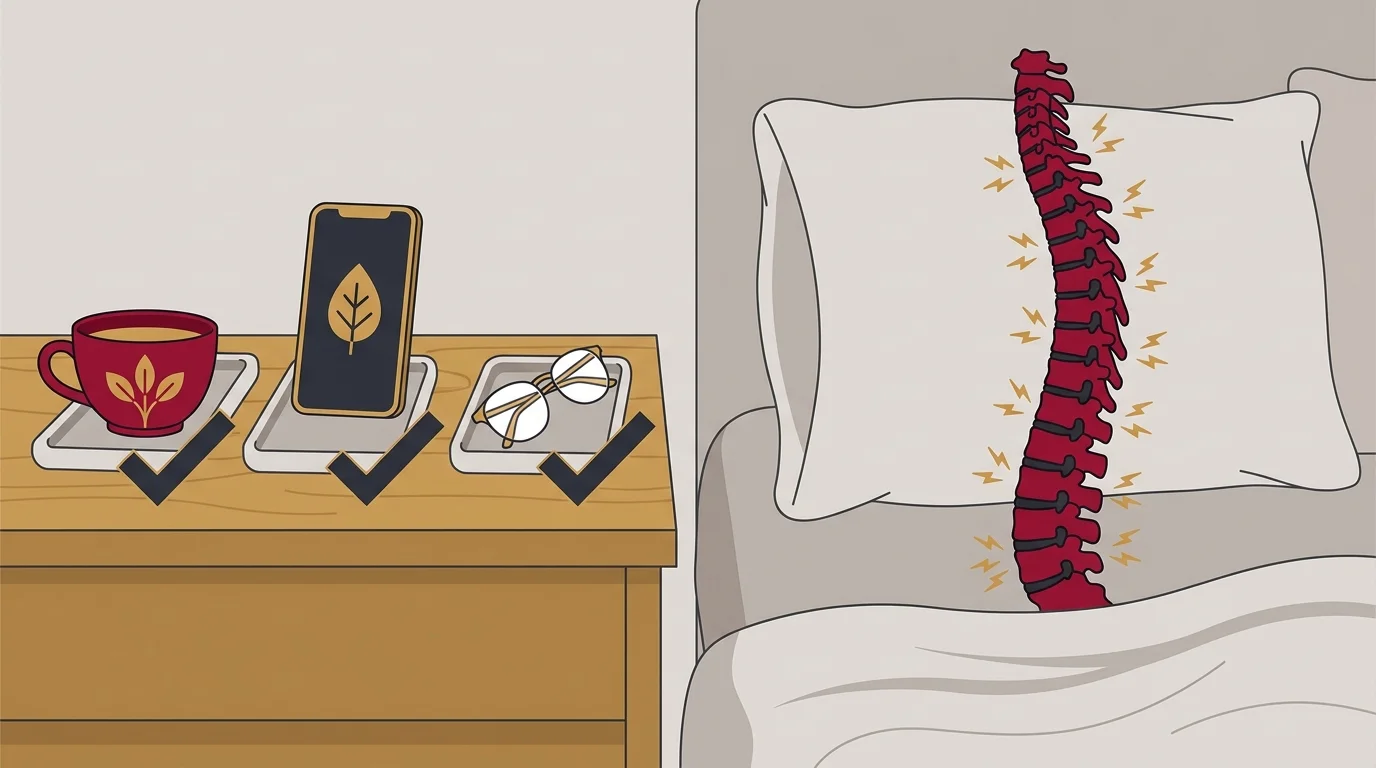
So many evening routines are built entirely around calming the mind. Herbal tea, meditation apps, blue-light-blocking glasses — the whole ritual assumes thoughts are the only obstacle standing between a person and sleep.
Mental relaxation techniques address only one half of the sleep-onset equation. They quiet the thoughts while leaving the body's tension signals fully active, which is why so many people follow every recommended step and still end up staring at the ceiling.
The Sleep Hygiene Checklist Was Never Built to Read the Body
The standard sleep hygiene checklist was written to manage behavior, not physiology. Dim the lights, cut the screens off an hour early, keep the bedroom cool — every step assumes the body will follow wherever the mind leads.
But the body does not take orders from a checklist. Its transition into rest is a physiological shift, not a mental decision, and mechanoreceptor signaling runs independently of whatever calming ritual is layered on top. Readers looking for the deeper mechanism behind that shift can explore the sleep restoration framework explained, which examines how the nervous system actually completes this transition.
What Spinal Mechanoreceptors Actually Report to the Brain
Spinal mechanoreceptors are sensory nerves sitting in and around the spine. Their whole job is reporting your position and tension back to the brain, without pause.
And that reporting never clocks out for bedtime. So the brain keeps getting position and tension data whether you're grinding through a stressful day or lying dead still under the covers.
The Two Signal Types Feeding the Nervous System at Bedtime
Now, heading into sleep, the nervous system is listening to two separate streams at once. One is cognitive, tracking racing thoughts and mental noise.
The other is mechanical, tracking spinal tension through mechanoreceptor activity. Most evening routines only address the first stream, which is why sleep can stall even after the mind quiets down. Readers building a full evening protocol around this idea can look at Maximize Parasympathetic Sleep in 2026 for the fuller sequence.
How the Autonomic Nervous System Decides Whether the Body Can Rest
So who decides whether the body actually gets to power down? The autonomic nervous system does, and it makes that call by weighing every incoming signal, mental and physical, before it lets the body shift into rest.
It runs on two branches pulling against each other. One keeps the body on alert. The other pulls it toward recovery.
The Vagal Pathway That Turns Down the Alarm
The vagus nerve carries the calming signals back to the brain stem. It stays busy during physical or psychological stress, feeding information about the body's internal state upward for processing.
And this same circuitry does more than pass information along. Per published academic reference, vagal afferent signals returning to the brain stem trigger a cholinergic anti-inflammatory reflex that limits cytokine release after physical or psychological stress — one expert assessment rather than a study finding. But that reflex only tempers inflammation when the signal actually reaches the brain stem, which is exactly what ongoing spinal tension gets in the way of.
The Locus Coeruleus and Why a Noisy Spine Keeps It Firing
But there's another player, and it works against the vagal pathway rather than beside it. The locus coeruleus is a brain stem structure tied straight to wakefulness and arousal.
Per PubMed Central, locus coeruleus neurons display higher discharge rates during waking than during sleep, and within waking states their discharge rate correlates positively with behavioral and EEG indices of arousal — a finding from animal research. So a spine still sending tension signals hands this structure a reason to keep firing. Anyone who wants the deeper mechanism behind calming it down can read Coeruleus and Reduce Nighttime Arousal.
Why Chronic Physical Signal Noise Keeps a System Stuck in Alert Mode
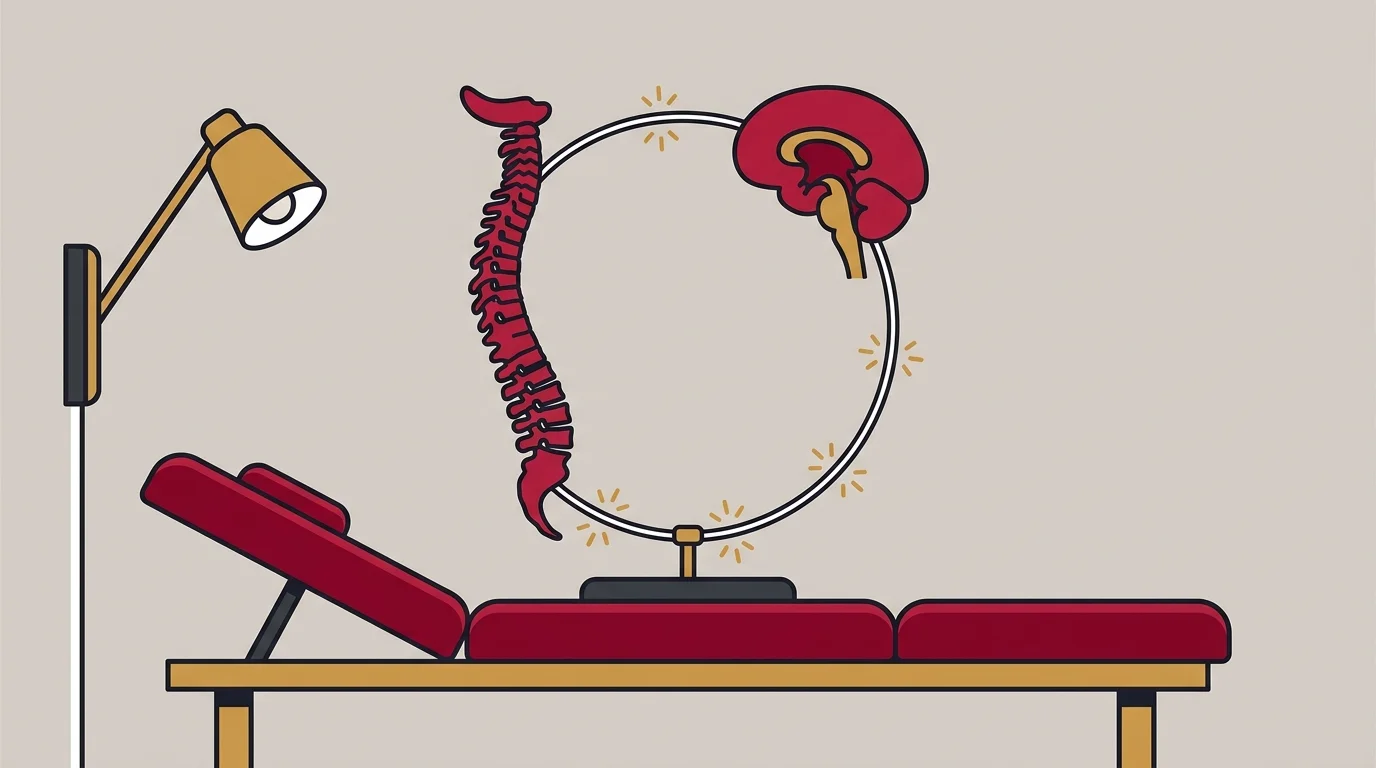
So what happens when this alert signaling never gets resolved? The system does not reset itself overnight. It stays in the same holding pattern, night after night, treating ongoing spinal tension as an active threat that never gets cleared.
The Mechanism of Sustained Alert-Mode Lock
That "tired but wired" feeling isn't random. It often points straight to a nervous system still catching continuous alert signals, even in the middle of a deliberate wind-down routine. For a closer look at how ongoing physical stress signaling gets addressed at the source, see root-cause chiropractic treatment.
What Gets Measured When Researchers Study Spinal Input and the Nervous System
So what turns up when controlled research measures this pathway head-on? A systematic review pooled 14 trials that tested spinal input against control or sham interventions. Findings published through The Journal of Manual & Manipulative Therapy show low quality evidence that spinal manipulation did not influence autonomic nervous system measures including heart rate variability, blood pressure, epinephrine and nor-epinephrine when compared with control or sham interventions. The measures were things you can track, not assume: heart rate variability, blood pressure, and the stress hormones epinephrine and nor-epinephrine, followed across every one of those trials.
| Measure Studied | What Was Tested | Finding |
|---|---|---|
| Autonomic Nervous System Response | Heart rate variability, blood pressure, epinephrine, and nor-epinephrine measured across 14 trials of spinal manipulation versus control or sham interventions | Low quality evidence found no influence on any of these autonomic measures |
| Cardiovascular and Stress Hormone Markers | Blood pressure and the stress hormones epinephrine and nor-epinephrine, compared against control or sham spinal manipulation | No measurable influence detected, though evidence quality was rated low |
| Chronic Insomnia Prevalence | Adults evaluated under strict diagnostic criteria for chronic insomnia | Prevalence ranges from 6% to 10% of adults, though about 30%-36% report at least one insomnia symptom |
| Sleep Statistic | Population | Reported Range |
|---|---|---|
| Insomnia symptom prevalence | General adult population | Reported by roughly one third of adults surveyed |
| Chronic insomnia diagnosis | Adults meeting strict diagnostic criteria | A smaller minority once formal criteria are applied |
| Autonomic nervous system response to spinal input | Trial participants across pooled controlled studies | Measured but rated as low quality evidence overall |
| Stress hormone and heart rate variability tracking | Trial participants compared against control or sham groups | Tracked directly rather than assumed, with no clear influence shown |
Reading the Evidence Without Overstating It
Now, low quality evidence doesn't mean no mechanism is there. It means the trials measuring it were limited, not that spinal input and the nervous system have nothing to do with each other. Findings published through the National Center for Biotechnology Information show chronic insomnia prevalence ranges from 6% to 10% in adults when strict diagnostic criteria are applied, though about 30%-36% report at least one symptom of insomnia. That gap matters, because it shows how many adults are living with a nervous system stuck between mental and physical alert signals.
Building an Evening Sequence That Addresses Both Channels
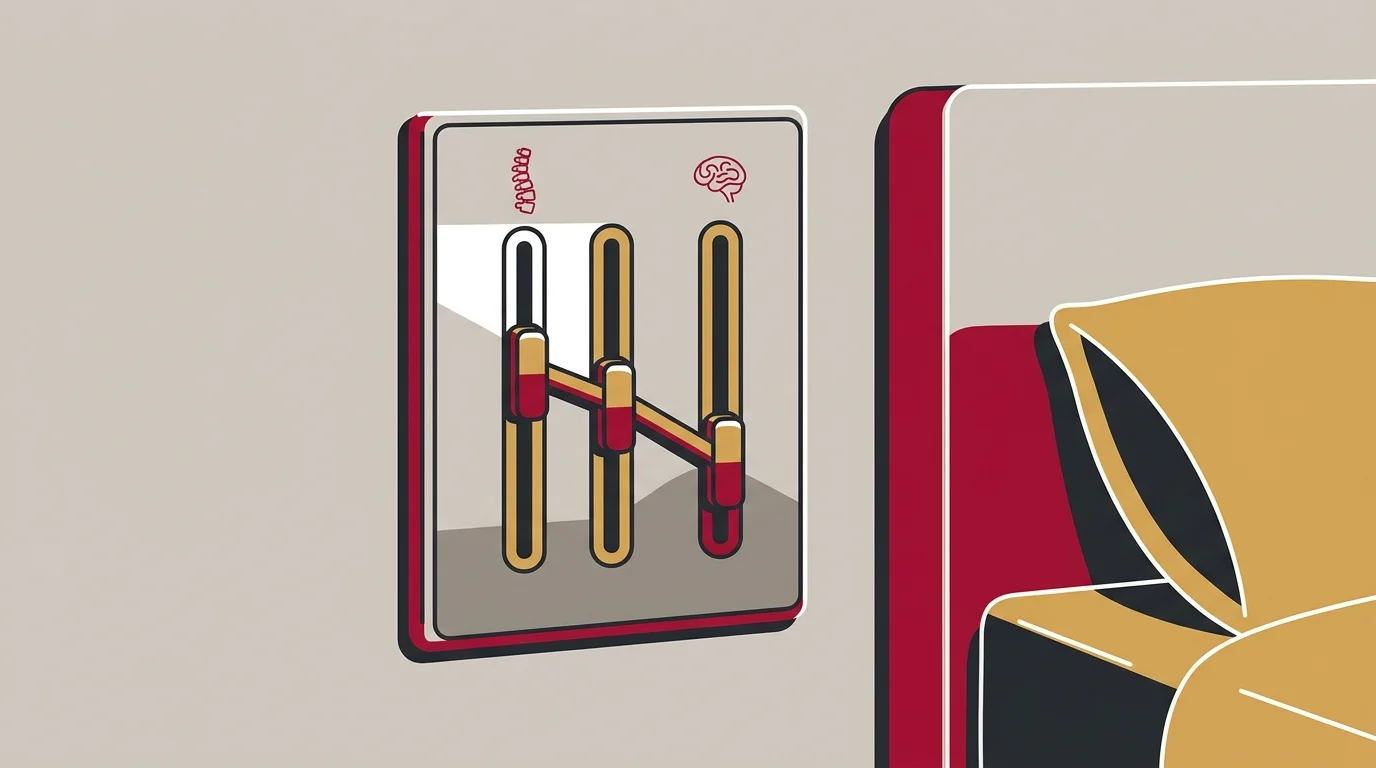
So how does this translate into an actual evening sequence? An effective wind-down structure has to give attention to both conversations happening at once, the mental one and the physical one, instead of treating calm thoughts as the whole job.
That means pairing mental relaxation steps with something that addresses spinal input directly, rather than stacking more cognitive techniques on top of each other.
| Sequence Step | Channel Addressed | Purpose |
|---|---|---|
| Dim lights and lower stimulation | Mental | Signals the cognitive channel that the day's demands have ended |
| Spinal mechanoreceptor reset | Physical | Quiets ongoing tension signaling so the body's alert channel can stand down |
| Slow, paced breathing | Physical and mental | Supports vagal signaling while giving the mind a simple focal point |
| Brief reflective wind-down | Mental | Lets racing thoughts settle once the physical channel is no longer competing for attention |
Where Spinal Input Fits in a Nightly Sequence
Spinal input fits earlier in the sequence, not as an afterthought tacked onto the end.: mechanoreceptor signaling needs time to settle before the mental relaxation steps can finish their job.
So a sequence that addresses spinal tension first gives the nervous system a real chance to let both channels go quiet together, instead of asking a racing body to catch up to an already-calm mind.
Frequently Asked Questions
So a few questions come up again and again once people start looking at sleep this way. Here are the direct answers.
Why does my evening relaxation routine suddenly not work for sleep?
Because that routine was only ever built to quiet the mind. It never touched the spinal tension still signaling alertness to the brain.
What are spinal mechanoreceptors and how do they affect my ability to relax?
They are sensory nerves in and around the spine that constantly report position and tension to the brain. When those signals stay elevated, the nervous system reads them as an ongoing reason to stay alert.
Can a chiropractic adjustment help me sleep better the same night?
A chiropractic adjustment targets the mechanical signaling that keeps the nervous system on alert. Settling that input the same day can make it easier for the body to drop toward rest that night.
Is it possible to reset my spinal mechanoreceptors at home without a chiropractor?
Basic movement and stretching can ease some surface tension, but it does not reach spine-driven mechanoreceptor signaling directly. That reset is not some catch-all protocol a person can replicate without hands-on assessment.
How does poor posture during the day contribute to poor sleep at night?
Hours spent in poor posture keep spinal mechanoreceptors reporting strain long after the workday ends. That signaling does not simply switch off at bedtime.
What's the difference between being mentally tired and physically ready for sleep?
Mental tiredness means the thoughts have quieted down. Physical readiness means the spine has stopped sending tension signals, and both have to land before real rest sets in.
Where This Leaves Your Evening Routine
Two conversations run at bedtime, and closing only one of them never adds up to rest. The mental channel can go quiet on schedule with every routine followed exactly right. But the physical channel, carried by mechanoreceptors still reporting tension from a spine under stress, keeps transmitting regardless of how still the mind gets.
That is the piece a tea-and-meditation routine was never built to reach. A wind-down sequence that only manages thoughts is solving half the problem and calling it done. The nervous system does not shift fully toward rest until both channels go quiet together, and that means spinal input has to be addressed directly, not assumed away.
So the real question is not whether the evening routine is calming enough. It is whether it ever reaches the physical signaling driving the alert state in the first place. That is the conversation worth having with a professional who works with spinal mechanoreceptor input directly, and it starts by scheduling a visit with Touch of Wellness Chiropractic.