
How to Load Tendons Safely After Shockwave Therapy
Shockwave therapy doesn't finish the job. It starts a biological conversation.
The micro-trauma shockwave induces at the tissue level is the opening signal. Structured mechanical loading is the reply that completes it. Shockwave starts the conversation. Loading writes the answer.
Shockwave therapy works by triggering cellular-level changes inside tendon tissue. Those changes launch a repair cascade — but that cascade needs the right mechanical input to produce organized, functional collagen. Without it, the tissue fills in. It doesn't rebuild. And it fails under real demand.
Tissue-remodeling signals peak between 4 to 8 weeks after the final session. That window isn't a rest period. It's an opportunity — and complete rest is exactly the wrong response to it.
When stimulated tenocytes don't receive structured mechanical load, the collagen they produce lacks proper fiber alignment and tensile strength. The timeline looks healed. The tissue isn't.
Safe loading after shockwave therapy follows three distinct phases. The first introduces low-load isometric work to begin guiding fiber alignment without exceeding tissue tolerance. The second uses eccentric contractions, which preferentially align newly formed Type I collagen fibers along lines of functional stress. The third reintegrates activity-specific demands as the tissue demonstrates progressive tolerance.
Transitions between phases depend on pain response and load tolerance — not a fixed calendar. A minimum 48-hour recovery interval between heavy loading sessions is required to prevent structural micro-ruptures in remodeling tissue.
When shockwave therapy is combined with a progressive loading protocol, clinical success rates for chronic tendinopathies reach 65% at 12 weeks. That number doesn't come from passive recovery. It comes from treating the post-treatment window as an active biological directive — one that requires a precise answer, not silence.
Last Updated: July 29, 2026
- • What Shockwave Therapy Actually Does to Tendon Tissue
- • Why Complete Rest After Shockwave Therapy Backfires
- • The Three-Phase Loading Framework: Matching Load to Tissue Recovery
- • Warning Signs: When Loading Has Exceeded Tissue Tolerance
-
• Frequently Asked Questions About Tendon Loading After Shockwave Therapy
- • How soon can I exercise after a shockwave therapy session?
- • Why does complete rest actually harm tendon healing after shockwave therapy?
- • What are the warning signs that I've overloaded my tendon during rehabilitation?
- • How do I structure a safe tendon loading progression without risking re-injury?
- • Is it safe to run immediately after shockwave therapy for Achilles tendinopathy?
- • The Biological Conversation Doesn't Complete Itself
What Shockwave Therapy Actually Does to Tendon Tissue
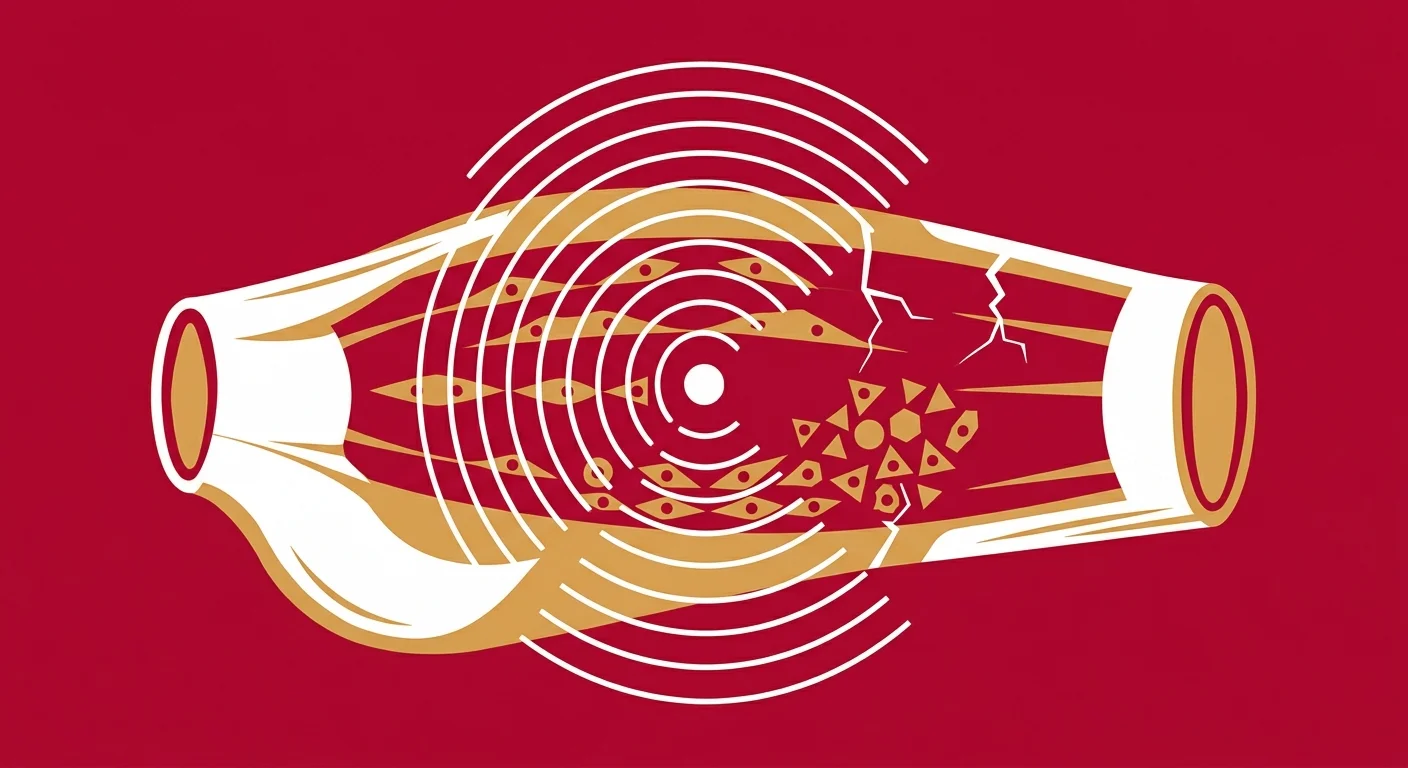
Here's the thing: the loading prescription isn't a guess. It follows directly from what shockwave therapy has done inside the tissue. Skip that biology and you're planning blind.
Shockwave therapy doesn't heal tissue. It destabilizes it — deliberately, precisely, in a way that restarts a repair process the body had stopped running on its own.
High-energy acoustic waves penetrate the tendon and alter cellular transcription factors inside tenocytes — the structural cells that produce and maintain collagen. That alteration is the opening signal. The biology doesn't stop there. It starts a conversation, and the tissue is waiting for a specific reply.
The Micro-Trauma Signal and Why It Matters
The micro-trauma shockwave induces isn't damage. It's a controlled disruption — one that forces the tissue into an active repair state it would never reach through passive rest alone.
Once tenocyte activity is upregulated, the tissue enters a remodeling window. NIH research confirms that neovascularization and tissue-remodeling signals peak between 4 to 8 weeks after the final session. That's not a rest window. That's the period when tissue is most receptive to mechanical input — the input that decides whether new collagen organizes into load-bearing fibers or disorganized scar tissue.
If you want to understand how shockwave triggers tissue regeneration at the structural level, that biology matters before you plan a single loading session. The cascade shockwave initiates is precise. So is the window in which loading either completes it or wastes it.
Why Most Patients Misread the Recovery Window
Most patients leave their final shockwave session with the same reflex: rest, protect, wait. It's the same thing they were told after every injection, every surgery, every round of treatment that didn't work.
But with shockwave therapy, that instinct works against the biology. The 4 to 8 week signaling window isn't asking for silence — it's asking for a structured mechanical reply. Rest during that window doesn't protect the repair process. It derails it.
Tenocytes that don't receive mechanical load still produce collagen. But collagen without directional stress lacks alignment and tensile strength. The tissue looks recovered on a timeline. It won't perform like it. That's why individualized chiropractic adjustment options matter in a full musculoskeletal recovery plan — one modality rarely finishes what another starts, and Shockwave Therapy is no exception.
| Biological Event | Timeframe Post-Session | Clinical Significance | Loading Implication |
|---|---|---|---|
| Tenocyte transcription factor alteration | Immediately post-session | Structural cellular changes initiated — repair cascade activated | Tissue is in active disruption state; loading not yet appropriate — protect the signal |
| Neovascularization onset | Early post-treatment weeks | New blood vessel formation begins supplying nutrients to remodeling tissue | Low-load isometric work (Controlled Mechanical Stimulus) can begin guiding early fiber orientation |
| Peak tissue-remodeling signal window | 4 to 8 weeks post-final session | Collagen synthesis and structural reorganization at maximum biological receptivity | Progressive Eccentric Loading must be active during this window — rest here means disorganized collagen output |
| Ongoing tenocyte collagen production | Weeks to months post-treatment | New collagen fibers require mechanical stress input to align along functional load lines | Functional Load Reintegration introduces activity-specific demands as tissue demonstrates progressive tolerance |
Why Complete Rest After Shockwave Therapy Backfires

Rest feels like the responsible call. Every procedure you've had before this one said the same thing: take it easy, let it settle, don't push it.
But shockwave therapy isn't every other procedure. And that instinct will cost you.
The tissue after shockwave therapy isn't asking for quiet. It's mid-repair. The cascade is already running.
What it needs is a mechanical reply. When that reply doesn't come, the repair keeps going — it just produces the wrong output.
Disorganized collagen. Poorly aligned fibers. Tissue that looks recovered on a timeline and fails the moment real demand returns.
That's not healing. That's a missed conversation.
The Cookie-Cutter Rest Protocol and What It Costs the Tendon
Here's what most post-treatment protocols do: they hand you the same instruction they hand everyone. Rest. Avoid aggravating activity. Return gradually.
That framework was written for modalities that don't trigger an active biological repair cascade. Shockwave therapy isn't one of them.
The problem is that shockwave therapy flips tenocytes into active repair mode. They're producing collagen now. The signal is live.
But collagen production without mechanical input doesn't build a functional tendon. The fibers lay down without directional cues. No alignment. No tensile strength calibrated to real load demands.
The tissue fills in. It doesn't rebuild. Those are not the same outcome.
The research published through the National Institutes of Health puts a number on it. When shockwave therapy is paired with progressive loading — not passive rest — clinical success rates for chronic tendinopathies reach 65% at 12 weeks.
That number doesn't come from waiting. It comes from treating the post-treatment window as an active biological directive. The tissue is primed. The window is open. Silence is not a neutral response to that.
The evidence on combining shockwave therapy with physical loading makes the point directly: these modalities work together, not in sequence.
Shockwave initiates the cascade. Loading completes it. Rest between those two steps isn't neutral. It's a disruption.
Under-Loading vs. Over-Loading: The Two Failure Modes
So the post-shockwave loading phase fails in exactly two ways.
Under-loading: the tissue's repair signals go unanswered. Over-loading: you push remodeling tissue past its current structural threshold before it's ready to absorb that demand.
Both paths lead to the same place — a tendon that doesn't recover.
Under-loading produces disorganized collagen — fibers laid down without the mechanical stress cues that orient them along functional load lines.
Eccentric contraction models preferentially align newly formed Type I collagen fibers in ways that concentric-only or passive protocols can't replicate.
Skipping that input doesn't spare the tissue. It deprives it.
Over-loading is the sharper edge. Remodeling tissue has a tolerance threshold, and that threshold rises as fibers mature. Push past it before new fibers have structural integrity and you're creating micro-ruptures — setting the clock back, not forward.
The loading prescription has to match what the tissue can handle right now. Not what it handled before the injury. Not what a generic protocol says it should handle at week three.
That's the whole problem with calendar-driven timelines. The tissue doesn't care what week it is. It responds to load — or it doesn't.
| Loading Approach | Effect on Collagen Formation | Tissue Outcome | Clinical Risk |
|---|---|---|---|
| Complete rest (no loading) | Collagen produced without directional stress cues — fibers lay down randomly with no functional orientation | Tissue appears healed on a timeline but lacks the tensile strength and alignment required under real demand | High risk of re-injury when activity resumes — the tendon looks recovered but isn't structurally prepared |
| Under-loading (minimal, non-progressive activity) | Insufficient mechanical input to guide fiber organization — collagen forms but remains disorganized and poorly integrated | Tendon develops a structurally weak repair zone that tolerates low demand but fails under sport- or work-specific stress | Moderate-to-high risk of chronic re-injury cycles — the underlying structural deficit is never resolved |
| Over-loading (too much demand too soon) | Remodeling tissue is pushed past its current tolerance threshold before new fibers have established structural integrity | Micro-ruptures form in partially remodeled tissue, disrupting the repair cascade and extending recovery significantly | High risk of acute setback — structural damage to tissue that was progressing correctly until load exceeded capacity |
| Progressive Eccentric Loading (response-driven progression) | Mechanical stress applied along functional load lines guides newly formed collagen into aligned, load-bearing fiber orientation | Tendon develops organized, tensile-strong tissue that mirrors the structural demands of real activity | Low risk when load is matched to tissue response — progression is determined by pain and tolerance, not a fixed calendar |
The Three-Phase Loading Framework: Matching Load to Tissue Recovery
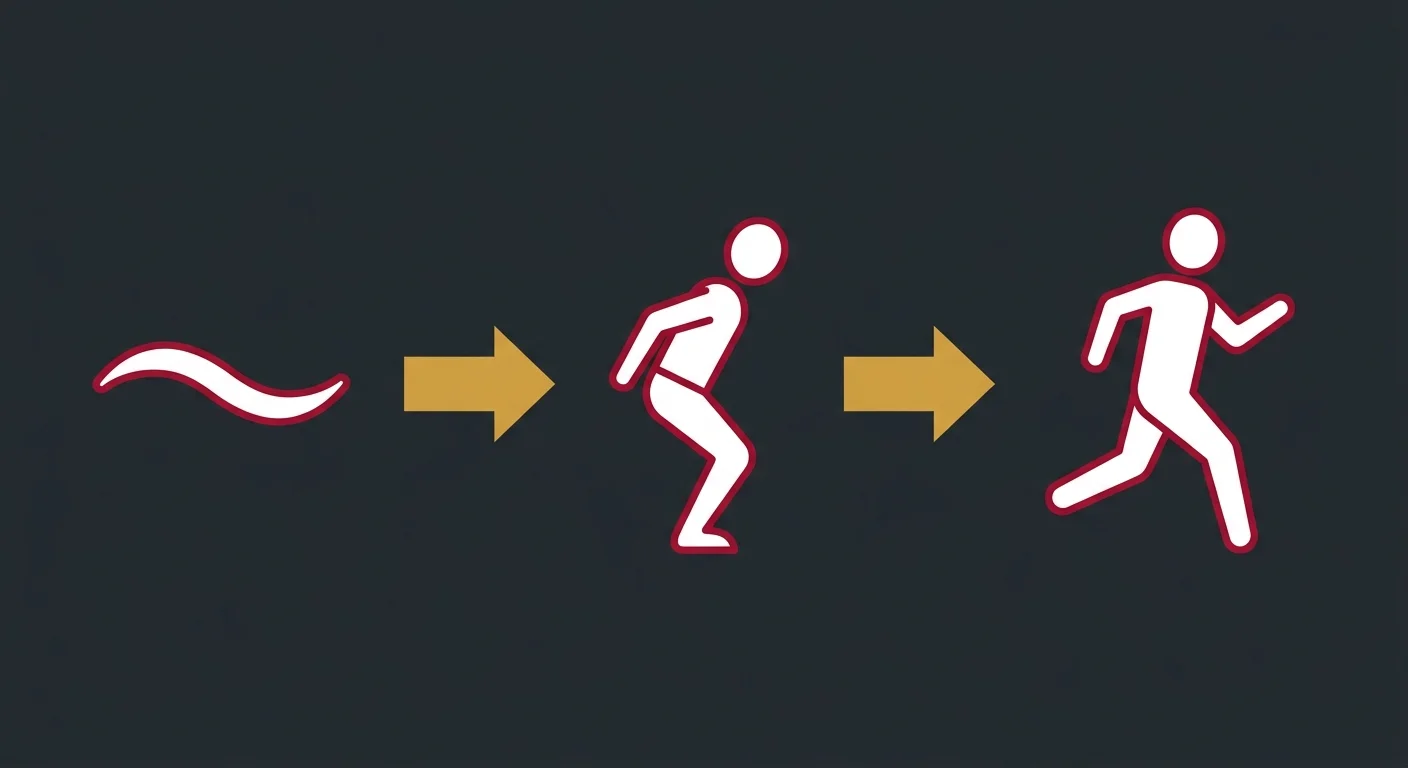
Here's what actually works. Not a lighter version of rest. Not a gentler timeline. A phase-matched loading model built around what the tissue is biologically ready to receive — and when.
This isn't rehab slapped onto an advanced procedure. It's a biological sequence. Each phase is timed to match where the tissue actually is in its repair process — not where a standard discharge calendar assumes it should be.
Each phase has a distinct mechanical purpose. Miss one. Compress the timeline. Skip ahead. Any of those moves produces the same result: collagen without the alignment or tensile strength to hold under real demand. The framework only works when you respect the sequence.
Phase 1: Controlled Mechanical Stimulus
Phase 1 begins in the most critical window: early post-treatment, before remodeling signals have peaked. The tissue is fragile. It's also maximally receptive. That combination isn't a reason to wait — it's a reason to start. Carefully. Deliberately. With load calibrated to exactly what the tissue can handle right now, not what it handled before the injury.
The goal isn't to train the tendon. It's to send a signal. Low-load isometric work tells the upregulated tenocytes which direction to lay down new collagen fibers. The tissue is actively listening during this window. Phase 1 gives it something to hear. Silence — which is what complete rest delivers — is not a neutral input. It's a missed instruction.
What Phase 1 looks like depends entirely on what the tissue has been through. That's why knowing whether shockwave therapy fits your situation matters before the first session — not after. You can't calibrate a precise mechanical input without a clear clinical picture of what preceded it.
Phase 2: Progressive Eccentric Loading
Phase 2 is where the work either pays off or falls apart.
Eccentric contractions — muscle lengthening under load — preferentially align newly formed Type I collagen fibers along lines of functional stress. Concentric-only loading can't replicate that. Passive rest certainly can't. This phase is the one that determines whether the collagen being produced is structurally useful or just structurally present. Those are not the same thing.
Phase 2 also demands real discipline around recovery. NIH-published findings confirm that remodeling tissue requires a minimum 48-hour recovery window between heavy mechanical loading sessions. Skip that window and you're not building on the previous session. You're interrupting it. The tissue isn't ready for more load. It's still processing the last round.
Phase 3: Functional Load Reintegration
Phase 3 is the destination. Phases 1 and 2 were the road to get here.
Now the tendon gets tested against the actual demands of real life — the sport, the job, the movement pattern it needs to handle under load. The tissue has been guided through alignment. It's been progressively stressed. But Phase 3 doesn't advance on a calendar. It advances when the tissue demonstrates it can absorb that demand without setback. The gate is tissue response. Full stop.
Controlled stimulus. Eccentric loading. Functional reintegration. That sequence is the structured mechanical reply the tissue has been waiting for since the final shockwave session. Tissue-remodeling signals peak between 4 to 8 weeks after that final treatment. The framework exists to use that window — not waste it on passive rest. Shockwave starts the conversation. Loading writes the answer.
| Phase | Timeframe | Load Type | Target Tissue Response | Key Marker to Advance |
|---|---|---|---|---|
| Phase 1 — Controlled Mechanical Stimulus | Early post-treatment window, before remodeling signals peak | Low-load isometric work | Orient upregulated tenocytes; introduce directional collagen signal | Symptom tolerance under low isometric load with no reactive flare |
| Phase 2 — Progressive Eccentric Loading | During the 4 to 8 week peak signaling window | Eccentric contractions under progressive load | Preferential alignment of newly formed Type I collagen fibers along functional stress lines | Minimum 48-hour recovery interval tolerated between sessions without micro-rupture symptoms |
| Phase 2 — Progressive Eccentric Loading (Recovery Rule) | Throughout peak remodeling window | Heavy mechanical loading with mandatory rest gaps | Prevent structural micro-ruptures; preserve remodeling integrity | 48-hour recovery interval between heavy sessions maintained without symptom regression |
| Phase 3 — Functional Load Reintegration | After peak remodeling signals confirm structural collagen alignment | Sport- and activity-specific functional demands | Validate tensile strength and load tolerance under real-demand conditions | Demonstrates structural capacity to absorb functional demand without micro-rupture or symptom flare |
Warning Signs: When Loading Has Exceeded Tissue Tolerance
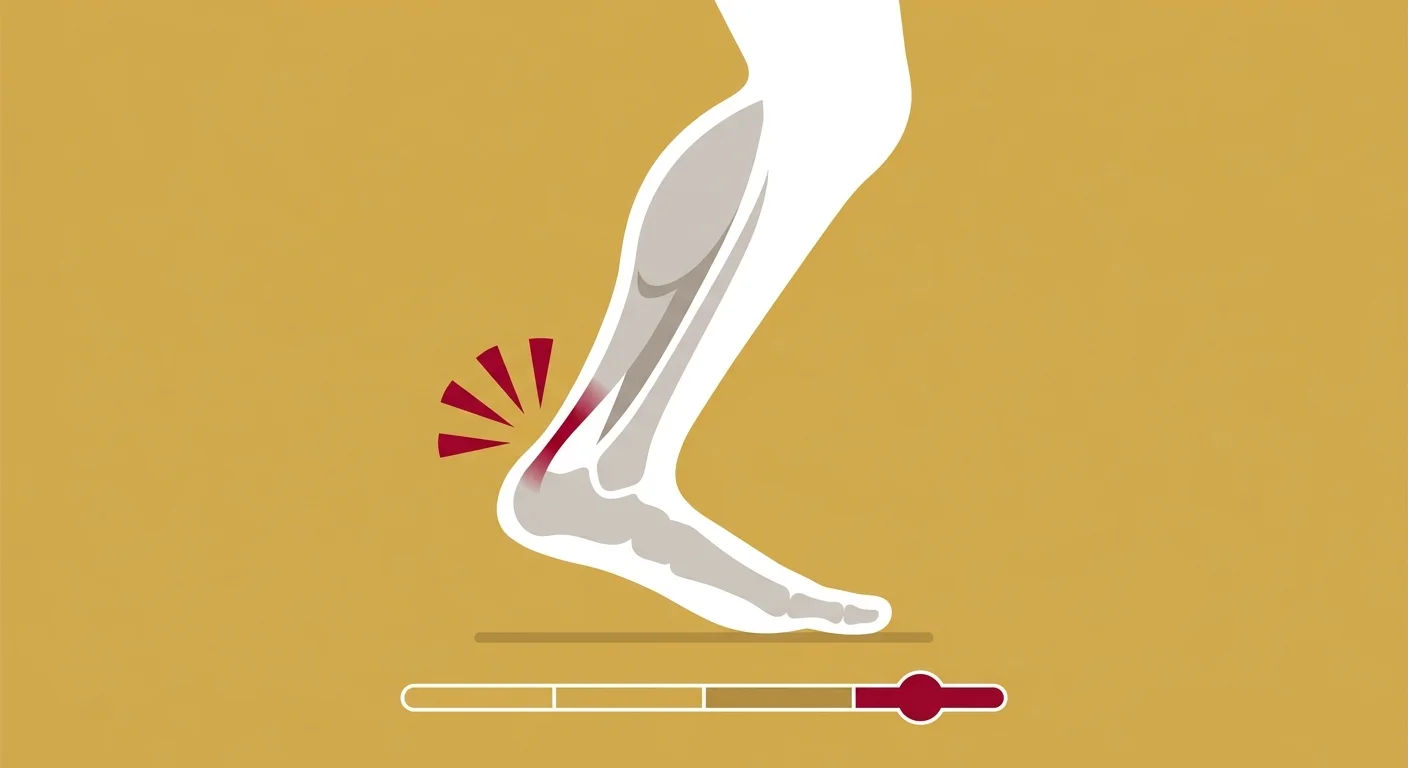
Knowing the three phases is only half the job. The other half is knowing when you've gone too far.
Progressive loading is supposed to stress the tissue. That's not a side effect — that's the mechanism.
But there's a difference between a tendon adapting to new demand and tissue that's been pushed past what its current structure can handle. One moves repair forward. The other resets it.
Mixing up the two is exactly where otherwise sound recoveries fall apart.
The 48-hour recovery interval between heavy loading sessions isn't a conservative suggestion. It's a biological requirement.
Remodeling tissue has a ceiling. Push through it before new fibers have structural integrity and you're not building — you're creating micro-ruptures that send the timeline backward.
Structured pain monitoring protocols exist to track that ceiling in real time. They work. But only if you're actually using them.
Reading Pain Signals Accurately During Rehabilitation
Pain during post-shockwave loading isn't automatically a problem.
Some discomfort during and immediately after a session is expected. It's the tissue responding to mechanical demand. The question isn't whether you feel anything. It's what you feel, when you feel it, and whether it resolves.
Pain that lingers more than 24 hours after a session is worth paying attention to.
Pain that's sharper at the start of the next session than it was at the end of the last one means the tissue hasn't recovered between loads. Either the 48-hour interval wasn't honored, or the load itself was too aggressive for where remodeling currently sits.
For conditions like plantar fasciitis and related heel-arch stress patterns, misreading that signal doesn't just slow progress — it pushes inflamed fascia back to square one.
Structured pain monitoring isn't about avoiding discomfort. It's about reading the difference between adaptation and injury.
That distinction requires honesty about what you're experiencing — and a clinician trained to interpret it in the loop with you.
Who Should Not Self-Direct Post-Shockwave Loading
Here's what needs to be said plainly: post-shockwave loading is not a self-directed process.
Prior tendon rupture. Systemic conditions affecting connective tissue. A shockwave course that addressed a complex presentation rather than a clean, isolated tendinopathy. In any of those cases, the three-phase framework doesn't change.
Who guides you through it does.
The tissue-level variables in those presentations require clinical oversight — not a protocol you found online. Knowing whether shockwave therapy fits your specific situation before the first session is part of what makes the loading phase possible to calibrate correctly.
And if you've already tried self-directed rehab and it didn't hold — that's not bad luck.
That's the system telling you the load prescription wasn't matched to what the tissue actually needed at that stage of recovery.
Shockwave opens the biological window. Loading is what you do inside it. Guessing at the dosage isn't the answer the biology is waiting for.
| Warning Signal | What It Indicates | Correct Response | Incorrect Response |
|---|---|---|---|
| Pain that persists more than 24 hours after a loading session | Tissue has not recovered between sessions — load exceeded current remodeling capacity | Reduce load intensity and extend recovery window before next session | Push through to the next scheduled session on the assumption that soreness is normal adaptation |
| Pain at the start of a session is sharper than it was at the end of the previous one | Recovery interval was insufficient or load progression moved faster than tissue tolerance allows | Pause progression, allow full symptom resolution, reassess load prescription before resuming | Interpret increased start-of-session pain as warm-up discomfort and continue with the planned load |
| Localized swelling or warmth that develops after loading and does not resolve within a day | Inflammatory response signals structural stress beyond what remodeling tissue can currently absorb | Treat as an overload event — step back one phase in the framework and consult clinical oversight | Apply ice and rest for one day, then resume the same load level on the next scheduled session |
| A sudden sharp pain during a loading movement — distinct from baseline soreness | Possible acute micro-rupture event; tissue integrity may be compromised at the point of demand | Stop the session immediately and seek clinical assessment before any further loading | Modify the movement slightly and continue the session, assuming the pain will settle mid-set |
| Plateau or regression in pain scores across consecutive sessions despite consistent effort | Load prescription is mismatched to the tissue's actual remodeling stage — either too high or too low | Reassess the phase and adjust loading parameters to match current tissue response rather than the original plan | Stay the course on the existing protocol, assuming improvement is delayed but still on schedule |
Frequently Asked Questions About Tendon Loading After Shockwave Therapy
Here's where it gets real. The biology makes sense in theory. But you're not in a lab — you're in the middle of a rehabilitation window that has rules, and something feels off.
These are the five questions that actually come up. Straight answers — no vague timelines.
How soon can I exercise after a shockwave therapy session?
Not on a fixed timeline. The tissue decides — not the date on the calendar.
Light isometric loading can start early. That's Phase 1. It's not training. It's sending a signal to tissue that's actively waiting for one.
Let the acute response from the session settle first. That's usually 24 to 48 hours. Then introduce load gradually and pay attention to what comes back.
Why does complete rest actually harm tendon healing after shockwave therapy?
Because the tissue isn't waiting for rest. It's waiting for a direction.
Shockwave Therapy primes tenocytes for repair. But those repair signals need a mechanical cue to orient around. Without structured load, new collagen forms with no functional alignment. The tissue fills in. It doesn't rebuild.
The clinical data is direct: combining Shockwave Therapy with progressive loading produces a 65% clinical success rate at 12 weeks. Complete rest doesn't get there. It wastes the biological window the shockwave opened.
What are the warning signs that I've overloaded my tendon during rehabilitation?
Three signals. Pay attention to all of them.
First: pain that's sharper at the start of your next session than it was at the end of the last one. The tissue didn't recover between loads.
Second: pain that lingers beyond 24 hours after a session. That's not adaptation — that's load that exceeded what the tissue could absorb.
Third: sudden sharp pain during a loading movement. Stop. That's not productive discomfort. That's a boundary.
The 48-hour recovery interval exists for a reason. Remodeling tissue has a ceiling. Cross it and you're not building — you're resetting.
How do I structure a safe tendon loading progression without risking re-injury?
Follow the three-phase sequence. In order. Don't compress it because Phase 1 felt manageable.
Phase 1 introduces low-load isometric work to orient new collagen fibers. Phase 2 builds tensile capacity through eccentric contractions. Phase 3 reintroduces real-world activity demands — but only as the tissue demonstrates it can absorb them.
Don't skip phases. Don't rush into Phase 2 because Phase 1 went smoothly.
Respect the 48-hour recovery interval between heavy loading sessions. Structured pain monitoring isn't optional — it's how you know whether the load you're applying is still inside the tissue's current capacity.
Is it safe to run immediately after shockwave therapy for Achilles tendinopathy?
No. Not immediately.
Running places high-velocity, repetitive eccentric demand on the Achilles. That's exactly what Phase 3 — Functional Load Reintegration — is built to reintroduce gradually, after the tendon has developed tensile capacity through Phases 1 and 2. Starting at a run skips both.
The tissue-remodeling window is active for weeks post-treatment. Running into that window before the tendon has structural integrity doesn't speed things up — it risks disrupting the remodeling process the shockwave initiated.
The load prescription has to match where the tissue actually is. Not where you want it to be.
The Biological Conversation Doesn't Complete Itself
Shockwave therapy opens a biological conversation. It doesn't finish it.
The micro-trauma is the opening signal. A repair cascade launches inside the tendon — one the tissue cannot complete on its own.
Structured mechanical load is the reply. Delivered in the right sequence, at the right intensity, inside the window the biology actually provides.
Rest is not that reply. It never was.
The clinical record doesn't leave this ambiguous. When Shockwave Therapy is paired with progressive tendon loading, clinical success rates for chronic tendinopathies reach 65% at 12 weeks. That outcome doesn't come from the shockwave alone. It comes from the loading phase completing what the shockwave started.
Tissue-remodeling signals peak between 4 to 8 weeks after the final session. That window is the biological directive. The three-phase framework — controlled isometric stimulus, progressive eccentric loading, functional load reintegration — exists to use that window with precision.
Not to wait it out. To answer it.
At Touch of Wellness Chiropractic, the loading plan isn't pulled from a template. It's built from what the tissue actually reports — where it sits in remodeling, what load it can absorb right now, and what the biology needs next.
That's the whole-body systems lens Dr. Karen Hannah brings to every case. Not a standard discharge timeline. Not a generic phase protocol applied without reading the tissue.
Shockwave starts the conversation. Loading writes the answer. Guessing at the dosage isn't the answer the biology is waiting for.
Shockwave starts the repair signal. But if no one has mapped out what comes next — how much load, in what sequence, at what pace — you're leaving the most important half of the protocol unfinished. That's the conversation worth having. Not after something goes wrong. Now. If you're in Morton or the surrounding area and want to know what a post-shockwave loading plan actually looks like for your condition, book an assessment in Morton. The biology has already done its part. The loading plan is what finishes it.