
Shockwave Therapy vs Physical Therapy: Why Combining Modalities Accelerates Recovery
Shockwave Therapy and physical therapy are not competing options. They are two halves of the same repair equation — and the research is unambiguous about what happens when both are used together.
Shockwave Therapy delivers high-energy acoustic pulses directly into damaged soft tissue. Those pulses restart cellular repair from the ground up — triggering new blood vessel growth, upregulating growth factors, and breaking the chronic inflammation loop that keeps conditions like plantar fasciitis, Achilles tendinopathy, and chronic shoulder pain from fully resolving. Clinical success rates for chronic soft tissue disorders range between 65% and 91%. For chronic plantar fasciitis, 78.5% of patients achieved clinical success after three sessions.
Shockwave Therapy fires the repair signal. Physical therapy converts that signal into structural strength — through progressive mechanical loading that directs the body to lay down organized, functional collagen instead of weak, disorganized scar tissue. Without that load, the repair stalls.
Combining both modalities accelerates functional recovery by up to 35% compared to single-modality treatment. Visual Analog Scale pain scores drop significantly faster when both are used within a 12-week window. For Achilles tendinopathy, pairing progressive loading with Shockwave Therapy cut return-to-activity timelines by an average of 4 weeks.
The biological sequence matters. Shockwave Therapy triggers a 2.5-fold increase in vessel density within the target tissue within 48 hours. That neovascularization delivers the oxygen, nutrients, and cellular signals that healing tissue needs to rebuild correctly. Physical therapy then directs that rebuild — loading the tissue progressively so the body constructs organized, functional structure rather than scar tissue.
Conservative physical therapy alone averaged 16.4 clinical sessions to reach what the combined approach accomplishes in fewer visits. Neither modality completes the job on its own. The most effective recovery protocol uses Shockwave Therapy to restart the biological repair process and physical therapy to direct that repair toward full functional restoration.
Last Updated: July 29, 2026
- • What Each Modality Actually Does to Damaged Tissue
- • Why Isolated Treatment Keeps Patients Stuck in Partial Recovery
- • The Evidence Behind Combined Protocol Outcomes
- • How a Combined Protocol Is Structured in Practice
- • Who Gets the Most From a Combined Protocol — And Who Needs a Different Conversation First
-
• Frequently Asked Questions
- • Is shockwave therapy more effective than standard physical therapy for chronic pain?
- • Can you combine shockwave therapy and physical therapy in the same treatment plan?
- • How do you safely load a tendon after receiving shockwave therapy?
- • How do I know if shockwave therapy is the right choice for my chronic pain before booking?
- • What is the typical recovery timeline when combining shockwave therapy with chiropractic adjustments?
- • Why does my pain keep coming back even after finishing a course of physical therapy?
- • The System Heals When You Stop Treating It in Pieces
What Each Modality Actually Does to Damaged Tissue
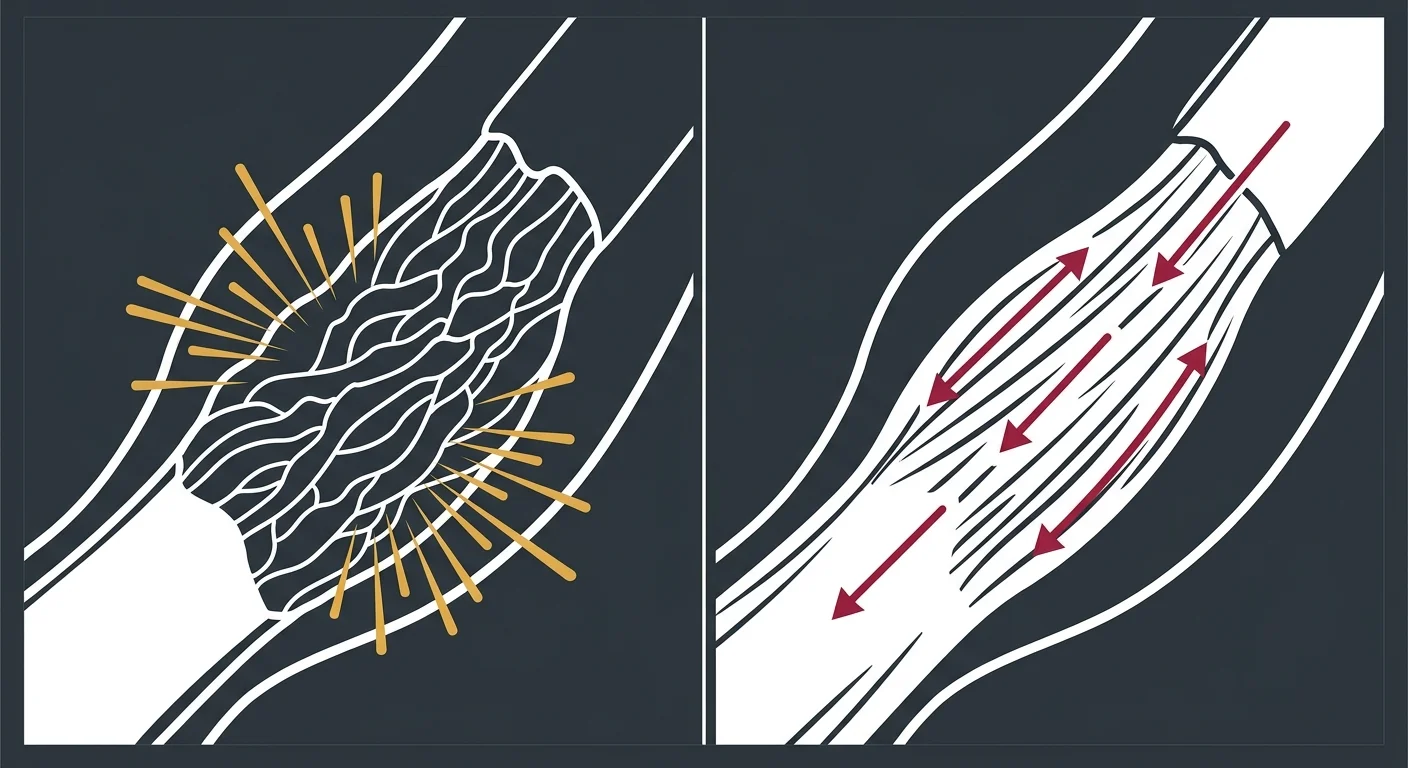
Most patients walk in asking the wrong question.
Shockwave Therapy or physical therapy — which one is better? That framing is the problem.
These two modalities are not competing for the same job. They don't overlap. They stack.
Shockwave Therapy works at the cellular and vascular level — firing repair signals that chronically damaged tissue can no longer generate on its own. Physical therapy works at the structural and mechanical level — directing how that newly activated tissue organizes itself under load.
The case for combining them starts here. They're solving different parts of the same problem.
Think of advanced acoustic tissue healing as the primer — it prepares the biological environment for repair. Physical therapy is what converts that environment into functional strength.
One without the other leaves the job half-finished.
How Shockwave Therapy Triggers Cellular Repair
Here's what happens the moment Shockwave Therapy hits damaged tissue.
According to NIH research, it triggers a 2.5-fold increase in vessel density within localized target tissues — and that response starts within 48 hours of treatment. Not weeks. Not after a full course of visits. Forty-eight hours.
That vascular surge isn't incidental. New vessels carry oxygen, nutrients, and the cellular signals that chronically damaged tissue has been cut off from — sometimes for months.
Shockwave Therapy also upregulates vascular endothelial growth factor (VEGF) and proliferating cell nuclear antigen (PCNA) within 48 hours — two markers that directly signal tissue remodeling and cell proliferation. Understanding exactly how this tissue regeneration works explains why passive treatment alone never produces the same result.
The biology doesn't hedge. The repair conversation restarts — and it restarts fast.
That's not theoretical. NIH clinical data puts success rates for chronic soft tissue disorders between 65% and 91%.
Shockwave Therapy doesn't mask the pain signal. It restarts the biological repair process that chronic injury shut down. Those are two completely different clinical events — and confusing them is exactly why patients keep cycling through treatments that provide temporary relief and call it progress.
Masking and restarting are not the same thing. One manages the problem. The other ends it.
What Physical Therapy Contributes That Shockwave Cannot
But restarting the conversation is only half the work.
Newly primed tissue doesn't know how to rebuild itself. That direction comes from physical therapy — specifically from progressive mechanical loading applied to the tissue Shockwave Therapy just reactivated.
Load is the signal that tells tissue how to organize. Skip it, and the repair process fills the space with disorganized scar tissue — flexible enough to patch the gap, not strong enough to handle real function.
Physical therapy supplies the graded mechanical stress that tells the body to lay down structured, load-bearing collagen instead of scar tissue. That's not a bonus step. That's the difference between a repair that holds and one that fails the first time you push it.
Every patient who reinjures the same spot experienced what happens when that step gets skipped.
So here's what Shockwave Therapy cannot do on its own: it cannot teach tissue what to become.
It floods the area with repair signals. It builds new vasculature. It breaks the cycle of chronic inflammation. What it cannot do is provide the mechanical blueprint for how that tissue gets reconstructed.
Think of it this way — the construction crew shows up with materials, energy, and the full biological capacity to build. But without a blueprint, they rebuild whatever was there before. Physical therapy is the blueprint. And without it, you're not recovering. You're repeating.
| Modality | Primary Mechanism | Target Tissue Effect | What It Cannot Do Alone |
|---|---|---|---|
| Shockwave Therapy | Delivers high-energy acoustic pulses that trigger neovascularization, upregulate growth factors, and break the cycle of chronic inflammation at the cellular level | Restarts the biological repair process in chronically damaged tissue — builds new vasculature, stimulates cell proliferation, and reactivates tissue remodeling that injury has shut down | Cannot direct how repaired tissue organizes under load — without progressive mechanical stress, the repair process lays down disorganized scar tissue rather than functional, load-bearing collagen |
| Physical Therapy | Applies graded mechanical loading to tissue, signaling the body to produce structured collagen and build functional strength progressively | Converts biological repair signals into organized tissue architecture — teaches the body how to reconstruct tissue so it can handle real functional demands | Cannot restart a stalled repair process — if the underlying tissue dysfunction and chronic inflammation are still present, progressive loading alone extends recovery timelines without resolving the root cause |
| Combined Protocol | Shockwave Therapy primes the tissue environment for repair; physical therapy supplies the mechanical blueprint that directs how that environment rebuilds | Accelerates cellular regeneration and guides it toward full structural restoration — the repair signal and the organizing directive arrive together, compressing recovery into a single coordinated process | Requires clinical sequencing and adaptive load management — applying physical therapy loads too early or without accounting for the tissue's repair state undermines the gains from Shockwave Therapy |
Why Isolated Treatment Keeps Patients Stuck in Partial Recovery
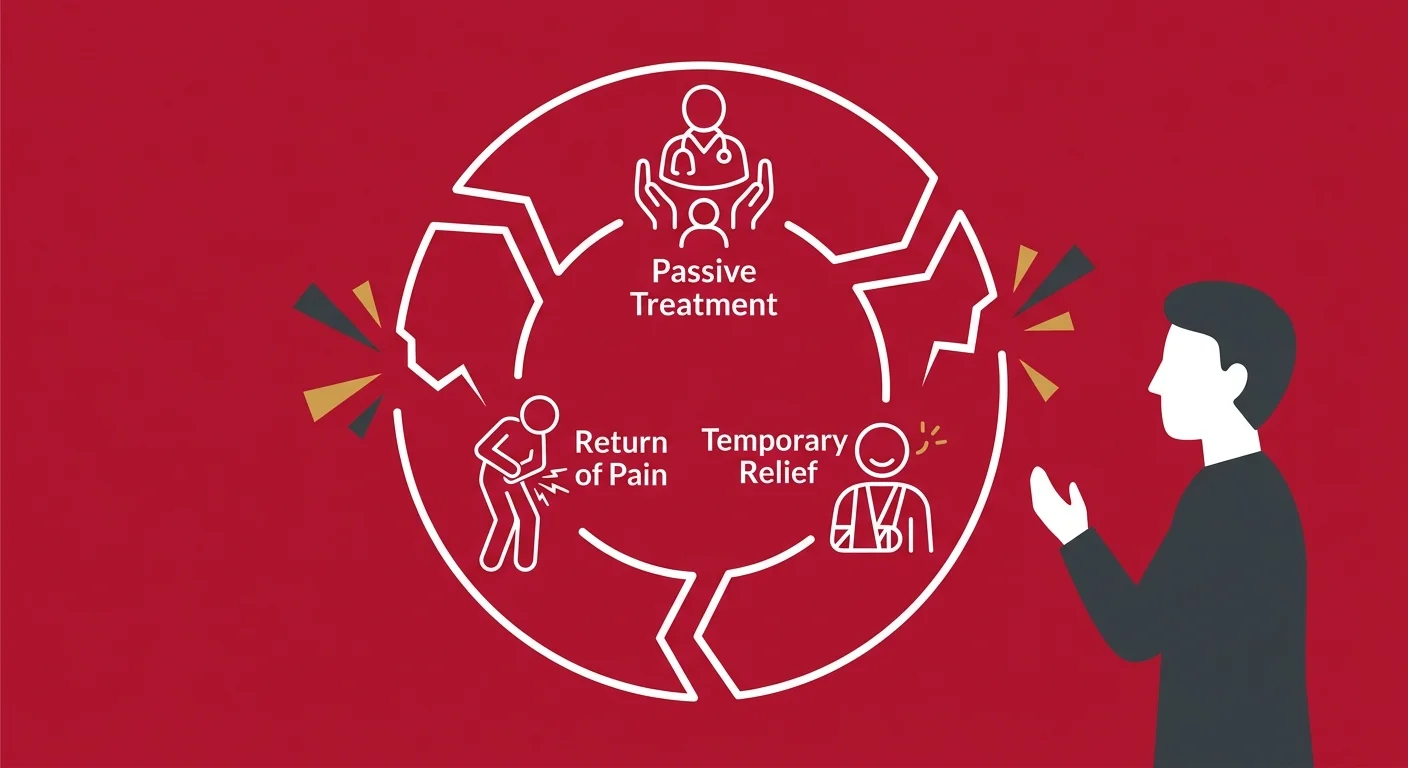
Isolated treatment doesn't fail because the provider got something wrong. It fails because no single modality was ever designed to finish the whole job alone.
Shockwave Therapy alone restarts the biological repair signal. Physical therapy alone loads tissue that was never prepared to receive that load.
Each approach, applied in isolation, hits a ceiling. And that ceiling is exactly where most chronic pain patients have been living for months — sometimes years.
Conservative physical therapy alone averaged 16.4 clinical sessions to achieve outcomes the combined approach reaches faster. That's not a rounding error.
That's a meaningful extension of the recovery timeline — more visits, more cost, and more time spent functioning below capacity. Integrating Shockwave Therapy decreased total required clinical visits by 30%.
The numbers aren't making a suggestion. They're making a case.
Why the Cookie-Cutter Shockwave Protocol Fails
Here's what the cookie-cutter Shockwave Therapy protocol looks like in practice: same energy level, same applicator position, same pulse count — delivered the same way regardless of what the tissue actually presents.
That's the Cookie-Cutter Protocol applied to an acoustic modality. And it carries the same failure mechanism every time.
Patient feedback isn't integrated into treatment decisions. Tissue response isn't tracked between sessions. And when something isn't working, the protocol doesn't change — it just repeats.
Running the same sequence on a body that's telling you it needs something different isn't care. It's a template.
Shockwave Therapy achieves clinical success rates between 65% and 91% for chronic soft tissue disorders — but those numbers come from protocols calibrated to the tissue.
Not from a fixed sequence applied uniformly.
The difference between a 65% outcome and a 91% outcome is the clinical decision-making surrounding the treatment. The technology is the same. What changes is whether someone is actually reading the tissue's response and adjusting.
And without structural assessment running alongside the Shockwave Therapy protocol, you're treating the tissue in isolation while ignoring the mechanical environment that damaged it.
That's the construction crew rebuilding the bridge using the original flawed blueprint. The biological materials are fresher. But the structure fails the same way.
New tissue. Same bad architecture. Same result.
The Limits of Physical Therapy When Tissue Isn't Ready to Load
Physical therapy has the opposite problem. The tissue isn't ready to be loaded — and loading it anyway doesn't accelerate recovery. It compounds the damage.
Chronically damaged tissue doesn't respond to mechanical stress the way healthy tissue does. It lays down disorganized collagen. It stays inflamed. And the patient gets progressively harder exercises applied to a structure that isn't biologically equipped to use them.
That's not a rehab failure. That's a sequencing failure.
Knowing how to safely progress tendon loading after the repair signal has been activated is the difference between rebuilding real strength and reinforcing a flawed structure.
So the limit of physical therapy in isolation isn't the exercises themselves. It's the biological environment those exercises are being applied to.
Shockwave Therapy changes that environment first. That's why the sequence matters.
Skipping the acoustic priming step doesn't make physical therapy faster. It makes it a slower, less effective version of what the combined approach accomplishes when both modalities run together.
| Treatment Approach | Where It Stalls | Clinical Consequence | What Gets Left Behind |
|---|---|---|---|
| Shockwave Therapy in isolation | Tissue is biologically reactivated but receives no mechanical direction | Repair signals fire without a structural blueprint — disorganized collagen fills the space instead of load-bearing tissue | Progressive loading cues that tell the body how to rebuild functional strength |
| Physical therapy in isolation | Mechanical load is applied before the underlying tissue damage is biologically addressed | Exercises stress a repair environment that was never primed to receive them — recovery extends and inflammation persists | The acoustic stimulus that restarts cellular repair and vascular growth in chronically damaged tissue |
| Cookie-cutter Shockwave Therapy protocol | Fixed energy, position, and pulse count applied regardless of tissue response or patient presentation | Clinical outcomes land at the low end of the success range — protocol continues unchanged even when tissue response signals a need to adapt | Clinical decision-making that calibrates treatment to what the tissue actually presents visit to visit |
| Structural assessment absent from the care plan | The mechanical environment that caused the original tissue breakdown is never corrected | Newly repaired tissue re-enters the same dysfunctional load pattern — the biological materials are fresher but the failure mechanism is identical | Spinal and structural alignment that changes the environment the repaired tissue must perform in |
The Evidence Behind Combined Protocol Outcomes
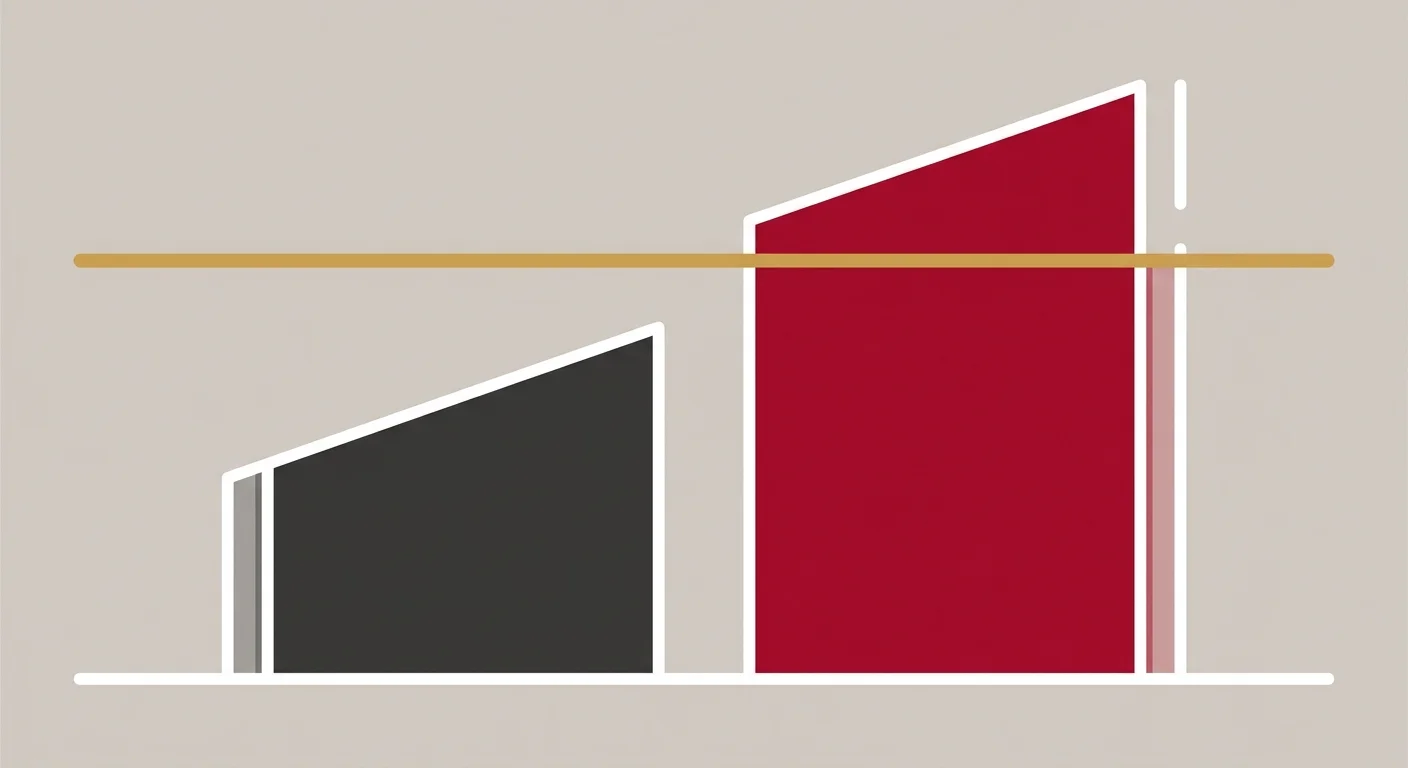
The research on this is not ambiguous.
When Shockwave Therapy and physical therapy are combined with clinical purpose — sequenced deliberately, not just stacked on the same schedule — outcomes are measurably better than either modality produces alone. NIH published findings show functional recovery accelerates by up to 35% compared to single-modality treatment.
That's not a marginal edge. That's a different recovery curve entirely.
And the pain scores move too. VAS scores drop significantly faster within 12 weeks of co-intervention — the kind of reduction that changes what a patient can actually do, not just what they report at a follow-up.
The clinical case for combining these modalities isn't theoretical. It's documented.
What the Research Shows When Both Modalities Are Used Together
And the data points to the same conclusion regardless of which condition you're looking at.
For chronic Achilles tendinopathy, NIH tendon recovery research confirms that pairing progressive loading with Shockwave Therapy cut return-to-play timelines by an average of 4 weeks.
The mechanism isn't mysterious. The combination elevates localized blood flow and upregulates insulin-like growth factor (IGF-1) expression — two signals that directly accelerate the cellular remodeling that progressive loading then directs.
Shockwave Therapy prepares the tissue. The loading protocol tells it what to become.
Think of it as a blueprint arriving at a construction site.
The acoustic priming creates the biological conditions. The structured loading gives the repair process its instructions. When both are present and sequenced correctly, the body doesn't just heal — it rebuilds toward function instead of scar tissue.
One without the other leaves the biology unfinished.
Condition-Specific Outcomes: Where the Data Is Strongest
Plantar fasciitis is where the numbers are sharpest. 78.5% of chronic cases achieved clinical success after three sessions of high-energy Shockwave Therapy — with sustained pain reduction greater than 50% documented across a 12-week tracking phase.
These weren't mild cases. These were chronic patients who had already failed conservative timelines before Shockwave Therapy entered the picture.
But strong population-level data doesn't automatically transfer to every presenting case. Before committing to a combined protocol, determining whether shockwave therapy fits your specific condition is the first clinical decision — not an afterthought.
The outcomes above came from patients whose tissue presentation and condition history matched the protocol. Assessment isn't a formality. It's what makes the data applicable.
The data is strongest where the protocol is most deliberate.
Achilles tendinopathy, plantar fasciitis, chronic soft tissue disorders — these are the conditions where the combined approach has been studied, tracked, and documented with intentional sequencing. The 35% improvement in functional recovery and the 4-week reduction in return-to-play timelines both came from protocols where the order of operations was planned before the first session, not adjusted on the fly.
Random co-application of two modalities doesn't produce these numbers. Intentional integration does.
| Condition | Single-Modality Result | Combined Protocol Result | Research Source |
|---|---|---|---|
| General Musculoskeletal Recovery | Single-modality therapy baseline | Functional recovery accelerated by up to 35% compared to single-modality therapy | NIH — PMC8116503 |
| General Musculoskeletal Recovery — Pain Scores | Moderate VAS pain reduction over 12 weeks with exercise alone | Significantly larger drops in patient VAS pain scores within 12 weeks of co-intervention | NIH — PMC8116503 |
| Chronic Achilles Tendinopathy | Standard return-to-play timeline with progressive loading alone | Combined progressive loading with Shockwave Therapy reduced overall return-to-play timelines by an average of 4 weeks | NIH — PMC10141380 |
| Chronic Plantar Fasciitis | Ongoing conservative care with incomplete resolution in chronic cases | 78.5% of chronic cases achieved clinical success; sustained pain reduction of greater than 50% over 12 weeks | PubMed — 29023122 |
How a Combined Protocol Is Structured in Practice
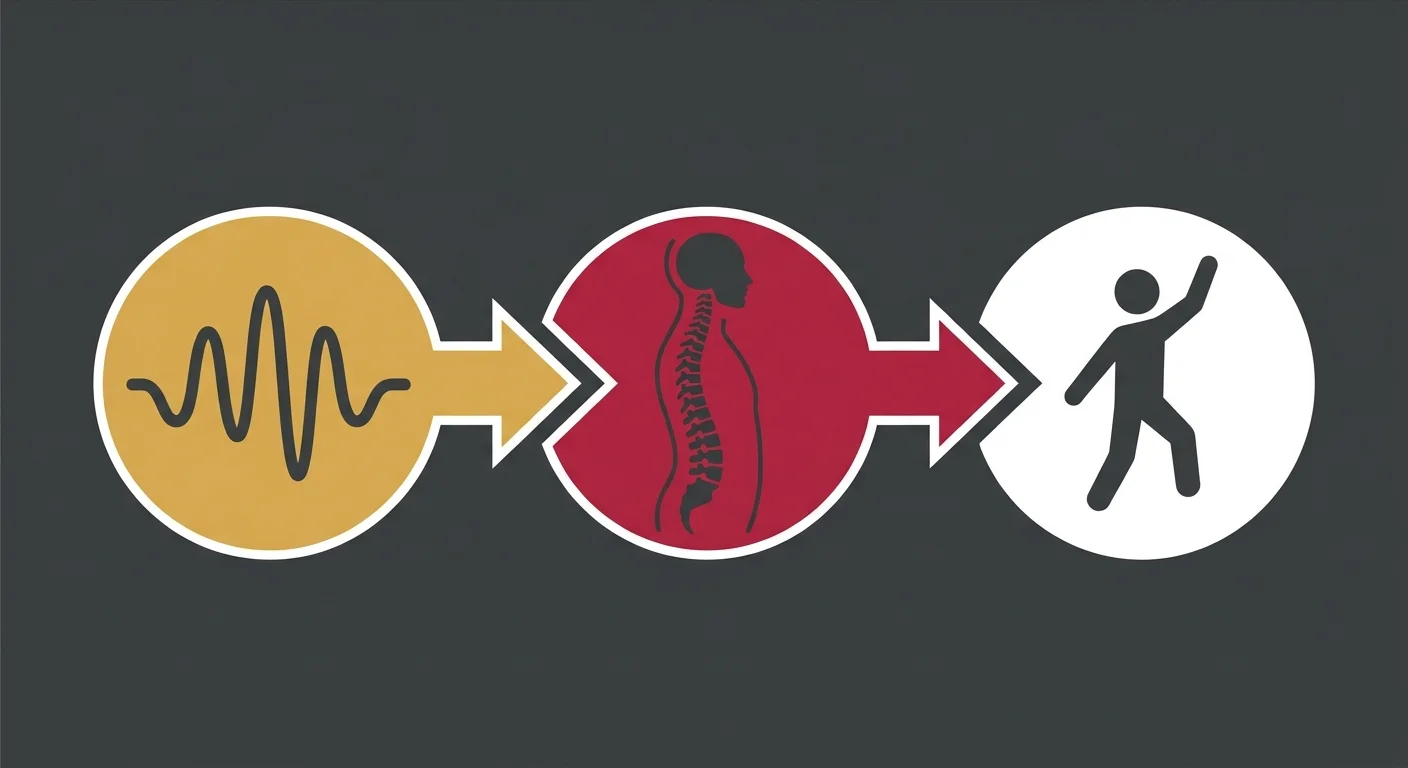
Research confirms that combining modalities works. What it doesn't hand you is the order of operations, why that order is non-negotiable, or what breaks down when you ignore it.
A combined protocol isn't two treatments sharing a schedule. It's a sequenced plan where each modality has a specific biological job at a specific moment. Shockwave Therapy goes first — the tissue has to be primed before load can be applied productively. Progressive loading follows because the repair signals Shockwave Therapy activates need mechanical direction to organize into something useful. And individualized chiropractic care runs alongside both — because tissue healing inside a mechanically compromised environment will rebuild toward that compromise.
The sequence isn't a preference. It follows the biology. Get it out of order and you're not running a combined protocol — you're running two isolated treatments that happen to share a calendar.
Sequencing Shockwave Therapy and Progressive Loading
Shockwave Therapy opens the window. The acoustic energy restarts a biological repair signal that chronic tissue has stopped running — triggering neovascularization, upregulating VEGF and insulin-like growth factor (IGF-1), and driving localized blood flow back into tissue that's been stuck in an inflammatory holding pattern. That vascular response kicks off within 48 hours. Think of it as the construction crew arriving on site: fresh materials, restored capacity, and a system that's finally ready to build something.
But that crew needs a blueprint the moment they show up. Progressive loading starts as the tissue becomes biologically receptive — graded, deliberate, calibrated to what the tissue can actually tolerate at that exact moment. That's where the 4-week reduction in return-to-play timelines for chronic Achilles tendinopathy comes from. Not from applying more load. From applying the right load at the right biological moment. For Achilles cases specifically, the full clinical progression through chronic tendinopathy recovery maps exactly how that sequencing plays out.
Functional recovery accelerates by up to 35% compared to single-modality therapy. VAS pain scores show significantly larger drops within 12 weeks of co-intervention. That's because the combined protocol compresses the biological timeline — the tissue is primed, the load arrives while repair is active, and both processes reinforce each other instead of running with a gap between them.
Two modalities doing different jobs. At the same time. That's the whole point.
Where Chiropractic Adjustments Fit Into the Sequence
Here's the thing — Shockwave Therapy and progressive loading fix the tissue. They don't fix the structure the tissue lives inside.
If the mechanical environment that overloaded the tissue in the first place hasn't changed, the newly healed tissue walks straight back into the same stresses that broke it. A chronically tight hip flexor. A rotated pelvis. Uneven load distribution through the lumbar spine. These aren't minor variables. They're the reason the tissue failed in the first place — and no amount of acoustic energy or progressive exercise corrects them on their own. Chiropractic adjustments address the architecture. They restore the mechanical conditions the tissue needs to stay recovered — not just heal once and come apart again six months later.
In a properly structured combined protocol, chiropractic care isn't the finishing touch. It's the reason recovery holds.
Shockwave Therapy rebuilds the material. Progressive loading teaches the tissue what to become. Structural alignment makes sure the environment it's returning to isn't the same one that destroyed it.
That's the full blueprint — delivered, maintained, and designed to last. The repair crew shows up ready. The work gets done right. And the structure they build this time is built to stay.
| Protocol Phase | Primary Intervention | Supporting Intervention | Clinical Goal | Typical Timeframe |
|---|---|---|---|---|
| Phase 1 — Acoustic Priming | Shockwave Therapy sessions | Structural alignment through chiropractic care | Restart the biological repair signal; trigger neovascularization and elevate localized blood flow in chronically inflamed tissue | Initial sessions; establishes the biological window for productive loading |
| Phase 2 — Directed Loading | Progressive tendon and soft tissue loading exercises | Continued Shockwave Therapy as needed; chiropractic alignment maintained | Apply mechanical direction to active repair signals; organize collagen deposition toward functional tissue rather than scar tissue | Begins as tissue becomes biologically receptive; graded to tissue tolerance throughout |
| Phase 3 — Structural Integration | Chiropractic care addressing mechanical environment | Adaptive loading progression; reduced Shockwave Therapy frequency | Correct the architectural conditions that originally overloaded the tissue; ensure healed tissue returns to a mechanically sound environment | Runs alongside active loading; sustained until load distribution is restored |
| Phase 4 — Functional Restoration | Condition-specific functional movement and loading | Periodic structural reassessment; care plan adjusted based on patient response | Confirm tissue integrity under real functional demand; prevent recurrence by maintaining both biological and structural gains | Outcome-dependent; care plan evolves based on what the patient actually reports |
Who Gets the Most From a Combined Protocol — And Who Needs a Different Conversation First
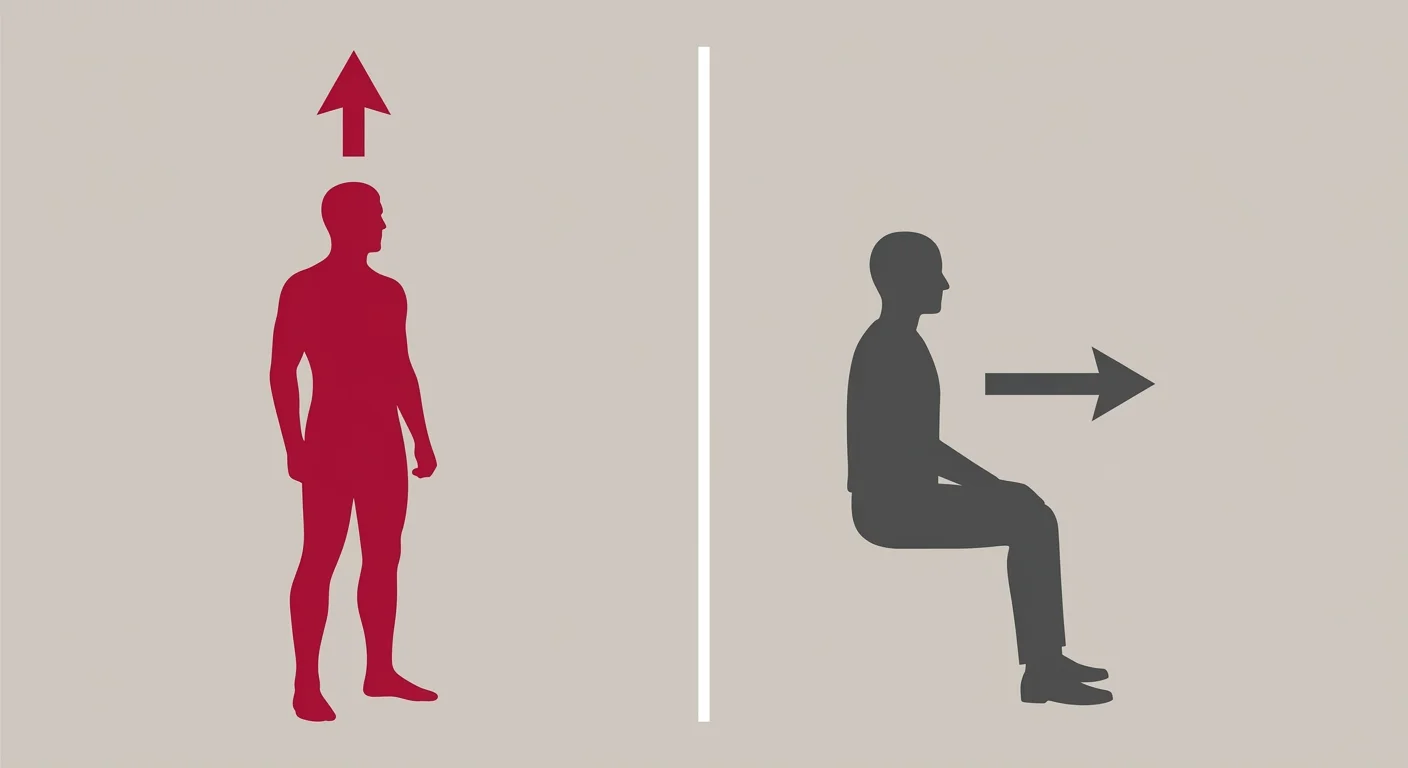
Not every patient is a day-one candidate for this protocol.
That's not a limitation. That's the whole point of the assessment.
This protocol has a specific biological target: chronic tissue that stopped responding to conservative care, locked in an inflammatory loop, unable to accept load without acoustic priming first.
That's a real and common presentation. But it's not every patient who walks in with pain.
The distinction matters — and the assessment is what draws that line.
Here's the framework in plain terms. Shockwave Therapy restarts a stalled repair signal. Progressive loading directs that signal toward organized tissue. Structural alignment ensures the healed tissue doesn't return to the same compromised mechanical environment that caused the breakdown.
When all three are present — and the patient's tissue and history actually match that model — the outcomes are measurable and documented.
When they don't match, the entry point changes. That's not a failure of the protocol. That's clinical intelligence doing its job.
The Conditions and Patient Profiles That Respond Best
Chronic tendinopathy is the clearest match. Achilles tendinopathy, plantar fasciitis, patellar tendinopathy — conditions where tissue has been trapped in a failed-healing loop for months and conservative timelines have already run out.
These are the cases where Shockwave Therapy's ability to trigger neovascularization and restart cellular remodeling makes the biggest clinical difference. The biological environment has gone passive. It needs a mechanical interrupt before progressive loading can do anything useful.
That's exactly what the acoustic signal delivers.
The NIH outcome data on plantar fasciitis makes the case precisely. 78.5% of chronic cases achieved clinical success after three sessions of high-energy Shockwave Therapy — with sustained pain reduction greater than 50% documented across a 12-week tracking phase.
These weren't mild presentations. These were chronic patients who had already exhausted standard conservative approaches before Shockwave Therapy entered the picture.
The common thread across all of them: tissue that was biologically stuck and needed priming before load could produce any real result.
The broader research confirms clinical success rates between 65% and 91% for chronic soft tissue disorders. That range isn't statistical noise — it reflects how much patient presentation, tissue history, and protocol sequencing actually matter.
Patients with chronic soft tissue dysfunction, documented failed conservative care, and a structural component to their presentation are the ones who respond best. That last piece — the structural component — is exactly why chiropractic care runs alongside the protocol, not after it.
And when cold laser therapy options are part of the picture for inflammatory modulation, the entry sequence shifts again. The clinical assessment drives everything — not the modality menu.
When This Protocol Is Not the Right Starting Point
Here's the thing — a combined protocol that opens with Shockwave Therapy isn't the right entry point when the tissue isn't actually chronic.
That distinction changes everything.
Acute injuries — recent sprains, fresh tendon tears, post-surgical tissue — are already in an active repair phase. The biological signal is running.
Adding acoustic energy to acutely inflamed tissue doesn't accelerate that process. It introduces a second mechanical stimulus into a repair conversation that hasn't stabilized yet. The right intervention for acute presentations is controlled stabilization and early loading — not priming a signal that's already firing.
That's a different protocol for a different biological moment. At Touch of Wellness Chiropractic, that determination starts with the assessment — not the modality menu.
And patients who want to select their treatment before the assessment is complete aren't a fit for this model.
The protocol is built from what the tissue actually presents. Not from what a previous provider did. Not from what someone read online. Not from a standard sequence applied to every chronic pain case regardless of what's actually happening in the body.
The one case where this combined protocol underdelivers isn't a failure of the modalities. It's the failure to draw the blueprint first. Sending construction crews to a site before the plans exist doesn't produce a better structure. It produces the same flawed one, rebuilt faster.
| Patient Profile | Condition Type | Why Combined Protocol Fits | Expected Entry Point |
|---|---|---|---|
| Chronic tendinopathy patient | Achilles tendinopathy, plantar fasciitis, patellar tendinopathy — months or years of failed conservative care | Tissue is biologically stuck in a failed-healing loop; needs acoustic priming before progressive load can produce organized repair | Shockwave Therapy first, followed by graded progressive loading and structural alignment throughout |
| Post-conservative-care plateau patient | Chronic soft tissue dysfunction that has not responded to standard physical therapy or rest cycles | Conservative timelines have run their course; the biological repair signal has gone passive and needs a mechanical interrupt to restart | Full clinical assessment to confirm chronic presentation, then combined protocol sequenced from Shockwave Therapy forward |
| Structurally compromised chronic pain patient | Chronic pain with a documented mechanical component — uneven load distribution, compensatory movement patterns, postural dysfunction | Tissue healing without structural correction rebuilds into the same mechanical environment that caused the breakdown; chiropractic care is not optional for this profile | Assessment-led entry; structural alignment integrated from the first session alongside Shockwave Therapy sequencing |
| Acute injury patient | Recent sprains, fresh tendon tears, post-surgical tissue — active inflammatory phase | The biological repair signal is already running; acoustic priming adds a second mechanical stimulus to an unstabilized process and is contraindicated | Stabilization and controlled early loading first; combined protocol re-evaluated once tissue exits the acute phase |
| Protocol-selective patient | Any chronic presentation, but patient arrives expecting to choose treatment before assessment is complete | The combined protocol is built from clinical findings — not from patient-selected modality sequences; skipping the assessment removes the blueprint the entire protocol depends on | Assessment is the non-negotiable entry point; patients unwilling to complete it are not candidates for this model regardless of condition type |
Frequently Asked Questions
The clinical picture holds. But the questions patients actually bring into that first conversation are sharper — shaped by a treatment that helped for a week and then didn't, or a protocol that kept running long after anything was changing.
These deserve a straight answer.
Is shockwave therapy more effective than standard physical therapy for chronic pain?
That question has the wrong frame built into it.
Standard physical therapy works. For mild presentations and early-stage dysfunction, it works well. But for chronic conditions — tissue that has stopped responding to conservative care, locked in a failed-healing loop — physical therapy alone is loading a structure that isn't biologically ready to receive that load. The repair signal has gone quiet. You're pushing a door that isn't open yet.
Shockwave Therapy changes the biological starting point. That's not a competitive claim — that's what the research shows: functional recovery accelerates by up to 35% when Shockwave Therapy is combined with targeted physical therapy exercises compared to exercise alone. VAS pain scores show significantly larger drops within 12 weeks of co-intervention.
That gap doesn't come from one modality beating the other. It comes from both working on different parts of the same problem at the same time. For chronic pain, the question isn't which one is better. It's whether the biology is ready for load — and whether anyone has checked the structural environment first.
Can you combine shockwave therapy and physical therapy in the same treatment plan?
Yes. And in chronic cases, that combination is where the results actually come from.
Shockwave Therapy restarts the repair signal. Progressive physical loading directs that signal toward organized, functional tissue. Run them together — sequenced correctly — and the recovery timeline compresses in a way neither achieves on its own.
The numbers aren't subtle. Conservative physical therapy alone averaged 16.4 clinical sessions in research tracking. Integrating Shockwave Therapy cut the total required visits by 30%.
But the word that matters most is sequenced. Acoustic priming happens first. Load follows when the tissue is biologically ready — not on a fixed calendar, not because the schedule says it's time. Get that order right and the two modalities reinforce each other. Get it wrong and you're running two isolated treatments that happen to share a room.
How do you safely load a tendon after receiving shockwave therapy?
Progressively. That's the whole answer.
After Shockwave Therapy, the tissue is in an active repair phase. Vessel density is climbing. Growth factors are upregulating. Cellular remodeling is underway. Loading aggressively at this stage doesn't accelerate healing — it disrupts the exact process that was just triggered.
The right approach starts low. Controlled movement that keeps the tissue engaged without overwhelming it. Load increases follow biological response — not a fixed schedule, not whatever week of the program you happen to be in.
That calibration is why combining progressive loading with Shockwave Therapy reduced return-to-play timelines for chronic Achilles tendinopathy by an average of 4 weeks. The load was matched to the repair window. Not applied on top of it.
How do I know if shockwave therapy is the right choice for my chronic pain before booking?
The clearest signal is chronicity.
If the pain has been there for months — if you've done the conservative work and the improvement either stalled or reversed — that's the biological profile Shockwave Therapy is built for. The tissue isn't in an acute phase. It's stuck. The repair signal has gone passive. Conservative loading isn't moving it because there's nothing primed to respond.
For chronic plantar fasciitis specifically, 78.5% of chronic cases achieved clinical success following three sessions of high-energy Shockwave Therapy — with sustained pain reduction greater than 50% documented across a 12-week tracking phase. These weren't mild presentations. They were cases where conservative care had already run its course.
But that determination starts with an assessment — not a modality menu. Tissue history, structural picture, how long the condition has been chronic — all of that gets evaluated before anything else. The outcomes above came from patients whose presentations matched the protocol. Assessment is what makes the data applicable to your case.
What is the typical recovery timeline when combining shockwave therapy with chiropractic adjustments?
The combined protocol compresses the timeline. It doesn't eliminate it.
For chronic tendinopathies, integrating progressive loading with Shockwave Therapy reduced return-to-play timelines by an average of 4 weeks compared to approaches that didn't sequence the two modalities together. That's a meaningful compression — not a marginal one.
Here's the honest answer on timing: it depends on tissue history, how long the condition has been chronic, and how consistently you engage with the loading protocol between sessions.
What changes with the combined approach — including structural chiropractic care — is biological efficiency. The tissue gets primed, loaded, and structurally supported at the same time instead of in sequence. And because the mechanical environment is addressed alongside the tissue itself, the healing doesn't have to start over when you return to normal activity. That's what changes the timeline. Not the treatment on its own — the integration.
Why does my pain keep coming back even after finishing a course of physical therapy?
Because the tissue healed. The environment didn't.
Physical therapy addresses load tolerance. It builds tissue capacity. What it doesn't address is the mechanical architecture — the structural misalignments, the compensatory movement patterns, the uneven load distribution — that caused the tissue to fail in the first place. So the tissue recovers, returns to the same mechanical stress, and the cycle starts again.
This is the structural gap in isolated physical therapy protocols. Shockwave Therapy restarts the repair signal. Progressive loading builds tissue capacity. But if the architecture is still wrong — rotated pelvis, compromised hip mechanics, uneven lumbar load distribution — the newly healed tissue walks straight back into the same problem.
That's the construction crew rebuilding a bridge from the original flawed blueprint. The materials are fresher. The effort is real. The structure fails the same way.
Addressing the architecture is what makes the recovery hold. That's not an add-on to the protocol. It's the reason the rest of it sticks.
The System Heals When You Stop Treating It in Pieces
Shockwave Therapy restarts the biology. Progressive loading gives it direction. Structural alignment makes sure the tissue isn't returning to the same mechanical environment that destroyed it the first time.
Pull one of those three out and you don't have an integrated protocol. You have a repair signal firing into a void.
Here's the thing — the body heals in systems. It always has.
Tissue stuck in a chronic inflammatory loop isn't stuck because it forgot how to repair itself. It's stuck because the conditions required for organized healing were never fully in place at the same time. That's the clinical reality behind every patient who did the exercises, got the injections, and still walked out of the appointment carrying the same pain they walked in with.
The modalities weren't wrong. The sequence was incomplete. And an incomplete sequence is just a slower, more expensive version of doing nothing.
At Touch of Wellness Chiropractic, the care plan is the blueprint.
Dr. Karen Hannah's whole-body biological systems lens means the protocol starts with what the tissue actually presents — not what the last provider tried, not what a standard sequence calls for. The modalities are sequenced to the biology. When the clinical picture changes, the protocol changes with it.
That's not a philosophy statement. That's the difference between healing that holds and healing that has to start over.
If your tissue has been stuck in that loop, the question isn't which modality to try next. It's whether anyone has delivered the blueprint yet. Because every fragmented recovery — every treatment that helped for a week and then didn't — traces back to the same root problem: sending construction crews to a bridge with no blueprint.
If you've done the work and the pain came back anyway, you weren't missing effort. You were missing the blueprint. At Touch of Wellness Chiropractic, Dr. Karen Hannah starts with what your tissue actually presents — not a modality menu, not a repeat of what the last provider tried. If Shockwave Therapy fits your clinical picture, it gets sequenced correctly. If it doesn't, that's worth knowing before you spend another month sending construction crews to a bridge that was never going to hold. Find out what your assessment looks like. Book Appointment Real answers. The right sequence. A plan built from your clinical picture — not someone else's protocol.