
Shockwave Therapy for Plantar Fasciitis: What to Expect
Shockwave Therapy for plantar fasciitis uses focused acoustic energy to trigger genuine tissue repair inside the plantar fascia. It is non-invasive, FDA-approved, and designed for patients with chronic heel pain who have already tried rest, orthotics, stretching, and cortisone injections — and are still in pain.
The mechanism is biological, not pharmaceutical. Acoustic waves create controlled microtrauma at the injury site, stimulating neovascularization and increasing blood flow to damaged tissue. That process activates the body's own healing response — remodeling the fascia from the inside out. It does not silence the pain signal. It addresses what's actually wrong with the tissue.
The clinical outcomes are well-documented. Studies report a success rate of 70% to 87% in patients who had already failed conservative treatments. Pain scores on the Visual Analog Scale drop by over 60% at 12 weeks post-treatment. More than 80% of patients report high satisfaction following a multi-session protocol.
There's no surgical downtime. Most patients return to light daily activity within 24 hours. A standard course of care involves multiple weekly sessions, with the total number calibrated to how the patient's tissue responds — not a fixed schedule applied in advance.
Session parameters — intensity, frequency, and treatment area — are set to match what the tissue needs. The goal is repair, not symptom suppression.
For patients managing chronic heel pain with ice, injections, or sheer willpower, Shockwave Therapy offers a different path — one that targets what's wrong with the tissue, not just how it feels in the moment.
Last Updated: July 29, 2026
- • What Shockwave Therapy Actually Does to Your Heel
- • Why Most Heel Pain Keeps Coming Back
- • What Actually Happens in a Shockwave Therapy Session
- • Who Gets the Best Results From Shockwave Therapy
-
• Frequently Asked Questions About Shockwave Therapy for Plantar Fasciitis
- • What does shockwave therapy feel like during a plantar fasciitis session?
- • How many shockwave therapy sessions will I need for chronic heel pain?
- • Are there side effects or downtime after a shockwave therapy session?
- • Why choose shockwave therapy over cortisone injections for plantar fasciitis?
- • How soon will I feel pain relief after my first shockwave session?
- • Stop Managing the Pain. Start Fixing the Tissue.
What Shockwave Therapy Actually Does to Your Heel
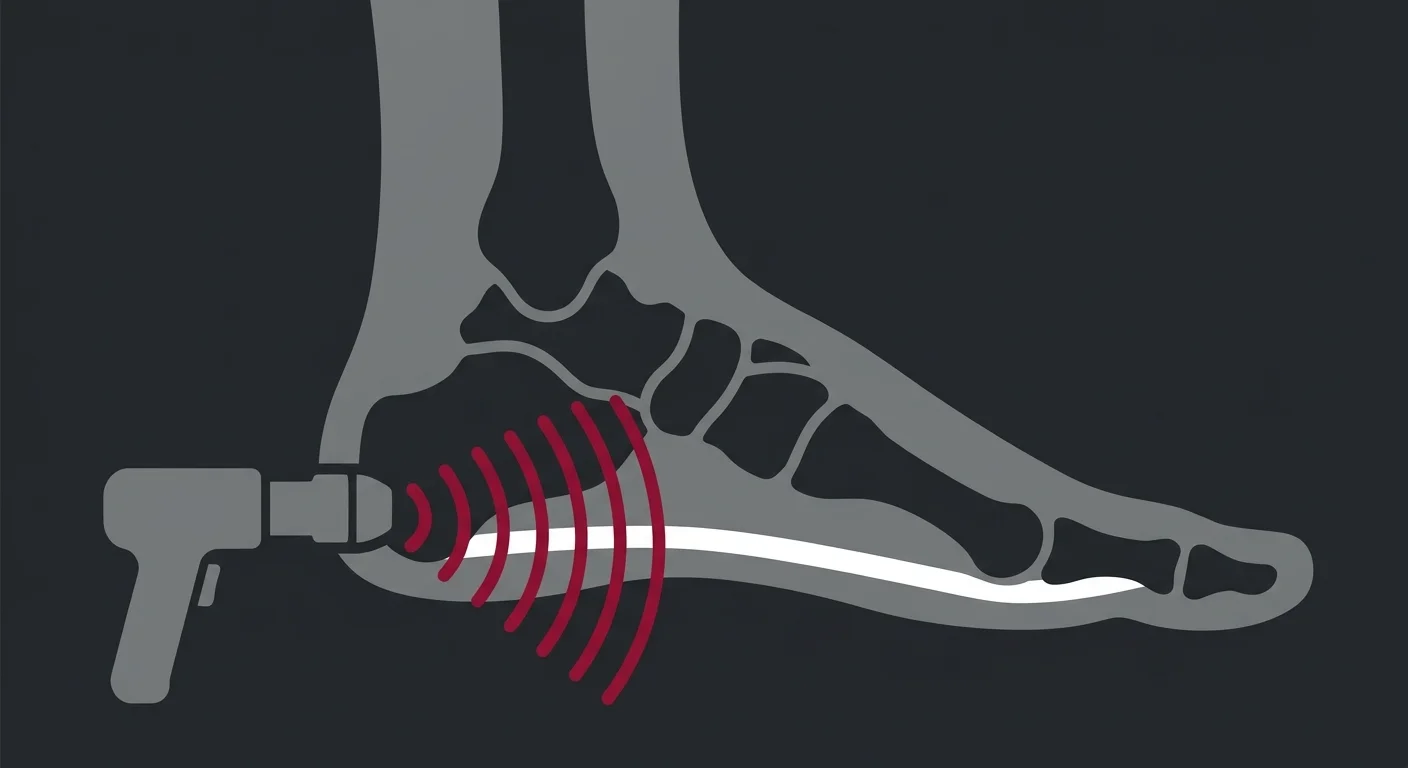
Most patients with plantar fasciitis have been told the problem is inflammation. That's not wrong.
But it's not the whole story. Chronic plantar fasciitis isn't just an inflammation problem. It's a tissue degeneration problem. And that distinction changes everything about how you treat it.
Cortisone works on inflammation. Shockwave Therapy works on the tissue itself.
That's the biological difference. It's also why patients who've been through multiple rounds of injections still end up needing something more.
That biological difference is the whole conversation. So let's get specific about what Shockwave Therapy is actually doing to your heel.
The Acoustic Wave Mechanism
Acoustic shockwaves deliver focused pulses of energy directly into the damaged tissue. These aren't vibrations. They're not heat. If you want to understand what makes this different from anything else on the market, how acoustic waves trigger collagen remodeling lays out the full picture.
What happens at the cellular level is controlled microtrauma. The body reads that signal as an injury that needs active repair — and it responds accordingly. That response is the entire point of the therapy.
That repair signal does something cortisone can't.
It stimulates neovascularization — the formation of new blood vessels — and drives blood flow into tissue that's been chronically starved of it. Degenerative plantar fascia doesn't heal on its own partly because circulation there is poor to begin with. Shockwave Therapy forces that biology to change. Not suppresses it. Changes it.
The FDA approved Shockwave Therapy specifically for chronic proximal plantar fasciitis(https://www.accessdata.fda.gov/scripts/cdrh/cfdocs/cfPMA/pma.cfm?id=P040026) — not as an experimental option, but after clinical trials demonstrated measurable efficacy in patients who had already failed conservative care.
That approval matters. It means an independent body looked at the mechanism, reviewed the outcomes, and confirmed the therapy does what it claims. This isn't someone's hypothesis. It's been tested.
Why This Is Different From Every Other Heel Pain Treatment
Rest tells the foot to stop moving. Orthotics redistribute load. Cortisone injections suppress the inflammatory signal.
Three different interventions. One shared problem: none of them touch the tissue itself. The damage stays. The symptom quiets for a while. And then it comes back — because nothing changed at the level that actually needed to change.
Shockwave Therapy is structurally different. It initiates the remodeling process — actually changing the biology of the fascia, not quieting the alarm.
That's what makes it a root-cause intervention. And it's why the results don't disappear the moment treatment stops.
At Touch of Wellness Chiropractic, Shockwave Therapy isn't a standalone add-on. It fits inside a clinical framework built around spinal adjustment and advanced therapy modalities — because chronic heel pain rarely exists in isolation from what's happening further up the chain.
What the tissue needs drives the protocol. Not a preset sequence. Not a billing calendar. The biology tells us where to go next.
| Treatment Type | Mechanism of Action | Effect on Tissue | Addresses Root Cause |
|---|---|---|---|
| Rest / Offloading | Reduces mechanical stress on the fascia | No direct change to tissue structure — degeneration remains | No |
| Orthotics | Redistributes load and alters foot mechanics | Reduces strain but does not repair damaged collagen fibers | No |
| Cortisone Injection | Suppresses the inflammatory signal at the injection site | Temporarily reduces pain without initiating tissue remodeling | No |
| Shockwave Therapy | Delivers focused acoustic pressure waves into degenerative tissue | Stimulates neovascularization, increases blood flow, and initiates active collagen remodeling | Yes |
| Surgery | Physically releases or removes a portion of the plantar fascia | Alters tissue structure through excision — not regeneration | Partial — removes the problem rather than repairing it |
Why Most Heel Pain Keeps Coming Back
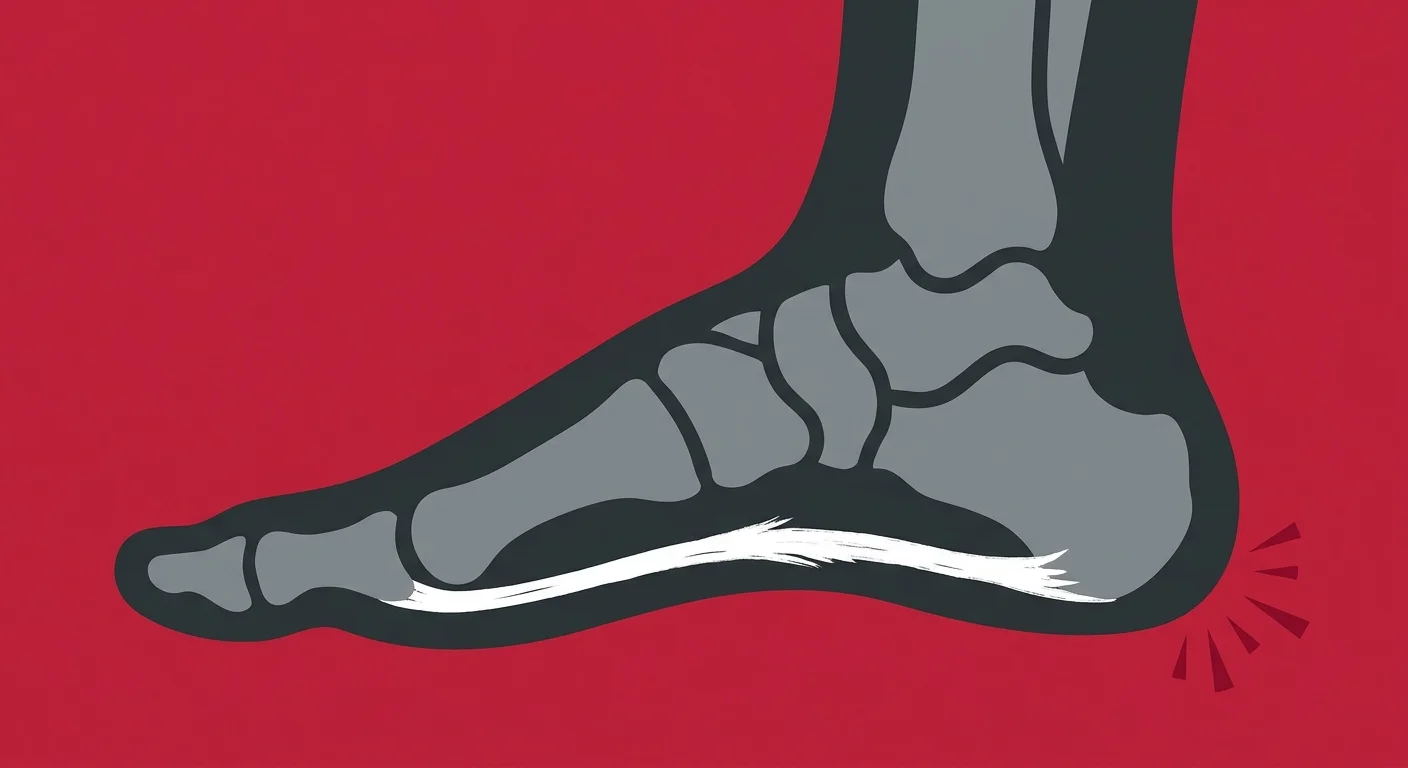
Heel pain that keeps coming back isn't telling you to rest more. It's telling you the tissue was never actually repaired.
Chronic plantar fasciitis is a tissue degeneration problem wearing an inflammation costume. That's not splitting hairs. It's the exact reason people run the same treatment loop and end up back at square one.
When the structure itself is compromised, managing the pain environment around it isn't treatment. It's borrowed time. And borrowed time runs out.
The Problem With Treating Symptoms Instead of Tissue
Cortisone injections suppress inflammation. That's a real, measurable effect — and it's exactly why they feel like they're working for the first few weeks. But inflammation isn't the root problem in chronic plantar fasciitis. It's a symptom of one.
The root problem is degraded connective tissue that's lost its ability to complete a repair cycle on its own. Cortisone doesn't reach that. It interrupts the pain signal without changing the structure that's generating it. If you want to understand why cortisone injections fail for chronic tendon pain at the biological level, that's the mechanism — signal suppression, not tissue repair.
Rest, orthotics, and stretching follow the same logic. They change how the foot functions under load. They don't remodel the fascia. The damaged tissue stays damaged.
That's not the patient failing. That's the treatment model failing. Symptom management and tissue repair aren't the same intervention. Treating them like they are is exactly what keeps people stuck.
What Chronic Plantar Fasciitis Actually Means Biologically
"Chronic" plantar fasciitis — symptoms that persist despite conservative care — means the fascia has entered a degenerative state. Not just an inflamed one. The tissue has lost structural integrity. Blood supply to the area is poor. The healing response has stalled.
That stalled healing response is exactly what NIH research documents in patients who've exhausted conservative care. A 70% to 87% success rate with Shockwave Therapy in that population isn't an outlier. It's what happens when the intervention targets the biology instead of the symptom. A separate NIH review confirms it — VAS pain scores drop by over 60% at 12 weeks post-treatment. Sustained reduction. Not a temporary reprieve.
The biology matters because it tells you what the right intervention actually is. Degenerated tissue needs a stimulus that forces active repair — new blood vessel formation, collagen remodeling, cellular turnover. That's what acoustic shockwaves deliver. And here's the thing: it isn't a more aggressive version of rest or injections. It's a different biological conversation entirely.
| Approach | What It Does | Why It Fails Long-Term | Average Recurrence Rate |
|---|---|---|---|
| Rest and offloading | Reduces mechanical stress on the plantar fascia during weight-bearing activity | Removes the load but doesn't repair the damaged tissue — once activity resumes, the same degraded structure is still bearing weight | High — symptoms return when normal activity resumes because the underlying degeneration is unchanged |
| Orthotics and arch support | Redistributes load across the foot to reduce strain on the fascia during movement | Manages how force is applied to the tissue but doesn't restore structural integrity to the fascia itself | High — dependent on continued use; degenerated tissue remains degenerated without active repair |
| Stretching protocols | Improves flexibility and reduces tension in the calf and plantar fascia | Addresses muscle tightness but doesn't stimulate collagen remodeling or new blood vessel formation in the damaged fascia | Moderate to high — beneficial as a support measure, but insufficient as a standalone intervention for degenerative tissue |
| Cortisone injections | Suppresses the inflammatory response, producing short-term reduction in pain and swelling | Interrupts the pain signal without touching the structural problem — repeated injections can further weaken already compromised connective tissue | Very high — relief is temporary because the root-cause degeneration is never addressed |
| Shockwave Therapy | Delivers focused acoustic energy to create controlled microtrauma, stimulating neovascularization and active tissue remodeling | Not a symptom-masking approach — it initiates biological repair at the cellular level, changing the structure of the fascia rather than quieting the alarm around it | Low in patients who complete the protocol — outcomes reflect genuine tissue repair, not borrowed time |
What Actually Happens in a Shockwave Therapy Session
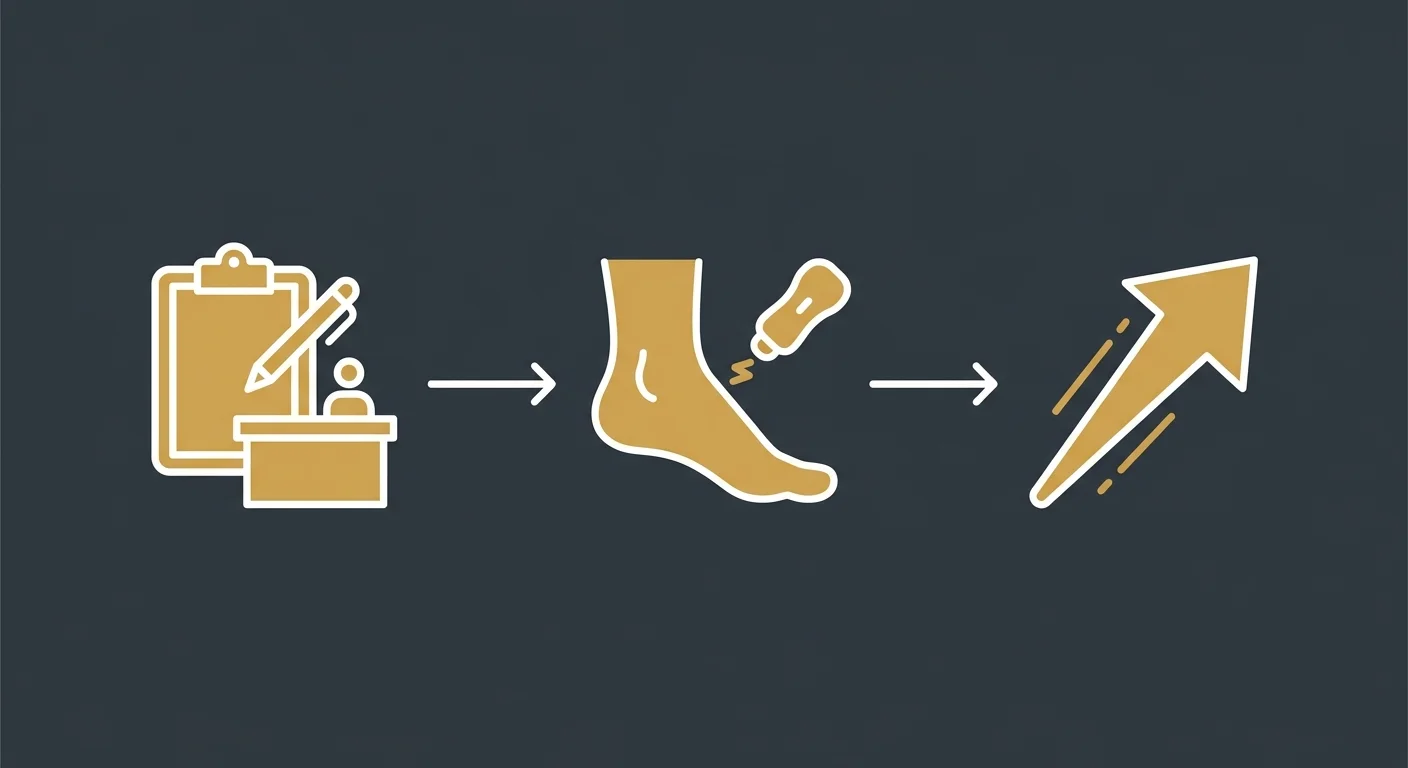
That's the biology. Now here's what it actually feels like.
Patients who know what's happening beneath the skin don't panic when the intensity hits. They recognize it as the mechanism doing its job.
Shockwave Therapy isn't something that happens to you while you lie still. You'll feel it working. That's by design.
From Check-In to Walking Out: The Session Breakdown
You walk in. The clock doesn't run against you.
The session starts with a quick clinical check-in — reviewing the target area, going over your symptom pattern since the last visit, adjusting the treatment parameters if your tissue response calls for it.
That last part isn't a formality. The protocol isn't fixed. It responds to what you actually report.
The treatment comes through a handheld applicator placed directly against the heel. Acoustic pressure waves pulse into the plantar fascia in focused, precise intervals — the provider moves methodically across the treatment zone.
None of that positioning is arbitrary. Where the applicator sits and how hard it's working both matter, because collagen remodeling under acoustic stimulation starts at the cellular level during this phase.
Then it's done. You walk out.
No recovery room. No crutches. No one telling you to stay off your feet for a week. Most patients return to light daily activity within 24 hours.
The 15-minute door-to-door standard isn't a marketing claim. It's a clinical commitment — because respecting your time is part of the care.
What the Therapy Feels Like During Treatment
Here's the honest version: Shockwave Therapy isn't painless.
The pressure waves create a deep, percussive feeling in the heel — tapping, sometimes pounding, depending on how degenerative the tissue is and where in the treatment zone the applicator sits.
That sensation is the mechanism. Controlled microtrauma at the injury site is what initiates the repair signal.
If you felt nothing, nothing would be changing.
Most patients tolerate it well. NIH-published data shows that over 80% report high satisfaction following a multi-session protocol.
That number holds because the outcome justifies the discomfort. Patients who've cycled through injections and ice for months know what it means to finally feel something working on the tissue itself — not just quieting the alarm around it.
What the Recovery Timeline Actually Looks Like
Here's where most patients either stay the course or bail early — expectations.
Session one won't resolve chronic plantar fasciitis. That's not a limitation of the therapy — that's how tissue remodeling works.
Collagen restructuring and neovascularization are biological processes. They take time. Many patients notice a short-term increase in sensitivity after the first session before the tissue begins to respond.
That's normal. It's part of the repair sequence — not a sign that something went wrong.
Care plans run across multiple weekly sessions. The exact number depends on your clinical picture and how your tissue responds between visits.
And if something isn't producing results, the protocol changes. Repeating the same thing and waiting for a different outcome isn't care. It's a template.
Patients who complete the course get real repair — not borrowed time.
Pain scores drop because the tissue structure improves. Not because the alarm got silenced. That's the distinction Shockwave Therapy makes.
Every symptom-management approach before it was working around damaged tissue. This one changes it.
| Session Phase | What Happens | Duration | What the Patient Experiences |
|---|---|---|---|
| Clinical Check-In | Provider reviews your symptom pattern since the last visit, confirms the target area, and adjusts treatment parameters based on your tissue response — not a fixed preset | Brief | Conversational — you're reporting what you noticed; the protocol listens |
| Applicator Placement | Handheld applicator is positioned directly against the heel; the provider identifies the precise treatment zone before delivering any pulses | Quick | Localized pressure as the target area is confirmed — no guesswork, no approximation |
| Acoustic Wave Delivery | Focused pressure pulses are delivered in a systematic pattern across the plantar fascia; intensity and frequency are set to your clinical picture | The bulk of the session | Deep, percussive sensation — often described as tapping or pounding; intensity varies with tissue degeneration; this is the mechanism working |
| Post-Treatment | No recovery room, no immobilization, no downtime protocols — you walk out the same way you walked in | Immediate | Mild lingering sensitivity in the treated area is normal; it's part of the repair sequence beginning |
| Return to Activity | Light daily activity resumes; no restrictions on walking or standard movement between sessions | Within 24 hours | No disruption to your workday or routine — the appointment fits your schedule, not the other way around |
Who Gets the Best Results From Shockwave Therapy
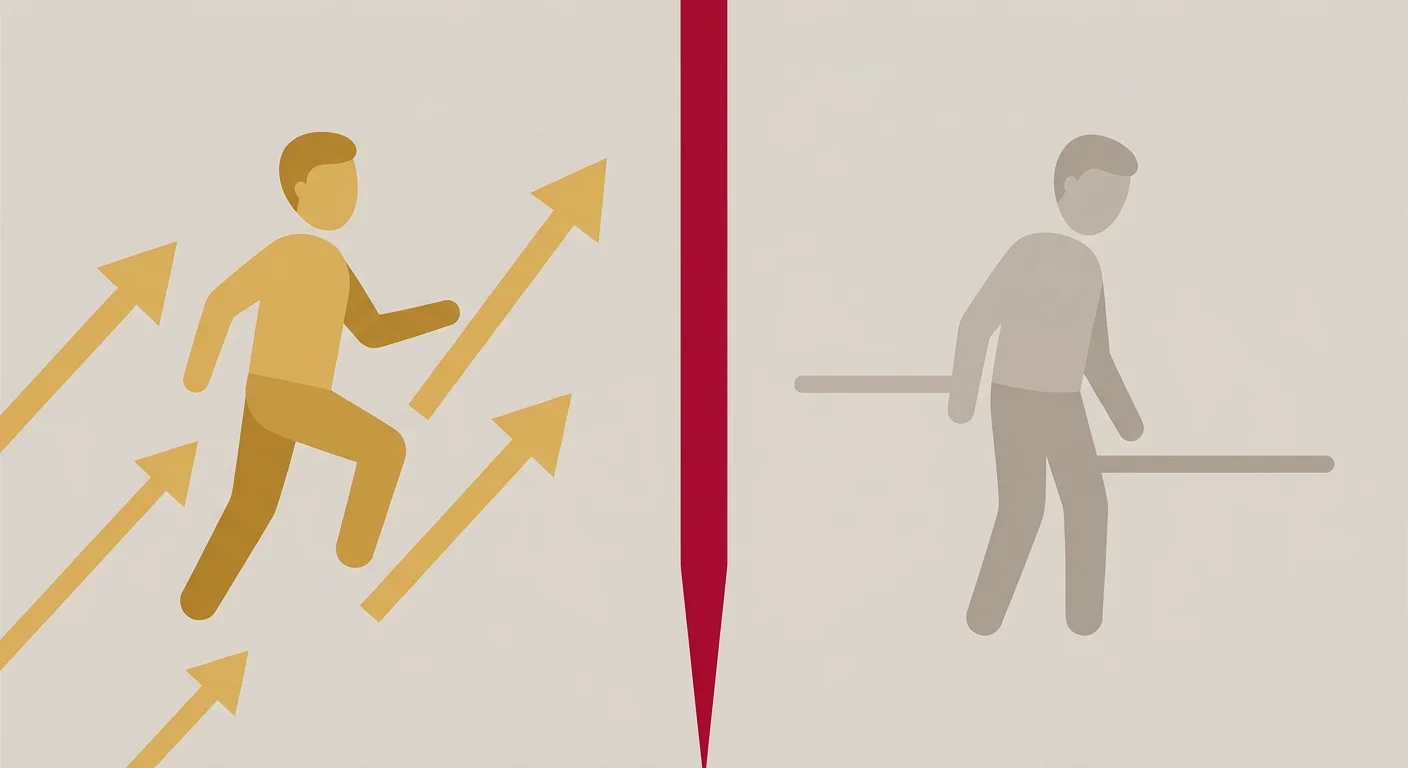
Not every heel pain patient belongs in a Shockwave Therapy protocol. That's not a disclaimer. That's the clinical picture being honest with you upfront.
The patients who get the best results share a specific profile. They've been living with plantar fasciitis long enough that conservative care has provably failed them. Their tissue isn't just inflamed anymore. It's degenerated. And they're ready to engage a process that asks their body to do real repair work — not just feel better for a few weeks before the cycle starts again.
The research backs this up. A 70% to 87% success rate and over 80% patient satisfaction aren't averages across the general population. Those numbers come from patients who had already burned through conservative care. That's the population Shockwave Therapy was designed for. The data follows the right clinical fit — it doesn't create it.
The Clinical Profile of a Strong Shockwave Candidate
The FDA approved Shockwave Therapy specifically for chronic proximal plantar fasciitis — meaning patients with at least six months of persistent symptoms who haven't responded to rest, stretching, orthotics, or injections. That approval wasn't a formality. It reflects the clinical reality that degenerated tissue needs a different intervention than acutely inflamed tissue. These aren't the same problem. They don't get the same answer.
Strong candidates have usually cycled through the standard sequence — physical therapy, cortisone injections, arch support — without lasting relief. The pain keeps coming back because nothing in that sequence repaired the tissue. It managed the environment around it. Run that loop long enough and Shockwave Therapy stops being one option among many. It becomes the clinically indicated next step.
There's a mindset piece too. Shockwave Therapy works by creating controlled microtrauma. That has a sensation. Patients who understand that going in — and who won't walk out when treatment feels uncomfortable — are the ones who finish the protocol and get the result. The biology requires a stimulus. Candidates who can tolerate that reality are exactly who the data supports. The ones who can't aren't failing. They're just not the right fit yet.
For patients weighing their options, the biology argument and the cost argument land in the same place. The real cost of staying in a cortisone cycle versus committing to a repair approach is not a close comparison. The tissue makes the case. So do the numbers.
Who This Approach Isn't For
Here's the direct version: if you're looking for a single-session resolution, Shockwave Therapy isn't your treatment.
Patients who won't commit to a multi-session protocol — or who expect full resolution before the tissue has had time to remodel — won't get the outcome the research shows. Collagen restructuring is a biological process. It doesn't bend to an impatient timeline. And any provider who tells you otherwise isn't being straight with you.
If your heel pain is recent — a few weeks in, still in the acute inflammation phase — Shockwave Therapy isn't the right entry point. Acute inflammation responds to conservative care. Jumping to shockwave for a two-week flare isn't individualized care. It's overtreatment. In those cases, cold laser therapy or another modality is the appropriate starting point while the tissue responds and the clinical picture becomes clearer.
And if you're arriving with a list of what your last provider did — expecting that sequence to be replicated before the assessment is finished — this isn't the right fit. The care plan here is built from your clinical picture. What you report. How your tissue responds between sessions. Where progress stalls. That drives the protocol. Not a preset sequence, not a billing calendar. The assessment is always the starting point.
| Patient Profile | Symptom Duration | Prior Treatments Tried | Shockwave Candidacy |
|---|---|---|---|
| Chronic sufferer — conservative care failed | Six months or longer of persistent symptoms | Rest, stretching, orthotics, cortisone injections — without lasting relief | Strong candidate — degenerated tissue needs active repair, not more symptom management |
| Post-injection patient with recurring pain | Months to years of cyclical flare-and-suppress pattern | Multiple cortisone rounds, physical therapy, arch support | Strong candidate — tissue degeneration is driving the cycle; injections aren't reversing it |
| Acute inflammation — recent onset | Fewer than six weeks of symptoms | Little to none — pain is new | Not the right entry point — acute tissue responds to conservative care first; overtreatment risk is real |
| Patient unwilling to complete a multi-session protocol | Any duration | Varies — but expects single-visit resolution | Poor candidate — collagen remodeling is a biological process; partial commitment produces partial results |
| Protocol-dependent patient requiring replication of prior provider's sequence | Any duration | Previous chiropractic or therapy care with a fixed sequence | Not the right fit — the care plan here is built from clinical assessment and tissue response, not a preset template |
Frequently Asked Questions About Shockwave Therapy for Plantar Fasciitis
The biology isn't complicated. But the questions you actually want answered — those don't come up during the appointment. They come up on the drive home.
Here are the questions that actually matter before you commit. Direct answers. No hedging.
What does shockwave therapy feel like during a plantar fasciitis session?
It isn't painless. Most patients describe it as a deep, percussive feeling — tapping, sometimes pounding. The intensity depends on how degenerated the tissue is. That sensation is the mechanism. Controlled microtrauma is what triggers the repair signal. If you felt nothing, nothing would be changing.
How many shockwave therapy sessions will I need for chronic heel pain?
Most care plans run 3 to 5 weekly sessions. But that number isn't locked in before we've seen how your tissue responds. What you report between visits drives the plan. If something isn't producing results, the protocol changes — not at the end of a 12-week billing cycle, but as soon as the clinical picture calls for it. No preset calendar. No sunk-cost pressure to keep showing up.
Are there side effects or downtime after a shockwave therapy session?
There's no surgical downtime. You walk out. Most patients return to light daily activity within 24 hours. Some notice temporary soreness or increased sensitivity at the treatment site — that's not a complication. That's the repair sequence doing its job. It passes. You're not recovering from a procedure. You're recovering from actual tissue remodeling, which is a different thing entirely.
Why choose shockwave therapy over cortisone injections for plantar fasciitis?
Cortisone quiets the alarm. It doesn't fix what's triggering it. The pain comes back because nothing in that injection touches the degeneration underneath — the damaged collagen, the absent blood supply, the structural breakdown that started this whole thing. Shockwave Therapy triggers actual biological repair: collagen remodeling, neovascularization, real structural change. Pain scores drop by over 60% at 12 weeks because the tissue itself improved. Over 80% of patients report high satisfaction after completing a multi-session protocol. Cortisone can't produce those numbers. It isn't doing the same work.
How soon will I feel pain relief after my first shockwave session?
Session one won't resolve chronic plantar fasciitis. That's not a limitation — that's how tissue remodeling works. Biological repair isn't instant. Many patients notice increased sensitivity after the first session before things start to shift. That's normal. Meaningful pain reduction builds across the full protocol. By 12 weeks post-treatment, research shows significant, sustained reduction in pain scores. The patients who complete the course get real repair. Not borrowed time. Not two more weeks of quiet before it comes back.
Stop Managing the Pain. Start Fixing the Tissue.
Cortisone doesn't repair anything.
It quiets the alarm while the tissue keeps degenerating. Every month without real intervention is another month the biology drifts further from recovery. That's the cycle — injections that work for two weeks, then don't, then repeat. And somewhere in that cycle, the window for easy recovery closes. Quietly. Without warning.
The research doesn't hedge. A 70% to 87% success rate in patients who'd already failed conservative care. Pain scores down by over 60% at twelve weeks post-treatment.
Not because the signal got silenced. Because the tissue structure actually changed.
That's the gap — between managing a symptom and resolving the thing producing it. Those aren't the same outcome. They never were.
At Touch of Wellness Chiropractic, the goal isn't to keep you coming back indefinitely. It's to get your tissue to a point where it doesn't need to.
Dr. Karen Hannah builds the care plan from what you actually report. Not a preset protocol. Not a billing calendar. And if something isn't producing results, the protocol changes — because repeating the same thing and calling it care isn't care. That's a template.
Individualized means it responds to you. That's the clinical standard here, not a marketing position.
If cortisone bought you two weeks and the pain came back every time — the tissue was never fixed. You bought time. Borrowed it, really.
Shockwave Therapy is a different conversation. Not symptom management. Actual repair.
The question isn't whether your heel hurts. It's whether you're ready to stop working around the damage — and go after it. That's the difference between borrowed time and real repair, not borrowed time.
If cortisone kept buying you two weeks and the pain kept coming back, the tissue was never repaired. It was silenced. That's the cycle. And the way out is real repair, not borrowed time.