
How to Know If Shockwave Therapy Is Right for Your Condition Before Booking
Shockwave therapy is not a pain switch. It's a biological trigger — one that uses high-energy acoustic waves to initiate tissue repair in chronically injured tendons, ligaments, and fascia that have already stopped healing on their own.
The FDA has cleared high-energy extracorporeal shockwave therapy devices for chronic heel pain and tennis elbow. Clinical success rates reach up to 91% for conditions like calcifying tendonitis of the shoulder. Up to 80% of patients with chronic tendinopathies report significant pain reduction after completing a full treatment cycle. But those numbers come with a protocol — typically 3 to 5 weekly sessions — because the acoustic wave doesn't remove the problem. It starts a cascade of collagen remodeling and vascularization that the body then has to carry through.
You're hiring the biology, not bypassing it.
Whether shockwave therapy is right for your condition comes down to three questions. Is the tissue chronically damaged — meaning it hasn't healed despite conservative care? Is the underlying structure biomechanically sound enough to support the repair process? And has the standard approach — cortisone, rest, stretching — already failed without resolving the root cause?
Cortisone suppresses inflammation. That's not healing. Repeated cortisone use has been linked to a 2-to-4-fold increase in tendon re-rupture risk over long-term follow-up. The short-term relief is real. So is the structural cost that compounds underneath it.
Shockwave therapy isn't the right fit for every presentation. Contraindications exist. So does the wrong clinical picture — a body that isn't positioned to respond. If the biomechanics are off or the nervous system pathway is compromised, the acoustic wave can trigger the cascade, but the tissue won't hold the result. The candidacy assessment matters more than the technology.
Last Updated: July 29, 2026
- • What Shockwave Therapy Actually Does Inside the Tissue
- • The Conditions Shockwave Therapy Is Built For
- • Who Should Not Book Shockwave Therapy
- • The Assessment Checklist: Is Your Body Ready to Respond?
-
• Frequently Asked Questions About Shockwave Therapy Candidacy
- • How can I tell if my chronic pain is a candidate for shockwave therapy before I make an appointment?
- • Why does shockwave therapy succeed on stubborn tendons when cortisone injections and stretching fail?
- • What specific conditions or patient health profiles make shockwave therapy unsafe or ineffective?
- • What should I expect regarding pain levels and functional recovery during the first 48 hours after treatment?
- • How many sessions are typically required to see lasting structural changes in the treated tissue?
- • The Honest Answer Before You Book
What Shockwave Therapy Actually Does Inside the Tissue
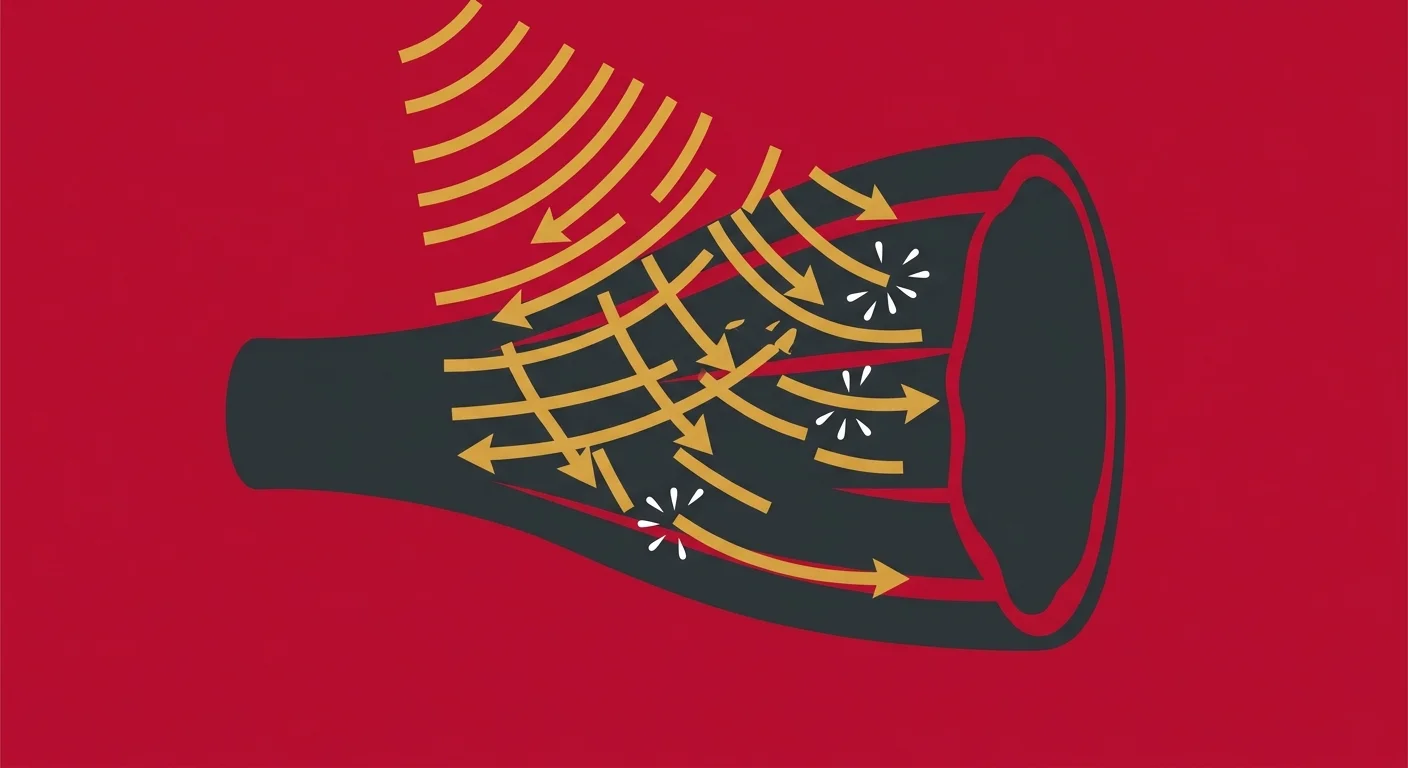
Most people walk in with the wrong model. And the wrong model sends them home with the wrong answer.
The acoustic wave doesn't remove pain. It creates controlled microtrauma in the damaged tissue — deliberately, at a calibrated intensity — and that microtrauma signals the body to restart a repair process it had already quit.
The tissue didn't stop healing because of bad luck. It stopped because chronic injury disrupted the biological signaling that makes repair possible. The wave restores that signal. Nothing more, nothing less.
That restarted signal triggers a cascade. The body upregulates vascular endothelial growth factor (VEGF), which drives new blood vessel formation directly into the damaged area. If you want to understand how that regeneration process works at the cellular level, the biology is the whole story — and it only works if the structural conditions are right.
You're hiring the biology, not bypassing it.
The Cookie-Cutter Fix That Keeps Failing
Most patients asking about shockwave therapy have already run the standard sequence. Cortisone. Rest. Stretching. Maybe physical therapy.
The pain backed off for a few weeks. Then it came back.
That cycle isn't bad luck. It's what happens when treatment addresses the symptom and leaves the structural problem alone.
A cookie-cutter protocol — same stretch progression, same anti-inflammatory injection, same rest-and-repeat instruction — doesn't account for what's actually happening in the tissue. It manages the complaint. It doesn't touch the cause.
Here's the real problem with generic care timelines: they measure success by whether the patient stopped reporting pain — not by whether the tissue actually repaired.
Those are two completely different outcomes. Confusing them is exactly why so many chronic presentations fail to respond to anything. Shockwave Therapy starts from a different premise entirely: the goal is structural change, not symptom management.
Why Cortisone Injections Break Down Over Time
Cortisone does one thing well: it kills inflammation fast. In an acute situation where inflammation is the immediate threat, that's genuinely useful.
But chronic tendon pain isn't an inflammation problem. It's a degeneration problem. Suppressing inflammation in a degenerating tendon doesn't restore anything. It quiets the signal while the damage keeps accumulating underneath.
Repeat that suppression often enough and the structural cost compounds. NIH-published research documents that repeated cortisone injections can raise tendon re-rupture rates by 2-to-4-fold compared to non-invasive conservative care over long-term follow-up.
The short-term relief is real. So is the long-term structural risk. Most patients never hear about the second part.
Shockwave therapy runs in the opposite direction. Instead of dampening the biological response, it amplifies it — forcing the tissue to engage the repair process rather than sidestep it.
That's not a subtle distinction. It's the entire reason these two approaches produce such different long-term outcomes in chronic presentations. One bypasses the biology. The other puts it to work.
| Treatment Approach | Mechanism | Effect on Tissue Biology | Long-Term Outcome |
|---|---|---|---|
| Cortisone Injection | Suppresses the inflammatory response at the injection site | Temporarily quiets biological signaling without repairing damaged tissue architecture | Pain returns as degeneration continues; structural integrity declines with repeated use |
| Rest and Stretching | Reduces mechanical load on the injured structure | Prevents further acute irritation but does not restart the stalled repair cascade | Symptom management with no structural resolution; chronic presentation typically persists |
| Generic Rehabilitation Protocol | Applies standardized loading progressions regardless of tissue state or biomechanical picture | May rebuild surrounding strength but leaves the degenerated tissue's root repair deficit unaddressed | Variable results; chronic presentations frequently plateau or regress without individualized correction |
| Shockwave Therapy | Delivers calibrated acoustic microtrauma to restart the body's dormant biological repair signaling | Triggers localized vascularization and collagen remodeling — the tissue actively rebuilds its own structure | Lasting structural change when the biomechanical environment and nervous system pathway support the repair process |
The Conditions Shockwave Therapy Is Built For
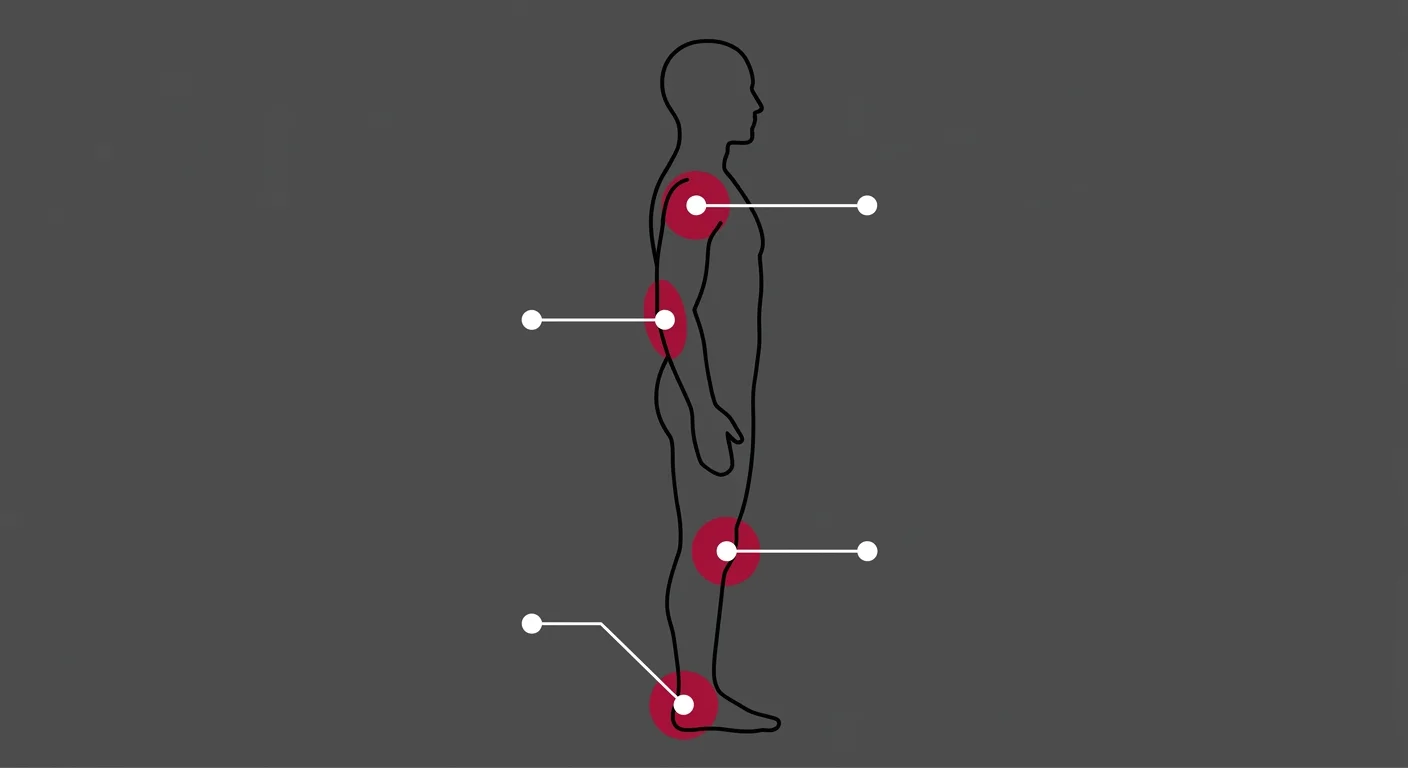
Not every chronic pain presentation qualifies. And the ones that do don't all respond the same way. The biology is the deciding factor — and it only lines up with specific conditions.
The strongest candidates share a specific profile. The tissue is chronically damaged — not slow to heal, but stuck. The body's repair cycle has stopped running. The injury isn't new. Conservative care has had a real run at it. And the structural problem is still there.
NIH clinical evidence puts success rates at up to 91% for calcifying tendonitis of the shoulder. Up to 80% of patients with chronic tendinopathies report significant pain reduction after completing their full treatment cycle. Those numbers don't apply across the board — they reflect the right condition matched to the right biological mechanism. That's exactly why candidacy assessment comes before the first session. Not after.
Conditions Where Shockwave Therapy Performs Strongly
The FDA-cleared applications tell you where the evidence is strongest. Chronic heel pain — plantar fasciitis. Tennis elbow — lateral epicondylitis. Both are degenerative tendon conditions. The tissue lost structural integrity over time, not from a single event. That degeneration is the actual target. Not the pain signal sitting on top of it.
Calcifying tendonitis of the shoulder is another strong performer. The acoustic wave targets the calcium deposits directly — breaking them down so the body can reabsorb the material and restore normal tissue architecture. Chronic Achilles tendinopathy, patellar tendinopathy, and hamstring insertional pain follow the same pattern: degenerated tissue, failed conservative care, and a biological repair process that shockwave therapy is specifically built to re-engage.
For plantar fasciitis, published NIH trials confirm that 3 to 5 weekly sessions are required to trigger optimal collagen remodeling. But the sessions aren't the whole picture. How you load tendons safely after shockwave therapy in the weeks following determines whether the new collagen survives daily mechanical stress — or breaks down the first time it meets a real demand.
Conditions Where Shockwave Therapy Is Less Predictable
Acute injuries don't belong here. If the tissue is already inflamed from a recent strain or tear, shockwave amplifies a biological process that's already running hot. More signal into reactive tissue isn't treatment — it's interference. The same problem shows up when the underlying structure hasn't been assessed. A biomechanically compromised joint, a spinal pathway contributing to altered load distribution, a compensation pattern quietly shifting stress onto the target tissue — any of these change the outcome. The wave can trigger the repair cascade. But if the structure can't support what the biology is trying to build, the result won't hold.
Some contraindications are non-negotiable regardless of condition. Active infection at the treatment site. Blood clotting disorders. Treatment over growth plates in pediatric patients. Pregnancy. These aren't edge cases — they're hard disqualifiers. A provider who skips the assessment and goes straight to the device is running the same cookie-cutter protocol this practice rejects: confident about the tool, completely incurious about the patient in front of them.
| Condition | Clinical Evidence Level | Typical Session Count | Expected Outcome |
|---|---|---|---|
| Plantar Fasciitis (Chronic) | FDA-cleared; NIH clinical trial support | 3 to 5 weekly sessions | Optimal collagen remodeling; lasting structural change in chronically stalled tissue |
| Calcifying Tendonitis of the Shoulder | NIH clinical trial — up to 91% success rate | Per clinical assessment | Calcium deposit breakdown and tissue reabsorption; restoration of normal tissue architecture |
| Lateral Epicondylitis (Tennis Elbow) | FDA-cleared for this indication | Per clinical assessment | Significant reduction in pain and localized tenderness in chronic degenerative presentation |
| Chronic Tendinopathies (General) | NIH tissue regeneration evidence | Per clinical assessment | Up to 80% of patients report significant pain reduction after completing recommended treatment cycle |
Who Should Not Book Shockwave Therapy

Knowing what shockwave therapy works for is half the picture. The other half is knowing when it's the wrong call — and who it can actively harm.
Most providers who skip this conversation aren't being reckless. They're running a protocol. There's a device. There's a billing code. There's a patient in front of them who wants relief. So the assessment that should happen before the first session gets compressed into an intake form and a quick palpation — and the contraindication screen quietly disappears.
That's the cookie-cutter protocol in clinical form. Confident about the tool. Incurious about the patient. The wrong candidacy call doesn't produce a poor result — it produces an actively harmful one. That distinction only shows up when someone actually looks.
Absolute Contraindications: When Shockwave Therapy Is Off the Table
Some contraindications don't bend. Active infection at or near the treatment site is a hard stop — amplifying biological activity in infected tissue pushes a process in exactly the wrong direction. Blood clotting disorders and anticoagulant therapy are hard stops for the same reason. Controlled microtrauma requires normal hemostatic function to resolve. Without it, you're not initiating repair. You're creating a problem.
Treatment over growth plates in pediatric patients is off the table. The acoustic wave disrupts tissue at a cellular level, and growth plate tissue doesn't respond to that disruption the way mature connective tissue does. Pregnancy is also an absolute contraindication. There's no established safety profile for acoustic wave exposure in that context — and no presenting complaint changes that calculus.
Cancer or active malignancy in or near the treatment area is a hard stop. The same biological amplification that restarts a stalled repair process can accelerate cellular proliferation in tissue that's already growing abnormally. Moving forward without ruling this out isn't a judgment call — it's negligence. NIH research on outcomes shows up to 80% of patients with chronic tendinopathies report meaningful pain reduction after completing their treatment cycle. But that number reflects the right patient, assessed correctly. Not everyone who walks through the door.
The Patient Profile That Gets the Worst Results
Hard contraindications aren't the whole story. There's a second category that doesn't get enough attention: the patient who clears every medical flag and still gets a poor result. No red flag shows up on the intake form. The disqualifier is their clinical picture — and that only surfaces when someone runs a real assessment instead of a protocol.
The most common version of this profile is the patient whose pain is driven by a compensatory load pattern — not primary tissue degeneration. The tendon that hurts isn't the source of the problem. It's the structure absorbing stress that should be distributed elsewhere. Shockwave therapy can initiate repair in that tendon. But if the biomechanical pattern driving the overload stays unaddressed, the repaired tissue meets the same mechanical demand that broke it down in the first place. That's why the question of whether combining modalities accelerates recovery isn't academic — it's the difference between tissue that holds and tissue that fails again.
The patient still in an acute inflammatory phase is another poor candidate. So is the patient who expects a single session to resolve a presentation that took months — or years — to develop. That expectation isn't a character flaw. It's the direct result of being told, repeatedly, that relief is the goal. When relief is the only metric, the biology gets bypassed instead of hired. And a body that isn't prepared to carry the repair process through isn't going to hold the result — no matter how precisely the acoustic wave is delivered.
| Contraindication Category | Specific Condition or Factor | Why It Disqualifies | Alternative Path |
|---|---|---|---|
| Absolute Medical Contraindication | Active infection at or near the treatment site | Acoustic waves amplify biological activity — driving that signal into infected tissue accelerates the wrong process and can spread the infection | Resolve the infection fully before any assessment for shockwave candidacy |
| Absolute Medical Contraindication | Blood clotting disorders or active anticoagulant therapy | Controlled microtrauma depends on normal hemostatic function to resolve cleanly — disrupted clotting turns a therapeutic mechanism into a tissue risk | Medical clearance from the prescribing provider; explore non-microtrauma modalities in the interim |
| Absolute Medical Contraindication | Pregnancy | No established safety profile exists for acoustic wave exposure during pregnancy — the risk calculus doesn't support treatment regardless of the presenting complaint | Defer all candidacy evaluation until after delivery and postpartum clearance |
| Absolute Medical Contraindication | Pediatric growth plates at or near the treatment site | Growth plate tissue doesn't respond to cellular-level acoustic disruption the way mature connective tissue does — the developmental risk is not acceptable | Explore age-appropriate conservative rehabilitation protocols under appropriate clinical supervision |
| Absolute Medical Contraindication | Cancer or active malignancy in or near the treatment area | The same biological amplification that restarts stalled repair can accelerate abnormal cellular proliferation — moving forward without ruling this out is a negligence failure, not a clinical judgment call | Oncology clearance required before any acoustic wave application is considered |
| Poor Clinical Candidacy (No Hard Contraindication) | Acute inflammatory injury — recent strain, tear, or flare | Shockwave therapy amplifies a biological process that is already active and reactive; adding acoustic signal to inflamed tissue is interference, not treatment | Allow the acute phase to resolve; reassess for chronic degenerative presentation before scheduling |
| Poor Clinical Candidacy (No Hard Contraindication) | Pain driven by compensatory load pattern rather than primary tissue degeneration | Repairing the tissue without correcting the biomechanical pattern that overloaded it guarantees the same breakdown — the root driver stays intact | Full biomechanical assessment first; address spinal and joint contributors before or alongside acoustic treatment |
| Poor Clinical Candidacy (No Hard Contraindication) | Patient expecting single-session resolution of a chronic, long-standing condition | The acoustic wave initiates a repair cascade — the body has to carry it through over multiple sessions and a deliberate loading progression; mismatched expectations produce abandoned care plans and no structural outcome | Establish realistic session timelines and post-treatment loading expectations before the first appointment |
The Assessment Checklist: Is Your Body Ready to Respond?

Clearing the contraindication screen isn't the goal. It's the floor.
Most practitioners screen for red flags, clear the patient, and proceed. But safe and ready aren't the same question. Safe means the treatment won't cause harm. Ready means the tissue can actually carry the repair through to a result that holds. One question protects the patient. The other determines whether any of this was worth doing six months from now.
A body carrying an unresolved spinal restriction, a compensatory load pattern, or chronic systemic depletion isn't going to hold a shockwave result — no matter how precisely the session is executed. You're not assessing a tendon in isolation. You're assessing everything that tendon depends on to survive under real mechanical load. That's a different scope than most candidacy screens ever reach.
Biological Readiness Markers That Predict a Good Response
The markers that predict a strong response aren't complicated. They show up in a thorough intake. Every one of them answers the same question: can this body finish what the acoustic wave starts?
Chronicity matters more than severity. A presentation that's been stuck for months without structural resolution is a stronger candidate than an acute injury that's still hot. The tissue needs to be in a stalled repair state — not an active inflammatory one. Clinical trials for chronic plantar fasciitis confirm that 3 to 5 weekly sessions are required to trigger the collagen remodeling response. That's not a protocol quirk. That's the biology telling you it runs on a process, not a single event. The patient expecting one session to resolve what months of conservative care couldn't is working from the wrong model — and no device changes that.
Tissue perfusion, load tolerance, and joint mobility in the surrounding structure all determine whether repaired tissue survives real mechanical demand. Up to 80% of patients with chronic tendinopathies report significant pain reduction after completing their treatment cycle — but that figure reflects patients whose biological environment supported the repair process. It doesn't reflect every patient who received the treatment. Understanding which protocol fits your injury is only half the equation. The surrounding structure still has to be ready to carry what the wave initiates. Without that, even a well-executed session produces a result the body can't protect.
What a Real Shockwave Candidacy Assessment Looks Like
A real candidacy assessment doesn't start with the device. It starts with your history.
How long has this been going on? What conservative care has already been tried — and what did it actually produce? Where does the pain land relative to the joint and the surrounding load-bearing structures? Is the spine contributing altered movement patterns that shift mechanical stress onto the affected tissue? These aren't checkbox questions. They require a clinician to interpret. At Touch of Wellness Chiropractic, the assessment that determines shockwave candidacy is the same one that determines whether the nervous system and biomechanical framework are positioned to hold a lasting result — because those aren't separate conversations.
Up to 91% success rates for calcifying tendonitis don't happen because the device is good. They happen when the right condition is matched to the right biological mechanism in a body that's been assessed and positioned to respond. If you're in Morton, Peoria, or the surrounding area and want to know whether your presentation actually qualifies — whether the tissue is stalled, whether the surrounding structure can carry the repair forward — chiropractic care in Morton, IL is where that conversation starts. The assessment comes first. The device comes second. That order isn't a formality. It's the reason the results hold.
| Readiness Marker | What It Signals | How It Is Assessed | Impact on Candidacy |
|---|---|---|---|
| Chronicity of presentation | Tissue has entered a stalled repair state rather than an active inflammatory phase — the biological environment shockwave therapy is designed to restart | Duration of symptoms, history of prior conservative care, and whether the condition cycles through temporary relief without structural resolution | Strong candidacy indicator — chronic, stalled tissue is the target; acute, still-hot presentations are a poor match |
| Spinal and joint mobility in surrounding structures | Altered movement at adjacent joints shifts mechanical load onto the target tissue — a pattern that undermines repaired tissue once it re-enters daily demand | Functional movement screen, range-of-motion testing, and palpation of the load-bearing chain above and below the affected site | Restrictions here don't disqualify candidacy — but they must be addressed concurrently or the repaired tissue faces the same mechanical environment that broke it down |
| Primary vs. compensatory pain source | Pain at the target site may reflect a structure absorbing stress that should be distributed elsewhere — treating the symptom site without addressing the source produces temporary results at best | Load pattern analysis, gait observation, and clinical history revealing whether the pain site correlates with the structural origin or sits downstream of it | Compensatory presentations require biomechanical correction alongside shockwave therapy — shockwave alone won't hold the result |
| Tissue perfusion and vascular integrity | Acoustic waves trigger a vascular response in the target tissue — poor baseline perfusion limits how effectively the body can carry that response through to structural repair | Clinical history of circulatory conditions, wound healing patterns, and palpatory assessment of local tissue quality and temperature | Reduced perfusion capacity lowers expected response — candidacy is conditional, and the treatment plan must account for a slower biological timeline |
| Load tolerance in the affected region | Tissue that can't tolerate graduated mechanical load after treatment can't integrate the structural repair — the repaired collagen requires progressive stress to remodel correctly | Functional strength testing, pain provocation under controlled load, and review of activity demands the patient will return to post-treatment | Low load tolerance signals the need for a structured rehabilitation protocol running alongside and after the acoustic treatment cycle |
| Patient's prior treatment history | What was tried, what it produced, and how long relief lasted reveals the biological pattern — temporary responders to conservative care often fit the shockwave candidacy profile closely | Detailed intake covering every prior modality, injection history, physical therapy protocols, and duration of any improvement achieved | Repeated short-term relief without structural resolution is one of the clearest indicators that the tissue repair process has stalled and needs a biological trigger to restart |
| Realistic recovery expectations | A patient expecting single-session resolution is working from a model that bypasses the biology — the acoustic wave initiates a repair cascade the body must carry through over weeks | Direct conversation during intake about the nature of acoustic tissue healing, the required session commitment, and what functional milestones look like across the treatment cycle | Expectation misalignment doesn't disqualify candidacy biologically — but it predicts early dropout, which produces incomplete biological response and poor outcomes |
| Nervous system and biomechanical framework alignment | Spinal restrictions and nervous system interference alter the body's ability to coordinate the tissue repair response the acoustic wave activates | Chiropractic assessment of spinal alignment, segmental mobility, and neurological function in the regions that govern the affected tissue | This is the readiness marker most assessments skip entirely — and the one that most reliably predicts whether the result holds after the treatment cycle ends |
Frequently Asked Questions About Shockwave Therapy Candidacy
Here are the questions that actually come up — answered directly, without hedging.
Still on the fence? Good. That means you're asking the right questions.
How can I tell if my chronic pain is a candidate for shockwave therapy before I make an appointment?
Chronicity is the signal — not severity. If the pain has been present for months and conservative care produced temporary relief that didn't hold, that's the profile. The tissue has stalled. It's stopped healing on its own. That stall is exactly what shockwave therapy is designed to break.
If the pain is new, acute, or still actively inflamed, the timing isn't right. Shockwave works on tissue that's stuck — not tissue that's still in the acute phase.
A real assessment tells you which category you're in. A symptom checklist won't.
Why does shockwave therapy succeed on stubborn tendons when cortisone injections and stretching fail?
Cortisone suppresses the biology. Shockwave activates it. That's the whole difference — and it matters.
Stretching addresses flexibility. It doesn't restart a stalled repair process. Cortisone cuts inflammation short-term, but repeated injections can push tendon re-rupture rates 2-to-4-fold higher than non-invasive care over the long haul. Neither approach triggers the cellular cascade that actually rebuilds damaged tissue.
Shockwave does. Controlled acoustic microtrauma forces the body to restart collagen production. The device starts the process. The biology does the rest.
What specific conditions or patient health profiles make shockwave therapy unsafe or ineffective?
Pregnancy is an absolute disqualification. Active malignancy at or near the treatment site is a hard stop. So are unhealed bone fractures, open wounds, active infections, blood-clotting disorders, and implanted hardware directly at the treatment site. Those are non-negotiable.
But there's a second category that doesn't get enough attention. The patient who clears every medical flag and still gets a poor result. If the pain is driven by a compensatory load pattern — not primary tissue degeneration — the repaired tissue faces the same mechanical demand that broke it down originally.
Clearing the contraindication screen is not the same as being ready to respond. The assessment catches the difference. Booking without it doesn't.
What should I expect regarding pain levels and functional recovery during the first 48 hours after treatment?
Expect soreness at the treatment site — sometimes more intense than the original complaint. That's not a complication. That's the biological response initiating.
Most patients hit peak soreness within the first 24 hours. Functional activity is generally fine. High-impact loading on the treated area should be avoided during that 48-hour window.
The soreness resolves. The repair continues underneath it. This isn't a sign the treatment failed — it's a sign the tissue responded. Rest it. Don't stress-test it.
How many sessions are typically required to see lasting structural changes in the treated tissue?
Clinical trial data for chronic plantar fasciitis shows that 3 to 5 weekly sessions are required to trigger optimal collagen remodeling. That's a process — not a single event.
Most patients notice meaningful change after the second or third session. But structural remodeling continues for weeks after the final treatment. Expecting one session to resolve what months of conservative care couldn't is the wrong model.
The biology needs repeated signaling to carry the repair through. Up to 80% of patients with chronic tendinopathies report significant pain reduction after completing their full recommended cycle — not after the first appointment. The full cycle is the treatment.
The Honest Answer Before You Book
Here's the honest answer: shockwave therapy isn't for everyone who hurts.
It's for the patient whose tissue has stalled. Whose body quit making progress on its own and needs a biological trigger to restart what it abandoned. That's a specific clinical picture. And it only shows up in a real assessment — not a symptom checklist, not a quick palpation, not an intake form.
The cortisone path is faster to book. It's also faster to fail.
It suppresses the biology instead of activating it. Permanent, structural recovery requires the biology to succeed. That means the tissue has to be genuinely stalled. The surrounding biomechanical framework has to be capable of carrying the repair forward. The nervous system has to be positioned to support a result that holds under real mechanical demand.
A provider who skips that picture and goes straight to the device isn't offering you a shortcut. They're handing you a timeline to re-injury.
If you want to know whether your condition is a genuine candidate — not whether shockwave therapy sounds like the right idea, but whether your biology is actually positioned to respond — that conversation has to happen before you book anything.
The assessment comes first. It always does. Because permanent recovery isn't about finding the right tool. It's about showing up with the right tissue, the right structure, and the willingness to let the biology do the work.
You're hiring the biology, not bypassing it.
Your tissue has been stalling for a reason. The question isn't whether shockwave therapy works — the data is clear on that. The question is whether your body is structurally positioned to respond to it. That answer doesn't come from a webpage. It comes from an assessment.