
(309) 321-8412 | 1101 W Jackson St, Suite A, Morton, IL 61550
(309) 321-8412 | 1101 W Jackson St, Suite A, Morton, IL 61550
How to Identify Peripheral Neuropathy Symptoms Early: The Biological Warning Signs
Early neuropathy is identifiable. The signs are there before the damage is permanent — intermittent tingling in the feet, a pins-and-needles sensation that comes and goes, numbness that doesn’t have an obvious cause, or a strange sensitivity to touch in areas that didn’t feel that way before. These sensory changes are documented early-stage distress signals — not coincidences, and not part of getting older.
They’re biological alarm signals. They mean the nerves aren’t receiving adequate oxygen or nutrients and are struggling to function normally. The alarm is the clue.
Here’s what most people don’t know: these symptoms are not the problem — they’re the warning that the problem exists. And when that warning is recognized early, the nerve’s biological environment can still be corrected. When it’s ignored until symptoms are constant, bilateral, and disrupting daily function, that window narrows significantly.
The difference between “I caught this early” and “I waited too long” is almost entirely a matter of recognizing specific sensory patterns before they progress. Research confirms that nerves have substantial capacity for repair — neuroplasticity — when the source of interference is identified and removed early. But that capacity is not unlimited. It’s time-sensitive.
This article covers the specific warning signs of early-stage nerve involvement, explains why they happen in the body, addresses what standard testing misses and why, and lays out what “early detection” actually makes possible clinically. If you’re experiencing something you can’t quite explain — something a doctor has already told you is “probably nothing” — this is written for you. Results may vary based on individual presentation, stage of involvement, and care consistency.
Last Updated: April 8, 2026
- Why the Standard “Wait and See” Response Is the Wrong Approach
- What Early Peripheral Neuropathy Actually Feels Like
- The Disruption Threshold: Where “Minor” Becomes Clinically Urgent
- Who This Approach Is — and Isn’t — For
- What You Actually Do When You Suspect Early Neuropathy
-
Frequently Asked Questions
- Can neuropathy symptoms start in just one foot?
- Is tingling always a sign of permanent nerve damage?
- Why do my symptoms feel worse at night?
- My doctor said my tests were normal, but I still feel numb. Why?
- What’s the difference between early-stage and advanced neuropathy?
- Can chiropractic care actually address nerve symptoms?
- What is the first step if I suspect early neuropathy?
- The Nervous System Doesn’t Send Idle Signals
Why the Standard “Wait and See” Response Is the Wrong Approach
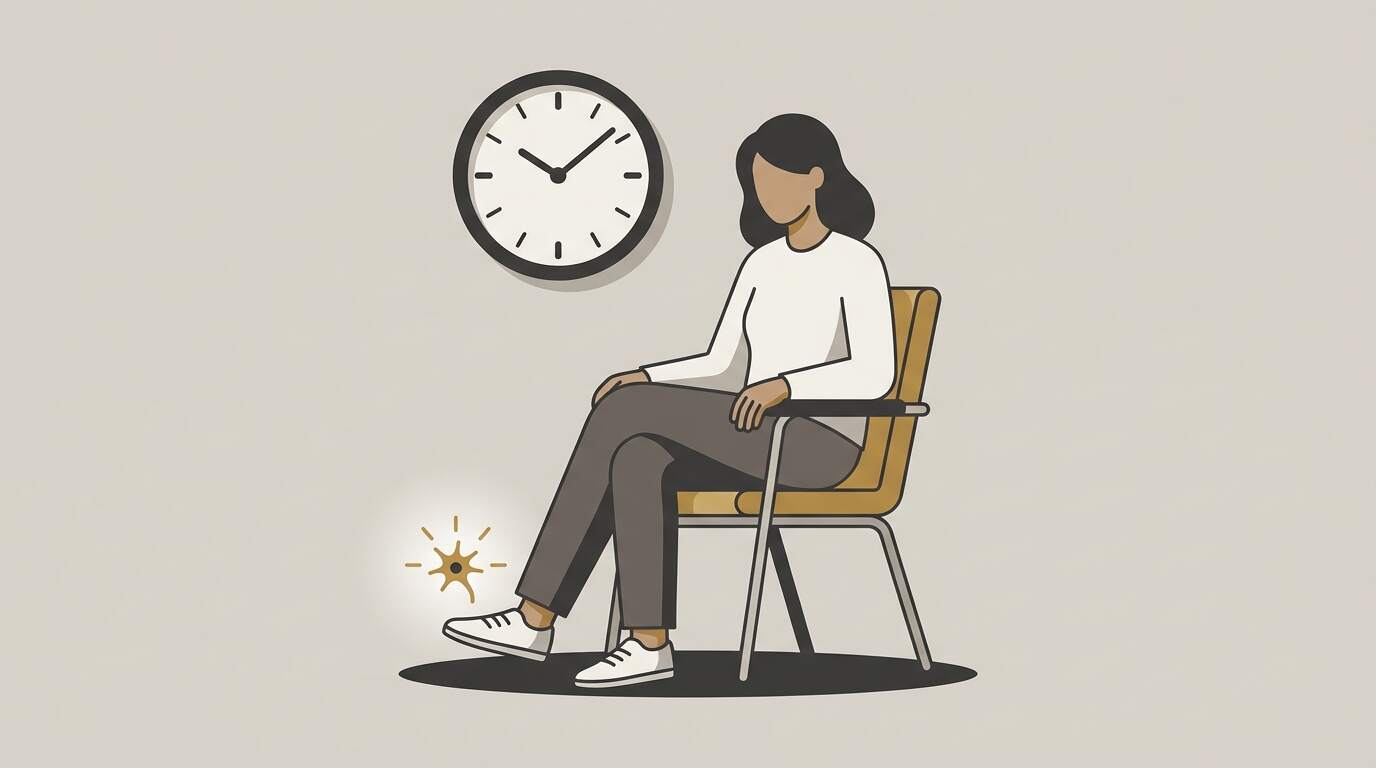
Most of the patients I see with neuropathy didn’t come in early.
Not because they weren’t paying attention. Because someone told them to wait.
The GP Bias Pipeline: Why Early Symptoms Get Dismissed
“Your tests are normal.” “That’s just aging.” “Come back if it gets worse.” And so they waited. And by the time they walked through the door, the nerve’s environment had been failing for months — sometimes years — while a window that could have changed things stayed open and unused.
The standard medical model is built to respond when something breaks. It’s not designed to catch things while they’re breaking. That distinction costs patients more than most providers will say out loud.
Here’s what the GP Bias Pipeline looks like in practice:
- Normal test result (no structural damage detected) — Nerve conduction studies look for nerve death. Functional distress doesn’t register. The test passes the patient when the nerve is still failing.
- Generic reassurance (“that’s just aging,” “try stretching”) — Without a measurement that confirms the problem, the response matches the measurement: nothing specific.
- Observation window (“come back in three months”) — Three months of continued nerve disruption in a window where early intervention would have mattered most.
- Repeat cycle — Symptoms worsen. The same tools run again. The protocol doesn’t change because the protocol isn’t built for what’s actually happening.
Root-cause chiropractic care isn’t built around responding to damage. It’s built around finding what’s causing it — before the damage writes the story.
Why the Cookie-Cutter Protocol Fails Neuropathy Patients
Here’s what the standard care pathway looks like for someone with early nerve symptoms.
Tingling gets reported. A nerve conduction test gets ordered. Results come back normal or inconclusive. Patient gets a B12 supplement, maybe a prescription, and a follow-up in three months.
Three months later, the tingling is worse. It’s moved. Maybe now it’s bilateral. The cycle runs again — same test, same result, same recommendation.
That’s the Cookie-Cutter Protocol. And it doesn’t fail because the providers don’t care. It fails because the tools are built for the wrong stage. NIH documentation confirms that early neuropathy frequently involves functional changes that precede any structurally measurable damage. Standard nerve conduction studies detect nerve death. They’re not built to catch nerve distress.
So the test comes back clean. The symptom continues. The protocol repeats. And the window where intervention would have mattered most keeps closing.
I’ve seen this play out the same way, again and again. Patients told their symptoms were “too vague” to address. They weren’t vague. They were early. That’s a clinical difference — but only if someone’s actually looking for it.
What Early Peripheral Neuropathy Actually Feels Like

The warning signs aren’t dramatic. That’s the problem.
They’re easy to rationalize — bad sleep, too much sitting, age catching up. And sometimes that explanation is right. But when the same sensation keeps coming back in the same place, without a mechanical explanation, the pattern is telling you something your rationalizations aren’t.
The Five Warning Signs That Appear First
| Warning Sign | What It Feels Like | What It Signals |
|---|---|---|
| Intermittent tingling | Pins and needles in feet or hands that comes and goes without a clear positional cause | Early nerve interference — oxygen or nutrient delivery is inconsistent |
| Heightened touch sensitivity | Normal contact from a sock, sheet, or shoe feels wrong, uncomfortable, or amplified | Sensory nerve fibers are processing signals incorrectly — misfiring, not failing |
| “Heavy legs” sensation | Legs feel weighted or unusually difficult to move despite no exertion | Motor nerve involvement beginning to layer on top of sensory disruption |
| Thin sock sensation when barefoot | Feeling of a physical layer between your foot and the floor when none exists | Disrupted proprioception — the nervous system’s spatial mapping is off |
| Asymmetrical numbness or tingling | One foot, one hand, or one side affected before the other | Common early-stage presentation — bilateral symptoms tend to develop as disruption progresses |
The Foundation for Peripheral Neuropathy documents that early diagnosis paired with targeted clinical intervention leads to meaningfully better functional outcomes than waiting. These five signals are where that difference gets made — or missed.
- Intermittent tingling (recurring pins and needles without a positional cause) — The most common first signal, and the easiest to explain away. When it keeps showing up in the same spot without a good reason, stop explaining. Start paying attention.
- Sensitivity to normal touch (socks, sheets, or shoes that feel wrong) — The nerve is amplifying input it used to filter without effort. That’s not hypersensitivity. That’s a nerve misfiring because its environment is off.
- The heavy legs feeling — When sensory symptoms start affecting how a limb moves, the disruption is widening. Sensory-only becomes sensory-plus-motor. That’s a progression marker, not a separate complaint.
- The sock-on-the-floor sensation — Your nervous system maps where your body is in space. When that map feels wrong and nothing structural explains it, the problem isn’t your shoes.
- One-sided numbness or tingling — Most people picture neuropathy as bilateral. Early-stage is almost always one side first. Don’t wait for the second foot before you take the first one seriously.
Why Symptoms Feel Worse at Night
Almost every neuropathy patient brings this up.
During the day, movement and sensory input create enough competing noise to partially mask what the nerve is signaling. The problem isn’t quieter — it’s just getting drowned out.
At night, the noise stops. The signal doesn’t.
Position shifts and circulation changes can amplify it further. So what you’re experiencing at 2am isn’t a flare. It’s the same thing that was happening at 2pm, now with nothing to drown it out.
If you’ve started treating nighttime tingling as your new normal — don’t. That’s not aging. That’s signal, and it’s been there longer than you think.
What Asymmetrical Symptoms Actually Mean
One foot. One hand. One side of the body.
Not a coincidence. Not a circulation issue. That’s typically where early-stage nerve disruption starts — following the most affected nerve pathway first, before the interference spreads.
Bilateral presentation comes later, as the underlying problem progresses. One-sided isn’t a lesser version. It’s the early version.
If you’ve been dismissing your left foot because your right foot feels fine — you’re using the wrong framework to evaluate it.
The Disruption Threshold: Where “Minor” Becomes Clinically Urgent
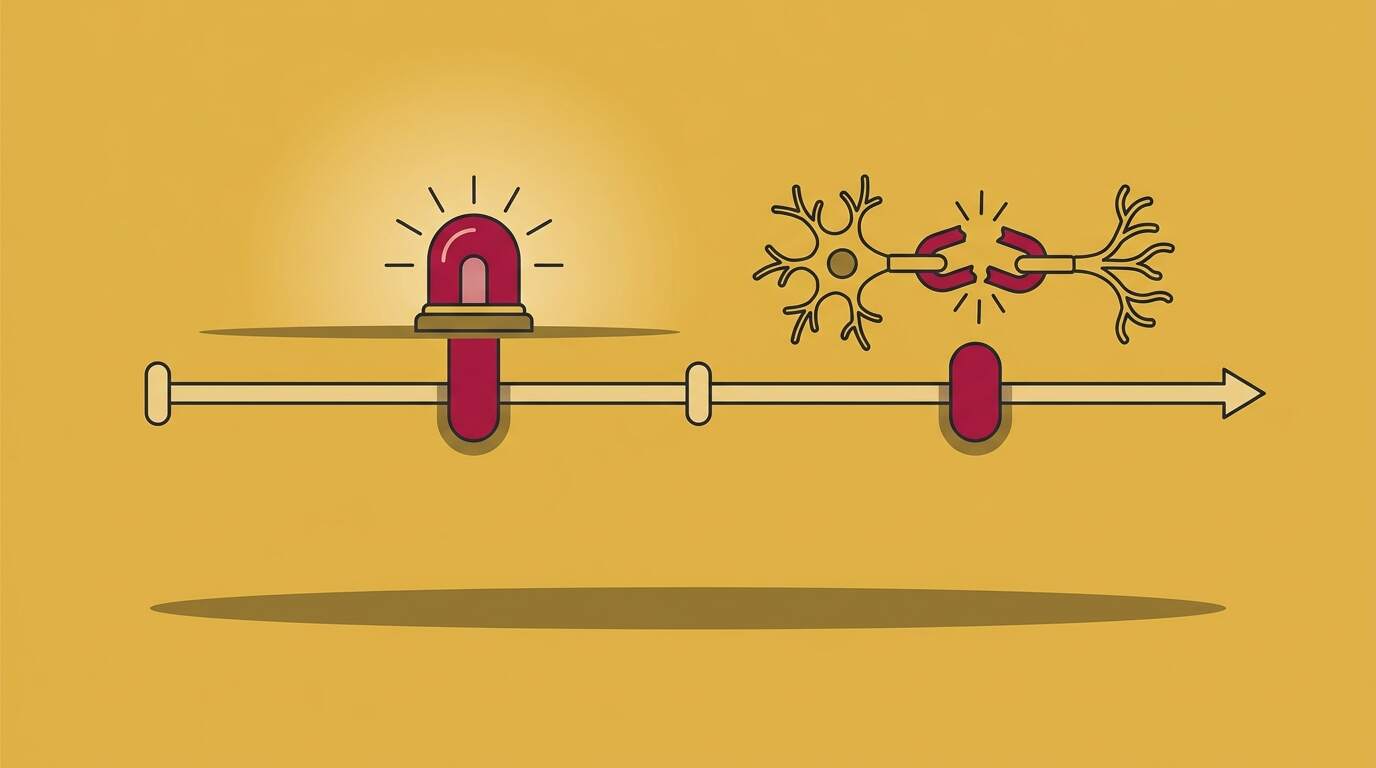
There’s a line. Most patients don’t know it exists until they’ve crossed it.
On one side, the nerve’s biological environment is disrupted but correctable. Research published in the Journal of Clinical Medicine confirms that nerves retain substantial capacity for repair through neuroplasticity when the source of interference is identified and removed early. On the other side, that capacity diminishes — and the clinical goal shifts from restoring function to managing what’s left.
That’s the Disruption Threshold. It’s not a metaphor. It’s a real clinical transition — and it’s the reason early identification changes everything.
Early vs. Advanced: What the Clinical Picture Actually Looks Like
| Early Stage | Advanced Stage | |
|---|---|---|
| Symptoms | Intermittent, often one-sided, sensory-only | Constant, bilateral, motor involvement (balance, gait) |
| Test Results | Frequently normal — functional changes precede structural damage | Abnormal nerve conduction, structural damage detectable |
| Restoration Potential | High — nerve environment can often be corrected | Limited — focus shifts from restoration to symptom management |
| What Care Looks Like | Identifying the source of interference, targeted restoration | Ongoing management, possible medication dependence, indefinite timeline |
| Outcome Trajectory | Functional improvement measured in weeks to months | Slow, incremental at best — rarely fully resolving |
The left column is where you are right now, if you’re reading this because something feels off but “nothing came back on the test.”
Stay there. That’s where intervention works.
What Standard Tests Actually Miss
Your nerve conduction test came back normal. Your doctor said you’re fine. So why does your foot still feel like it’s wrapped in cotton?
Here’s what the test measured: it looked for structural nerve damage — the kind that happens after nerve fibers have already died. It was never designed to detect early functional disruption. That’s not a flaw in the test. That’s what it was built to do.
NIH documentation confirms that early-stage neuropathy frequently involves sensory changes that precede structural damage detectable by standard testing. A clean result isn’t clearance. It’s a measurement limit.
Your symptoms being real and your test being normal aren’t contradictions. They’re just measuring different points on the same timeline.
That’s why understanding that permanent nerve damage isn’t a foregone conclusion — when symptoms are caught now — changes what comes next.
- What the test measures (structural nerve death) — Detectable only after nerve fibers have already failed. Not a screen for early-stage disruption.
- What the test misses (functional nerve distress) — The environment the nerve is operating in. Oxygen and nutrient delivery. The interference causing the symptom before the damage is permanent.
- What clinical assessment evaluates (your specific pattern) — Where the sensation is, when it shows up, how it’s changed. The picture standard testing doesn’t ask for.
Who This Approach Is — and Isn’t — For

I’ll be direct.
What the Neuropathy Care Process at Touch of Wellness Chiropractic Actually Is
The neuropathy care process here is built from what you specifically report, evaluated through clinical assessment, and adjusted when the picture changes. It is not a single session. It is not something I’ll dress up as simpler than it is to get you scheduled.
What that process requires:
- Clinical commitment (showing up for the full assessment, not a partial picture) — The care plan can only be as accurate as the information it’s built from. Skipping the assessment is skipping the foundation.
- A realistic timeline (nerve repair has a biological schedule) — The right care can accelerate it. Nothing skips it. Coming in with a two-visit threshold isn’t a clinical plan.
- Willingness to follow clinical lead (your previous provider’s protocol isn’t the starting point here) — Assessment drives the plan. What worked somewhere else may or may not apply.
- Honest feedback (reporting what changes, what doesn’t, what gets worse) — If a care approach isn’t producing results, I stop it and reassess. That only works if you’re telling me what you’re actually experiencing.
This Isn’t for the One-Appointment Expectation
Some people come in expecting one adjustment to resolve what took months to develop.
I get it. But that’s not how nerve restoration works — and I won’t tell you it is.
Nerves repair on a biological timeline. The right care can accelerate it. Nothing skips it.
If your plan is two visits and a verdict — this isn’t the right fit. That’s not a judgment. It’s information. Partial commitment to a process that requires time produces partial results, and neither of us benefits from pretending otherwise.
A neuropathy care approach built on honest clinical assessment gives you a real timeline and a real picture of what to expect. It may not be what you hoped to hear. But most providers won’t say it before you’re already scheduled — and knowing it upfront is worth more than finding out after.
What You Actually Do When You Suspect Early Neuropathy

You don’t need a diagnosis. You don’t need both feet involved. You don’t need a referral from the physician who already told you nothing’s wrong.
If the warning signs above match what you’re feeling — even some of them, even mildly — the right move is clinical assessment. Not another supplement. Not a rerun of the test that came back clean. Assessment.
What a 15-Minute Clinical Assessment Does
The entry point at Touch of Wellness Chiropractic is a 15-minute evaluation — door-to-door. That’s the clinical standard here, not a scheduling convenience.
In 15 minutes, your symptom pattern gets mapped. What gets documented:
- Location (where the sensation is, and whether it’s moved or spread) — Asymmetrical vs. bilateral, feet vs. hands, proximal vs. distal.
- Timing (when it happens, what triggers it, what changes it) — The pattern tells more than any single symptom in isolation.
- Night behavior (how it changes without competing sensory input) — The signal that gets louder when everything else quiets down.
- Progression (whether it’s shifted since it started, and how) — Early-stage and advancing-stage require different approaches.
- Functional impact (whether and how it’s affecting movement or daily activity) — The bridge between sensory disruption and motor involvement.
That map is the foundation. Your care plan gets built from what you actually report — not from what a protocol says you’re supposed to have. That’s the difference between a Nerve Restoration Protocol and a sequence someone else’s patient followed.
Addressing the “But My Doctor Said I’m Fine” Objection
I hear this constantly. And it deserves a real answer, not reassurance.
Tests came back normal. A physician said nothing’s wrong. So why would a different provider see something different?
Because they’d be asking a different question.
The nerve conduction study didn’t detect structural nerve death. It wasn’t built to evaluate early functional disruption. It measured whether advanced damage was already present — and found none. That’s all “normal” means here. It’s not a clean bill of health. It’s a measurement with a specific scope.
“Unexplained” doesn’t mean untreatable. Patients dismissed by standard workups aren’t imagining their symptoms. They’re experiencing real clinical signals that functional assessment — built around what they actually report — is designed to find.
NerveDr research documents that patients who begin with conservative clinical approaches, including chiropractic, see higher recovery rates in early-stage nerve cases than those who delay until symptoms advance. The question isn’t whether your physician was wrong. The question is whether a normal test result means what most people assume it does.
If you want to know whether your pattern falls within what this kind of care can help damaged nerves recover from — assessment is where that answer comes from.
| What Patients Often Experience | What Standard Testing Measures | What Clinical Assessment Evaluates |
|---|---|---|
| Intermittent tingling, sensitivity, one-sided numbness | Structural nerve damage (advanced stage) | Functional nerve environment (early disruption pattern) |
| Normal results despite persistent symptoms | Presence or absence of nerve fiber death | Pattern, origin, and progression of biological distress signals |
| “Wait and see” recommendation | Detectable nerve conduction abnormality | Active symptom mapping and root-cause pathway identification |
| Symptoms attributed to aging | Measurable structural change | Biological source of interference and correction options |
Frequently Asked Questions
Can neuropathy symptoms start in just one foot?
Yes. While the condition often progresses to both sides over time, early-stage neuropathy frequently presents asymmetrically — one foot, one hand, or one leg before the other.
One-sided is the starting point, not the exception. Don’t wait for the second side before you take the first one seriously.
Is tingling always a sign of permanent nerve damage?
Not necessarily. Tingling is a distress signal — it means the nerve is struggling, not that it’s already destroyed.
When the source of biological disruption is identified and removed early, nerves retain meaningful capacity to restore normal function through neuroplasticity. Catching it now is what determines whether “distress signal” stays a warning or becomes a permanent condition.
Results may vary based on individual presentation and stage of involvement.
Why do my symptoms feel worse at night?
During the day, competing sensory input from movement and physical engagement partially masks the nerve’s distress signals. At night, that input disappears.
The signal your nervous system has been sending all day becomes the loudest thing in the room — and position changes and circulation shifts can turn up the volume further.
It didn’t get worse. Everything else got quiet.
My doctor said my tests were normal, but I still feel numb. Why?
Standard nerve conduction tests are calibrated to detect structural nerve damage — the kind that appears in advanced-stage neuropathy. They’re not designed to catch early functional changes in the nerve’s biological environment.
Normal results mean the damage isn’t measurable yet by the tools being used — not that nothing is happening. Your symptoms are real. The test just wasn’t asking the right question.
The starting point for a first nerve restoration session is symptom mapping — not a rerun of a test designed for a different stage of the problem.
What’s the difference between early-stage and advanced neuropathy?
Early-stage neuropathy involves sensory symptoms that are intermittent and often one-sided. Test results frequently come back normal because structural damage hasn’t occurred yet — only functional disruption. That’s the window.
Advanced neuropathy involves constant, bilateral symptoms, possible motor function loss, and structural damage standard testing confirms. At that point the clinical goal changes — from restoring function to managing what’s left.
The earlier you act, the more of the first scenario you stay in.
Can chiropractic care actually address nerve symptoms?
Chiropractic adjustment addresses spinal interference that disrupts nervous system communication. When a nerve is being compressed, stretched, or functionally impaired due to spinal dysfunction, correcting that source directly targets the cause — not the symptom.
It’s not a universal answer. It’s a root-cause process — and whether it applies to your specific pattern is exactly what assessment determines.
Results vary based on stage, source, and care consistency.
What is the first step if I suspect early neuropathy?
A clinical assessment that maps your specific symptom pattern to its likely origin. At Touch of Wellness Chiropractic, that starts with a 15-minute evaluation — no extended intake, no long wait.
You describe what you’re feeling. The pattern gets evaluated. You leave knowing what’s actually happening and what your options are — not with another observation window and a supplement to try.
The Nervous System Doesn’t Send Idle Signals
Your nervous system doesn’t test the alarm for fun.
The tingling. The sensitivity. The sock-on-the-floor feeling that wasn’t there six months ago. Those aren’t random. They’re a biological system under load doing the one thing it’s designed to do when something is wrong — signal before the window closes.
Here’s the part most patients don’t hear until it’s too late: that window doesn’t stay open. Before the Disruption Threshold, nerve function can often be restored. After it, the conversation changes. The standard medical model isn’t built to see the threshold coming — it’s built to confirm that it’s been crossed. That’s not a flaw. That’s its design. And it means that by the time your test results look alarming, you’ve already lost ground you didn’t have to lose.
If you’ve been dismissed, told your results are normal, handed a supplement and sent back to wait — that’s not an answer. That’s a delay. The root-cause chiropractic care framework at Touch of Wellness Chiropractic exists for this exact window — when the biology is disrupted but not destroyed, and correction is still the right word for what’s possible.
Unexplained doesn’t mean untreatable. It means no one’s asked the right questions yet.
If you’ve been tracking a pattern — the same tingling in the same spot, the sensitivity that won’t explain itself, the test results that say normal and the symptoms that say otherwise — that pattern deserves a clinical answer.
A 15-minute assessment at Touch of Wellness Chiropractic maps what you’re actually experiencing to a specific root cause. Not a standard protocol. Not a supplement recommendation. A real picture of what’s happening and what can realistically be done about it.
The care plan that comes from that assessment is built from what you report — adjusted when something changes, stopped when the goal is reached.
The window between “distressed nerve” and “damaged nerve” is where this kind of care works. If you’re reading this because something feels off, you’re probably still in it.
Copyright Touch of Wellness Chiropractic 2026
1101 W Jackson St, Suite A Morton, IL 61550
Web Design by iTech Valet