
How Acoustic Waves Trigger Collagen Remodeling During Shockwave Therapy
Acoustic waves trigger collagen remodeling during Shockwave Therapy by delivering controlled mechanical pulses into damaged tendon tissue. Those pulses initiate a three-phase biological repair sequence that chronically injured tissue cannot complete on its own.
The building isn't on fire. It's structurally compromised.
Here's what that means clinically. The acoustic waves create micro-disruptions at the cellular level, signaling tenocytes — the specialized cells responsible for tendon maintenance — to start producing new structural protein. Collagen type I synthesis increases by over 2-fold compared to untreated tissue, restoring the load-bearing matrix that chronic tendon conditions have degraded over time.
The biological cascade moves through three phases. First: Acute Disruption, where acoustic energy shears compromised tissue and re-opens the healing window. Then Proliferative Repair begins within days — growth factors flood the area, and new blood vessel formation starts. Vascular Endothelial Growth Factor (VEGF) upregulation begins within 24 hours of the initial acoustic application, delivering oxygen and nutrients that chronically painful tendons are starved of. Then Collagen Remodeling takes over — a phase that peaks between 3 weeks and several months post-stimulation as the new collagen matrix matures and realigns under mechanical load.
The bridge between acoustic force and biological response is mechanotransduction. When acoustic waves contact cell membranes, they activate the focal adhesion kinase pathway, elevating FAK phosphorylation and increasing TGF-beta-1 levels. Those are the chemical signals that tell cells to rebuild — not just manage inflammation.
That's the core distinction. Cortisone injections suppress inflammatory signaling without restoring structural integrity. Shockwave Therapy doesn't suppress the signal. It uses it. The pain isn't masked. The tissue is reconstructed.
Last Updated: July 29, 2026
- • Why Chronic Tendon Pain Keeps Coming Back
- • What Acoustic Waves Actually Do Inside the Tissue
- • The Collagen Remodeling Sequence: What Happens After Each Session
- • How to Read Your Body's Response During Treatment
-
• Frequently Asked Questions About Acoustic Wave Therapy and Collagen Repair
- • How do acoustic waves actually stimulate collagen repair at the cellular level?
- • Why are multiple Shockwave Therapy sessions necessary for tendon healing?
- • What is mechanotransduction and why does it matter for tendon repair?
- • How does Shockwave Therapy compare to cortisone injections for long-term tendon repair?
- • What should I expect during the collagen remodeling phase after Shockwave Therapy?
- • Structural Repair, Not Pain Management
Why Chronic Tendon Pain Keeps Coming Back
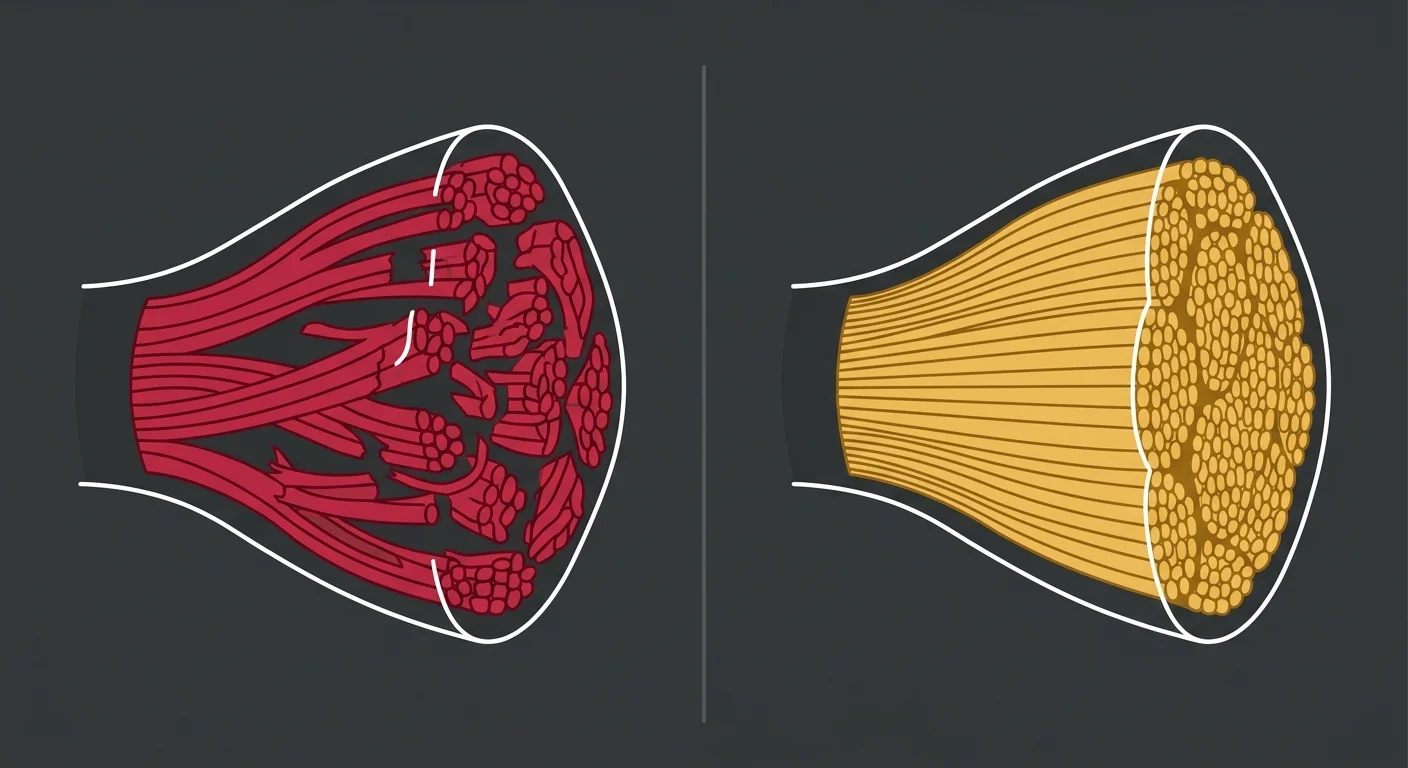
Every provider gives chronic tendon pain the same explanation: inflammation. Treat the inflammation, fix the pain. That framing isn't wrong. But it's incomplete in a way that keeps patients stuck in the same cycle for years.
Here's the thing. A tendon that's been hurting for months isn't locked in an inflammatory flare. The inflammation came and went. What never came was the rebuild.
The building isn't on fire. It's structurally compromised. Putting out the fire doesn't rebuild the columns. That's the gap between what most chronic tendon treatments address and what actually needs to happen inside the tissue — and for anyone asking how shockwave therapy addresses that gap at the cellular level, that distinction is exactly where the answer starts.
The Difference Between Acute Inflammation and Structural Breakdown
Acute inflammation is the body's first responder. It shows up fast, it's loud, and it's doing exactly what it should — recruiting immune cells, driving blood flow, flagging the area for repair. That phase is necessary. It's also temporary.
That's where chronic tendon conditions go wrong. The Proliferative Repair phase naturally initiates 3 to 5 days after soft tissue micro-disruption. In an acute injury with healthy tissue, that handoff is reliable. In a chronically compromised tendon, it isn't. The repair signal fires — and then stalls.
The result is a tendon caught between phases. Past the acute inflammatory window. Not yet into Collagen Remodeling. Structurally incomplete. NIH research confirms that collagen type I synthesis — the primary load-bearing protein in healthy tendon — must increase by over 2-fold compared to untreated tissue for meaningful structural recovery to occur. In a chronically stalled tendon, that synthesis never gets off the ground.
Why the Cortisone Approach Misses the Point
Cortisone doesn't fix that problem. It can't.
Cortisone suppresses the inflammatory signaling driving the pain. Short-term, that's genuinely useful — it cuts swelling, buys time, lets someone function. But it doesn't restart the Proliferative Repair phase. It doesn't trigger Collagen Remodeling. It doesn't touch the structural deficit at all.
So the pain comes back. Not because the inflammation is stubborn. Because the structural problem was never addressed. The cortisone injection is a fire extinguisher applied to a building with compromised load-bearing columns. The smoke clears. The columns are still compromised. That's the cycle patients describe over and over — it helps for a few weeks, and then they're right back where they started.
The real clinical question isn't whether to reduce inflammation. It's whether the treatment can restart the repair sequence that chronic tendon tissue has lost the ability to complete on its own. That's a different question — and it points toward a different answer than another cortisone shot. Chiropractic care built around structural repair rather than symptom suppression is what actually changes the outcome.
| Condition Type | Root Cause | What Cortisone Does | What Acoustic Wave Therapy Does | Long-Term Outcome |
|---|---|---|---|---|
| Acute tendon injury (recent onset) | Inflammatory response with early tissue micro-disruption | Reduces swelling and pain signals in the short term | Reinforces the natural Acute Disruption phase and accelerates transition to Proliferative Repair | High recovery potential — repair sequence is intact and responding |
| Chronic tendon pain (stalled repair cycle) | Proliferative Repair phase initiated but never completed — collagen matrix remains structurally deficient | Suppresses residual inflammatory signaling without restarting the repair sequence | Mechanically re-opens the healing window and triggers the Proliferative Repair phase the tissue stalled out of | Structural recovery becomes possible — the repair cycle restarts rather than loops |
| Tendinopathy (degenerative, low inflammation) | Collagen matrix degradation without active inflammatory signaling — the body has stopped attempting repair | Minimal effect — there is no active inflammation to suppress | Delivers controlled mechanical disruption to re-initiate Acute Disruption and drive new collagen synthesis into Collagen Remodeling | Tissue remodeling becomes achievable where passive treatment produces no structural change |
| Recurrent tendon pain (repeated cortisone cycles) | Structural deficit accumulates with each suppression cycle — pain returns because the underlying repair failure is never resolved | Temporary symptom relief that resets without addressing the load-bearing collagen deficit | Targets the structural deficit directly — promotes collagen type I and III synthesis and tenocyte proliferation to rebuild the matrix | Breaks the repeat-treatment cycle by resolving the structural problem rather than masking the pain signal |
| Post-inflammatory tendon weakness (pain-free but structurally fragile) | Collagen Remodeling phase incomplete — tissue is quiet but not load-bearing capable | Not applicable — inflammation has resolved; cortisone has no active target | Supports Collagen Remodeling phase completion by sustaining tenocyte activity and matrix maturation under controlled mechanical load | Tissue regains structural integrity rather than remaining vulnerable to re-injury |
What Acoustic Waves Actually Do Inside the Tissue
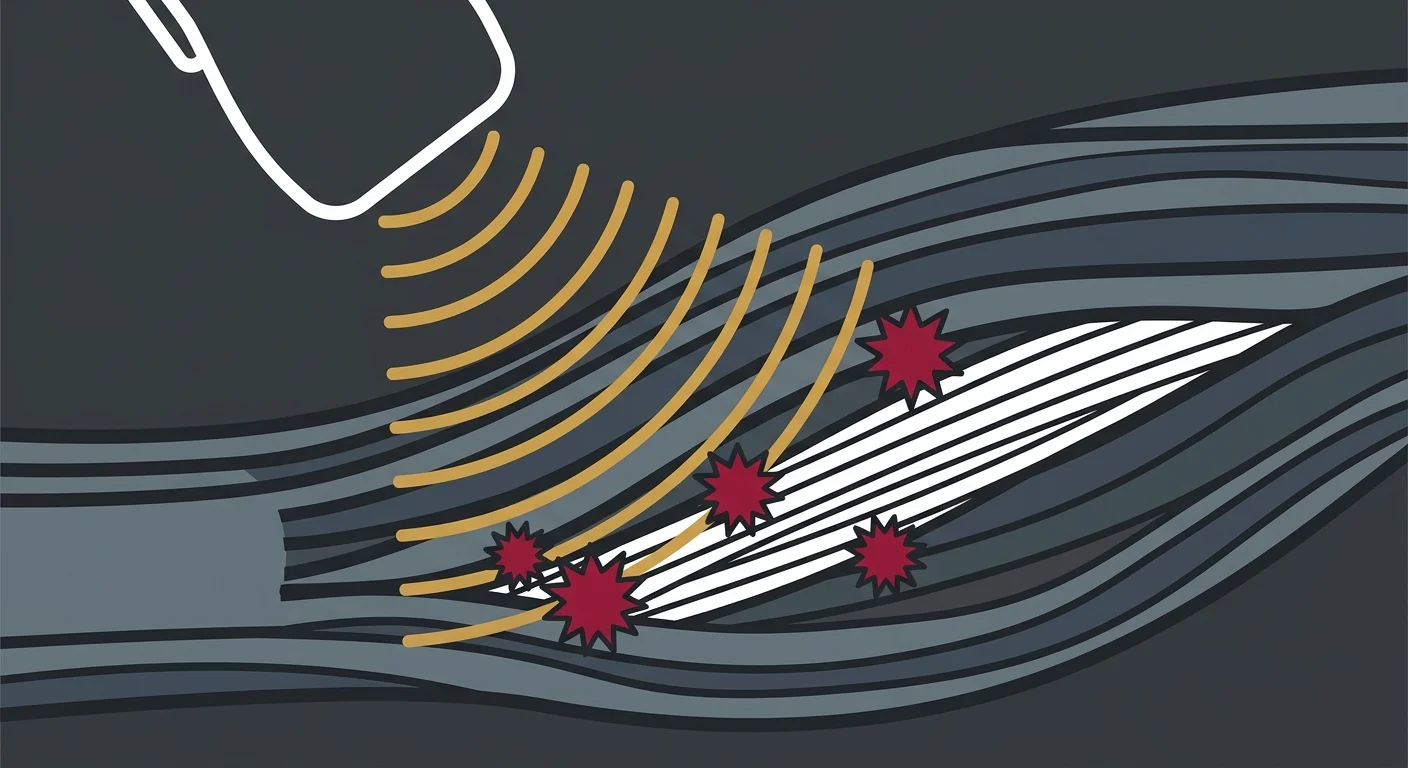
Acoustic waves don't touch the pain signal. They rebuild what's broken underneath it.
Shockwave Therapy delivers controlled mechanical pulses directly into the compromised tissue. Those pulses don't reduce inflammation. They trigger a cascade of cellular events cortisone was never designed to produce. Cortisone is the fire extinguisher. Acoustic waves are the construction crew that shows up with a blueprint.
- Mechanotransduction — converts the mechanical force into a biological repair signal the body can actually act on
- Neovascularization — restores the blood supply a stalled tendon has been starved of for months or years
- Collagen Synthesis — rebuilds the structural framework that chronic tendon conditions have left incomplete
Mechanotransduction: How Pressure Becomes a Biological Signal
The acoustic pulse doesn't heal the tendon directly. It tells the tendon's own cells to do it.
When an acoustic wave contacts a cell membrane, it activates the focal adhesion kinase pathway. FAK phosphorylation rises in response to that mechanical input. That single event converts a physical pressure wave into a chemical instruction the cell can execute.
The instruction is specific: TGF-beta-1 levels rise to direct cellular matrix remodeling. It's not a generic stress response. It's a targeted command telling the tenocytes to shift from passive maintenance to active structural repair. Cortisone never activates this pathway — and why cortisone falls short at the cellular level explains why the pain always comes back.
Neovascularization: The Blood Supply the Tendon Was Missing
Chronic tendon tissue doesn't just lose structural integrity. It loses its blood supply.
Chronically painful tendons are relatively avascular. They don't get the circulation that active muscle tissue does. Without adequate blood flow, the oxygen and nutrients that drive Proliferative Repair can't reach the site consistently. The repair window opens — and shuts — without the raw materials to do anything with it.
Acoustic wave application triggers Vascular Endothelial Growth Factor upregulation — and it moves fast. VEGF levels begin rising within 24 hours of the initial application. NIH published findings on this neovascularization response confirm that acoustic stimulation initiates new blood vessel formation through this growth factor pathway. That's the utility hookup in the construction metaphor. The crew can't rebuild the columns until the site has power and water. Neovascularization is exactly that.
Collagen Synthesis: Building the Structural Framework Back Up
Everything up to this point — the mechanotransduction signal, the restored blood supply — exists to make one thing possible: new collagen.
Acoustic energy doesn't deposit collagen. It removes the cellular barriers that were preventing tenocytes from producing it. Once those barriers clear and the biological signals are active, collagen type I synthesis increases by over 2-fold compared to untreated tissue. That's not a modest bump. That's the structural rebuild the tendon couldn't execute on its own.
That's Collagen Remodeling in action. The load-bearing structure the chronically damaged tendon was missing doesn't appear overnight — but it appears. The body had the capacity to build it the whole time. It needed acoustic energy to restart the disruption phase, sustain the proliferative window, and finally let remodeling run its full course. Nothing about that sequence is passive. And nothing about cortisone touches any of it.
| Biological Event | Trigger | Timeline After Acoustic Exposure | Clinical Significance |
|---|---|---|---|
| Mechanotransduction (FAK Activation) | Acoustic wave contact with cell membrane | Immediate — triggered at point of acoustic exposure | Converts mechanical pressure into a chemical repair signal; FAK phosphorylation tells tenocytes to shift from maintenance to active structural rebuilding |
| TGF-beta-1 Upregulation | FAK phosphorylation cascade | Follows directly from initial FAK activation | Directs cellular matrix remodeling — a targeted biological command to rebuild tissue structure, not merely manage inflammation |
| VEGF Upregulation / Neovascularization | Acoustic stimulation of avascular tendon tissue | Within 24 hours of primary acoustic application | Restores blood supply to chronically starved tendon tissue; enables oxygen and nutrients to sustain the Proliferative Repair phase |
| Collagen Type I Synthesis | Active tenocyte response to mechanotransduction and restored blood supply | Builds during Collagen Remodeling phase following Acute Disruption and Proliferative Repair | Type I collagen synthesis increases by over 2-fold compared to untreated controls — the structural rebuild a stalled tendon could not execute on its own |
| Cavitation-Driven Membrane Disruption | Acoustic energy within effective energy flux density range | Occurs during acoustic application within the therapeutic energy window | Micro-jets from cavitation bubble collapse mechanically stimulate cell membranes to initiate repair — the physical mechanism that gets the Acute Disruption phase restarted |
The Collagen Remodeling Sequence: What Happens After Each Session
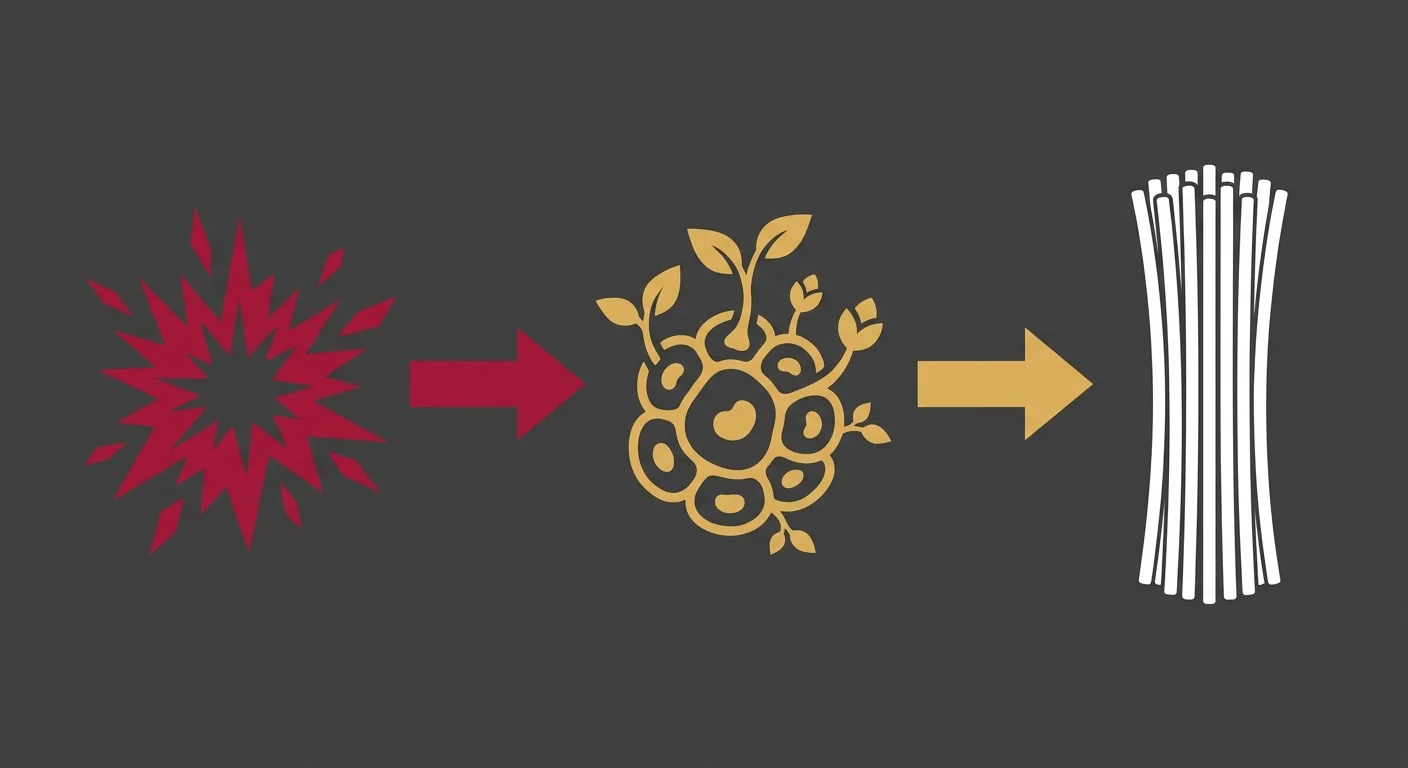
Knowing what acoustic waves trigger is one question. Knowing why the protocol runs multiple sessions is a completely different one. And that second question has a cellular answer.
Collagen repair isn't a single event. It's a sequence of overlapping phases, each one dependent on the last, each one requiring the right biological conditions to proceed. One session starts the cascade. The sessions that follow sustain it long enough for Collagen Remodeling to actually run to completion.
The session schedule isn't a billing structure. It's a biological requirement. Here's what each phase actually does.
Phase 1 — Acute Disruption: Resetting the Repair Clock
The first thing acoustic waves do isn't repair. It's reset.
Acute Disruption creates controlled micro-trauma in the stalled tissue. That sounds backward — until you remember the tissue was already compromised. The goal isn't damage. It's reactivation. Chronic tendon tissue has lost the ability to re-enter the repair sequence on its own. The acoustic pulse delivers the starting signal it can't generate anymore.
VEGF upregulation begins within 24 hours of the initial application. The blood supply that chronically avascular tendon tissue had been missing starts responding almost immediately. That's the construction site getting power and water before the crew arrives. Without Acute Disruption doing that reactivation work, the phases that follow have nothing to build on.
Phase 2 — Proliferative Repair: New Collagen Starts Forming
3 to 5 days after that micro-disruption signal fires, Proliferative Repair kicks in. Tenocytes stop idling and start producing. The collagen synthesis deficit that chronic tendon tissue has been carrying — sometimes for months, sometimes years — finally starts to close. That's not recovery. That's the body doing structural work it hadn't been able to do on its own.
That soreness most patients notice after a session? That's Proliferative Repair doing exactly what it should. It isn't a warning sign. It's a signal that the repair window is open. For anyone working through a plantar fasciitis treatment course, knowing what that window feels like between sessions changes everything about how you stay in the protocol.
Collagen type I synthesis climbs during this phase — increasing by over 2-fold compared to untreated tissue when the acoustic signal is applied correctly. That's not a modest bump. That's the structural output Proliferative Repair exists to produce. The load-bearing framework the chronically damaged tendon was missing starts taking shape here. Not from a drug. From the body's own repair machinery finally running at the right speed.
Phase 3 — Collagen Remodeling: Structural Strength Returns
Collagen Remodeling is the longest phase. It's also the one most patients never reach — because they stopped the protocol before the construction crew finished.
This is where newly synthesized collagen fibers organize, cross-link, and align under mechanical load. The remodeling phase peaks between 3 weeks and several months post-stimulation. That range is exactly why the treatment timeline exists — it's not a guess, it's the window biology requires. Cut the protocol short and Collagen Remodeling never runs to completion. The structural rebuild stalls again. Just further along in the cycle than where it started.
The building is finally getting rebuilt. Not patched. Not masked. Not temporarily quieted — rebuilt. Acute Disruption resets the clock. Proliferative Repair lays the structural framework. Collagen Remodeling finishes the job the chronic tendon tissue couldn't complete on its own. That's what the full three-phase sequence delivers when each session is timed to sustain the biological cascade the one before it started.
| Remodeling Phase | Biological Activity | Approximate Timeline | What the Patient May Notice |
|---|---|---|---|
| Acute Disruption | Controlled micro-trauma reactivates the stalled repair sequence; VEGF upregulation begins, initiating new blood vessel formation | Within 24 hours of initial application | Mild soreness or achiness at the treatment site — a sign the repair signal has fired, not a setback |
| Proliferative Repair | Tenocytes shift from passive maintenance to active collagen production; type I collagen synthesis rises significantly compared to untreated tissue | Initiates 3 to 5 days after soft tissue micro-disruption | Continued mild tenderness between sessions; some patients notice gradual reduction in the sharp pain that was present before treatment |
| Collagen Remodeling | Newly synthesized collagen fibers organize, cross-link, and align under mechanical load; structural integrity of the tendon matrix is restored | Peaks between 3 weeks and several months post-stimulation | Meaningful, sustained reduction in pain with load; improved function during activities that previously aggravated the tendon |
| Collagen Type I Synthesis Output | Acoustic stimulation drives tenocyte proliferation and matrix repair, producing measurably more structural collagen than untreated tissue generates on its own | Active throughout Proliferative Repair and into early Collagen Remodeling | Progressive load tolerance — the tendon begins handling daily mechanical stress without the pain response that defined the chronic phase |
How to Read Your Body's Response During Treatment
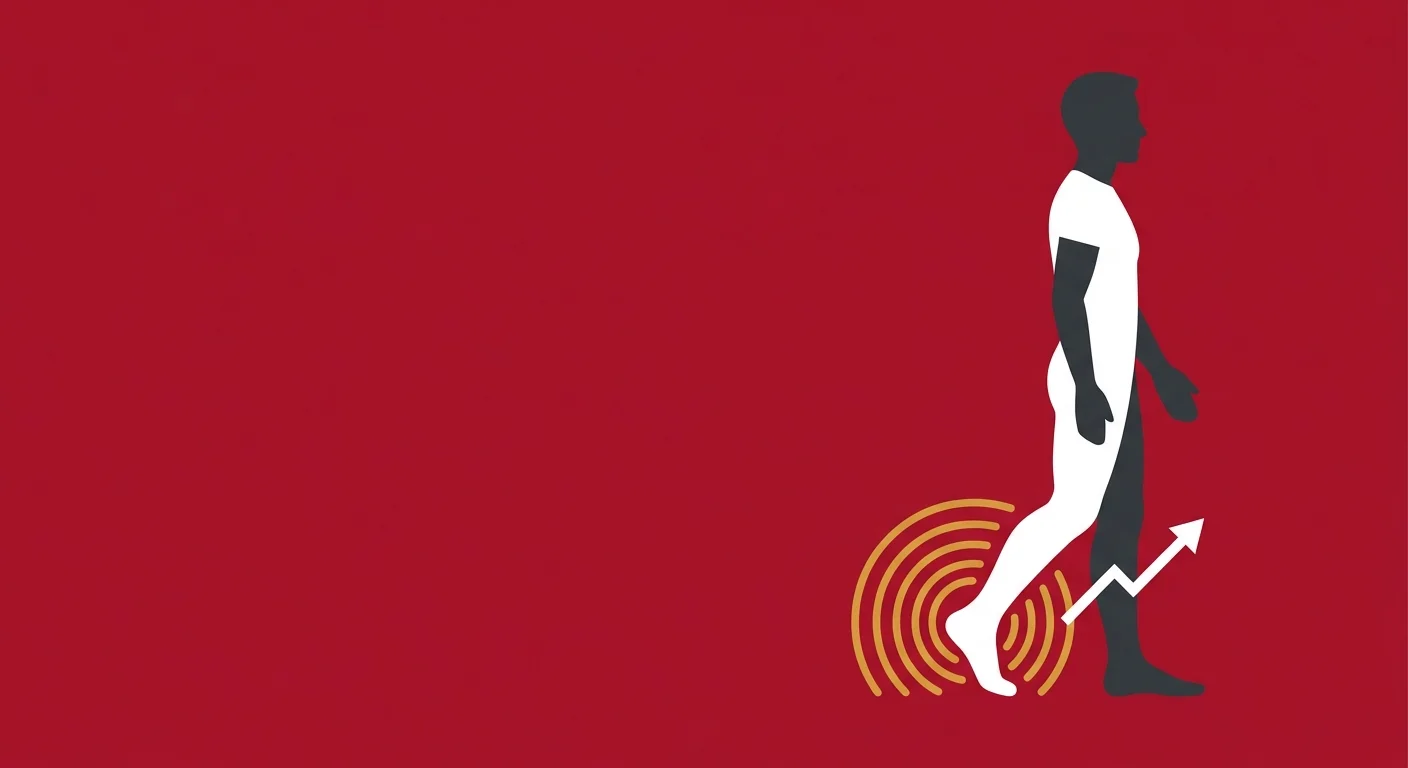
The biology explains what's happening inside the tendon. But what you feel between sessions is what decides whether you stay in the protocol long enough for any of it to matter.
Most patients feel soreness after session one and assume something went wrong. That's backwards. The soreness is confirmation that Acute Disruption did exactly what it was supposed to do — and that Proliferative Repair is already initiating. But nobody explains this before the session starts. So when the tenderness arrives 24 to 48 hours later, it reads as a warning sign instead of a green light. Patients quit right when the biology is finally moving.
Knowing what to expect is what keeps patients in the protocol long enough for Collagen Remodeling to run its course. If you're still in the evaluation stage, working through whether shockwave therapy is the right fit for your specific condition before the first session matters — not after the soreness surprises you into quitting.
What a Normal Post-Session Response Looks Like
Within the first 24 hours, the treated area usually feels more tender than it did going in. Not damaged — reset. That's Acute Disruption doing its job. The tissue isn't being injured. It's being restarted.
That temporary sensitivity isn't a reason to stop. It's the starting signal the stalled repair sequence was missing. By days three to five, Proliferative Repair naturally initiates — and for most patients, the acute soreness has already started to settle. What replaces it is a subtle loosening in the treated area, especially with movement that was restricted before. That shift is the tissue doing what cortisone never let it do.
NIH clinical data on patients treated for chronic plantar fasciitis shows a 72.1% success rate at three-month follow-up, with pain scores dropping from an average of 7.4 to 2.2. Those numbers don't show up after session one. They accumulate across the full treatment arc. Reading early soreness as progress — not failure — is what keeps patients in the protocol long enough for that outcome to arrive.
Who This Protocol Is Not For
This protocol isn't for everyone. And that's not a liability disclaimer — it's clinical reality.
If you're expecting one session to resolve what took years to develop, this isn't the right fit. Someone who exits care in week one — when immediate resolution hasn't arrived — walks out right as Proliferative Repair is getting started. Partial commitment produces partial results. In a phase-dependent biological sequence, early exit means Collagen Remodeling never runs. The tissue stays stalled. Same as before — just with a shorter timeline of disappointment.
The same applies to anyone who won't follow the session spacing the biology requires. Skipping sessions because the soreness felt like a stop sign breaks the cascade. The acoustic signal that sustained Proliferative Repair has a limited window before the tissue needs reinforcement. Miss that window and you don't delay progress. You reset it. The rebuild starts over from zero.
Why Session Spacing Matters to the Biology
Session spacing isn't a scheduling preference. It's a biological requirement — and the protocol only works if the spacing matches what the tissue actually needs.
The remodeling phase peaks between three weeks and several months post-stimulation. Every session exists to sustain the cascade the previous one started. Space them too far apart and Proliferative Repair loses momentum before Collagen Remodeling can take over. Compress them too tightly and the tissue doesn't have time to progress through the repair arc before the next disruption arrives. The spacing is calibrated to the biology — not to what's convenient on the calendar. That's the difference between a finished rebuild and another stalled repair.
| Response Type | What It Signals Biologically | Normal or Concern | Recommended Action |
|---|---|---|---|
| Increased tenderness within 24 hours of session | Acute Disruption phase is active — controlled micro-trauma has reactivated the stalled repair sequence | Normal | Rest the area; avoid aggressive loading. This is the starting signal the tissue needed, not a setback. |
| Mild soreness settling by days 3 to 5 | Proliferative Repair phase is initiating — tenocytes are shifting from passive maintenance to active collagen production | Normal | Stay in the protocol. This transition is the cascade working as designed. Do not skip the next session. |
| Subtle loosening or improved range of motion between sessions | Collagen Remodeling is beginning — newly synthesized fibers are organizing under mechanical load | Normal | Continue the full session schedule. Early functional improvement does not mean the rebuild is complete. |
| Sharp or escalating pain that worsens across multiple days | Outside the expected Acute Disruption response — may indicate tissue reaction beyond the therapeutic window | Concern | Report to your provider before the next session. The protocol may need reassessment before continuing. |
| No response at all — no soreness, no sensitivity, no change in symptoms | The acoustic signal may not have reached the target tissue at sufficient energy flux density to initiate disruption | Concern | Discuss with your provider. Energy parameters or session spacing may need adjustment to engage the repair cascade. |
| Returning symptoms weeks after the final session | Collagen Remodeling phase may not have reached completion — the structural rebuild stalled before cross-linking was finished | Concern | Do not wait. Restarting the protocol earlier in a relapse gives the remodeling phase a better window to run its full course. |
Frequently Asked Questions About Acoustic Wave Therapy and Collagen Repair
The biology is clear. The lived experience is messier. And the gap between those two things is where most people abandon the protocol right when it's starting to work.
These are the questions that deserve straight answers. Not reassurances. Not hedged clinical language. Just the actual clinical reality — because that's what decides whether someone commits to the rebuild or goes back to the fire extinguisher.
How do acoustic waves actually stimulate collagen repair at the cellular level?
The acoustic wave contacts the cell membrane and immediately activates the focal adhesion kinase pathway. FAK phosphorylation rises. That mechanical signal becomes a chemical instruction — and the instruction is specific: TGF-beta-1 levels elevate, telling the tenocytes responsible for tendon matrix production to stop passive maintenance and start building.
The output is measurable. Collagen type I synthesis increases by over 2-fold compared to untreated tissue. That's not inflammation management. That's structural production — the kind the chronically damaged tendon couldn't generate on its own because the cells had stopped receiving the signal to do it.
Why are multiple Shockwave Therapy sessions necessary for tendon healing?
Because collagen repair is a phase-dependent sequence. One session triggers Acute Disruption and begins VEGF upregulation within 24 hours. But Proliferative Repair needs reinforcement before it can hand off to Collagen Remodeling. Miss that window and the biological momentum doesn't pause — it loses ground.
Each session isn't repeating the same step. It's sustaining the cascade the previous session started and advancing it to the next phase. A build schedule has a sequence. It has specific timing requirements. Partial completion isn't early success — it's a stalled rebuild at a different point in the cycle.
What is mechanotransduction and why does it matter for tendon repair?
Mechanotransduction is how a pressure wave becomes a repair instruction. The acoustic energy hits the tissue. The focal adhesion kinase pathway activates. FAK phosphorylation rises — and that mechanical input converts into chemical output: TGF-beta-1, which tells the matrix-producing cells what to build and where.
For a chronically damaged tendon, that's the missing piece. The structural deficit isn't because the cells forgot how to produce collagen. It's because they stopped receiving the signal to do it. Mechanotransduction restores that signal. The cells were always capable of rebuilding. They just needed the right instruction to start.
How does Shockwave Therapy compare to cortisone injections for long-term tendon repair?
Cortisone suppresses inflammation. It doesn't rebuild collagen, restore tenocyte production, or touch the structural deficit that caused the pain. When the suppression wears off, the structural failure is still there — usually more entrenched than before.
Shockwave Therapy operates on an entirely different mechanism. It triggers the cellular cascade that rebuilds the load-bearing matrix cortisone leaves completely untouched. Clinical data on patients treated for chronic plantar fasciitis shows a 72.1% success rate at three-month follow-up, with pain scale scores dropping from an average of 7.4 to 2.2. Those results accumulate across a full treatment arc.
Cortisone can quiet the signal. It can't rebuild the structure. That's not a nuance. That's the entire difference between a fire extinguisher and a construction crew.
What should I expect during the collagen remodeling phase after Shockwave Therapy?
Collagen Remodeling is the quietest phase — and the most important. The acute soreness from earlier sessions is usually gone. What's happening internally is structural integration: the newly synthesized collagen fibers are organizing, cross-linking, and aligning under mechanical load. It doesn't announce itself with dramatic symptom changes.
This phase peaks between 3 weeks and several months post-stimulation. The neovascularization that began with VEGF upregulation within 24 hours of the initial application is now sustaining the blood supply that Collagen Remodeling requires to run to completion. The collagen synthesized during Proliferative Repair doesn't automatically align correctly — it responds to load, movement, and time.
The quiet isn't stagnation. It's the rebuild finishing. The construction crew isn't gone — they're just doing the work that doesn't make noise.
Structural Repair, Not Pain Management
Cortisone doesn't rebuild anything.
It quiets the signal long enough for you to stop noticing the structural problem — and then the signal comes back. Usually louder. That's not a treatment failing. That's a fire extinguisher being mistaken for a construction crew.
Shockwave Therapy works differently — not just in degree, but in kind. Acute Disruption resets a stalled repair sequence the chronic tissue couldn't restart on its own. Proliferative Repair builds the collagen framework that years of recurring pain had left incomplete. Collagen Remodeling finishes what the body never got to finish.
That's a biological rebuild. Not a patch. Not a mask. Not another temporary quieting of a problem that hasn't moved.
And that distinction changes everything about what kind of provider you actually need. A provider running volume-first protocols on pre-set timelines isn't managing a build schedule. They're managing a billing calendar. Those aren't the same thing — and your tendon knows the difference.
At Touch of Wellness Chiropractic, Dr. Karen Hannah doesn't separate the mechanism from the patient. The biology tells you what needs to happen. The clinical picture tells you whether the protocol is actually calibrated to what your tissue is doing right now — or just running the same sequence on a fixed schedule regardless of your response.
The building isn't on fire. It's structurally compromised.
If you've been managing a tendon problem that keeps coming back, the question isn't whether you've tried enough. It's whether anyone has stopped treating the smoke and started rebuilding the columns.
Tendon pain that keeps coming back isn't a pain management problem. It's a structural repair problem that nobody has actually addressed. Cortisone masks it. Rest pauses it. But if the collagen matrix was never rebuilt, the same load that broke it will break it again. If you're tired of treating the symptom while the cause goes untouched, find out what a clinical assessment at Touch of Wellness Chiropractic actually looks like — and whether Shockwave Therapy is what's been missing from your care.