
(309) 321-8412 | 1101 W Jackson St, Suite A, Morton, IL 61550
(309) 321-8412 | 1101 W Jackson St, Suite A, Morton, IL 61550
Animal Chiropractic vs. Lay Practitioners: Safety and Legal Differences Explained
Animal chiropractic and lay practitioner spinal work are not two versions of the same service. One is a credentialed clinical specialty. The other is unlicensed practice.
Animal chiropractic is performed by a licensed Doctor of Chiropractic (DC) or Doctor of Veterinary Medicine (DVM) who has completed a minimum of 226 hours of approved postgraduate training through the American Veterinary Chiropractic Association (AVCA). That credential requires an active professional license before enrollment even begins. The AVCA pathway is not a weekend certification — it is a structured clinical program built on an existing foundation of advanced anatomical and neurological education.
Lay practitioners — individuals without a DC or DVM license performing spinal work on animals — operate entirely outside that framework. In Illinois, unauthorized manual therapies on animals constitute unlicensed veterinary practice, categorized as a Class A misdemeanor under the Illinois Veterinary Medicine and Surgery Practice Act. The legal exposure is not theoretical. It is statutory.
The safety distinction follows directly from the training gap. Untrained manual work on animal spines carries documented risk of articular hypermobility or severe structural injury. Animal anatomy is not scaled-down human anatomy — weight distribution, neurological pathways, and contraindication profiles differ significantly across species. Recognizing those contraindications requires the same clinical education that underpins every other high-stakes intervention in practice.
Over 30 states require veterinary referral or direct supervision before a certified practitioner can adjust an animal. The Federal Trade Commission formally supported the inclusion of certified practitioners in animal care because the credentialing standard protects both the animal and the owner.
The hands matter more than the technique. And the training behind those hands is either there — or it isn't.
Last Updated: August 18, 2026
- • What Animal Chiropractic Actually Is — And What It Isn't
- • Why the 'Who's Holding the Hands' Question Is the Only One That Matters
- • The Legal Landscape: What Illinois Law Actually Says
- • How AVCA Certification Changes the Entire Risk Profile
-
• Frequently Asked Questions
- • Can a lay practitioner legally perform chiropractic adjustments on animals in Illinois?
- • What are the anatomical risks of letting an uncertified person adjust my pet?
- • How does the law distinguish between veterinary chiropractic and animal chiropractic?
- • What educational credentials must an AVCA-certified animal chiropractor hold?
- • Why does a practitioner need a veterinary referral before adjusting an animal?
- • The Bottom Line on Certified Animal Chiropractic
What Animal Chiropractic Actually Is — And What It Isn't
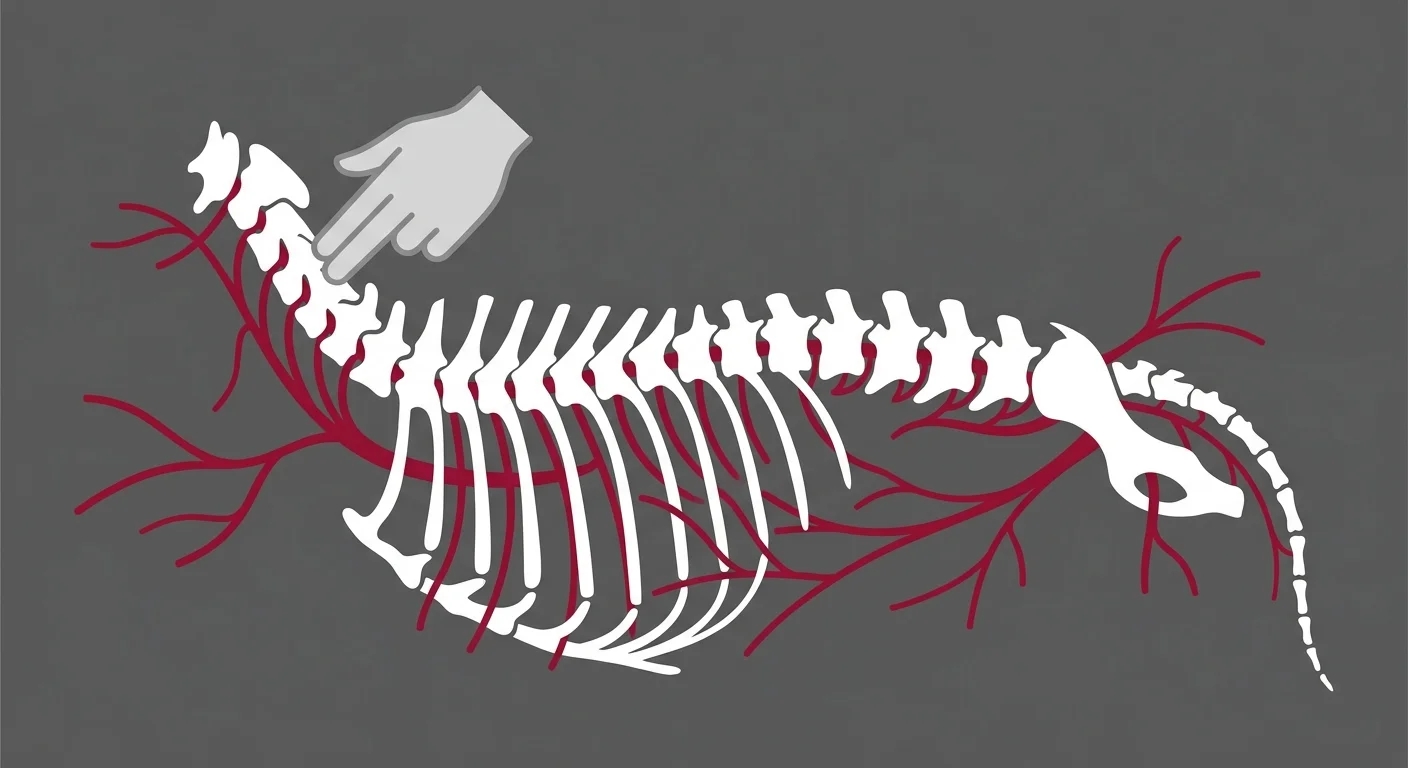
Animal chiropractic is not a wellness trend. It is not a philosophy. It is a postgraduate clinical specialty — and it starts with what the practitioner already knows before their hands ever touch an animal spine.
Not everything calling itself 'animal spinal work' is the same thing. Some of it is credentialed, clinically grounded, and legally sanctioned. Some of it is an unlicensed person applying force to a spine they don't understand. Those aren't two versions of the same service. One is care. The other is liability.
Real animal chiropractic restores nervous system function by addressing the relationship between the spine and the neurological pathways it protects. That requires individualized chiropractic care applied through species-specific anatomical knowledge — not a human technique repurposed and relabeled. Transferring a generic adjustment from a human patient to an animal patient isn't a modification. It's guesswork wearing the same name.
The Neurological Foundation Most People Miss
The nervous system is the system. In any species. Every organ, every tissue, every movement pattern runs on neurological signals traveling through the spinal column. A disruption there doesn't just produce pain. It disrupts function throughout the entire body.
Here's what most people miss when they evaluate animal chiropractic: they focus on the visible action and stop there. The adjustment is the output. The clinical reasoning behind it is the practice. Strip the reasoning, and you don't have a modified technique. You have an unqualified person applying force.
So what does AVCA certification actually demand? That's not a rhetorical question. It has clinical and legal answers — and both point in the same direction. Whether that training produces safety-qualified practitioners is exactly the question every pet owner should be asking before anyone touches their animal's spine.
Why Untrained Practitioners Get This Wrong
Here's the problem with untrained practitioners: they don't know what they don't know. An animal spine is not a smaller human spine. Weight distribution, joint mechanics, contraindication profiles, neurological pathways — these differ significantly by species. Getting those differences wrong doesn't produce a suboptimal outcome. It produces injury.
Untrained manual work on animal spines carries documented risk — articular hypermobility, severe structural injury, and irreversible neurological damage. Manual therapy is strictly contraindicated in active spinal fracture or bone infection. Identifying those contraindications requires the same clinical education behind every other high-stakes intervention. A lay practitioner doesn't have that education. That's not a judgment call. That's the definition of unlicensed.
The NIH-indexed research on spinal interventions in animals makes this explicit. The same manual forces that restore function in a trained clinical context can cause irreversible structural damage without diagnostic competency behind them. The technique doesn't change. The risk profile changes entirely — based on who is executing it and what they understand about the nervous system underneath.
Integrative veterinary medicine programs have incorporated AVCA certified animal chiropractic alongside standard canine and equine rehabilitation — because the credential signals clinical accountability that peer-reviewed evidence supports. That integration didn't happen by accident. Lay practitioners don't belong in that framework. They never did.
| Dimension | Certified Animal Chiropractic | Lay Practitioner Approach |
|---|---|---|
| Practitioner Prerequisite | Active DC or DVM license required before certification begins | No licensed professional credential required |
| Certification Standard | Minimum postgraduate training hours through an AVCA-approved program | No standardized training program or credentialing body |
| Anatomical Knowledge Base | Species-specific anatomy, weight distribution, joint mechanics, and neurological pathways across species | Generic technique transferred from human patients — species differences largely unaccounted for |
| Contraindication Screening | Clinically trained to identify absolute contraindications such as active spinal fracture or bone infection before any intervention | No diagnostic competency to screen for contraindications — applied force without clinical baseline |
| Veterinary Collaboration | Operates within a supervised referral structure alongside the treating veterinarian | Functions independently, outside any veterinary oversight or referral chain |
| Legal Standing in Illinois | Credentialed practice recognized under statutory frameworks governing licensed animal care | Unauthorized manual therapy on animals constitutes unlicensed veterinary practice under state law |
| Clinical Accountability | Bound by professional licensing standards, board oversight, and AVCA credentialing requirements | No licensing board, no credentialing body, no enforceable standard of care |
| Integration with Veterinary Medicine | Increasingly incorporated into canine and equine rehabilitation programs as a peer-reviewed, evidence-supported modality | Not recognized within formal veterinary rehabilitation or integrative medicine programs |
Why the 'Who's Holding the Hands' Question Is the Only One That Matters

Every spinal intervention comes down to one question. Not the technique. Not the price. Who is holding the hands — and what do they actually know about the nervous system underneath?
The motion can look identical. A certified practitioner and a lay practitioner can make the same general movement with their hands. But clinical reasoning, anatomical knowledge, and the judgment to recognize a contraindication — those aren't interchangeable. One practitioner has them. The other is guessing.
That gap is the whole issue. The credential isn't a formality. It's the proof that the person holding the hands knows the difference between a safe intervention and a contraindicated one.
What AVCA Certification Actually Requires
AVCA certification is not a weekend course. Candidates must complete a minimum of 226 hours of approved postgraduate training through the American Veterinary Chiropractic Association. And that training doesn't begin until they already hold an active Doctor of Chiropractic (DC) or Doctor of Veterinary Medicine (DVM) license.
That prerequisite isn't administrative. A DC or DVM license represents years of foundational training in anatomy, neurology, and clinical diagnosis. AVCA certification builds on that foundation. It is not a substitute for it. Anyone who takes the time to verify AVCA credentials quickly discovers that the prerequisite alone disqualifies most lay practitioners before a single continuing education hour is counted.
Over 30 states require veterinary referral or direct supervision before a certified practitioner can adjust an animal. That legal framework exists because the standard of care is built around clinical accountability. AVCA certified animal chiropractic belongs in a supervised, collaborative model. Lay practitioners don't fit that model. They never have.
Who This Care Is Not For
This care is not for pet owners looking for the cheapest available option. Price-driven decisions and high-stakes spinal interventions don't belong in the same sentence. No credentialed practitioner will pretend otherwise.
And it's not for owners expecting one session to resolve a chronic problem. Animal chiropractic works on the nervous system. The nervous system doesn't reset in a single visit — it never has. Owners who arrive looking for a shortcut are asking the wrong question. A qualified practitioner will say that directly. No softening.
It's also not for owners who've already decided what they want before the evaluation starts. The clinical picture drives the care plan here — not a preference formed in the parking lot before anyone has looked at the animal. If you need the practitioner to follow your lead rather than the assessment, this isn't the right fit. That's not a rejection. That's a clinical boundary. And it holds here the same way it holds anywhere care is taken seriously.
| Credential Requirement | AVCA-Certified Practitioner | Lay Practitioner |
|---|---|---|
| Prerequisite License Required | Active DC or DVM license required before training begins | None — no licensed foundation required |
| Postgraduate Training Hours | Minimum of 226 hours of approved postgraduate instruction | None — no standardized training requirement exists |
| Veterinary Referral or Supervision Required | Required in over 30 states before adjusting an animal client | No credential to meet referral or supervision requirements |
| Operates Within Supervised Clinical Model | Yes — collaborative oversight is the standard of care | No — practice is independent and unverified |
The Legal Landscape: What Illinois Law Actually Says

Here's the thing most pet owners never think to ask: who is actually allowed to adjust my animal?
That question is the gap. And unlicensed practitioners live in it.
The Illinois Veterinary Medicine and Surgery Practice Act closed that gap with statutory language.
Unauthorized manual therapies on animals constitute unlicensed veterinary practice. First-offense violations are classified as a Class A misdemeanor.
Not a civil fine. A criminal charge.
'I didn't know' doesn't hold up in court.
The exposure runs both ways — the person performing unauthorized care, and whoever arranged it.
The Veterinary Referral Requirement and Why It Exists
Illinois isn't the outlier here. The American Chiropractic Association has documented that over 30 states require veterinary referral or direct supervision before a certified chiropractor can adjust an animal.
That's not a regional preference. That's a national consensus about where the standard of care sits.
The referral requirement isn't a bureaucratic hurdle. It exists because animal chiropractic doesn't function as a standalone service.
A veterinarian confirms the animal is a safe candidate before any spinal intervention begins. That's the gate. The way certified practitioners work alongside veterinarians on non-surgical care isn't a courtesy step — it is structurally embedded in how the credential functions.
Skip that step and you haven't streamlined anything. You've removed the only safeguard.
A lay practitioner has no entry point into that framework. No licensed veterinarian. No referral confirming the animal is a safe candidate.
The referral requirement doesn't slow them down. It rules them out entirely.
What the FTC Said — And Why It Still Matters
In 2004, the Federal Trade Commission issued a formal staff letter supporting the inclusion of certified chiropractors in animal care — specifically under veterinary supervision.
That published federal position matters. Not because it overrides state law. Because it confirms what the credentialing standard actually accomplishes: it creates a framework rigorous enough that a federal agency endorsed it as safe for consumers.
The Federal Trade Commission's case rested on consumer benefit: certified practitioners expand access and increase competition without compromising safety.
But that argument only holds because certification means something. You need an active DC or DVM license to enter the program. You complete postgraduate clinical training. You operate inside a supervised competency framework.
Strip the credential out and the FTC's argument doesn't stretch to cover what's left. What's left is unqualified hands on an animal spine.
The legal picture points in one direction.
Certification isn't a preference. It's the minimum threshold. The law already decided that — the only question is whether the owner knows it before the appointment is booked.
| Legal Variable | Certified Animal Chiropractor (AVCA) | Uncertified Lay Practitioner |
|---|---|---|
| Legal status of practice in Illinois | Permitted under veterinary supervision | Constitutes unlicensed veterinary medicine |
| Criminal exposure for first offense | None — operating within licensed, supervised framework | Class A misdemeanor |
| Governing statute (Illinois) | Illinois Veterinary Medicine and Surgery Practice Act — compliant | Illinois Veterinary Medicine and Surgery Practice Act — violated |
| Veterinary referral or supervision requirement | Required in over 30 states — structurally embedded in credentialed practice | No pathway to satisfy referral requirement — disqualified by design |
| Federal regulatory position | FTC formally supports certified chiropractors providing animal care under veterinary supervision | No federal recognition — uncertified practice falls outside supported framework |
| Consumer protection rationale | Expands access and competition while preserving safety standards | Removes safety standards entirely — no clinical accountability structure |
How AVCA Certification Changes the Entire Risk Profile
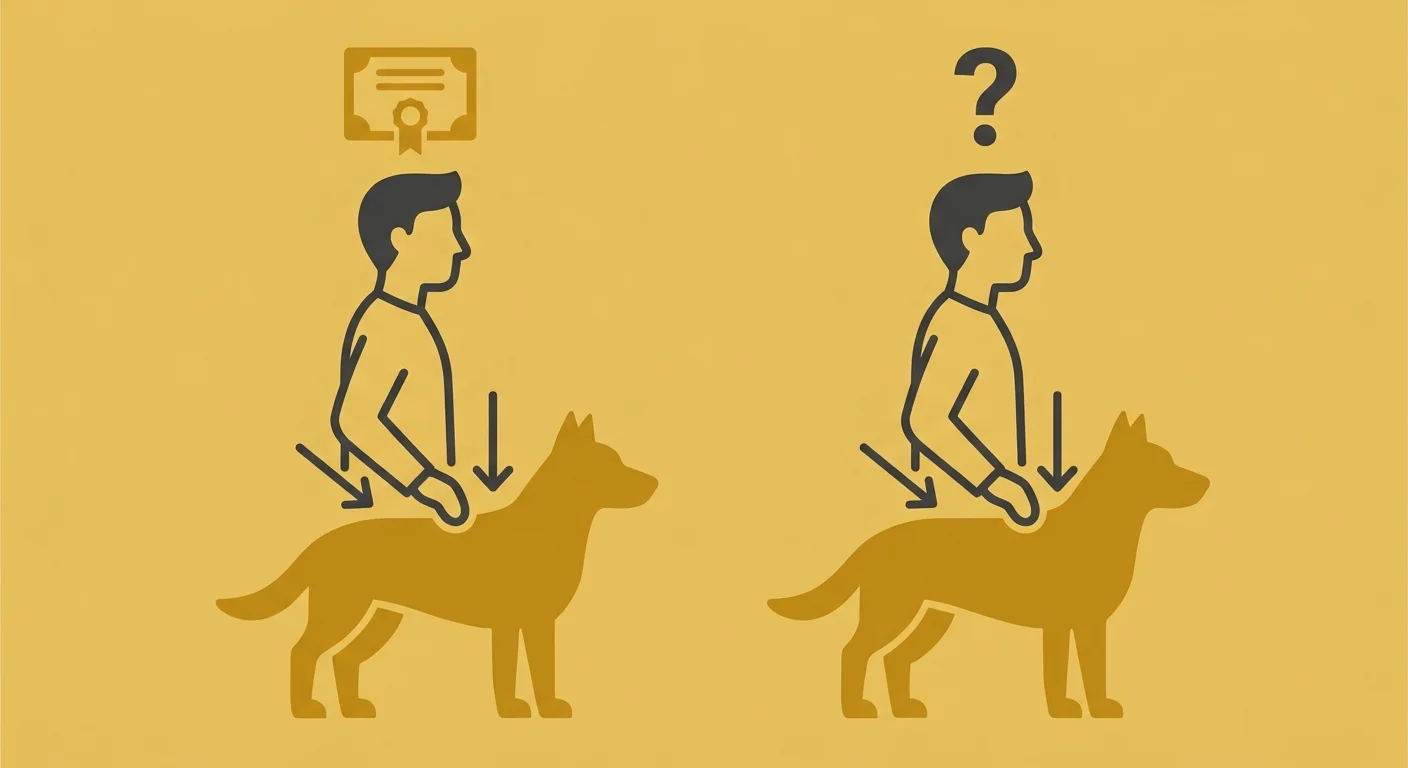
The law tells you who can't be there. The credential tells you who can. Those are two different questions — and both have specific answers.
AVCA certification doesn't start with animal training. It starts with an active Doctor of Chiropractic (DC) or Doctor of Veterinary Medicine (DVM) license — already earned, already held. That prerequisite isn't paperwork. It is years of foundational clinical education in anatomy, neurology, and differential diagnosis. Every decision a certified practitioner makes in the treatment room rests on that foundation. Strip it, and there is no foundation.
On top of that existing license, the AVCA requires a minimum of 226 hours of approved postgraduate instruction — species-specific anatomy, contraindication recognition, neurological assessment. That is the floor. Everything below it is an uncredentialed practitioner applying a technique with no clinical accountability behind it. The motion can look the same. The reasoning cannot be borrowed.
The Anatomy Knowledge Gap Between Certified and Uncertified Practitioners
An animal spine is not a smaller human spine. Weight distribution, joint architecture, and neurological mapping differ across species in ways that take years of formal study to understand. You cannot discover that gap on YouTube.
Untrained practitioners cannot identify contraindications they were never taught to recognize. Manual therapy is strictly contraindicated in cases of active spinal fracture or bone infection — conditions that can be present without obvious external signs. Even behavioral signals matter: subtle movement changes in dogs that point to spinal involvement require a trained clinical eye to read correctly. A lay practitioner doesn't have that eye. That's not a criticism. That's the definition of untrained.
Untrained manual work on animal spines carries documented risk of articular hypermobility and severe structural injury. That is not a hypothetical. It is the direct outcome when the knowledge behind the hands doesn't exist. The motion can look clinical. What makes it clinical is the judgment about when not to proceed — and lay practitioners have never been taught that judgment. The technique isn't the variable. The training is.
How Certified Practitioners Collaborate With Veterinarians
AVCA-certified animal chiropractic doesn't operate in isolation. It functions inside a collaborative model where a veterinarian has already confirmed the animal is a safe candidate before any spinal work begins. That structure is not a courtesy. It is how the credential is designed to function.
Integrative veterinary medicine programs incorporate certified animal chiropractic alongside standard canine and equine rehabilitation — not because it's trendy, but because the credential signals the clinical accountability that makes interdisciplinary care work. There is peer-reviewed evidence behind that integration. It is a structured, supervised framework, and certified practitioners collaborate within it alongside veterinarians on cases where non-surgical care is the right path.
A lay practitioner has no pathway into that framework. No licensed veterinarian is supervising their work. No referral structure has confirmed the animal is even a safe candidate. The collaborative model doesn't create a hurdle for uncertified practitioners. It disqualifies them entirely — and that's the point.
| Risk Factor | With AVCA-Certified Practitioner | With Uncertified Lay Practitioner |
|---|---|---|
| Anatomical knowledge | Species-specific training in joint architecture, weight distribution, and neurological mapping across animal types | General bodywork intuition with no formal animal anatomy education — differences between species are not known, not taught |
| Contraindication screening | Trained to identify conditions — including spinal fracture and active bone infection — where manual therapy is dangerous or prohibited | No clinical framework for recognizing contraindications — proceeds without the knowledge that certain presentations require a full stop |
| Credential prerequisite | Holds an active DC or DVM license before animal-specific training begins — years of foundational clinical education already in place | No licensed clinical baseline required — anyone can present as a practitioner without any prior formal training |
| Veterinary collaboration | Operates inside a supervised referral structure — a licensed veterinarian has confirmed the animal is a safe candidate before care begins | No referral pathway and no supervising veterinarian — the animal's candidacy for spinal intervention is never formally assessed |
| Legal standing | Credentialed practitioner functioning within the standard of care defined by state law and national certification bodies | Performing unauthorized manual therapies on animals constitutes unlicensed veterinary practice — a criminal exposure, not a civil one |
| Injury risk profile | Clinical judgment about when to proceed and when to stop is grounded in formal postgraduate instruction and supervised competency | Risk of articular hypermobility or severe structural injury is real and documented — the technique may look similar; the judgment behind it does not exist |
Frequently Asked Questions
Pet owners ask the right questions. They just don't always ask them of the right person.
What follows are the specific legal realities, anatomical risks, and clinical distinctions that should drive every animal chiropractic decision. Not after the appointment. Before it.
Can a lay practitioner legally perform chiropractic adjustments on animals in Illinois?
No. In Illinois, performing manual therapies on animals without an active Doctor of Chiropractic (DC) or Doctor of Veterinary Medicine (DVM) license is unlicensed veterinary practice.
The Illinois Veterinary Medicine and Surgery Practice Act is explicit. First-offense violations are classified as a Class A misdemeanor. That is not a fine. That is a criminal charge.
And the exposure is not limited to the practitioner. Anyone who arranges the appointment carries legal risk too.
What are the anatomical risks of letting an uncertified person adjust my pet?
The risks are structural. Documented. And not always reversible.
Manual therapy is strictly contraindicated in active spinal fracture or bone infection. Both conditions can be present with zero visible external signs. An uncertified practitioner has no training to screen for either. That's not an oversight in their education — it's because they never received the education.
Untrained manual work on animal spines carries a documented risk of articular hypermobility or severe structural injury. The technique can look identical from the outside. What you can't see is the clinical judgment that determines when not to proceed. That judgment is what the AVCA credential requires. A lay practitioner doesn't have it. That's not a criticism. That's what "untrained" means.
How does the law distinguish between veterinary chiropractic and animal chiropractic?
The law doesn't care what the service is called. It cares whether the person performing it holds the required credential.
Animal chiropractic performed by an AVCA-certified Doctor of Chiropractic (DC) or Doctor of Veterinary Medicine (DVM) — operating inside a veterinary referral structure — is legally sanctioned. Spinal interventions performed by anyone else fall under unauthorized veterinary practice. The label on the service doesn't change that.
The credential is the line. Either the practitioner is standing on the right side of it, or they aren't.
What educational credentials must an AVCA-certified animal chiropractor hold?
The credential doesn't start at the AVCA training program. It starts years before.
Candidates must already hold an active Doctor of Chiropractic (DC) or Doctor of Veterinary Medicine (DVM) license before AVCA instruction begins. That prerequisite represents years of foundational clinical education — anatomy, neurology, diagnosis. It's the baseline, not the qualification.
On top of that existing license, the AVCA requires a minimum of 226 hours of approved postgraduate instruction covering species-specific anatomy, contraindication recognition, and neurological assessment across animal populations.
That is the floor. Not a weekend seminar. The minimum threshold for practicing legally and safely.
Why does a practitioner need a veterinary referral before adjusting an animal?
Because the veterinarian confirms the animal is a safe candidate before any spinal intervention begins. That is not a courtesy step. In over 30 states, it is a legal requirement.
The referral structure exists to ensure contraindicated conditions have been ruled out by a licensed clinician before a certified practitioner proceeds. AVCA-certified animal chiropractic functions inside that collaborative model — not independently of it.
A lay practitioner has no pathway into that framework. No referral structure. No supervising veterinarian. The referral requirement doesn't inconvenience them. It disqualifies them entirely.
The Bottom Line on Certified Animal Chiropractic
The technique isn't the variable. The training is.
That standard doesn't get softer because the patient has four legs. It gets harder. An animal can't tell you where it hurts. It can't flag a contraindication. It can't stop the appointment when something feels wrong. The person holding the hands carries all of that — and either has the clinical education to carry it, or doesn't.
An AVCA-certified practitioner walks in with an active clinical license, species-specific postgraduate training, a veterinary referral on file, and the diagnostic foundation to know when to stop.
A lay practitioner brings none of that.
From the outside, the motion can look the same. The clinical accountability is not. And when something goes wrong, the consequences land on the animal — not on the person who applied the force.
Your animal deserves the same standard you'd demand for yourself: a credentialed provider, a collaborative clinical model, and a practitioner willing to stop when the assessment says stop.
At Touch of Wellness Chiropractic, animal chiropractic is a credentialed specialty. Not a casual add-on. Not a stand-in for veterinary diagnosis. The legal framework is clear. The anatomical stakes are documented. The AVCA certification standard exists because the alternative carries real consequences — structural, legal, and clinical.
The hands matter more than the technique. Know whose hands are on your animal before the appointment is booked.
Your animal deserves a practitioner who can actually clear them for care — not someone guessing at anatomy with no credentials and no veterinarian in the loop. If you want to know whether AVCA-certified animal chiropractic is the right next step, Book Appointment and find out what a real assessment looks like.
Copyright Touch of Wellness Chiropractic 2026
1101 W Jackson St, Suite A Morton, IL 61550
Web Design by iTech Valet