
Clinical cold laser wavelengths reach deeper than consumer red light panels for one reason: they work inside a specific range built to slip past melanin and blood in the skin and surface tissue. Picture light as a traveler heading somewhere buried under layers of the body. Melanin in the skin and hemoglobin in blood act like checkpoints, and they scatter or soak up shorter wavelengths long before that light ever reaches muscle, joint, or nerve. Most consumer red light panels emit light in ranges these barriers filter hard, so their effect stays stuck at the surface. Clinical devices are calibrated to wavelengths that land inside what researchers call the optical therapeutic window, a band that melanin and blood absorb far less readily. That lets more of the light travel past the surface and reach the deeper structures. This comes down to physics, not raw output. A device can be powerful and still fail to go deep if its wavelength sits outside that window. Once light does arrive at depth, it meets the mitochondria inside cells and sets off biological processes tied to circulation, inflammation response, and repair. The depth the light reaches decides whether those processes fire in surface skin cells or in the deeper muscle, ligament, and nerve tissue where musculoskeletal pain usually starts. Wavelength selection, not brightness or wattage, is the variable that determines whether the light hits its target. A device outside the therapeutic window can still glow and give off warmth without doing much of anything below the skin. That is the line between clinically applied wavelengths and the generalized consumer lighting sold for at-home wellness.
What Counts as Deep Tissue Penetration in Photobiomodulation
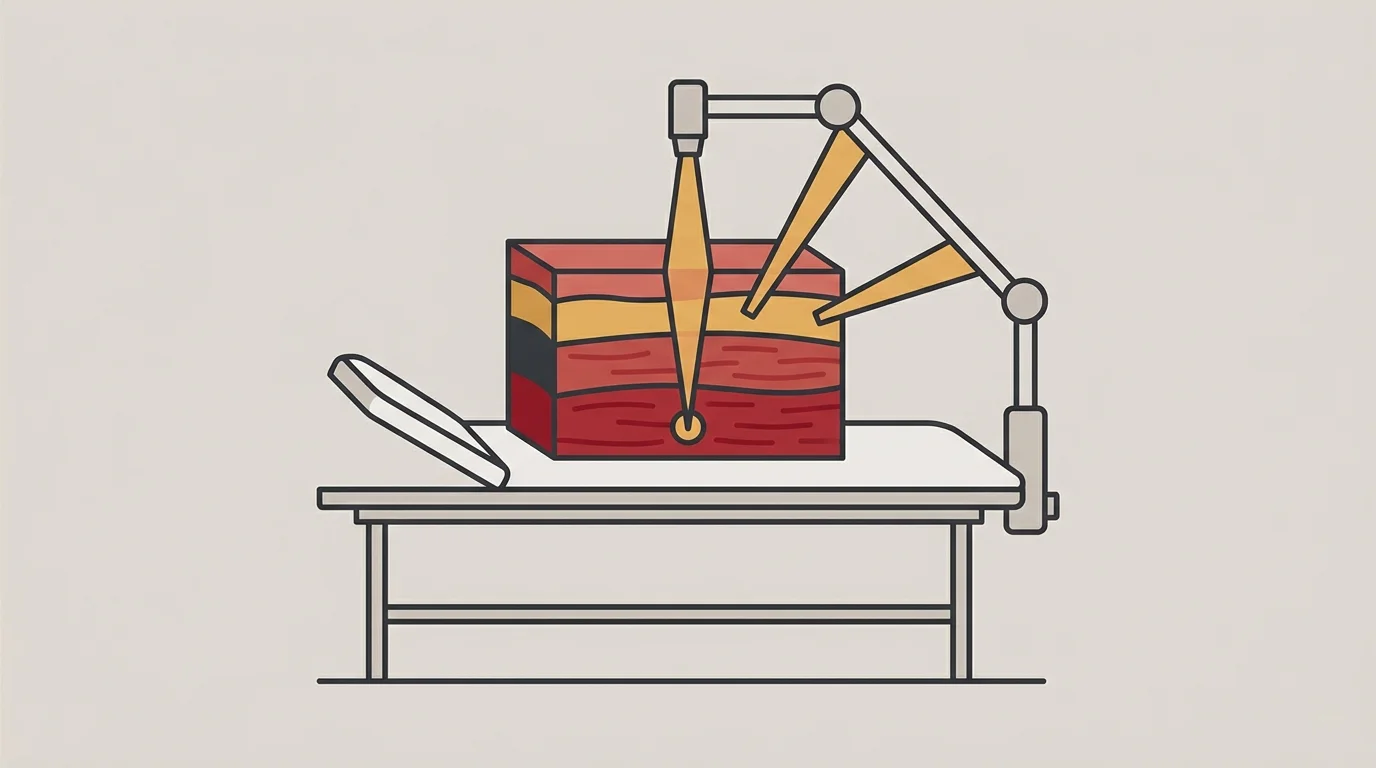
Photobiomodulation is the name for how specific wavelengths of light spark biological activity inside cells. But that only happens if the light actually reaches the cells it's meant to reach.
That's where depth becomes the whole question. A wavelength that stalls in the skin never gets the chance to do anything for the muscle or nerve tissue underneath it.
The Optical Therapeutic Window
Think of light as a traveler trying to reach a destination buried under layers of tissue. Melanin and blood act like checkpoints along the way, and most wavelengths get turned back before they arrive.
Only certain wavelengths carry the right passport through those checkpoints. That band is what researchers call the optical therapeutic window, and it's the physics that separates one device from another — not how bright the light looks.
Why Melanin and Blood Set the Real Boundary
Melanin sits in the skin. Blood carries hemoglobin through vessels close to the surface. Both soak up light hard at shorter wavelengths, which is exactly the range most consumer red light panels use.
Clinical devices are built around wavelengths that slip past those checkpoints instead of colliding with them. That difference in physics is covered in more depth in how light therapy drives tissue repair, where the underlying mechanisms get a closer look. Understanding this is what separates a device that treats tissue from one that just warms skin.
What the Measurements Actually Show About Wavelength and Depth
Here's where theory has to prove itself. Researchers don't just guess at how far near-infrared light travels through tissue. They test it directly, on fresh tissue samples measured under controlled conditions.
The findings confirm what the checkpoint idea predicts. Light stalls quickly at some wavelengths and keeps traveling at others, and the difference is measurable in millimetres, not guesswork.
| Spectral Window | Wavelength Range | Maximum Detection Depth | Tissue Types Measured |
|---|---|---|---|
| NIR-I | Shorter near-infrared band | 1 to 3 millimetres | Brain, kidney, liver, muscle, fat, and skin |
| NIR-II | Longer near-infrared band | 3 to 6 millimetres | Brain, kidney, liver, muscle, fat, and skin |
NIR-I Versus NIR-II Penetration Data
One review measured detection depth across six types of fresh tissue, including brain, kidney, liver, muscle, fat, and skin. According to published research data, near-infrared light can penetrate tissue to a maximum detection depth of 1 to 3 millimetres in the NIR-I spectral window and 3 to 6 millimetres in the NIR-II spectral window — a laboratory finding rather than a study in people. The wavelengths in the NIR-I window reached a maximum depth of 1 to 3 millimetres, while the NIR-II window reached 3 to 6 millimetres.
That gap matters more than it might seem at first glance. A wavelength stopping at 1 to 3 millimetres never leaves the skin, while one reaching 3 to 6 millimetres has a real shot at muscle and joint tissue underneath.
The same logic applies when comparing laser classes used in Cold Laser Therapy, not just wavelength bands. That comparison gets a full breakdown in Which Is More Effective, where output power and depth are weighed side by side.
How a Clinical Laser System Is Built to Reach Depth
Reaching that depth is not just about wavelength. It's about how the light itself is built.
There's a common assumption that all red light is interchangeable, as if color alone decided the outcome. But that skips a second variable entirely: whether the light is coherent laser light or scattered LED output. And that distinction shapes how far the energy actually travels.
Coherent Laser Light Versus Scattered LED Output
Laser light moves in a single, organized wave, every photon traveling the same direction at the same phase. LED light does the opposite. It scatters outward in every direction the moment it leaves the diode, losing focus and strength within a short distance.
That organization is what lets a clinical device concentrate energy at depth instead of spreading it thin across the skin's surface. The same underlying mechanism ties into circulation once the light reaches target tissue, a process explored further in Post-Adjustment Healing and Blood Flow.
Why Shallow-Wavelength Panels Fail to Reach Injured Tissue
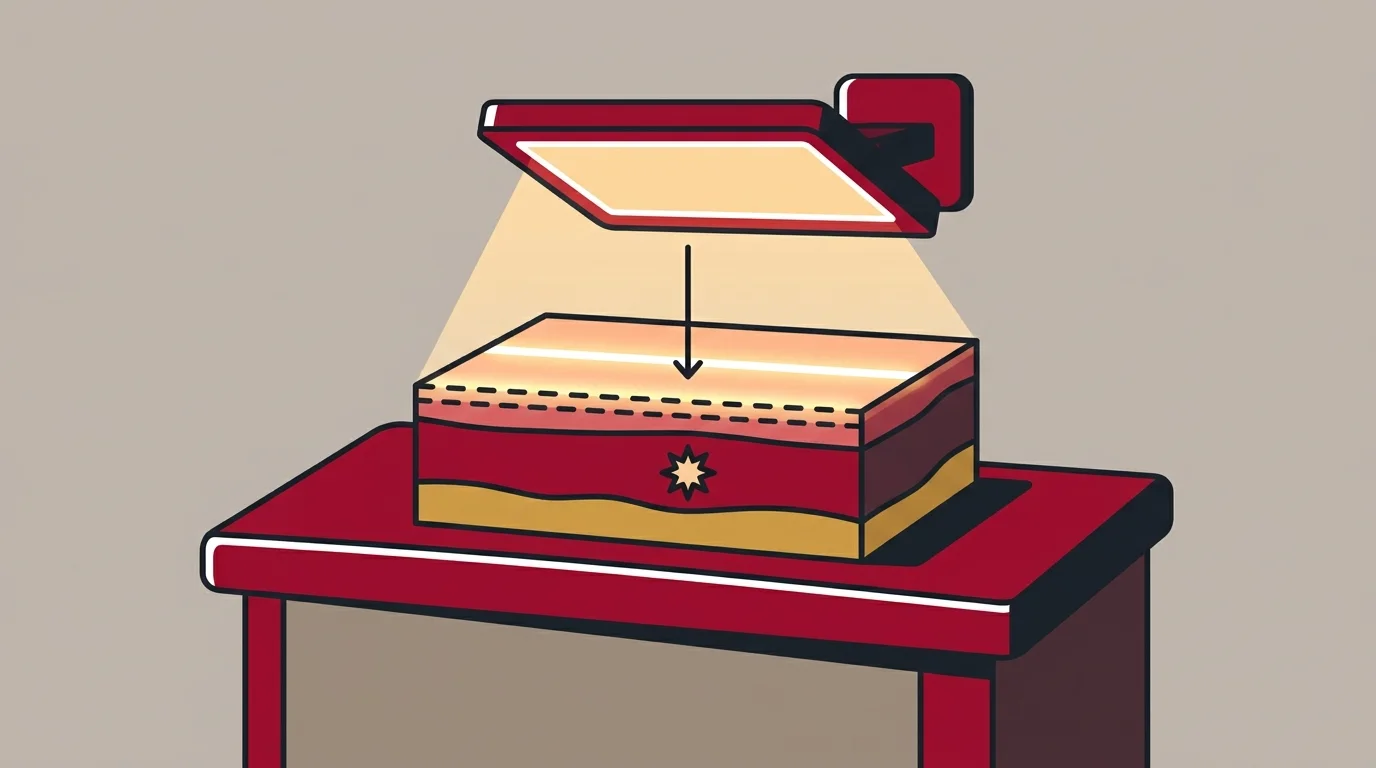
The market for at-home wellness and recovery devices has exploded, leaving many consumers confused about what actually works. Every panel on the shelf claims cellular benefits, regardless of the wavelength it emits. A well-built system concentrates the right wavelength at the right depth. Swap that wavelength for a shorter one, and the same mechanism collapses before it reaches injured tissue.
The Mechanism Behind Shallow Light Failing at Depth
Shallow-wavelength panels fail because they hand energy to melanin and blood before it ever crosses into muscle or joint tissue. The light still glows and still warms skin, but warmth is not depth. Consumer wellness and recovery routines built around that kind of everyday care are worth understanding on their own terms, which is where ongoing chiropractic care fits into the bigger picture.
Where Regulatory Classification Fits Into the Wavelength Picture
Wavelength selection is not the only variable regulators care about. How a device is classified shapes what it is legally allowed to claim, and that classification adds another layer to the comparison between clinical and consumer light.
| Device Category | Regulatory Classification | Primary Use Case |
|---|---|---|
| Consumer LED red light panel | Class II device subject to special controls, covering wrinkles, acne, and general therapeutic heating claims | Surface-level skin appearance and everyday at-home warmth |
| Clinical cold laser device used for Cold Laser Therapy | Falls under a distinct medical device pathway tied to deeper tissue application rather than general OTC heating | Targeting muscle, joint, and nerve tissue beneath the skin's surface |
| General wellness light-emitting product | Regulatory oversight matched to surface-level, non-invasive claims rather than deep tissue outcomes | Marketed broadly for at-home recovery and relaxation use |
How Class II Devices Differ From Clinical-Grade Equipment
Not every light-emitting device sold for home use falls into that category by accident. Research published through the FDA found light-emitting medical devices for treating wrinkles, acne, and providing therapeutic heating are classified by the FDA as Class II devices subject to special controls. That classification covers OTC LED products aimed at wrinkles, acne, and general therapeutic heating. It says nothing about depth, only about the level of oversight the device requires.
What an Operator Actually Sees When Wavelength Is Applied Correctly
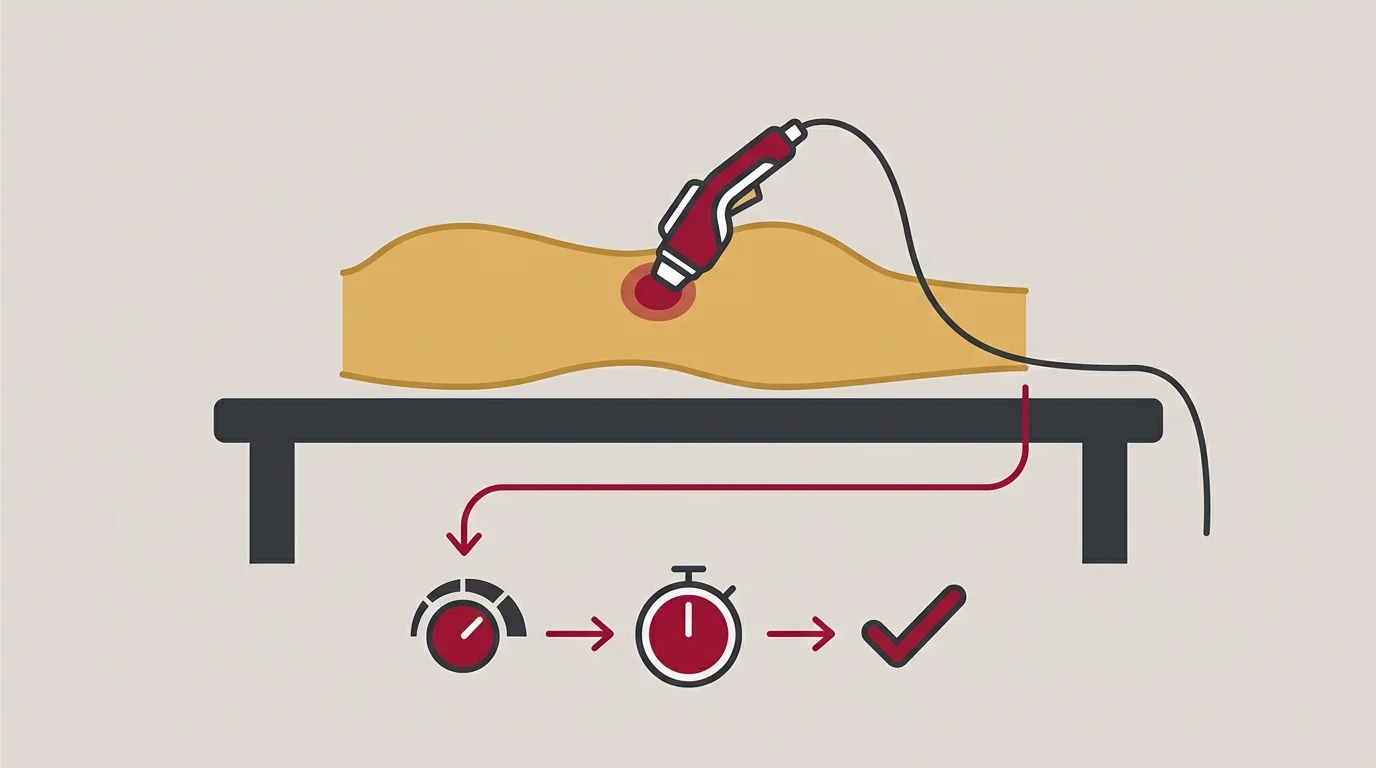
Correct wavelength selection shows up as a treatment area responding below the surface, not just skin warming under the applicator. An operator watching for this notices the effect reaching muscle and joint tissue rather than stopping at the skin. That result depends on the checkpoint being cleared, not on the device feeling powerful.
| Tissue Depth Target | Wavelength Consideration | Application Step |
|---|---|---|
| Skin surface | Shorter wavelengths absorbed by melanin, useful only for surface warming | Applicator rests lightly on skin, no adjustment needed for depth |
| Muscle and soft tissue | Wavelength must clear melanin and blood before dispersing | Treatment area is worked in sequence, checking response beneath skin |
| Joint and nerve tissue | Longer near-infrared wavelength required to avoid early absorption | Deeper structures targeted only after surface checkpoints are confirmed cleared |
Matching Wavelength to Target Tissue Depth
Matching wavelength to target depth starts with identifying how far beneath the skin the tissue in question actually sits. Surface concerns need less penetration, while muscle, joint, and nerve tissue need light that survives past melanin and blood. That match is set before the laser ever touches skin, then confirmed as the treatment area is worked in sequence.
Frequently Asked Questions
A handful of questions come up again and again once the wavelength piece clicks. Here are the straight answers.
Is at-home red light therapy a waste of money for deep tissue pain?
Not always, but it depends what the panel is being asked to do. For surface concerns it may help. For deep tissue pain, a wavelength that stalls in the skin was never going to reach the muscle or joint underneath.
Can consumer red light panels cause skin damage or burns?
Skin damage is uncommon with consumer red light panels, since most operate at lower output than clinical devices. The bigger issue isn't safety, it's that the light gets absorbed before it does anything meaningful below the surface.
What is the difference between a Class II and Class IV laser for therapy?
Both are regulatory categories, not measures of wavelength accuracy. Classification tells you about oversight and output level. It says nothing about whether a device is built around the optical therapeutic window.
How many sessions of clinical cold laser are needed to see results for back pain?
That depends on what the tissue is responding to, which is exactly why Touch of Wellness Chiropractic never treats Cold Laser Therapy as not some catch-all protocol. A visit built around Chiropractic adjustment and Cold Laser Therapy is evaluated case by case, not on a fixed session count.
Does deeper tissue penetration from a clinical laser actually mean better results?
Depth matters, but only when the wavelength is right for the tissue involved. A laser reaching deeper without the correct wavelength still runs into the same melanin and blood checkpoints described earlier.
Is Cold Laser Therapy painful?
No. Cold Laser Therapy typically feels like mild warmth, if anything is felt at all. There's no snapping, cracking, or discomfort involved in the light itself reaching tissue.
What This Means for Wavelength and Depth
The checkpoint metaphor holds up because it describes physics, not marketing. Melanin and blood turn back most wavelengths before they ever reach the tissue that actually hurts.
Depth is a function of wavelength, not brightness or wattage. A device can look powerful and still stall at the skin if it carries the wrong one. That's exactly the difference Touch of Wellness Chiropractic built Cold Laser Therapy around.
Getting back to being you starts with light that actually reaches the tissue involved. So if muscle, joint, or nerve pain has you wondering whether that checkpoint is being cleared, schedule a visit to find out.