
A first cold laser therapy session typically involves a short, painless application of a handheld device directly against clean skin over the target area, lasting only a few minutes per site depending on the size and depth of the tissue being treated. The device emits specific wavelengths of light that penetrate the skin without producing heat, so most patients report feeling a mild, soothing warmth or a faint tingling sensation, while some feel nothing distinguishable at all during application. Cold laser therapy, also called low-level laser therapy or photobiomodulation, works by delivering light energy to cells, which is absorbed by mitochondria and converted into increased cellular energy that supports repair and reduces inflammation at the site of injury. Because the treatment works at a cellular level rather than providing immediate mechanical relief, initial sessions are typically part of a cumulative process rather than a single decisive event. Patients often notice no dramatic change immediately following the first appointment, since the physiological response builds gradually as cells absorb light energy and begin repair processes over subsequent visits. There is no downtime associated with a session, and normal activity, including driving and returning to work, can typically resume right away. The skin is not cut, burned, or altered in any visible way during application, distinguishing this modality from surgical or aesthetic laser procedures. Preparation is minimal, generally requiring only that the treatment area be clean and free of lotions or heavy clothing that would block light penetration. Understanding that a single session initiates a process rather than concluding one helps set realistic expectations for the sensations felt and the timeline required before therapeutic effects become noticeable.
What Cold Laser Therapy Actually Does at the Cellular Level
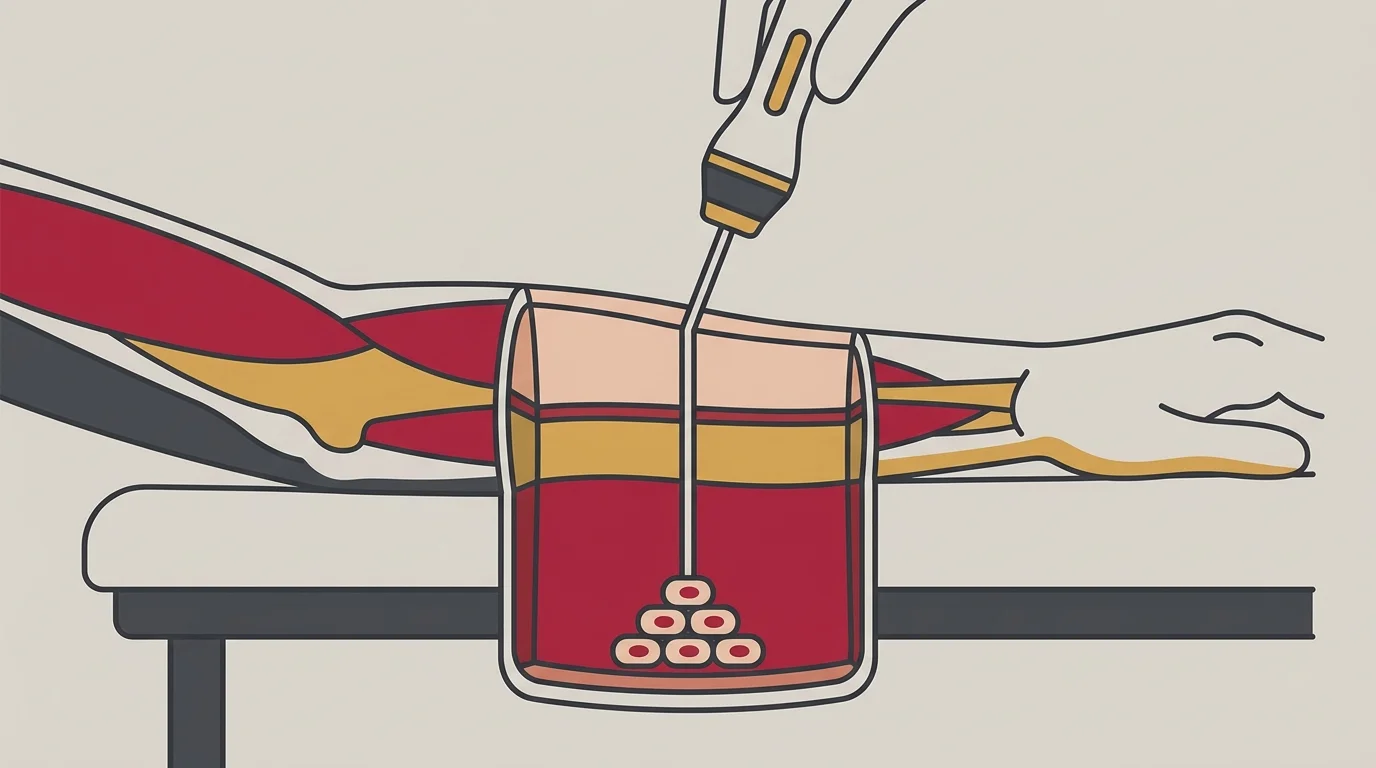
Start with what the light actually does. Cold laser therapy, also called low-level laser therapy or photobiomodulation, is non-invasive, and it uses specific wavelengths of light to interact with your tissue. That light energy speeds up your body's own healing instead of masking discomfort from the outside in.
The goal is not to mask symptoms. It is to stimulate cellular repair, reduce inflammation, and work toward a lasting resolution of pain and injury. For a deeper look at the research behind this mechanism, see why light-based therapy aids tissue recovery.
Why 'Nothing Happened' Is a Misread of a Painless Session
A patient who walks out feeling nothing dramatic has not experienced a failed session. Unlike surgical or aesthetic lasers, the cold laser produces no heat and does not cut or damage the skin, so there is no visible wound marking progress.
That absence of sensation is not absence of effect. Think of the first session as planting a seed rather than flipping a switch. Cellular recovery compounds session by session, not in a single instant.
The Assumption That Every Light Therapy Feels the Same
Here's a mistake people make all the time: they treat every light-based device as if it's the same thing. So they walk in expecting a warm heat lamp or a hot stone treatment.
That guess sets the wrong expectation before the appointment even begins. Cold laser therapy runs on a completely different mechanism than heat, and blurring the two hides what's really happening at the cellular level.
How Conflating Heat-Based and Cold Laser Devices Misleads Patients
Heat-based devices warm the tissue to boost blood flow near the surface, and you feel that warmth right away. Cold laser therapy sends light energy for your mitochondria to absorb, and that process produces little to no sensation you can detect.
So when someone expects obvious heat and feels only a faint tingle or nothing at all, they assume the device broke. But that gap has nothing to do with the quality of the treatment and everything to do with how differently the two technologies work. What happens after a session matters just as much as the sensation during it, which is why the Post-Laser Movement Guidelines help turn that cellular activity into a real recovery plan.
What a First Session Physically Involves, Minute by Minute
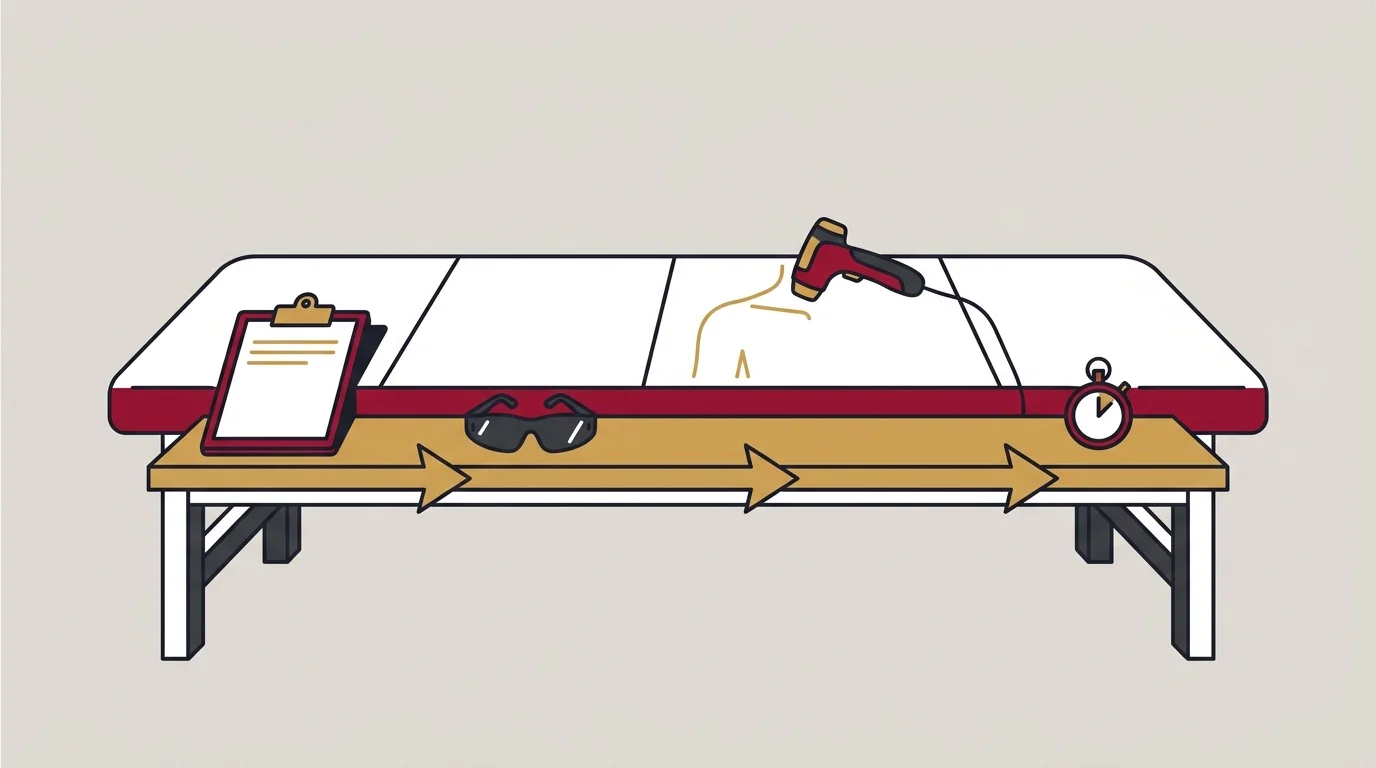
With expectations corrected, walk through the literal sequence of a first visit. A staff member cleans the target area and positions the handheld device directly against the skin. From there, the applicator moves in a slow, deliberate pattern across the treatment zone.
Knowing what to expect during that sequence, from the sensations felt to the timeline ahead, helps demystify a process that can otherwise feel uncertain. It also sets the stage for a recovery that unfolds gradually rather than all at once.
| Session Phase | What Occurs | Typical Duration |
|---|---|---|
| Intake and Preparation | A staff member reviews the treatment area and confirms it is clean and free of lotions or heavy clothing that could block light penetration. | A few brief minutes before application begins |
| Device Application | The handheld applicator is positioned directly against the skin and moved in a slow, deliberate pattern across the treatment zone while light energy penetrates the tissue. | Several minutes per site, depending on the size and depth of the area being treated |
| Post-Application Check | The area is briefly reviewed for skin response, though no visible marks or wounds are expected since the treatment does not cut or burn tissue. | A short final moment before the patient is cleared to leave |
| Immediate Return to Activity | Because there is no downtime, the patient can resume normal activity right away, including driving or returning to work. | Effectively no recovery time required |
Sensation Reporting and Why It Varies by Tissue and Condition
What you feel changes because tissue depth and condition change from one area to the next. A shoulder joint sits deeper than surface skin, so the light has to travel further to reach the cells that need it.
Nerve-related conditions can produce a different sensory response than muscular strain, since irritated nerve tissue reacts differently to light absorption. Before any of these variables matter, though, understanding who qualifies for treatment comes first, which is why reviewing Contraindications, Eye Protection belongs early in the conversation.
Device Standards and What Regulatory Clearance Signals
Sensation is subjective. Regulatory clearance isn't, and that difference starts to matter the moment a device touches skin.
Cold laser devices used in a clinical setting carry FDA clearance that spells out exactly what the device may claim to treat. Take the Enhanced Handheld Pain Relief Laser Instrument, model GD-P-E: it was cleared as a Class II device for adjunctive use in the temporary relief of minor chronic neck and shoulder pain of musculoskeletal origin, along with temporary relief of minor chronic pain associated with Carpal Tunnel Syndrome. Findings published through the FDA show cleared the Enhanced Handheld Pain Relief Laser Instrument (GD-P-E) as a Class II device for adjunctive use in providing temporary relief of minor chronic neck and shoulder pain of musculoskeletal origin and temporary relief of minor chronic pain associated with Carpal Tunnel Syndrome. So that clearance marks the edge of an approved claim, not a promise of resolution.
| Trial Parameter | Measured Value | Condition Studied |
|---|---|---|
| Minimum energy dose per point | 3 Joules | Chronic non-specific low back pain, non-acupuncture LLLT trials |
| Baseline pain duration threshold | Less than 30 months | Chronic non-specific low back pain, low-level laser treatment trials |
| FDA device classification | Class II | Enhanced Handheld Pain Relief Laser Instrument GD-P-E, adjunctive use for minor chronic neck and shoulder pain and Carpal Tunnel Syndrome |
How Treating a Flawed Baseline Assumption Distorts Results
Treating every laser device as interchangeable ignores that clearance boundary entirely. A device cleared for one indication is not automatically appropriate for another, regardless of how similar the light output appears. Assuming dosage does not matter compounds the error further.
Research on low-level laser treatment for chronic non-specific low back pain found that trials using at least 3 Joules per point, with baseline pain lasting less than 30 months, produced significant pain reduction at immediate and short-term follow-up. As PubMed reports, pain reduction was observed at immediate and short-term follow-up in laser treatment trials using at least 3 Joules per point in patients with baseline pain lasting less than 30 months, with a weighted mean difference of up to -1.40 cm. That threshold shows dosage isn't incidental to the outcome. For a fuller look at how these standards play out in everyday practice, see an overview of chiropractic care.
Mapping the Session Arc From First Visit to Measurable Change
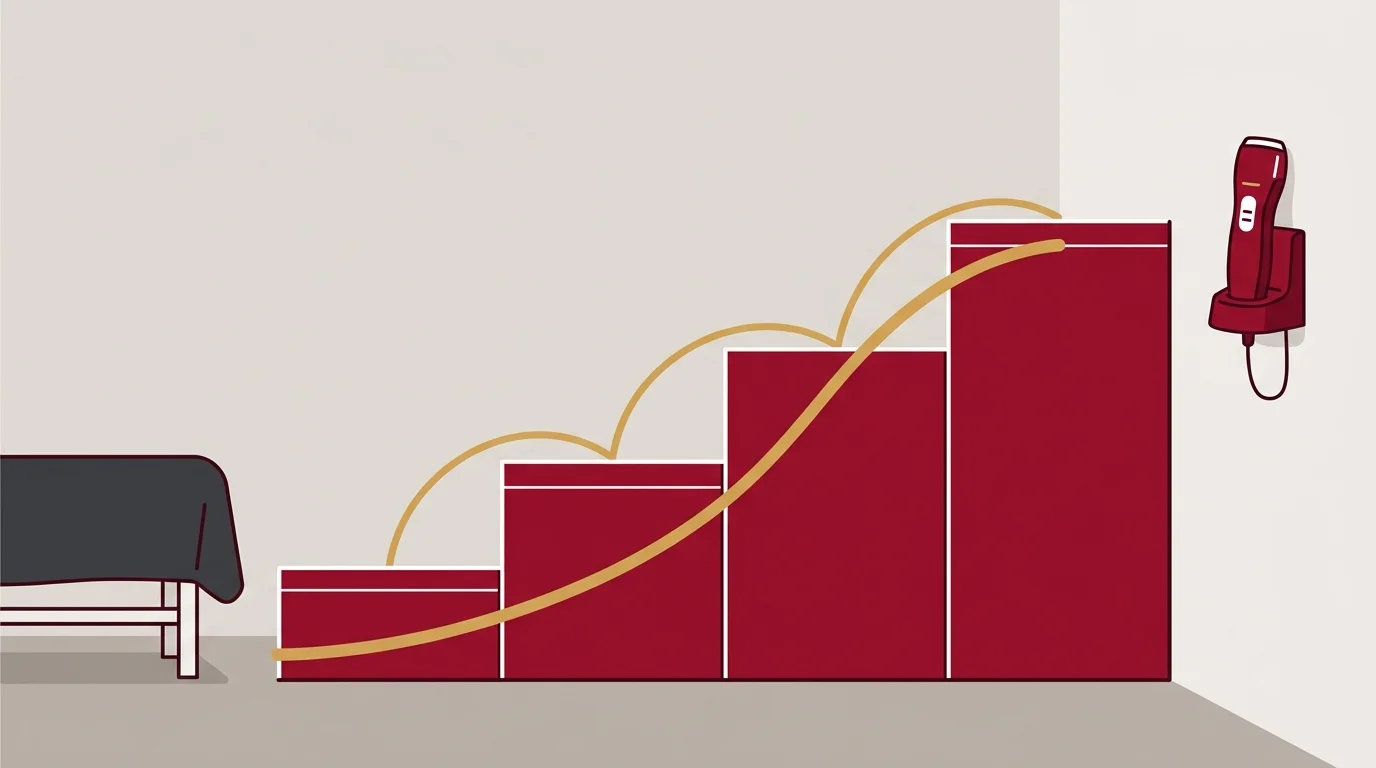
Dosage tells you why the results pile up. The session arc tells you what that pile-up actually looks like from the outside.
A first appointment marks the beginning of the arc, not a checkpoint within it. Measurable change tends to surface only once enough sessions have supplied the light energy a target area needs.
| Recovery Stage | Cellular Focus | Patient-Reported Change |
|---|---|---|
| Initial Session | Light energy reaches surface and near-surface cells, beginning mitochondrial absorption without a detectable structural shift | Mild warmth, faint tingling, or no distinguishable sensation, with no immediate change in pain or mobility |
| Early Accumulation | Repeated exposures compound cellular energy output as inflammation begins easing at the treated site | Small shifts in range of motion or a slightly longer window before discomfort returns after activity |
| Mid-Arc Repair | Tissue-level repair processes accelerate as mitochondrial activity sustains across multiple sessions | Noticeably steadier movement through previously painful motions and reduced reliance on compensating patterns |
| Consolidation | Cellular gains stabilize as inflammation reduction and repair reach a functional plateau for the treated area | Consistent comfort during daily movement, with occasional flare-ups shorter and milder than before treatment began |
Why a Single Session Rarely Tells the Full Story
One session is one dose. That dose kicks off the cellular work, but it rarely finishes it.
Judging the therapy by the opening visit mistakes the first step for the whole journey. Mitochondrial repair plays out across repeated exposures, so a single visit can only tell part of the story.
Tracking Progress Between Sessions Without Guesswork
Tracking progress doesn't mean guessing at what your cells are doing inside. It means watching the functional markers that shift as inflammation eases and tissue repairs.
Range of motion, pain during certain movements, how fast discomfort comes back after activity — all of it shifts slowly across the arc. Noting those changes visit by visit turns an abstract cellular process into something you can actually watch.
Frequently Asked Questions
A handful of questions come up in almost every consultation about a first visit. Here are direct answers to the ones that matter most.
What does the laser actually feel like on your skin?
Most patients describe a mild warmth or a gentle tingle at most. Some feel nothing at all, and that quiet doesn't mean the device is doing nothing.
How long is a typical first session, and how many will I need?
A single session runs a short window focused on the treatment area. How many total visits are needed depends on the condition and how the tissue responds over the arc.
Is it safe to drive or go back to work immediately after a cold laser session?
Yes. There is no downtime, no sedation, and no visible wound, so driving and returning to work right after a session is standard.
When will I start to feel results or pain relief?
Results build gradually. They don't arrive after one visit. Functional markers like range of motion usually shift first, ahead of any dramatic drop in pain.
Are there any conditions that would prevent someone from being a candidate for cold laser therapy?
Certain conditions and skin sensitivities can affect candidacy, which is why reviewing contraindications and eye protection guidance matters before scheduling.
What preparation does a first cold laser therapy appointment require?
Preparation is minimal. Arrive with the treatment area clean and free of lotions or heavy clothing that would block light penetration.
Where This Leaves You
A first cold laser therapy session plants a seed. It does not flip a switch.
Recovery compounds session by session, built on cellular work that needs repeated exposure to finish what one dose starts. A patient who understands that arc reads the sensation, the timeline, and the progress correctly, instead of mistaking a quiet first visit for a wasted one. And that's the whole difference: the patient who tracks range of motion across the arc gets more from the same sessions than the one who walks away early, judging everything by the opening appointment.
Touch of Wellness Chiropractic treats that first session as the deliberate start of a targeted recovery process, not a one-time event. So if mitochondrial repair and cumulative dosing raise questions specific to your condition, schedule a visit with Touch of Wellness Chiropractic.