
Mitochondrial ATP upregulation speeds soft tissue injury recovery by increasing the cellular energy available for tissue repair. Every cell relies on adenosine triphosphate, or ATP, produced inside its mitochondria, as the direct energy source that powers repair enzymes and structural protein synthesis. When soft tissue is injured, damaged cells often face an energy deficit that limits how quickly they can rebuild. Photobiomodulation, delivered through specific wavelengths of red and near-infrared light, targets this deficit directly. Light at these wavelengths is absorbed by cytochrome c oxidase, an enzyme within the mitochondrial electron transport chain, which increases mitochondrial ATP output. With more ATP available, cells have more usable energy to drive the biological processes involved in tissue regeneration, including protein synthesis, cell proliferation, and structural rebuilding. This mechanism differs from approaches that primarily interrupt pain signaling or reduce inflammation without addressing cellular energy supply. Conventional methods such as anti-inflammatory medication and rest can relieve discomfort, but they do not increase the ATP available to injured cells. Mitochondrial ATP upregulation instead works at the cellular level, supplying the energy currency that repair processes require to proceed efficiently. The result is a recovery pathway centered on restoring the cell's own capacity to do the work of healing, rather than solely managing the symptoms produced by the injury. This distinction matters because tissue repair is an energy-dependent process. Cells with insufficient ATP cannot execute repair functions at full capacity, regardless of how well pain or inflammation is controlled. Increasing mitochondrial ATP production addresses that underlying constraint, giving injured tissue the fuel needed to complete structural repair on a faster timeline.
What Mitochondrial ATP Upregulation Actually Means for a Healing Cell
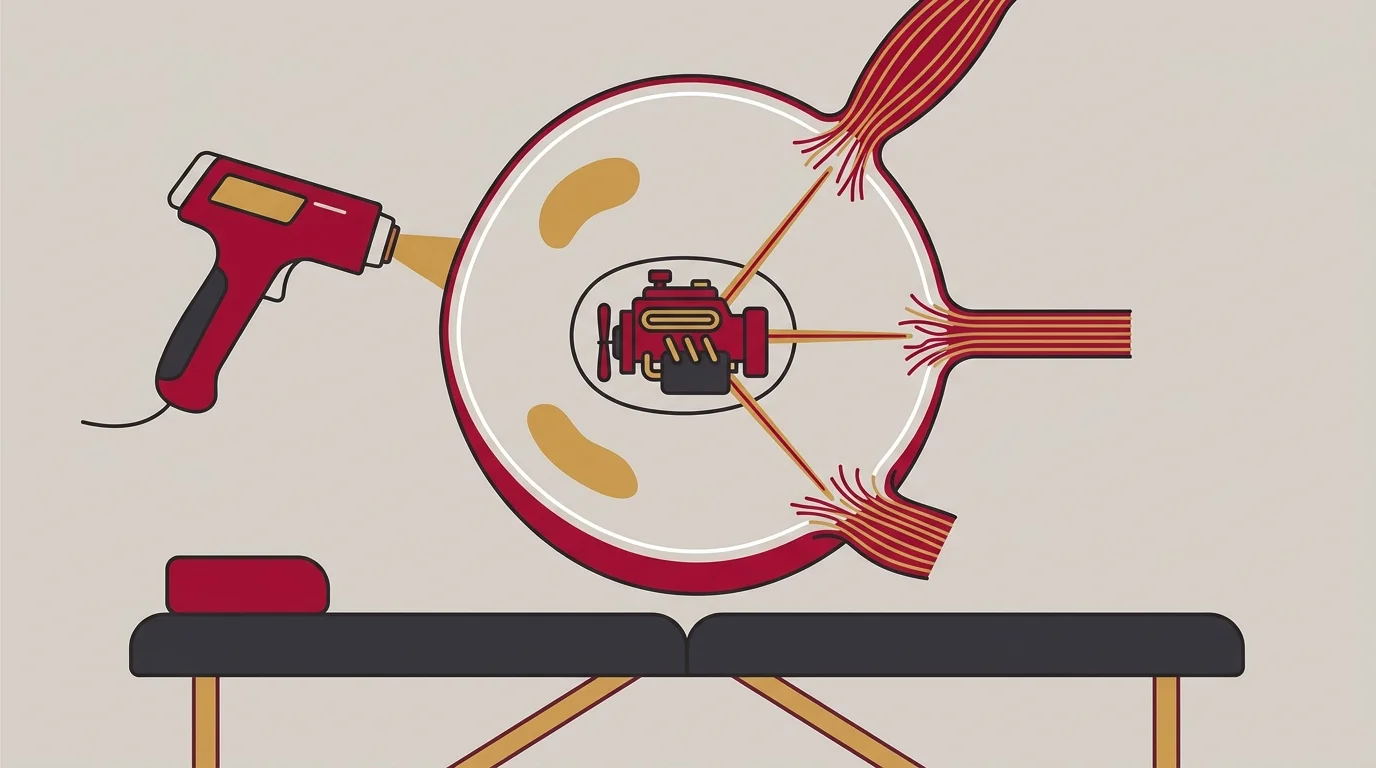
Think of mitochondria as the power plants inside every cell. What they produce is ATP, the currency the cell spends. Repair and regeneration run on nothing else.
Picture an injured cell as a construction site. The repair crew, enzymes and structural proteins, is already on site and ready to work. Without ATP, that crew stands idle, waiting for fuel it does not have.
Why the Rebuild-the-Fuel-Supply Model Matters
Here's why that matters. Once you understand ATP's role, the focus moves off managing symptoms and onto speeding up the body's own repair. And that changes what a recovery plan is actually built to do.
Light-driven ATP upregulation is what refuels that idle crew. For a closer look at how the light works on cellular machinery, see what cold laser therapy actually does. Give the site fuel again, and the workers who were already there can finally do the job they were built for.
Where Cytochrome C Oxidase Fits in the Chain
Red and near-infrared light does not act on cells randomly. It is absorbed by a specific molecular target inside the mitochondria.
That target is cytochrome c oxidase, the terminal enzyme of the mitochondrial electron transport chain. Research identifies it as the primary photoacceptor through which red and near-infrared light acts on cells. That makes it the entry point for the entire energy cascade that follows. As PubMed Central reports, cytochrome c oxidase, the terminal enzyme of the mitochondrial electron transport chain, is identified as the primary photoacceptor through which red and near-infrared light acts on cells — one expert assessment rather than a study finding. For the mechanics of how that light reaches the enzyme without heating the tissue, see Oxidase Without Generating Thermal Heat.
Why Blocking Pain Signals Is a Different Job Than Rebuilding Energy
Blocking pain signals and rebuilding cellular energy are not the same job. One quiets a symptom. The other restores the fuel supply a cell needs to do repair work at all.
True healing from a soft tissue injury isn't about masking pain; it's about providing your cells with the energy they need to rebuild. That is the distinction cytochrome c oxidase makes possible.
The Problem With Rest-and-Anti-Inflammatory as a Default Protocol
So what's the usual answer to a sprain or strain? Rest, plus anti-inflammatory drugs — the very things that can stall the cellular work recovery depends on. It's one protocol pointed at every soft tissue injury, no matter what the damaged cells actually need to rebuild.
Rest holds movement back. Anti-inflammatory drugs quiet the inflammatory signaling that helps kick off repair. And neither one hands a single unit of ATP to the cells doing the rebuilding.
How an Energy Deficit at the Cellular Level Shows Up as Slow Recovery
An energy-starved cell cannot execute repair functions on schedule, no matter how much rest it gets. The construction crew waiting inside that cell stays idle, because idle workers do not need less pain. They need fuel.
That's the mechanism gap rest-and-anti-inflammatory protocols never touch. For a direct look at how photobiomodulation stacks up against that default, see Cold Laser Therapy vs NSAIDs. Neuropathy care protocols run 8 to 12 weeks.
What the Measured ATP Response Looks Like Across the Healing Window
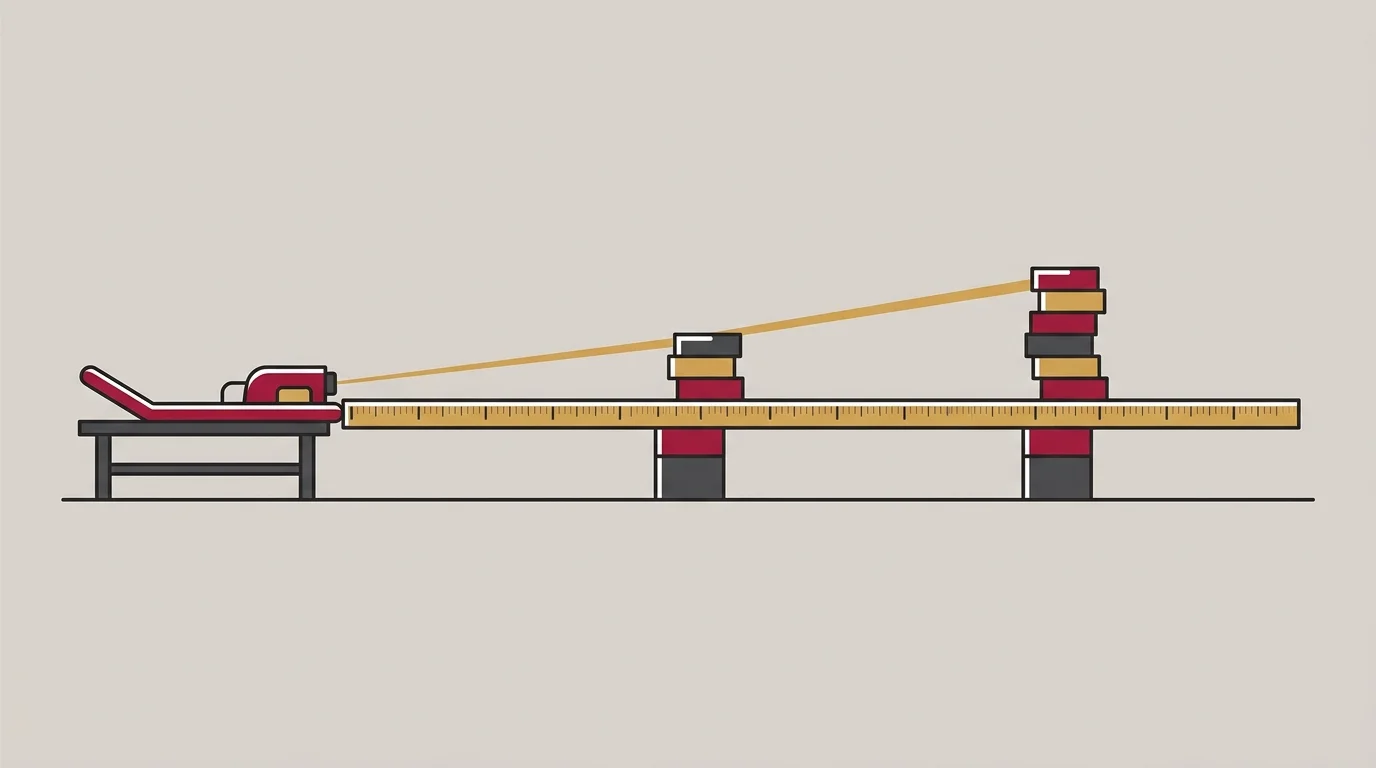
So the failure mechanism tells you why rest and anti-inflammatory drugs leave the repair work stalled. What it doesn't tell you is what a corrected energy supply actually looks like once someone measures it.
That's where laboratory research on photobiomodulation opens a window into the timeline. In gentamicin-exposed auditory cells studied in vitro, ATP levels climbed by a measurable margin inside a defined window after treatment. The refueled construction site didn't wait long to show it.
| Measurement Point | Cellular Condition | ATP Observation |
|---|---|---|
| Immediate Post-Treatment | Injured cell with low ATP reserves, repair enzymes idle | ATP output begins rising as cytochrome c oxidase absorbs light energy |
| Early Recovery Window | Cellular machinery still primed from the initial energy shift | ATP levels remain elevated above the untreated baseline |
| Ongoing Repair Phase | Structural proteins and enzymes actively engaged in rebuilding | Sustained ATP availability supports continued repair activity rather than a single spike |
| Untreated Comparison Point | Cell relying only on its own baseline mitochondrial output | ATP supply stays constrained, limiting the pace of repair work |
Reading the Numbers Without Overclaiming Them
Significantly different ATP levels were observed immediately and at 1 hour after treatment, with higher ATP levels in the treated group relative to cells that received no such light exposure. But that's a lab measurement in cells. It isn't a clinical outcome in an injured tendon or ligament.
The journal Nature reports photobiomodulation increased ATP levels in auditory cells immediately and at 1 hour after treatment — a laboratory finding rather than a study in people. The value of that number is in what it demonstrates about mechanism, not in promising an identical timeline for every soft tissue injury. It confirms that ATP output responds to photobiomodulation on a short, measurable clock, which is the same clock the idle construction crew has been waiting on. For a broader look at how that mechanism fits into a full course of chiropractic services, see services built around restoring cellular repair capacity.
How the Optical Window Determines Whether Light Reaches the Injury
That measurable ATP response only counts if the light actually reaches the injured tissue. And not every wavelength pushes through skin, fat, and muscle the same way.
| Tissue Layer | Penetration Consideration | Practical Implication |
|---|---|---|
| Skin and Superficial Fat | Shorter wavelengths scatter quickly and much of the light energy dissipates before going deeper. | Surface-focused wavelengths lose strength before reaching the injury site, leaving the deeper repair work unfueled. |
| Muscle and Connective Tissue | Wavelengths within the optical window travel through this layer with comparatively little absorption loss. | This is where a sprain or strain typically lives, so light reaching this depth intact matters for reaching cytochrome c oxidase. |
| Deep Soft Tissue Near Bone | Longer near-infrared wavelengths pass through water and hemoglobin with reduced interference but still lose intensity with depth. | Injuries at this depth demand wavelengths selected specifically for penetration, not just for surface comfort. |
| Blood-Rich Regions | Hemoglobin absorbs certain wavelengths strongly, competing with cytochrome c oxidase for available photons. | Wavelength selection has to account for this competition, or the energy meant for the mitochondria never arrives. |
Matching Wavelength to Tissue Depth
Cytochrome c oxidase can only answer light that gets to it. Shorter wavelengths scatter and burn out near the surface. Longer ones slip through water and hemoglobin with far less interference.
Between those two extremes sits a therapeutic range, often called the optical window, where red and near-infrared light travel deep enough to reach soft tissue without dissipating as heat. Miss that window, and the construction crew never gets its fuel delivery at all.
Sequencing ATP Support Across a Recovery Timeline

Light delivery and mechanism tell you why photobiomodulation works. Sequencing tells you when it works best across a recovery timeline. The construction site holds up here too: fuel delivered early keeps the idle crew from waiting any longer than it has to.
| Recovery Stage | Cellular Priority | Expected Tissue Change |
|---|---|---|
| Acute Stage | Restoring baseline energy to the most depleted cells | Reduced idle time in repair machinery as ATP availability rises |
| Early Repair Stage | Fueling protein synthesis and cell proliferation | Structural rebuilding activity becomes visible as the repair crew engages |
| Active Remodeling Stage | Sustaining energy for tissue reorganization and strength gains | Tissue architecture shifts from patchwork repair toward organized structure |
| Late Recovery Stage | Supporting the final energy demands of tissue maturation | Repaired tissue approaches its pre-injury capacity for load and function |
What Changes in the Tissue at Each Stage
Early in recovery, injured tissue carries the largest energy deficit and the most idle repair machinery. That gap is where refueling has the most immediate effect. As repair progresses, cells shift from basic viability toward active rebuilding. Each stage draws on ATP differently, which is why timing the light exposure to the tissue's changing needs matters.
Frequently Asked Questions
The mechanism raises a few practical questions. Here are the ones that come up most.
How does increasing ATP in my cells actually help a sprained ankle heal faster?
A sprained ankle heals through cellular repair work, and that work runs on ATP. More ATP means more fuel for the cells doing it. That's how protein synthesis and tissue rebuilding finish sooner.
Is mitochondrial upregulation the same thing as cold laser therapy or photobiomodulation?
Cold Laser Therapy is the delivery method. Mitochondrial ATP upregulation is the cellular result that specific wavelength sets off inside injured cells.
Can I feel the process of ATP upregulation happening during treatment?
No. The light exposure itself is not felt, and the ATP increase it triggers happens at a molecular level inside cells, not as a sensation.
Why don't more recovery protocols target mitochondrial energy directly?
Many recovery protocols were built around blocking pain signals rather than measuring cellular energy output. Targeting mitochondrial ATP directly requires understanding a mechanism that rest and anti-inflammatory approaches were never designed to address.
How many treatments are typically needed to see significant improvement in recovery time?
The number of sessions depends on the tissue involved and how far along the injury already is. Progress gets tracked against how the tissue is responding, not against a fixed schedule.
Are there any side effects to stimulating mitochondria with light therapy?
Photobiomodulation does not involve heat, chemicals, or systemic drugs entering the body. It works by triggering a light-driven response in cytochrome c oxidase, not by altering tissue through force or medication.
Where This Leaves the Recovery Conversation
The idle crew was the argument all along. Enzymes and structural proteins were never what went missing. Fuel was.
Blocking pain signals never refuels that site. Rest never refuels it either. Only restoring ATP output gets the crew working again, which is why mitochondrial ATP upregulation addresses the deficit that rest and anti-inflammatory approaches leave standing.
That is the model this evidence supports: energy first, repair follows. If a soft tissue injury has stalled longer than it should, the question worth asking is whether the cells doing the rebuilding ever had the fuel to finish the job, and a conversation with Touch of Wellness Chiropractic is the place to start answering it — talk it through with us.