
Cold laser therapy stimulates cytochrome c oxidase through a photochemical process called photobiomodulation, not through heat. Low-level laser wavelengths pass through skin and soft tissue and are absorbed directly by cytochrome c oxidase, an enzyme sitting inside the mitochondrial membrane that also functions as a photoacceptor, meaning it captures light energy the way a solar panel captures sunlight. This absorption triggers the release of nitric oxide molecules that had been binding to the enzyme and blocking its normal activity. With nitric oxide cleared away, cytochrome c oxidase resumes its role in the mitochondrial electron transport chain at a higher rate of efficiency, which increases production of adenosine triphosphate, the molecule cells rely on for energy. This entire mechanism is photochemical rather than photothermal. The light energy is converted into a biochemical signal, not into heat, so the tissue is never warmed the way it would be under a heating pad or an infrared lamp. Because no significant heat is generated, there is no thermal damage to surrounding cells, and the therapeutic effect comes entirely from restored mitochondrial output rather than from raising tissue temperature. Wavelength selection matters because cytochrome c oxidase absorbs light most efficiently within specific ranges of the visible and near-infrared spectrum. Wavelengths outside those absorption windows pass through tissue without producing the same photochemical response. The clinical result of this mechanism is measurable at the cellular level: mitochondria that were functioning below capacity, often in tissue affected by injury or inflammation, regain the ATP output needed to support repair processes. This distinguishes cold laser therapy from heat-based modalities, which manage symptoms through vasodilation and surface warming rather than by directly addressing mitochondrial energy production.
What Cold Laser Therapy Actually Does Inside a Cell
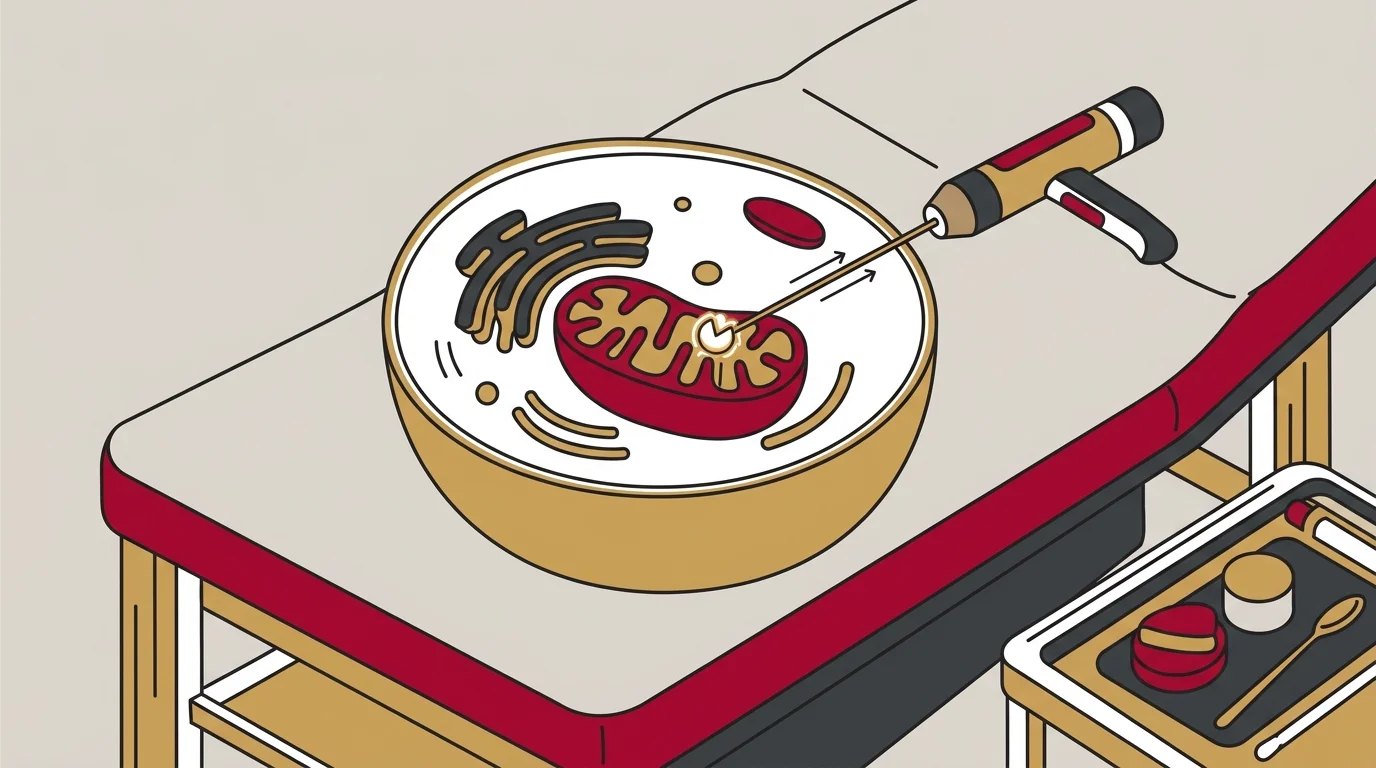
Think of an injured cell as a battery running low, not just a spot that hurts. That reframe matters because it points to what actually needs to happen for tissue to repair itself.
Cold laser therapy operates on a fundamentally different principle than heat-based therapies. It works by recharging the cell's power supply rather than warming the surface above it.
The Power Plant Inside Every Cell
The key to this process lies within the mitochondria, the powerhouses of our cells. Every cell carries these structures, and every one of them can slow down when tissue is injured or inflamed.
A slowed mitochondrion is a power plant running under capacity. Less fuel gets converted. Less energy reaches the repair work waiting on it.
Where the Light Actually Lands
The light has to land somewhere specific to do anything at all. Cytochrome c oxidase is an enzyme that acts as a photoacceptor, meaning it absorbs light energy the way that depleted battery needs a charging point.
That absorption is the entire event. Heat plays no part in it, and that distinction is worth understanding fully before you weigh this mechanism against warmth-based alternatives, a comparison covered in how photobiomodulation supports cellular recovery.
Why Heat-Based Thinking Misreads What Light Therapy Does
Most people assume light therapy works the way a heating pad does. Warm the tissue, loosen it up, dull the pain.
But that guess misses what's really happening inside the cell. The mechanism above matters for exactly that reason: it's why not all light therapies are created equal.
| Feature | Heat-Based Therapy | Cold Laser Therapy |
|---|---|---|
| Primary Mechanism | Raises tissue temperature to trigger vasodilation and surface warming | Triggers a photochemical reaction inside cytochrome c oxidase without raising temperature |
| Effect on Mitochondria | Not targeted directly; any benefit is a byproduct of increased blood flow | Directly restores electron transport chain efficiency and mitochondrial ATP output |
| Sensation During Treatment | Warmth felt on the skin's surface throughout the session | Little to no sensation, since the energy is absorbed rather than dissipated as heat |
| Risk Profile | Thermal exposure carries a risk of surface burns or overheating tissue | No thermal load on tissue, since the process is photochemical rather than photothermal |
| What It Actually Addresses | Manages surface symptoms through temporary warming | Addresses the underlying cellular energy deficit driving slow tissue repair |
The Heat Assumption That Won't Let Go
Patients walk in expecting a warm sensation from any device involving light. When they feel nothing, some assume the unit isn't working.
Nothing could be further from the truth. The absence of heat is the point, not a malfunction — it means the energy is going where it's supposed to go instead of dissipating as warmth on the skin's surface.
Photothermal Versus Photochemical Effects
Photothermal effects heat the tissue to get a response. That's how infrared lamps and heating pads work. Photochemical effects set off a reaction without ever raising the temperature.
Cold Laser Therapy lands squarely in that second camp. And the difference isn't cosmetic. It's the whole reason this approach can recharge a drained cell without ever risking thermal damage, a topic explored further in Rapid Soft Tissue Injury Recovery.
From Photon Absorption to Measurable Cellular Output
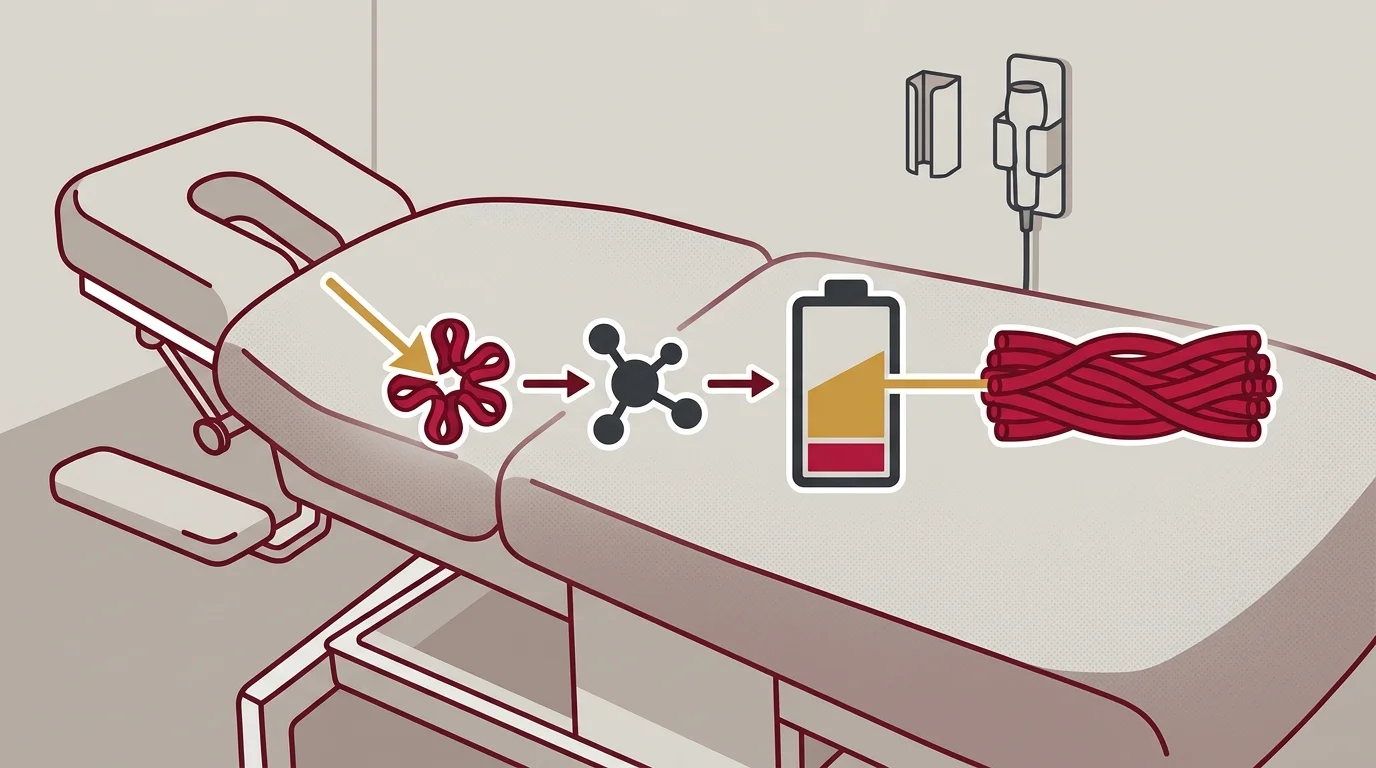
Absorption is only the opening move. What follows is a cascade, one event tripping the next in a fixed order.
And that sequence is worth knowing, because it turns an abstract mechanism into something you can track from photon to repaired tissue.
| Stage | Cellular Event | Measured Effect |
|---|---|---|
| Photon Absorption | Cytochrome c oxidase captures incoming light energy at the mitochondrial membrane | Enzyme functions as a photoacceptor, absorbing light energy |
| Nitric Oxide Release | Bound nitric oxide detaches from the enzyme, clearing the block on electron transport | Electron transport chain resumes at higher efficiency |
| ATP Output Increase | Cellular energy production rises in laboratory-tested cells exposed to a mitochondrial stressor | Higher ATP levels measured immediately and at one hour compared to the stressor alone |
The Signaling Cascade After Light Absorption
The instant the photoacceptor takes in a photon, nitric oxide lets go of the enzyme. That release is the switch that flips the whole chain forward.
With nitric oxide out of the way, electron transport speeds back up and ATP synthesis climbs. The effect isn't limited to injured tissue in a person sitting in a treatment room. Research published through the journal Nature found photobiomodulation increased ATP levels immediately and at one hour in auditory cells exposed to gentamicin, with higher ATP levels observed in cells treated with both gentamicin and photobiomodulation compared to gentamicin alone — a laboratory finding rather than a study in people. That detail matters because it shows the ATP response isn't a one-off; it shows up across different cell types under laboratory conditions, which is exactly the kind of evidence a mechanism needs before anyone builds a therapy around it.
From Energy Release to Tissue-Level Repair
Restored ATP output gives the cell the fuel it needs to run repair processes it couldn't previously afford. That's the bridge between a photochemical event and something a patient actually feels, a comparison Cold Laser Therapy vs NSAIDs explores from a different angle entirely.
How a Flawed Reading of Light Therapy Fails in Practice
Applied right, Cold Laser Therapy recharges a depleted cell. Treat it like a heating pad with extra steps, though, and that mismatch is exactly where the mechanism breaks down in practice.
When Generic Dosing Undermines the Photochemical Effect
Generic dosing ignores the absorption window that makes the photochemical effect possible in the first place. Too little energy leaves the enzyme untouched, and too much can overwhelm the very process it's meant to support, a nuance covered further under the practice's chiropractic treatment approach.
Where Regulatory Classification and Cellular Mechanism Meet
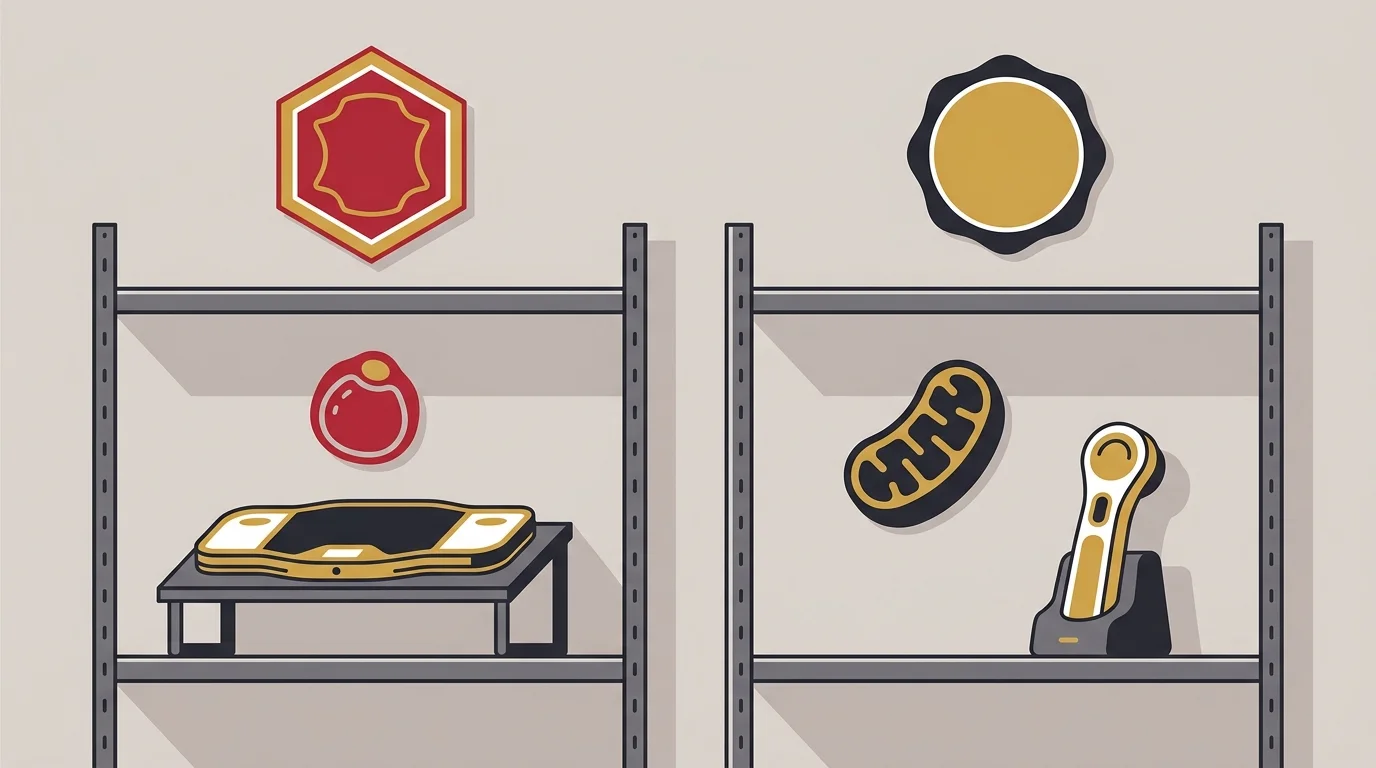
Classification tells you something the mechanism alone won't: what a device is actually built to do. And that matters more than most people realize the moment they hear the word "laser" attached to two completely different jobs.
| Device Category | Intended Mechanism | Regulatory Classification |
|---|---|---|
| Aesthetic Fat-Disruption Laser | Rupture adipocyte cell membranes to release stored fat and lipids for non-invasive body contouring | Class II device requiring special controls, per FDA classification |
| Cold Laser Therapy for Soft Tissue Recovery | Stimulate cytochrome c oxidase to upregulate mitochondrial ATP production and support cellular repair | Classified separately from fat-disruption systems, reflecting a distinct intended mechanism |
| Heat-Based Modalities (heating pads, infrared lamps) | Raise tissue temperature to produce vasodilation and surface warming that manages symptoms | Regulated according to thermal output rather than photochemical cellular effect |
How Aesthetic and Recovery Applications Diverge Under FDA Classification
Aesthetic laser systems target adipocyte cells, aiming to disrupt fat storage rather than restore cellular energy output. Work available through the FDA indicates low-level laser systems intended to disrupt fat cells for non-invasive aesthetic use are classified by the FDA as Class II devices requiring special controls. That regulatory category reflects a mechanism aimed at fat cell disruption, not mitochondrial recharge. Cold Laser Therapy for soft tissue recovery works toward the opposite goal: feeding a depleted power plant rather than rupturing a storage cell.
Frequently Asked Questions
Once the mechanism clicks, the same handful of questions come up every time. Here are the straight answers.
How does light energy turn into cellular energy without creating heat?
Cytochrome c oxidase absorbs specific light wavelengths and converts that energy into a biochemical signal instead of warmth. Nitric oxide releases from the enzyme, electron transport speeds up, and ATP production rises without ever heating the tissue.
What specific wavelengths of light are most effective for stimulating cytochrome c oxidase?
Cytochrome c oxidase absorbs light most efficiently within specific bands of the visible and near-infrared spectrum. Wavelengths outside those absorption windows pass through tissue without triggering the same photochemical response.
Can cold laser therapy damage cells or mitochondria if used incorrectly?
Generic dosing that ignores the absorption window can leave the enzyme untouched or overwhelm the very process it's meant to support. Done right, it recharges a depleted cell instead of stressing it.
Is the increase in ATP production after laser therapy temporary or long-lasting?
The photochemical event itself is immediate, but the ATP boost supports an ongoing repair process rather than a one-time spike. That's why care plans build in enough sessions for mitochondrial output to keep supporting tissue repair.
What is the difference between cold laser therapy and using a heating pad for an injury?
A heating pad raises tissue temperature to produce vasodilation and surface warmth. Cold Laser Therapy skips heat entirely and drives a photochemical reaction that restores mitochondrial energy output directly.
What This Means
A depleted battery doesn't need warmth. It needs a charge, delivered at the right wavelength, in the right dose.
That's the whole case for Cold Laser Therapy. Restoring mitochondrial output beats masking pain, because the tissue gets back the fuel it was short on instead of a signal that's only briefly dulled.
Touch of Wellness Chiropractic built its approach around that cellular reality, not around surface warmth. So if a soft tissue injury is stalling because the cells doing the repair are running on empty, book a visit at Touch of Wellness Chiropractic.