
(309) 321-8412 | 1101 W Jackson St, Suite A, Morton, IL 61550
(309) 321-8412 | 1101 W Jackson St, Suite A, Morton, IL 61550
How Long Does Nerve Restoration Take to Show Clinical Results?
Peripheral nerve restoration follows a biological timeline, not a visit count. Early sensory changes — shifts in pain quality, reduced numbness intensity, brief windows of improved sensation — typically begin within 4 to 8 weeks of starting a structured care plan. Achieving durable functional stability takes longer. Three to six months is the realistic window when care is consistent and the clinical environment is right.
The reason for that window isn't arbitrary. It's biology.
Peripheral nerves regenerate at a fixed rate — roughly one millimeter per day under optimal conditions. What the clinical approach controls is whether the environment those nerves are growing into actually supports repair, or whether it's still the same compressed, poorly oxygenated tissue that caused the damage in the first place.
Most conversations about nerve healing skip that part. They jump to timelines without explaining the conditions those timelines depend on. This article doesn't do that.
Here's what you'll actually understand after reading this: why the timeline is what it is, what has to happen before nerve regeneration can begin, what clinical signals confirm you're on track, and why comparing your progress to someone else's — or to what a medication promised — is the fastest way to misread your own recovery.
The biology is fixed. What's variable is how quickly the interference gets removed and the supply chain gets restored. That distinction is what the rest of this article is built around.
Last Updated: April 8, 2026
- Why the Timeline Can't Be Separated From the Cause
- The Supply Chain of Nerve Repair
- What Clinical Progress Actually Looks Like, Stage by Stage
- This Is Not for Everyone, and That Matters
-
Frequently Asked Questions
- Why do I sometimes feel a "zapping" sensation as my nerves heal?
- Does age affect how fast nerves restore?
- What if I don't see results in the first 30 days?
- How does the one millimeter per day rate apply to my feet?
- Can I speed up the restoration timeline with home exercises?
- What's the difference between the care plan here and a standard fixed protocol?
- What is the realistic end goal of nerve restoration care?
- Real Answers Take Longer Than Comfortable Ones. That's the Point.
Why the Timeline Can't Be Separated From the Cause
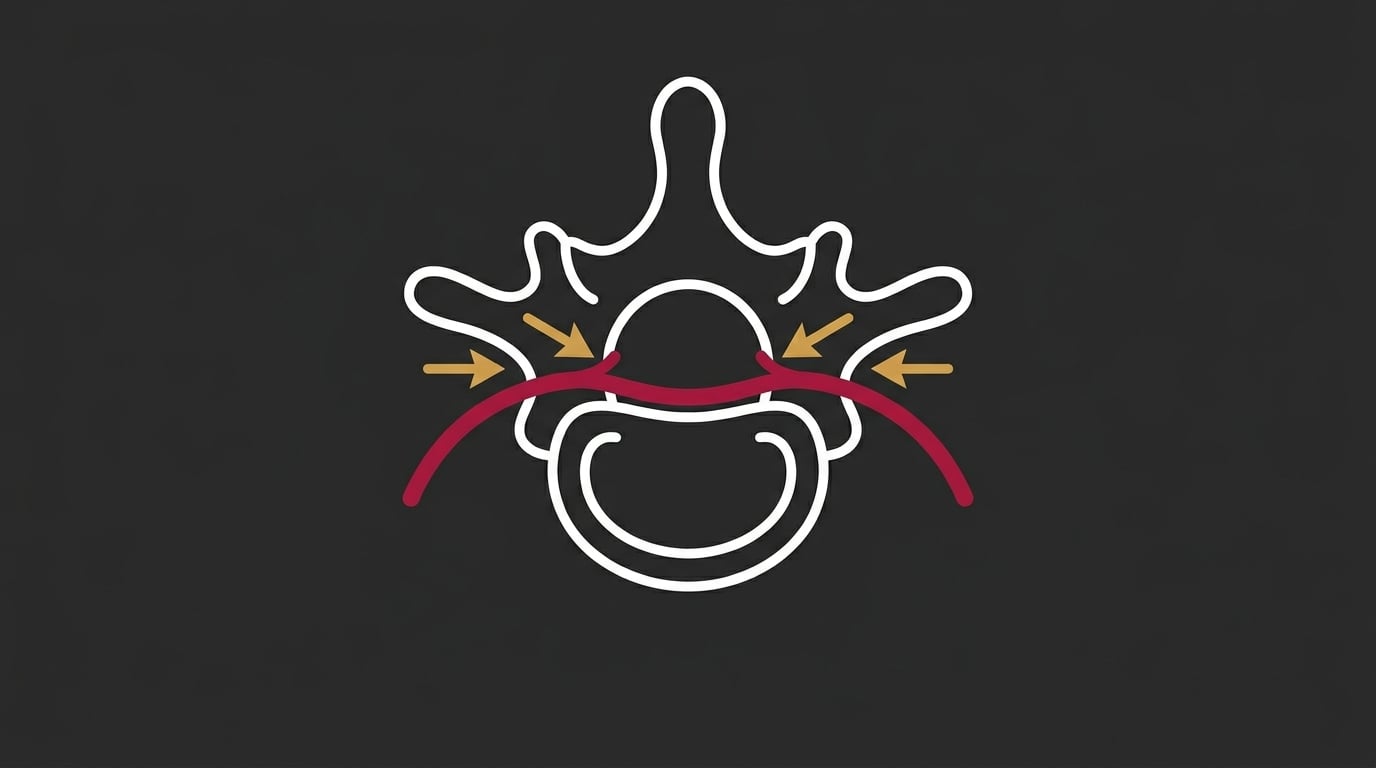
Nerve restoration and nerve pain relief aren't the same thing. Most people never get that clearly explained to them.
Pain relief can happen in hours. Restoration takes months. The difference isn't how often you come in — it's what's actually happening inside the tissue.
Here's the thing. The medication that quieted your nerve pain didn't fix anything. It turned the alarm off while the fire kept burning.
Why Medications Don't Move the Needle on Nerve Restoration
The compression is still there. The oxygen deprivation is still there. The metabolic starvation the nerve's been running on is still there. It's just quieter.
Pharmaceutical options for nerve pain have a role. That's not the argument here.
The argument is this: they don't move the restoration timeline. Not even slightly.
Quieting nerve pain doesn't restore nerve function — it removes the signal while the cause keeps running. Mayo Clinic research is clear that early intervention targeting the underlying cause is critical for functional recovery, and that symptomatic suppression alone doesn't produce it. The compression has to be addressed. The structural interference has to be cleared. Medication doesn't do either.
Patients who transition from long-term medication management to structural care often feel more in the first several weeks — more sensation, more awareness. That's not regression. That's the nerve coming back online. The numbness wasn't neutrality. It was damage.
That's what root-cause chiropractic care is built for. Not quieting what you feel. Identifying what's causing the interference — and removing it.
The Fixed Rate No Provider Can Override
NIH-published research on peripheral nerve biology confirms that peripheral nerves regenerate at approximately one millimeter per day under optimal biological conditions.
One millimeter. Per day.
That rate doesn't respond to motivation, to care frequency, or to anything else. What consistency controls is whether the environment those nerves are growing through is actually supporting repair — or constantly disrupting it. You can't accelerate the rate. You can only stop undermining it.
This is why foot symptoms take longer to resolve than hand symptoms. If the damage is at the spinal level, the nerve is regenerating the entire length of the leg. Same fixed rate. Much longer route.
| Injury Location | Approximate Nerve Path Distance | Estimated Regeneration Timeline (at 1mm/day) |
|---|---|---|
| Cervical spine to fingertips | ~700–900mm | 23–30 months (optimal conditions) |
| Lumbar spine to knee | ~400–600mm | 13–20 months (optimal conditions) |
| Lumbar spine to foot | ~900–1,100mm | 30–36 months (optimal conditions) |
| Local soft tissue (hands, wrists) | ~50–150mm | 2–5 months (optimal conditions) |
Note: These ranges reflect biological regeneration potential only. Functional clinical improvement typically begins before full regeneration is complete — signal quality improves before the full nerve path is restored.
The Supply Chain of Nerve Repair
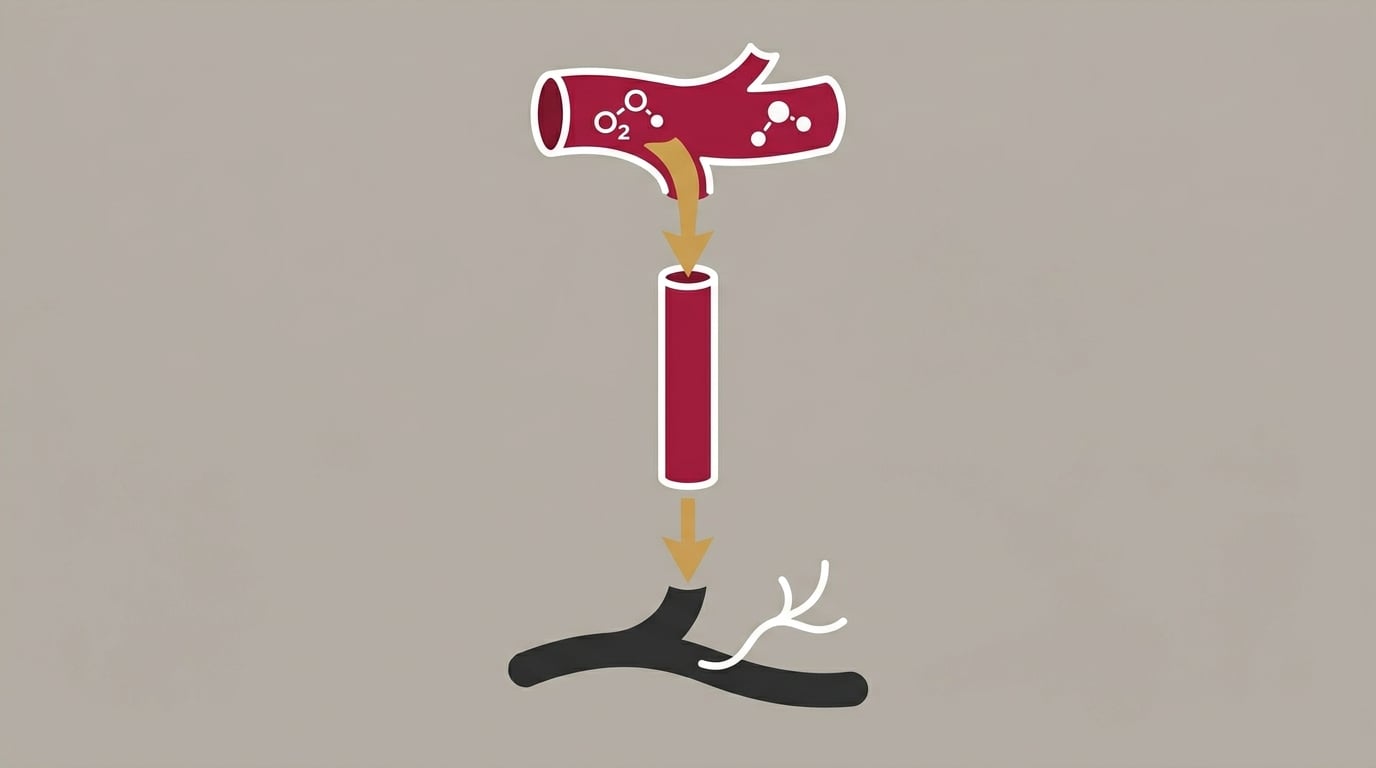
Most people — and a lot of providers — start the nerve conversation at regeneration. That's the wrong starting point.
Before a nerve can grow back, three things have to happen first. The compression has to lift. The blood supply has to be restored. The structural environment has to stay stable long enough that repair can actually begin.
Skip any one of those steps, and the regeneration clock doesn't start. Or it starts and stalls — because the environment keeps knocking it down.
Think of nerve repair as a supply chain. If any link is broken, the end product doesn't arrive. It doesn't matter how long you wait.
Phase 1 — Removing the Interference
The nerve can't repair through the same pressure that damaged it.
Compression — from a misaligned vertebra, a herniated disc, scar tissue, or chronic muscular restriction — limits both movement and blood flow to the nerve. The signal is weak. The nourishment is poor. Until that pressure clears, the biological conditions for regeneration don't exist.
This is why the opening phase of a structured neuropathy care approach isn't about symptom resolution. It's about clearing the path. The first several weeks are foundational. They're not flashy. But without them, none of the rest works.
Phase 2 — Restoring the Metabolic Supply
Decompression opens the door. Blood flow delivers what's needed to walk through it.
Nerves are metabolically expensive tissue. They need oxygen, glucose, and micronutrients to rebuild. Chronic compression cuts the supply of all three. Research published in Brain Sciences (MDPI) confirms that sustained clinical input is required to reorganize neural pathways after chronic damage — because the nerve isn't just growing back physically, it's reestablishing functional patterns that were disrupted during the compression period. That requires more than decompression. It requires the metabolic raw materials to actually do the work.
This is also where why proper nutrition is essential for nerve fiber regeneration becomes a direct clinical variable. What goes into the body is part of what the nerve has to work with.
Phase 3 — Holding the Environment Stable
A nerve growing back through a structurally unstable environment is like trying to restring a guitar while someone's actively bending the neck.
The repairs have to happen somewhere stable. Every time the structural environment collapses between visits, the slow, precise work of regeneration gets interrupted. Consistent care at this stage isn't dependency — it's maintaining the conditions that let the fixed biological rate actually run.
The Foundation for Peripheral Neuropathy confirms that functional improvements are cumulative and require consistent adherence to a multi-stage care plan. That's not a pitch. That's what the biology takes.
| Phase | Primary Clinical Goal | Typical Timeframe | What the Patient Experiences |
|---|---|---|---|
| Phase 1 — Decompression | Reduce compression, restore vascular access | Weeks 1–4 | Pain quality may shift; sensitivity may temporarily increase |
| Phase 2 — Metabolic Supply | Restore circulation and nutrient delivery | Weeks 4–8 | Early sensory shifts; numbness begins to fluctuate |
| Phase 3 — Stabilization | Hold the environment; support active regeneration | Months 2–6 | Progressive functional gains; clinical benchmarks become measurable |
What Clinical Progress Actually Looks Like, Stage by Stage

Here's what catches most patients off guard about the neuropathy recovery process. The first sign of progress doesn't look like improvement. It looks like change.
Pain quality shifts before intensity drops. Numbness fluctuates before it fades. Zapping, electrical sensations show up partway through recovery — not as a setback, but as the brain registering new input from nerves that are re-establishing signal. Knowing what progress actually looks like is the only way to read your own recovery without panicking over the wrong things.
Weeks 1–4 — Stabilization Before Growth
The first month isn't about producing outcomes. It's about building the conditions for them.
Clinically, this stage is decompression, assessment of physiological response, and confirming the current care pattern is generating the shifts the next phase depends on. Symptom change can go in any direction during these four weeks and still be on track.
- Pain quality shift (not intensity drop) — A change from burning to aching, or aching to pressure, tells you the nerve is receiving different input. That's progress, even when it doesn't feel like relief.
- Increased sensitivity — Areas that were numb becoming more sensitive as circulation improves isn't regression. It's the tissue responding. It means something is alive in there.
- No change at all — Expected and clinically normal at this stage. The month is removing interference. Growth hasn't started yet.
Weeks 4–8 — First Sensory Signals
This is typically when the first verifiable clinical signals appear.
For damage originating at the spine, signal doesn't return from the inside out. It returns from the top down. The area closest to the spine responds first. The feet are last. That's the biological explanation behind "my back feels better but my feet are still numb." It's not a treatment failure. It's the regeneration front working its way down the leg.
- "Zapping" or electrical sensations — The nerve is waking up. These brief, sharp signals are the brain receiving sensory input it hasn't processed in a while. A positive clinical indicator, not a problem.
- Intermittent improvement windows — Short periods of reduced symptoms followed by a return to baseline. The window is growing, even when it doesn't feel that way yet.
- Sleep disruption patterns shifting — Nervous system stabilization frequently shows up in sleep quality before it shows up in daytime symptoms. Pay attention to that.
Months 3–6 — Functional Stability and Reassessment
This is where outcome data becomes meaningful — and where the care plan has to reflect what that data actually says.
Dr. Karen Hannah reassesses at this stage not as a formality, but because the plan has to track with what's actually happening in the patient's nervous system. If the trajectory is on track, it continues. If a component isn't producing the expected physiological shift, it changes. Not at the six-month mark. When the clinical picture says so.
That's the specific contrast with a fixed-protocol model. The fixed protocol runs the same predetermined sequence for the same predetermined number of visits regardless of clinical response. The count hits, the plan ends. Whether you're better or not is between you and the chart. Here, the data drives the decision — not the calendar.
| Timeframe | What's Happening | Clinical Signals | What It Means |
|---|---|---|---|
| Weeks 1–4 | Decompression, environment stabilization | Pain quality shifts, sensitivity changes | Foundation is being built |
| Weeks 4–8 | Metabolic restoration, early nerve signal | Zapping sensations, intermittent improvement windows | Regeneration conditions are active |
| Months 2–3 | Early functional gains | Reduced numbness duration, improved coordination | Nerve signal improving across the path |
| Months 3–6 | Reassessment + continued restoration | Functional benchmarks — balance, grip, sleep quality | Outcomes become measurable |
Knowing what your first nerve restoration session actually evaluates — and why that assessment is the foundation for everything that follows — is the starting point for reading this timeline correctly.
What you do between sessions matters in ways most patients underestimate. Specific movements either support or disrupt the repair rate. Home exercises that support nerve healing are a clinical tool, not a generic handout.
Understanding the full Nerve Restoration Protocol — what each phase is built on and why it exists — makes the timeline feel like a roadmap instead of an open-ended waiting game.
If you've been told that chiropractic care can't address nerve damage, the research on whether care like this can heal damaged nerves is worth reviewing before that assumption gets settled.
This Is Not for Everyone, and That Matters

Nerve restoration is a process. Not a session. Not a shortcut.
If a single adjustment resolving everything is the expectation coming through the door, this isn't the right fit. Saying that clearly upfront is more useful than letting the expectation collide with the biology a few weeks in.
If You Expect Results in the First Week, Read This First
The One-Adjustment Miracle Seeker reads articles like this one, books an appointment, and leaves by week two — not because the care isn't working, but because the biology didn't match the expectation they brought with them.
Nerve tissue is the slowest-healing tissue in the human body. The first month is removing interference and stabilizing the environment before growth even begins. Expecting clinical resolution in week one is the same as expecting a broken bone to be healed three days after setting it. The biology doesn't accelerate based on urgency, and no provider can make it.
If you want to come in once and feel better permanently, this is not the right practice for you. That's not how nerve biology works. And any provider who tells you it does is managing your expectations for their own convenience — not yours.
This practice works with patients who are willing to engage the process as it actually is. Saying so isn't a barrier. It's a favor to both parties.
Who Gets the Best Results
The patients who get results from nerve restoration are the ones willing to work with the biology — not against the timeline it requires.
- Willing to complete the assessment before forming a judgment — the evaluation drives the care plan here, not a pre-loaded sequence from the previous provider
- Prepared for a multi-phase timeline — not because it benefits a billing calendar, but because the biology actually takes that long
- Honest reporters — patients who describe accurately what's changing and what isn't give the clinical picture that drives meaningful reassessment decisions
- Committed between visits — home exercises that support nerve healing maintain the environment the adjustments open; skipping them is skipping part of the care plan
Results may vary.
Frequently Asked Questions
Why do I sometimes feel a "zapping" sensation as my nerves heal?
That zapping sensation is typically a sign of progress, not a problem. As nerve regeneration occurs, the brain receives new sensory inputs it hasn't processed in a while.
The result is a brief, sharp, electrical feeling in the affected area — the system rebooting after a long shutdown. This is most common between weeks 4 and 8, when early sensory restoration is underway. If the sensation is intense or persistent, mention it at the next appointment. In most cases, it's the nervous system doing exactly what it should be doing.
Does age affect how fast nerves restore?
Biological repair capacity doesn't disappear with age. But several factors that influence the speed of that repair do shift.
Circulatory efficiency, metabolic health, blood sugar regulation — all of these affect how well the supply chain functions as the body ages. They don't make restoration impossible. They make getting the supply chain phases right more important, not less. The clinical approach doesn't change based on age. What the assessment finds does, and the plan follows that.
What if I don't see results in the first 30 days?
The first month is almost never about visible results. It's about establishing the conditions for results.
Nerve tissue is the slowest-healing tissue in the human body. The first four weeks are typically spent removing interference so that the regeneration environment can actually form. Expecting visible symptom change by week four is like expecting the house to be finished when the foundation was just poured. If nothing has shifted at all — not improved, not even changed in quality — by week eight, that's worth evaluating. Not a reason to stop. A reason to reassess.
How does the one millimeter per day rate apply to my feet?
If your nerve symptoms are in your feet and the injury origin is at the spinal level, the nerve isn't regenerating across a short distance. It's regenerating the length of the leg.
At one millimeter per day, lumbar-to-foot nerve paths can measure 900 to 1,100 millimeters. That's a biological timeline of 30 months or more at the fixed rate — before accounting for the time needed to stabilize the environment first. Foot symptoms are reliably the last to resolve in spinal-origin neuropathy. Longer route. Same fixed speed. "My back feels better but my feet are still numb" is not treatment failure. It's the biology working its way down.
Can I speed up the restoration timeline with home exercises?
Yes — within the constraints of the biology. Specific neurodynamic movements and circulation-supporting exercises help maintain the structural openings that chiropractic adjustments create between sessions.
They don't change the one-millimeter-per-day rate. They prevent that rate from being undermined by the environment collapsing back between visits. That's the actual value: not acceleration, but consistency. The repair rate stays active because the conditions aren't constantly being disrupted. The specific movements are built from the assessment data, not a generic protocol — that's part of what makes home exercises supporting nerve healing between adjustments a clinical tool rather than a pamphlet.
What's the difference between the care plan here and a standard fixed protocol?
A fixed protocol runs the same sequence for the same number of visits regardless of what the clinical data says. A reassessment-driven plan changes when the data says it should.
Care plans here are built from what you actually report and what the assessment finds — not from a predetermined count decided before the first appointment. When something isn't producing the expected physiological shift, the plan changes. Not at the six-month mark. When the clinical picture says so. The willingness to stop and pivot when something isn't working isn't a weakness in the approach. It's what makes the approach defensible.
What is the realistic end goal of nerve restoration care?
Functional stability — not permanent weekly visits. The goal of every care plan here is to get you to a point where ongoing clinical intervention isn't necessary to maintain your results.
Honest, outcome-based recommendations — even when that means shorter care plans — are the only defensible standard. A provider who keeps you coming back past the point of clinical need is serving their schedule, not your recovery. That's not what this practice is built on.
Real Answers Take Longer Than Comfortable Ones. That's the Point.
The comfortable answer to "how long does this take" is a fixed number. The real answer depends on where the damage is, how long the compression ran before anything was done, how quickly the supply chain can be restored, and whether the structural environment stays stable enough for the fixed biological rate to actually run.
I've seen patients come in after months on medication that kept the pain quiet while the underlying compression kept doing damage. Their starting point wasn't week one of restoration — it was whatever the nerve had deteriorated to by the time the alarm got silenced. Real answers are more valuable than comfortable ones. A six-month roadmap that produces durable results beats a two-week "solution" that drops you back at the start by month three.
Unexplained nerve symptoms, symptoms that haven't responded to standard care, timelines that keep extending with no clear endpoint — those aren't signs that nothing can be done. They're signs the cause hasn't been found yet. That's a different problem than most patients have been told they have — and it's a solvable one.
Results may vary.
Nerve pain that keeps coming back isn't a mystery. It's a supply chain problem. And the first step toward solving it is understanding what's actually happening in your nervous system — not just quieting what you feel.
A chiropractic assessment at Touch of Wellness Chiropractic starts with what you actually report. It maps the clinical picture. It identifies where the interference is and what the restoration environment looks like — before a single decision is made about care.
If you're in Morton, Peoria, or the surrounding central Illinois area and want to know what's driving your nerve symptoms — not just what's covering them — map your nerve restoration timeline.
The biology is fixed. The cause isn't. That's where this conversation starts.
Copyright Touch of Wellness Chiropractic 2026
1101 W Jackson St, Suite A Morton, IL 61550
Web Design by iTech Valet