
(309) 321-8412 | 1101 W Jackson St, Suite A, Morton, IL 61550
(309) 321-8412 | 1101 W Jackson St, Suite A, Morton, IL 61550
Chiropractic Adjustments vs Nightguards: Which Actually Resolves the Root Cause of TMJ?
Chiropractic adjustments and nightguards do not compete. They address different problems entirely.
A nightguard protects teeth from grinding damage. That's a shield. It's not a correction. And for the majority of TMJ sufferers, the problem was never at the jaw to begin with.
Temporomandibular joint dysfunction is frequently a downstream symptom of upper cervical spine misalignment. The neck and jaw share a neurological pathway — the trigeminocervical complex — where sensory input from the C1–C3 cervical nerves converges directly with the trigeminal nerve fibers that supply the jaw. When the upper neck is misaligned, that convergence produces referred tension, pain, and muscular dysregulation at the jaw, even when the jaw itself has no structural injury.
The data reflects this. Up to 70% of TMD patients present with co-existing cervical spine pain and dysfunction. That number isn't a coincidence. It points to a structural relationship that nightguard therapy isn't designed to touch.
Nightguards prevent tooth attrition during bruxism. What they don't do — and aren't designed to do — is correct the spinal mechanics generating the neuromuscular tension that causes the jaw to clench. Clinical reviews confirm that occlusal splint therapy lacks a corrective mechanism for the spinal dynamics underlying long-term TMD.
Chiropractic adjustments to the cervical spine take a different approach. By restoring proper alignment at C1 and C2, they relieve tension on the trigeminocervical complex — reducing the neurological load that keeps jaw muscles in chronic contraction. Clinical evidence shows targeted cervical chiropractic adjustments reduced average TMJ pain ratings from 6.2 to 2.1 on the visual analog scale. Long-term rehabilitation studies show manual physical therapy produces significantly better outcomes than passive oral orthotics in both jaw mobility and structural pain threshold.
The National Institute of Dental and Craniofacial Research supports conservative, reversible physical treatments as the appropriate first-line intervention for TMJ — over irreversible dental restructuring.
A shield isn't a solution. For TMJ pain rooted in cervical spine misalignment, the root cause doesn't live at the jaw — and that's exactly where nightguard therapy stops looking.
Last Updated: August 25, 2026
- • What TMJ Actually Is — And Where the Pain Really Starts
- • Why Most Dentists Focus on the Jaw (And What That Misses)
- • The Cervical Spine Connection: Why Your Jaw Follows Your Neck
- • What Chiropractic Adjustments Actually Do for TMJ
-
• Frequently Asked Questions About Chiropractic vs Nightguards for TMJ
- • Do nightguards actually resolve the root cause of TMJ jaw pain?
- • How can a neck alignment problem cause chronic TMJ headaches?
- • What does a chiropractic adjustment do for TMJ dysfunction?
- • Why do my TMJ symptoms return even though I wear my nightguard every night?
- • Is chiropractic care for TMJ safe and clinically backed?
- • The Bottom Line on TMJ Treatment
What TMJ Actually Is — And Where the Pain Really Starts
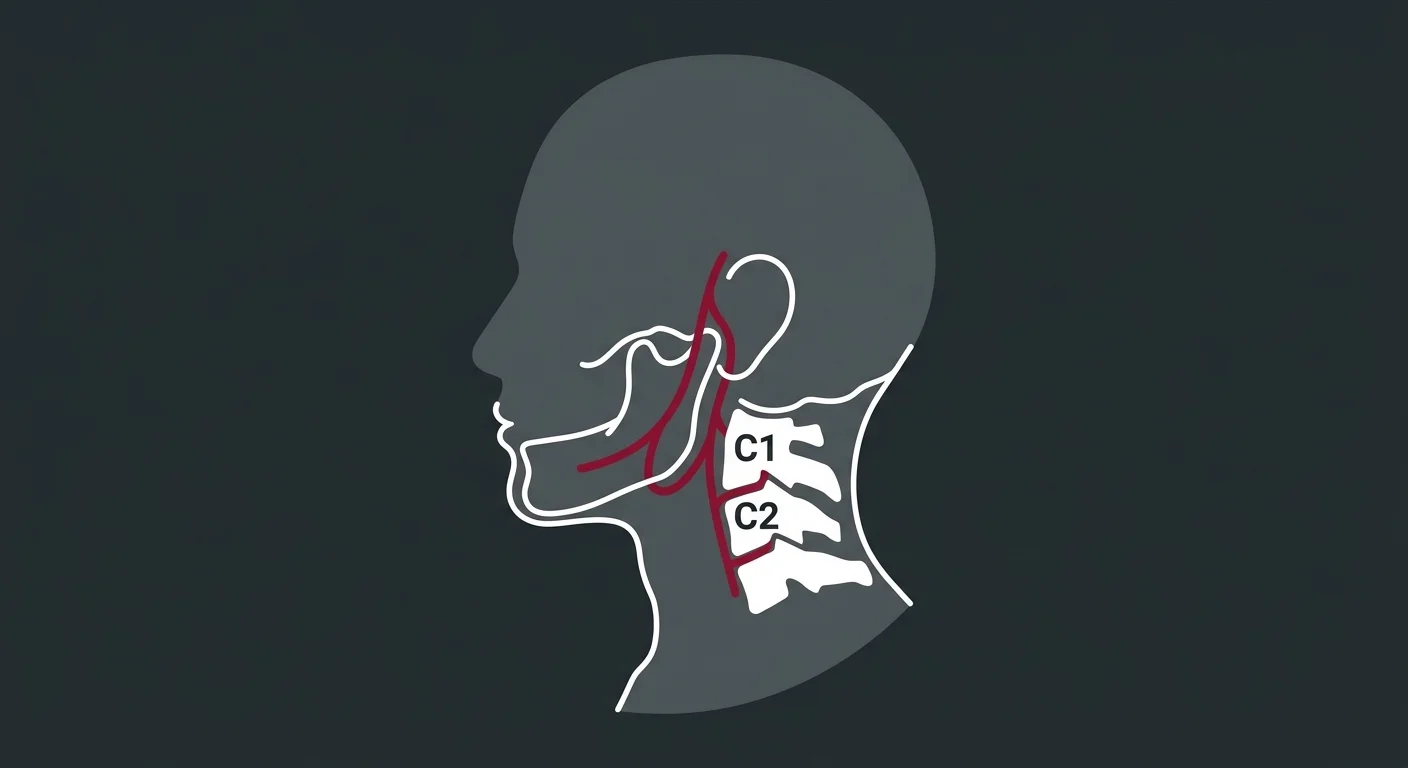
Most people hear "TMJ" and picture a jaw problem.
That's exactly where the wrong treatment starts.
The temporomandibular joint is the hinge connecting your jaw to your skull. When it's dysfunctional, you feel it as clicking, locking, morning soreness, or headaches radiating from the base of the skull.
But here's the thing — the joint is almost never the origin. It's the last stop on a longer chain.
What drives most TMJ dysfunction isn't a broken jaw. It's a nervous system under chronic load from a misaligned upper cervical spine.
That load has to go somewhere. The jaw is where it lands.
Protecting the jaw without addressing that upstream cause is like putting a helmet on a player with a broken ankle. The equipment is real. The fix isn't.
The Trigeminocervical Complex: The Nerve Pathway Dentists Don't Treat
Here's the mechanism most dental treatment skips entirely. Your upper neck and your jaw don't just sit near each other — they share a neurological highway.
NIH research on the trigeminocervical complex shows that sensory inputs from the C1–C3 cervical nerves converge directly with trigeminal nerve fibers that supply the jaw. That convergence is why an upper cervical spine alignment issue can produce jaw pain with no jaw injury at all.
When C1 or C2 is misaligned — even slightly — that convergence zone gets overloaded. The trigeminal system reads the incoming neurological noise as a jaw problem.
So the jaw muscles contract. The joint compresses. And you wake up with jaw pain that your dentist treats with a nightguard that never touches the spine.
Patients locked in dental-only management hit the same wall. The splint stops holding results. And the question that never gets asked is whether the cervical spine was ever part of the picture.
For most, it wasn't. That's the structural blind spot the nightguard model never closes — and what happens when dental splints fail makes exactly that cost clear.
Forward Head Posture and Its Role in Chronic TMJ
There's another pattern that shows up in chronic TMJ cases without fail: the head isn't sitting where it belongs. Forward head posture — skull drifted in front of the shoulder line — is pervasive among patients with chronic jaw pain.
NIH findings show that up to 70% of TMD patients present with co-existing cervical spine pain and dysfunction. That's not a secondary complaint. That's the body drawing you a map.
Every inch the head drifts forward adds load to the cervical spine. That load feeds directly into the trigeminocervical convergence zone.
The jaw doesn't create that tension. It absorbs it.
No jaw-focused treatment resolves a posture-driven cervical load. The jaw is downstream. The neck is the source.
| TMJ Symptom | Commonly Assumed Cause | Documented Contributing Factor | Treatment Target |
|---|---|---|---|
| Jaw clicking and locking | Joint disc displacement or jaw misalignment | Upper cervical spine misalignment creating neuromuscular tension at the joint | C1/C2 spinal alignment — not the jaw disc |
| Chronic jaw soreness on waking | Nighttime teeth grinding (bruxism) | Cervical nerve overload from the trigeminocervical complex driving unconscious muscle contraction | Upper cervical spine — the source of the neurological load |
| Headaches radiating from the base of the skull | Jaw tension or dental occlusion problems | Referred pain from C1–C3 nerve convergence with the trigeminal system | Cervical spine — where the referred signal originates |
| Facial muscle tightness and fatigue | Stress or poor bite alignment | Chronic neuromuscular contraction driven by trigeminocervical overload | Nervous system load — relieved through cervical adjustment, not splint therapy |
| TMJ symptoms that return after dental treatment | Inadequate splint fit or patient compliance | Underlying cervical misalignment never addressed — the structural root cause persists | Cervical spine — the treatment the dental model left out |
| Forward head posture with jaw pain | Poor ergonomics or muscle weakness | Head position increasing cervical load, feeding directly into the trigeminocervical convergence zone | Spinal alignment and postural correction — upstream of the jaw |
Why Most Dentists Focus on the Jaw (And What That Misses)
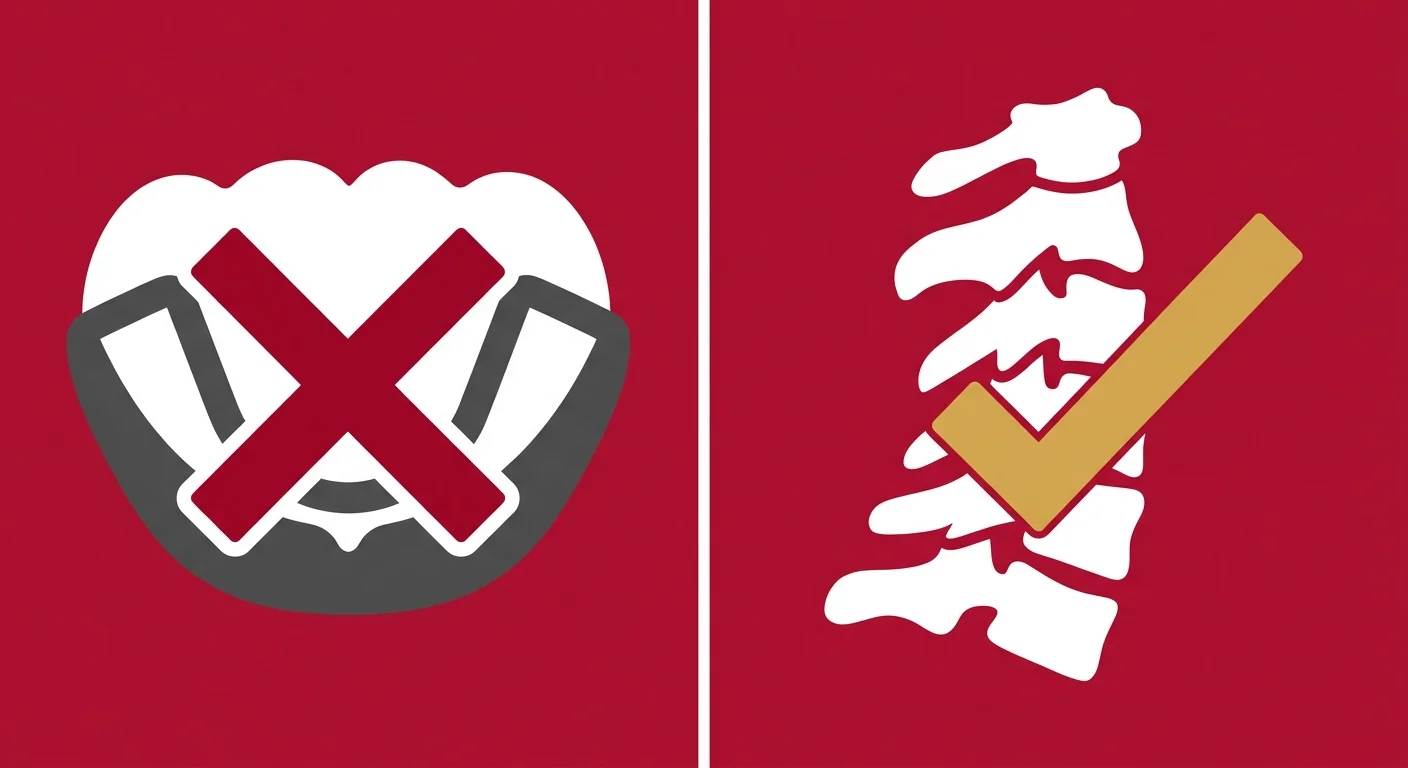
Dentistry has a clear line of sight to the jaw. So that's where it looks.
When a patient reports clicking, morning soreness, or jaw pain, the dental model evaluates the bite and prescribes what it can reach. That's not negligence. That's the logical limit of a discipline trained to work inside the mouth.
But the jaw isn't where most TMJ dysfunction starts. It's where it shows up.
For a significant portion of chronic cases, the origin is upstream — at C1 or C2, where misalignment overloads the trigeminocervical complex and sends referred tension straight into the jaw musculature. That's a structural problem the dental field isn't built to treat.
So the dental-only model does what it can: protect the jaw from the damage the dysfunction causes.
That's a real goal. But it's not the same as treating the source. Patients who suspect their jaw pain traces to a cervical origin consistently find that dental treatment manages symptoms without resolving them. The spinal driver keeps firing. The jaw keeps absorbing it.
The Nightguard: What It Does, What It Doesn't
A nightguard does exactly what it's designed to do.
It sits between the upper and lower teeth and absorbs bruxism force — grinding, clenching — so that force doesn't wear down enamel or fracture tooth structure. For patients who grind heavily, that protection is real.
What it doesn't do is stop the grinding. NIH clinical reviews confirm that occlusal splint therapy lacks any corrective mechanism for the spinal dynamics underlying long-term TMD.
The appliance intercepts the symptom. It doesn't interrupt the cause.
That's not a care plan. That's a shield.
And a shield worn every night for years — while the neurological tension driving the clenching continues unchecked — is a maintenance strategy. Not a resolution. The distinction matters more than most patients are ever told.
How Nightguards Protect Teeth Without Fixing the Problem
Here's where the nightguard model runs into a wall.
Long-term rehabilitation studies show that passive oral orthotics produce significantly inferior outcomes compared to active spinal-jaw physical therapy — manual therapy outperforms dental splints in both vertical jaw opening and structural pain threshold. Those aren't marginal differences. They're the difference between managing a condition and resolving it.
The nightguard protects. It doesn't restore.
Federal dental health guidance explicitly prioritizes conservative, reversible physical treatments over irreversible dental restructuring as the appropriate first-line approach for TMJ.
That's not a fringe position. That's the official recommendation. And it points away from passive oral appliances as a complete answer — not toward more splints.
Here's the simplest version of this problem.
A nightguard is useful equipment. But useful equipment applied at the wrong location doesn't produce results — no matter how consistently you use it. When the root cause lives in the cervical spine, protecting the jaw isn't wrong. It's just nowhere near the problem.
That gap is what most patients are never told exists.
| Treatment Approach | What It Targets | Mechanism | Root Cause Addressed? | Long-Term Outcome |
|---|---|---|---|---|
| Nightguard (Occlusal Splint) | Teeth and bite surface | Physical barrier absorbs grinding force to prevent enamel wear | No — protects against damage but does not address neuromuscular or spinal origin | Symptom management; grinding and clenching continue; long-term dependency without resolution |
| Dental Bite Adjustment | Occlusal (bite) relationship between upper and lower teeth | Reshapes tooth surfaces to redistribute bite forces | No — addresses bite mechanics only; does not reach cervical spine or trigeminocervical complex | May reduce bite-related strain; cervicogenic TMJ tension remains unaddressed |
| Upper Cervical Chiropractic Adjustment | C1 and C2 vertebral alignment | Restores cervical alignment to relieve tension on the trigeminocervical complex and reduce referred jaw load | Yes — targets the spinal misalignment driving neuromuscular jaw dysfunction | Reduced jaw muscle contraction, improved joint mobility, decreased referred pain as cervical load normalizes |
| Physical Manual Therapy (Spinal-Jaw) | Cervical spine, jaw musculature, and postural alignment together | Active manual techniques address both spinal mechanics and jaw muscle dysfunction simultaneously | Yes — treats the structural and neuromuscular source, not the symptomatic endpoint | Long-term improvements in jaw opening range and structural pain threshold; outcomes superior to passive appliances |
| Irreversible Dental Restructuring (e.g., surgery, permanent reshaping) | Jaw joint structure or bite anatomy | Permanently alters joint or tooth anatomy to modify jaw mechanics | Rarely — most TMJ dysfunction is neuromuscular and cervicogenic, not structural at the joint itself | High risk with limited reversibility; official guidelines deprioritize this approach in favor of conservative physical treatments |
The Cervical Spine Connection: Why Your Jaw Follows Your Neck
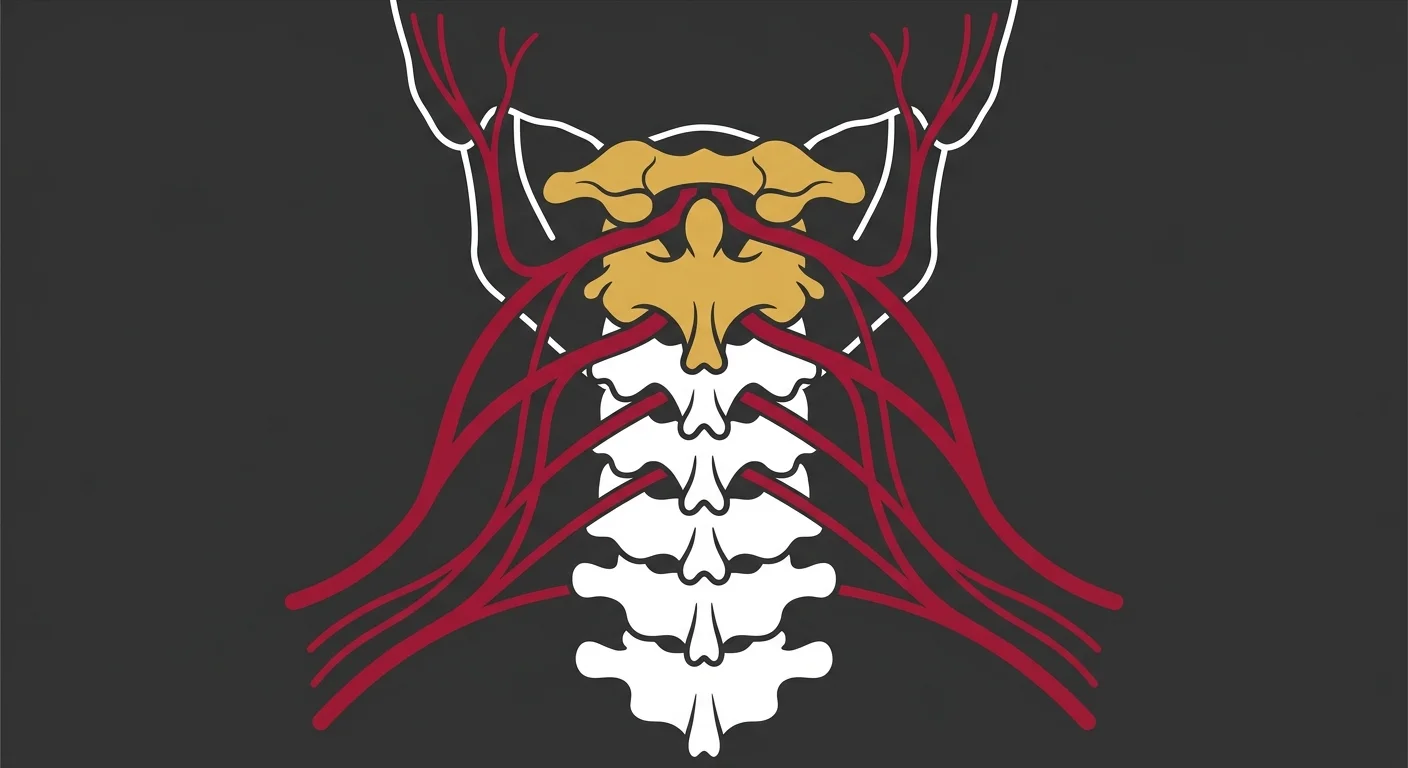
Here's what the nightguard model can't account for.
Your jaw doesn't operate in isolation. It's neurologically tethered to your neck — and when the neck is off, the jaw follows.
C1 and C2 sit at the very top of the cervical spine, directly under the skull. When those segments lose alignment, the neurological disruption doesn't stay local.
It travels. And the jaw musculature is one of the first places it shows up.
That's why chronic TMJ almost always arrives packaged with cervical tension, recurring headaches, and forward head posture.
Those aren't separate complaints. They're the same upstream dysfunction landing at different downstream addresses. The neck is the source. Everything else is where it shows up.
The Adjustment Mechanism: Decompressing the Nerve Pathway
The mechanism isn't mysterious once you understand how neck tension reaches the jaw. Sensory inputs from the C1–C3 cervical nerves converge directly with trigeminal nerve fibers that supply the jaw — a junction called the trigeminocervical complex.
When that junction gets overloaded by cervical misalignment, the trigeminal system reads the incoming signal as a jaw problem. So the jaw responds. The jaw muscles contract. The joint compresses. And the source never gets touched.
A precise upper cervical adjustment restores segmental alignment at C1 and C2. That realignment decompresses the trigeminocervical convergence zone.
The referred neurological load that's been holding the jaw in chronic contraction finally has an exit. And that exit is out of the system entirely — not managed, not muffled.
Think of it as removing the signal at its source.
The jaw doesn't stop clenching because someone told it to. It stops clenching because the input driving the clench gets interrupted — at the vertebral level where that input originates. That's a fundamentally different intervention than anything a nightguard reaches.
Clinical Evidence: What the Research Shows About Chiropractic and TMJ
NIH research on cervical adjustments shows that targeted chiropractic adjustments to the cervical spine reduced average TMJ pain ratings from 6.2 to 2.1 on the visual analog scale.
That's not a marginal improvement. That's a functional shift — produced by addressing the spine, not the jaw. The location of the intervention is the point.
Long-term rehabilitation data confirms the same direction. Passive oral orthotics perform significantly worse than active spinal-jaw physical therapy over time — with manual therapy producing measurably better outcomes in both vertical jaw opening and structural pain threshold.
The nightguard protects teeth. It doesn't restore function. Those are two different goals. And when patients confuse them — or when no one explains the difference — chronic cases don't resolve. They just get managed indefinitely.
Back to the broken ankle.
A helmet is well-made equipment. It's just solving the wrong problem. When the root cause lives in the cervical spine, even a perfectly fitted nightguard worn every night is a tool applied at the wrong address.
The outcomes reflect exactly that. Symptoms get managed. The structure never changes.
| Outcome Measure | Nightguard / Splint Therapy | Upper Cervical Chiropractic Adjustment | Clinical Significance |
|---|---|---|---|
| TMJ Pain Score (Visual Analog Scale) | No documented reduction in pain ratings | Average pain rating decreased from 6.2 to 2.1 | Cervical adjustment produced a clinically significant functional shift; splint therapy addresses tooth protection, not pain origin |
| Vertical Jaw Opening (Range of Motion) | Inferior long-term outcomes vs. manual therapy | Statistically significant improvement over passive splint therapy | Manual therapy restores structural jaw function; nightguards do not produce measurable range-of-motion gains |
| Structural Pain Threshold | Inferior long-term outcomes vs. manual therapy | Statistically significant improvement over passive splint therapy | Physical manual therapy raises the structural pain threshold; passive oral orthotics do not correct the underlying neuromuscular load |
| Neurological Root Cause (Trigeminocervical Convergence) | No mechanism to address cervical nerve convergence | Restores C1–C2 alignment, decompressing the trigeminocervical convergence zone | C1–C3 sensory inputs converge with trigeminal fibers; only cervical realignment interrupts that referred signal at its source |
| Long-Term Rehabilitation Outcome | Passive oral orthotics perform significantly worse than active spinal-jaw physical therapy over time | Active spinal-jaw physical therapy produces superior long-term rehabilitation results | Passive protection of the jaw produces no structural resolution; active cervical care addresses the source driving chronic dysfunction |
What Chiropractic Adjustments Actually Do for TMJ
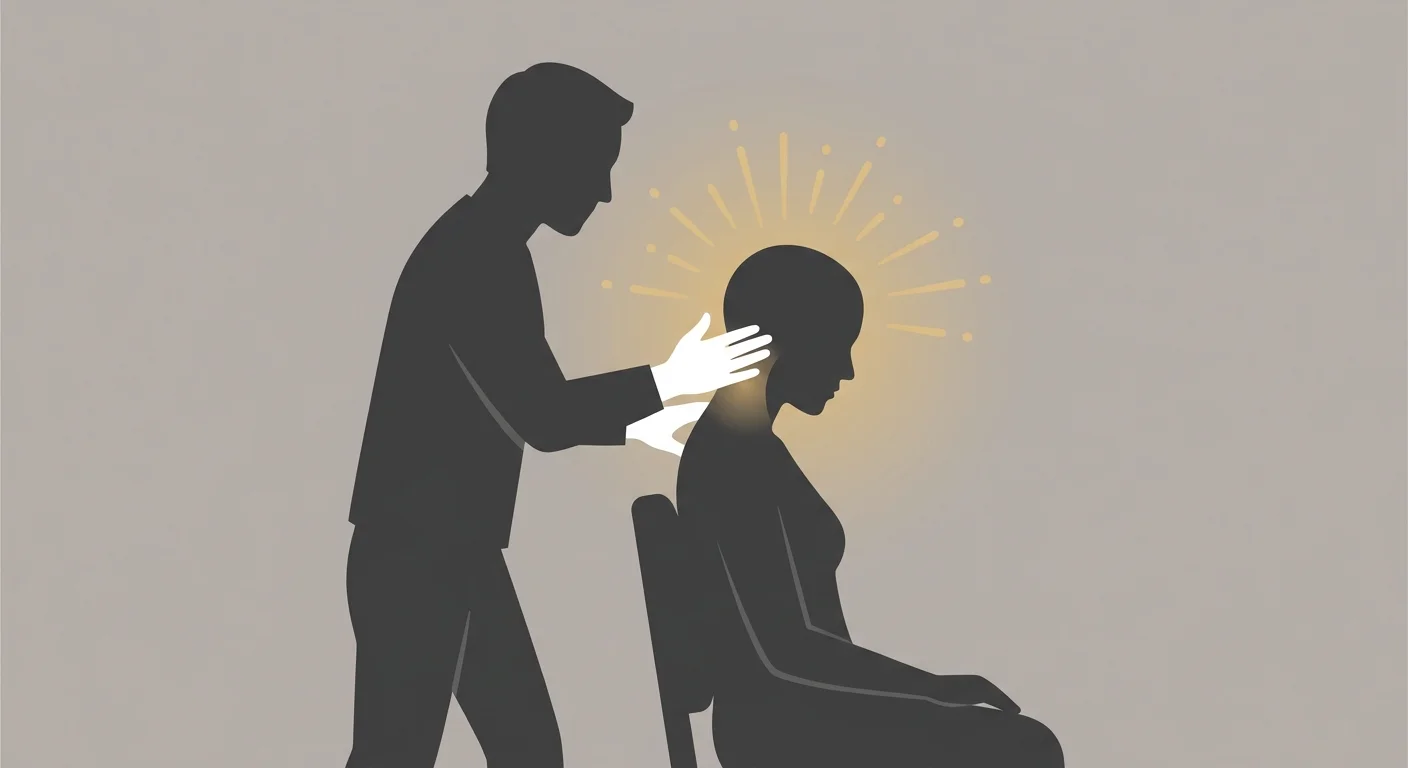
Here's what most patients never get told.
A chiropractic adjustment for TMJ isn't targeting the jaw. It's targeting the vertebral segments feeding the jaw problem in the first place.
At C1 and C2, precise realignment decompresses the trigeminocervical convergence zone. The neurological load that's been driving chronic jaw muscle contraction finally has somewhere to go. The jaw stops clenching — not because someone told it to, but because the signal triggering the clench was cut off at its source.
The clinical data doesn't leave much room for debate.
NIH research on cervical adjustments shows targeted chiropractic adjustments to the cervical spine reduced average TMJ pain ratings from 6.2 to 2.1 on the visual analog scale. That's not a marginal shift. That's a functional change produced by addressing the spine — not the jaw.
And NIH findings confirm up to 70% of TMD patients present with co-existing cervical spine dysfunction. That number tells you the cervical spine isn't a secondary consideration. It's the primary one.
What makes individualized chiropractic care effective here isn't only the adjustment. It's what happens between sessions.
The adjustment creates a window. Whether that window holds or closes depends on what you do outside of it — and how you carry your head, your neck, and your jaw through a normal day matters more than most patients expect. Posture, daily mechanics, load on the cervical spine — these either support the correction or undo it.
The National Institute of Dental and Craniofacial Research explicitly prioritizes conservative, reversible physical treatments over irreversible dental restructuring as the appropriate first-line approach. A well-executed cervical care plan delivers exactly that. Passive oral appliances, used alone, don't.
This Approach Is Not for Everyone
This approach isn't built for everyone. Saying so directly saves both parties time.
If you need this practice to replicate what your last provider did, this isn't the right fit.
The assessment drives the care plan here — not a previous provider's habits. Arriving with a list of what your old chiropractor ran, and needing it matched before we've evaluated anything, tells both of us something important.
And if you're expecting complete resolution after one visit, that expectation is going to work against you. A cervical misalignment that's been feeding jaw dysfunction for months doesn't resolve in a single session. A realistic care plan requires both parties to show up — the provider and the patient.
But there's a specific patient this approach was built for.
The one who's done the dental-only track. Worn the nightguard faithfully. Still can't hold results. Whose jaw pain arrives with cervical tension, recurring headaches, or forward head posture that nobody has connected to the jaw yet.
That patient wants a real answer — not a better shield. If that's where you are, the cervical spine is worth evaluating. That's where the conversation changes.
| Patient Profile | Primary Symptom Pattern | Likely Contributing Factor | Fits Chiropractic Assessment? |
|---|---|---|---|
| Nightguard wearer with recurring symptoms | Jaw pain, grinding, clenching — managed but never resolved after months of appliance use | Upper cervical misalignment sustaining neurological load on the trigeminocervical complex | Yes — cervical spine evaluation indicated |
| Chronic headache patient with jaw tension | Morning headaches, facial tightness, neck stiffness that worsens through the day | C1/C2 segment dysfunction referring tension into trigeminal nerve territory | Yes — cervical and jaw relationship warrants assessment |
| Forward head posture with jaw clicking | Audible clicking or locking, postural fatigue, upper back and neck tightness | Postural cervical load shifting mechanical stress into jaw musculature | Yes — postural and structural assessment appropriate |
| Patient with isolated dental bruxism, no cervical symptoms | Tooth wear and enamel damage without headaches, neck pain, or referred tension | Primary bruxism without detectable spinal contribution | Partial — nightguard remains appropriate; cervical assessment clarifies whether spinal input is a factor |
| Post-dental procedure TMJ flare | Jaw soreness following extended dental work, no prior chronic TMJ history | Temporary muscular strain from prolonged mouth opening, not structural cervical dysfunction | Conditional — assess duration and symptom pattern before committing to a cervical care plan |
Frequently Asked Questions About Chiropractic vs Nightguards for TMJ
Once the cervical-jaw connection clicks, the questions shift.
Patients stop asking which nightguard brand is better. They start asking why symptoms keep returning, what a chiropractic adjustment actually does to the spine, and whether any of it holds up in real research.
Good questions. Here's what the evidence actually says.
Do nightguards actually resolve the root cause of TMJ jaw pain?
No. A nightguard protects teeth from grinding damage. That's its function — and it does that well.
But it doesn't stop the jaw from clenching. Research confirms that occlusal splint therapy lacks any corrective mechanism for the spinal dynamics feeding long-term TMD. The root cause isn't at the jaw. A tool applied at the wrong location doesn't reach it.
How can a neck alignment problem cause chronic TMJ headaches?
It comes down to one junction: the trigeminocervical complex.
Sensory fibers from the C1–C3 cervical nerves converge directly with the trigeminal nerve — the nerve that supplies the jaw. When the upper cervical vertebrae lose proper alignment, that junction gets overloaded. The trigeminal system reads incoming cervical tension as a jaw problem. So the jaw muscles contract, the joint compresses, and headaches follow.
The neck isn't just nearby. For many patients, it's running the whole problem.
What does a chiropractic adjustment do for TMJ dysfunction?
It targets the spine — not the jaw.
A precise upper cervical chiropractic adjustment restores proper alignment at C1 and C2. That decompresses the trigeminocervical convergence zone and reduces the referred neurological load that's been holding the jaw muscles in chronic contraction.
Clinical data shows average TMJ pain ratings dropped from 6.2 to 2.1 on the visual analog scale following targeted cervical chiropractic adjustments. The jaw improves because the input driving the problem gets interrupted at its source.
Why do my TMJ symptoms return even though I wear my nightguard every night?
Because the nightguard doesn't change the input.
Every morning when you take it out, the cervical misalignment feeding tension into the trigeminocervical complex is still there. The jaw returns to the same neurological environment it was in the night before. The guard absorbed the consequence — the source kept running.
Long-term studies show passive oral orthotics consistently underperform active spinal-jaw physical therapy — in both vertical jaw opening and structural pain threshold. Managed symptoms without source resolution always cycle back.
Is chiropractic care for TMJ safe and clinically backed?
Yes — and the source matters here.
The National Institute of Dental and Craniofacial Research explicitly prioritizes conservative, reversible physical treatments — including manual therapy — over irreversible dental procedures as first-line care for TMD. That's not a chiropractic advocacy group. That's federal dental health policy.
Clinical research shows cervical chiropractic adjustments reduced average TMJ pain scores from 6.2 to 2.1 on the visual analog scale. Long-term rehabilitation data confirms manual therapy outperforms passive splint therapy on measurable structural outcomes. The evidence is published, reproducible, and pointing one direction.
The Bottom Line on TMJ Treatment
The nightguard was never the fix.
It's a shield. A well-made one. But a shield applied to the wrong address doesn't resolve anything — it manages the consequence while the cause keeps running.
The research doesn't hedge on this. Targeted chiropractic adjustments to the cervical spine reduced average TMJ pain ratings from 6.2 to 2.1 on the visual analog scale.
That's not a marginal improvement. That's what happens when the intervention reaches the actual source — not the downstream structure absorbing the impact.
The location of the fix is the whole point.
If you've worn the nightguard faithfully and still can't hold results, the cervical spine is where the evaluation starts. At Touch of Wellness Chiropractic, that's the actual starting point — not the jaw.
Because the problem was never at the jaw. Protecting it was never going to get you closer to a resolution.
A shield is not a solution. If your jaw dysfunction has a cervical driver, the only question left is whether you're ready to stop managing the consequence and start addressing the cause.
A shield isn't a solution. If the nightguard hasn't held, the cervical spine is what no one's looked at yet. That's where Touch of Wellness Chiropractic starts.
Copyright Touch of Wellness Chiropractic 2026
1101 W Jackson St, Suite A Morton, IL 61550
Web Design by iTech Valet