
(309) 321-8412 | 1101 W Jackson St, Suite A, Morton, IL 61550
(309) 321-8412 | 1101 W Jackson St, Suite A, Morton, IL 61550
Why 'Resting' Isn't Enough to Heal a Stressed Nervous System
Resting doesn't heal a chronically stressed nervous system. It pauses the output — the fatigue, the tension, the inability to wind down — but it doesn't address what's keeping the system locked in overdrive.
A tripped breaker doesn't reset itself by sitting still.
Chronic stress activates the sympathetic nervous system and drives measurable dysregulation of the hypothalamic-pituitary-adrenal (HPA) axis. That isn't a mood state. It's a physiological condition with documented structural consequences. Over 75% of bodily systems are influenced by autonomic nervous system imbalance during chronic stress states. Sustained cortisol elevation inhibits hippocampal neurogenesis. Chronic stress exposure is associated with a 15% reduction in prefrontal dendritic arborization — the brain's capacity for rational, regulated thinking — while the amygdala undergoes hypertrophic changes under prolonged cortisol exposure. The nervous system isn't metaphorically stressed. It's structurally altered.
An estimated 60% to 80% of primary care doctor visits involve conditions driven or exacerbated by stress. Most of those patients are told to rest, reduce stress, and take medication. None of those interventions address the physical mechanism: mechanical joint dysfunction alters afferent input to the central nervous system, keeping sympathetic tone elevated even during sleep. Passive rest doesn't reverse a structural spinal joint restriction. The sympathetic response stays elevated during sleep when physical pain pathways are constantly triggered.
Spinal adjustments directly modulate the autonomic nervous system — and the evidence is measurable. Post-adjustment Heart Rate Variability data shows a statistically significant shift toward parasympathetic dominance. Parasympathetic activation markers increased within 15 minutes of mechanical spinal intervention. That's an active physiological response — not relaxation, not breathing exercises, not waiting for the body to sort itself out.
Restoring normal joint motion normalizes nociceptive input to the brain and lowers sympathetic activity. That requires a physical intervention. Not a passive one.
Last Updated: June 22, 2026
- • What Chronic Nervous System Overload Actually Looks Like
- • Why Your Body Stays in Fight-or-Flight Even When You Stop
- • The Problem With Passive Recovery
- • How Spinal Adjustments Interrupt the Stress Loop
- • Who This Type of Care Is — and Isn't — For
-
• Frequently Asked Questions About Nervous System Stress Recovery
- • Why doesn't sleeping or lying down heal a stressed nervous system?
- • What is the difference between passive rest and active nervous system recovery?
- • How do spinal misalignments keep the nervous system in a state of fight-or-flight?
- • What are the physical signs that my nervous system is chronically overloaded?
- • Can chiropractic care help recalibrate my autonomic nervous system?
- • How long does it take to see results from chiropractic care for nervous system stress?
- • The Circuit Breaker Has to Be Reset
What Chronic Nervous System Overload Actually Looks Like
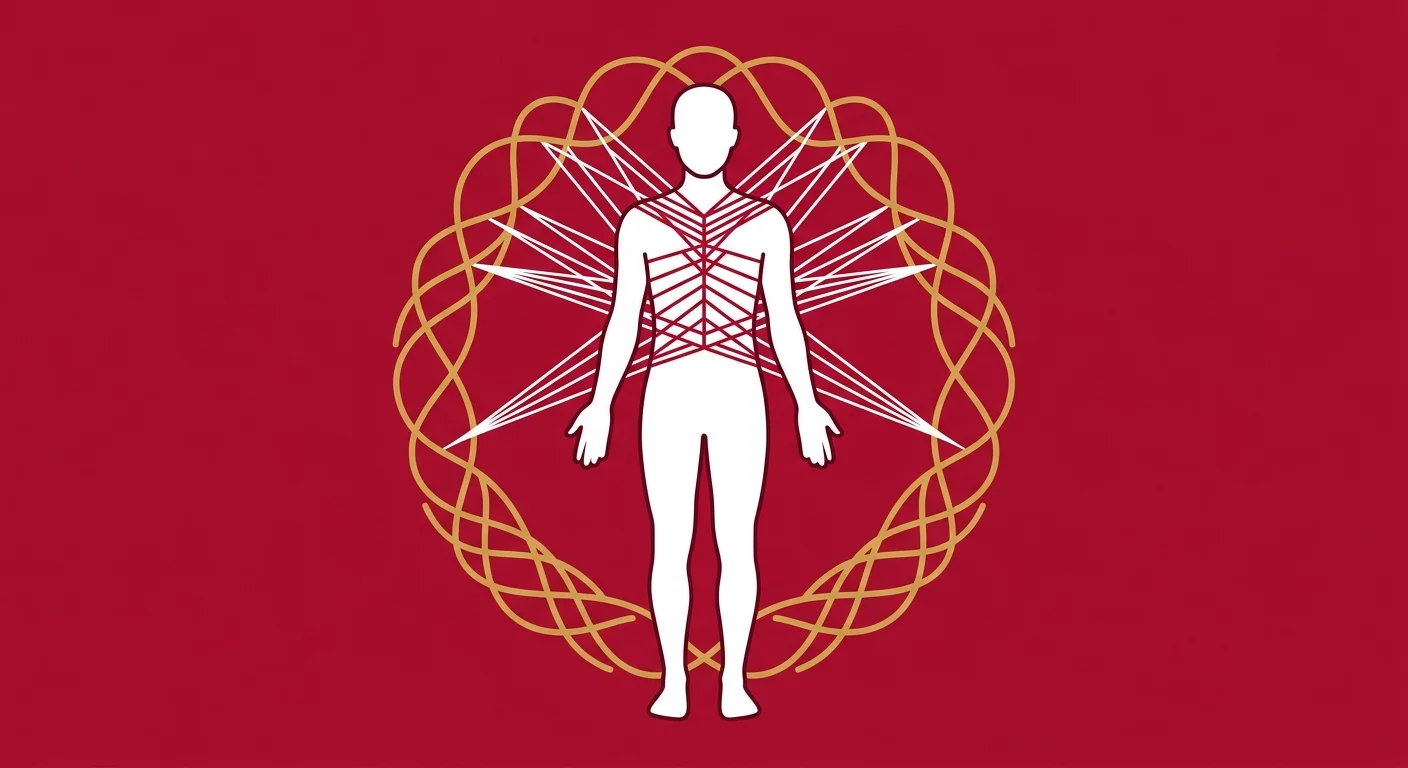
Most people already know the feeling. They just can't explain why it won't stop.
Chronic nervous system overload doesn't arrive as one dramatic event. It's everything being slightly wrong, all at once, without a clear reason why.
Sleep doesn't restore you. Weekends don't reset you. Vacations take the edge off for two or three days — then you're right back where you started.
That's because this isn't a mood state. It's a measurable physiological condition.
According to NIH research, chronic stress drives sustained sympathetic activation and dysregulates the HPA axis — and over 75% of bodily systems are influenced by that autonomic imbalance. The body isn't being dramatic. It's running a biological alarm that no one has turned off.
The Physical Signs Most People Attribute to Something Else
And the symptoms show up in ways that have nothing to do with stress — on the surface.
Tension headaches that never fully clear. Jaw tightness. A neck that won't loosen no matter how much you stretch it. Shallow breathing you don't notice until someone else points it out. Waking at 3 a.m. for no apparent reason. Digestive disruption. Skin flare-ups. A heart rate that spikes when you stand up too fast.
These aren't separate problems. They're one system stuck in overdrive — expressing itself across multiple channels at once. Recognizing what nervous system stress recovery actually requires starts with a single, uncomfortable truth: these symptoms share one source.
So why do people miss it? Because there's no clear origin story. No injury. No single event to point to.
So they chalk it up to aging, bad sleep, anxiety, or just bad luck — and cycle through interventions that treat each symptom individually. Meanwhile, the underlying system stays exactly where it is. Nothing changes because nothing is addressing the actual problem.
Why These Symptoms Don't Resolve With Standard Interventions
Here's what standard interventions are actually doing: managing output, not resetting the source.
An estimated 60% to 80% of primary care visits involve conditions driven or exacerbated by stress, according to published NIH data. The standard response is medication, rest recommendations, and a referral for the presenting symptom. None of that touches the structural component keeping the nervous system locked in constant activation.
A tripped breaker doesn't reset itself by sitting still. Someone has to physically flip it back.
Rest pauses the output. It doesn't address the physical restrictions and disrupted signaling keeping the system locked. That's not a flaw in the patient's effort. That's a flaw in the intervention.
| Symptom Category | Common Explanation Given | What It Actually Signals | Why It Persists |
|---|---|---|---|
| Sleep disruption (waking at 3–4 a.m., unrefreshing sleep) | Stress, anxiety, poor sleep hygiene | Sympathetic nervous system failing to downshift into parasympathetic recovery mode | The structural conditions keeping the system in activation aren't addressed by sleep itself — rest doesn't reset the source |
| Persistent tension headaches and jaw tightness | Dehydration, teeth grinding, postural habits | Chronic muscular bracing driven by sustained sympathetic overdrive and unresolved spinal tension | The nervous system signal driving the bracing pattern remains active — stretching and hydration address the output, not the input |
| Neck stiffness that never fully resolves | Sitting too long, poor ergonomics, aging | Mechanical joint restriction altering afferent nerve signaling to the central nervous system | Joint hypomobility isn't corrected by posture changes or rest — it requires restoration of normal joint motion to normalize the disrupted input |
| Digestive disruption and appetite irregularity | Diet, food sensitivities, IBS | Autonomic imbalance suppressing parasympathetic digestive function in favor of sustained fight-or-flight output | Dietary changes don't shift the autonomic state driving the suppression — the underlying system imbalance stays intact |
| Heart rate spikes, shallow breathing, chest tightness | Cardiovascular issue, anxiety disorder, panic | Autonomic dysregulation producing exaggerated sympathetic responses to ordinary stimuli | Medication manages the expression of these responses — it doesn't resolve the dysregulated signaling producing them |
| Skin flare-ups, immune dysregulation, slow recovery from illness | Allergy, autoimmune condition, seasonal variation | Sustained cortisol elevation suppressing immune system regulation across multiple bodily systems | Treating each flare-up individually doesn't address the hormonal and neurological environment producing them — the system stays in the same state |
Why Your Body Stays in Fight-or-Flight Even When You Stop
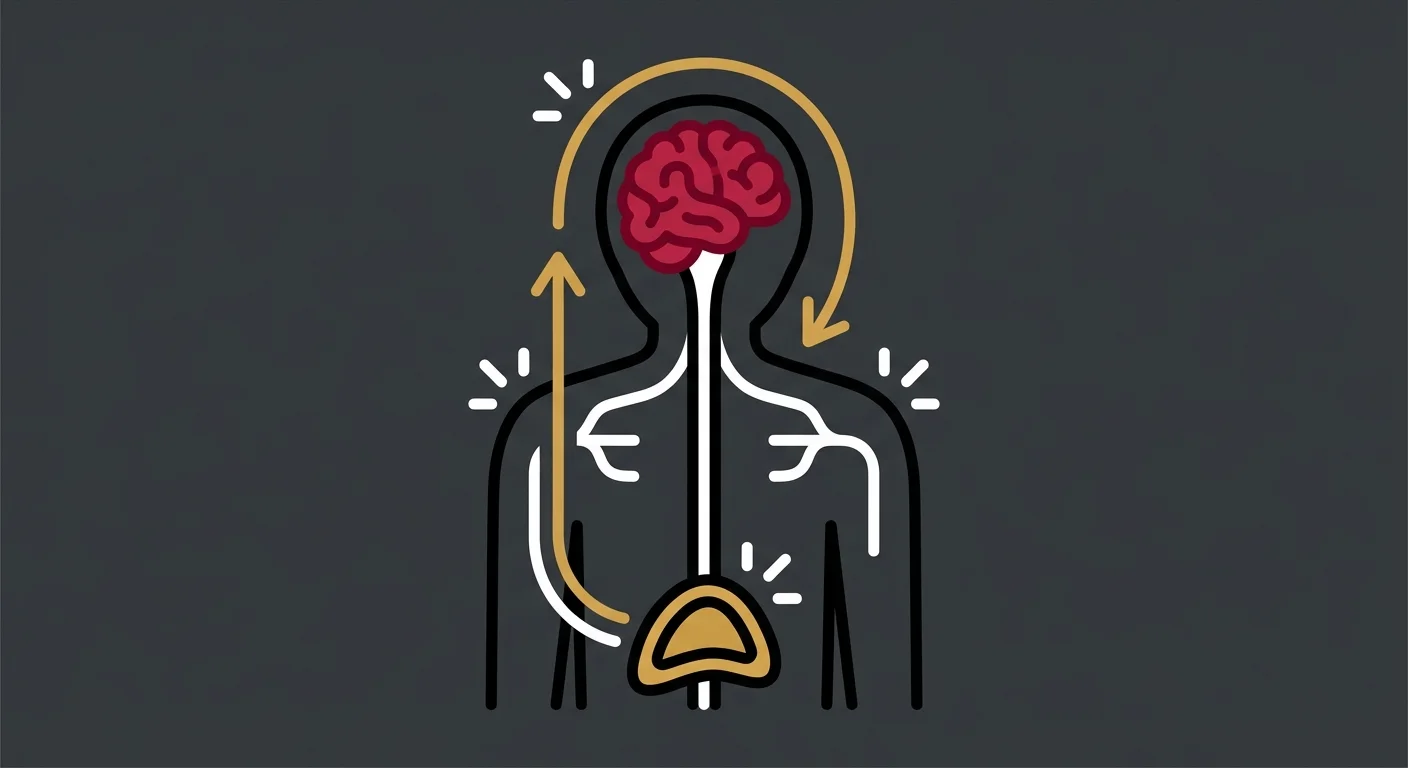
Here's what nobody tells you: fight-or-flight isn't designed to be a permanent address.
The sympathetic nervous system is built for short bursts. Activate, respond, recover. That's the design.
But chronic stress breaks the recovery half. The body isn't responding to a threat anymore — it's frozen in the posture of one. The alarm is blaring in an empty building. And nobody's reaching for the switch.
That's why stopping doesn't fix it.
You can remove every external stressor — take the vacation, cut the workload, go to bed at nine — and the system stays exactly where it was. Not because you're not trying. Because the circuit is tripped, and rest isn't the same thing as resetting it. A tripped breaker doesn't reset itself by sitting still.
The HPA Axis and Why Cortisol Doesn't Just Turn Off
Here's the loop: the hypothalamus signals the pituitary. The pituitary signals the adrenals. The adrenals release cortisol. That's the HPA axis.
Under normal conditions, cortisol rises to meet a demand and drops when the demand passes. Under chronic stress, that feedback loop breaks down. The off-ramp disappears. The signal keeps firing long after the threat is gone.
Sustained cortisol elevation inhibits hippocampal neurogenesis — the process the brain uses to regenerate cells responsible for memory, emotional regulation, and stress recovery. That's not a side effect of chronic stress. That's the system dismantling its own off-switch.
According to NIH-published research, chronic stress is associated with a 15% reduction in prefrontal dendritic arborization. The brain's physical capacity for reasoned, regulated thinking shrinks. The part that tells the rest of the system to stand down is losing structural ground.
The amygdala undergoes hypertrophic changes under prolonged cortisol exposure. It gets bigger. More reactive. More hair-trigger.
So while the part of the brain that says "this is fine, stand down" is literally losing structural capacity, the part that fires the alarm is growing. This isn't a psychological pattern. It's a measurable structural shift in the brain itself — and rest doesn't reverse it.
What Sustained Sympathetic Dominance Does to the Body Over Time
Over 75% of bodily systems are affected by autonomic nervous system imbalance during chronic stress states. That's not a rounding error. That's almost everything.
Think about what the autonomic nervous system actually runs: cardiovascular function, digestion, immune response, hormonal regulation, sleep architecture, respiratory rate.
When sympathetic dominance becomes the chronic default, every one of those systems runs against the grain. Not broken — dysregulated. That's why treating each symptom in isolation never fully resolves anything. You're addressing the output. The source stays exactly where it is.
A circuit breaker that's been tripped doesn't care how long you wait in the dark. The wiring is still interrupted.
The sympathetic nervous system stays dominant not because the mind won't relax — but because the physical conditions keeping it elevated haven't changed. That's the gap passive rest can't close. And that's where the intervention has to be different.
| Phase | What Is Happening Neurologically | Physical Experience | Recovery Status on Rest Alone |
|---|---|---|---|
| Acute Stress Response | Sympathetic nervous system activates; cortisol and adrenaline surge; HPA axis fires on demand | Heart rate spikes, muscles tense, breathing shallows, digestion pauses | Recovers with rest — the threat passes, the system resets |
| Chronic Stress Onset | HPA axis feedback loop begins to break down; cortisol stays elevated between demands | Persistent tension, disrupted sleep, shallow breathing that never fully releases, fatigue that rest doesn't fix | Partial — rest reduces output temporarily but does not reset the loop |
| Structural Entrenchment | Spinal joint restrictions alter afferent signaling to the brain, keeping sympathetic tone elevated independent of external stressors | Neck that won't loosen, jaw tightness, headaches with no clear trigger, waking at night without cause | Not recovered on rest — the physical signal driving the alarm is still present |
| Neurological Remodeling | Prefrontal cortex loses structural capacity for regulation; amygdala grows more reactive; the brain's own off-switch degrades | Heightened reactivity, difficulty calming after minor stressors, emotional regulation feels effortful rather than automatic | Not recovered on rest — structural changes to brain tissue do not reverse through passive waiting |
| Sympathetic Dominance as Default | The autonomic nervous system is now biased toward threat-response as its baseline state; parasympathetic recovery is suppressed | Digestive disruption, immune dysregulation, cardiovascular irregularities, hormonal imbalance — systems governed by the autonomic nervous system all run against the grain | Not recovered on rest — the baseline itself has shifted; intervention must address the physical conditions sustaining it |
The Problem With Passive Recovery
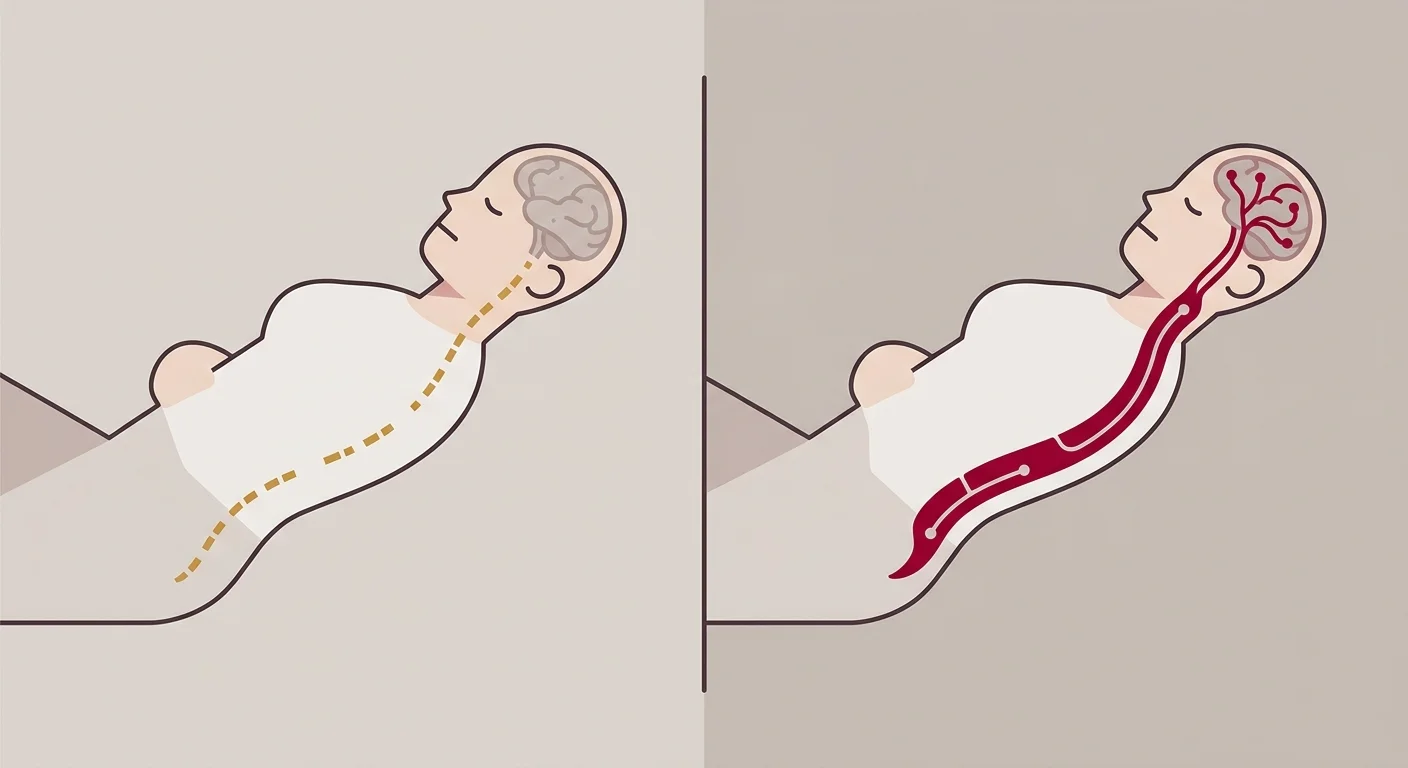
Rest is real advice. It's just not complete advice. And the gap between those two things is where people stay stuck for months.
The standard recovery toolkit looks reasonable on paper. Sleep more. Breathe deeply. Reduce obligations. Take it easy.
Every one of those tools works on the demand side of stress — the psychological pressure, the mental load. None of them reaches the structural side. The physical restrictions inside the spine that are actively keeping the nervous system in sympathetic dominance don't care how well you've managed your calendar.
That's the real problem. It's not that people aren't resting correctly. It's that rest is a passive act — and the conditions locking the nervous system in overdrive aren't passive conditions. They're structural ones.
Why Passive Rest Doesn't Reach the Root
Passive rest doesn't reverse a physical spinal joint restriction. That sentence sounds simple. The implication is anything but.
Here's what's actually happening. When a joint is restricted — not moving the way it's designed to move — the mechanoreceptors in that joint send altered signals up into the central nervous system. And the central nervous system doesn't interpret altered input charitably. It reads it as threat.
So the sympathetic state doesn't wind down during sleep. Not when those signals are still firing. You're resting the output. The input is still running at full volume.
It's why people tracking signs of nervous system chronic overload — disrupted sleep, persistent tension, flare-ups that seem to come from nowhere — report the same pattern: rest helps for a day, maybe two, then everything floods back. The system wasn't reset. It was temporarily quieted while the structural source kept running underneath.
The Structural Layer Rest Cannot Access
The spine isn't a stack of bones. It's the physical housing for the nervous system's primary communication channel. Mechanical dysfunction anywhere along that channel changes what gets transmitted through it.
Restoring joint motion normalizes the nociceptive input reaching the brain. That lowers sympathetic activity. That's an active, mechanical process — not a passive one.
A weekend off doesn't perform it. A meditation session doesn't perform it. Deep breathing doesn't reach joint hypomobility that's keeping an altered signal running. The wiring is still interrupted whether the mind feels calm or not.
A tripped breaker doesn't reset because the room gets quiet. Someone has to physically flip it back.
Passive recovery is waiting in the dark. The breaker is still down.
| Recovery Method | What It Addresses | What It Misses | Effective For Structural Restriction |
|---|---|---|---|
| Sleep and rest | Reduces cognitive load and emotional reactivity | Does not reverse spinal joint restriction or normalize altered mechanoreceptor signals | No |
| Deep breathing and meditation | Lowers perceived stress and slows respiratory rate | Does not reach structural joint hypomobility keeping sympathetic tone elevated | No |
| Stretching and yoga | Increases muscular flexibility and promotes temporary relaxation | Does not restore motion to restricted spinal joints or correct disrupted afferent signaling | No |
| Massage therapy | Reduces muscular tension and promotes short-term parasympathetic response | Does not address the mechanical joint restriction driving altered nerve input at the source | No |
| Medication and pain management | Suppresses symptom output and reduces acute discomfort | Does not correct the structural conditions maintaining the pain loop or sympathetic dominance | No |
| Active spinal adjustment | Restores joint motion and normalizes nociceptive input to the central nervous system | Requires clinical assessment to identify the specific restrictions driving the patient's symptom pattern | Yes |
How Spinal Adjustments Interrupt the Stress Loop
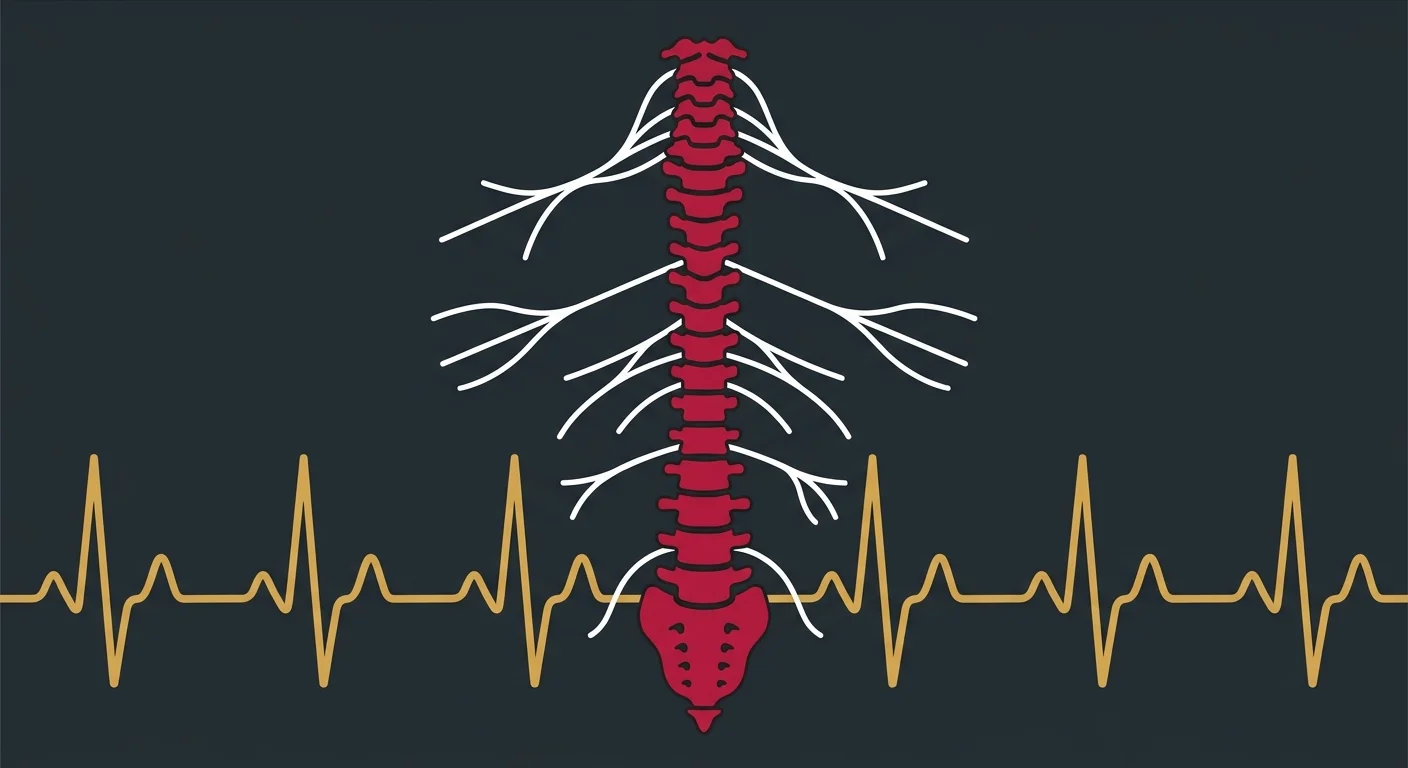
Rest quiets the output. It doesn't change the wiring. Those are two completely different things — and confusing them is exactly why people stay stuck.
Here's the thing: the gap is physical. When a joint can't move the way it's supposed to, the mechanoreceptors inside that joint send a distorted signal up the chain. Not a loud alarm. A low-grade, constant one. And that signal feeds directly into the central nervous system, keeping sympathetic tone elevated — regardless of how still the patient is lying.
You can't wait that out. The input is still running. The only thing that closes the gap is restoring the joint motion itself — which normalizes the signal, reduces nociceptive input to the brain, and gives the sympathetic system an actual reason to stand down. That's not a mindset shift. That's mechanics.
A chiropractic adjustment is the physical act of flipping the breaker back.
It targets the structural restriction directly. The downstream effect on the autonomic nervous system is measurable — not theoretical. That's why individualized chiropractic care works where passive approaches don't: it addresses the specific joints producing the altered afferent signal. Not a uniform sequence applied to every patient in the same order. The joint that's driving the problem — that's the one that gets addressed.
What Changes in the Nervous System After a Spinal Adjustment
When a restricted joint gets adjusted, the signal it's been sending to the central nervous system changes. That change is immediate. It reaches the brain before anything else has time to adapt.
Restoring joint motion normalizes nociceptive input to the brain. The brain stops receiving a constant low-grade distress signal from that joint.
So the sympathetic system — which was responding to that input — loses one of its structural reasons to stay elevated. What looked like a nervous system problem was, in part, a joint problem. And you can't meditate or sleep your way out of a mechanical restriction.
That's why the type of intervention matters. The muscle guarding around a restricted joint isn't anxiety manifesting physically. It's the nervous system responding to a disrupted mechanoreceptor signal — and what makes stress-related tension a biological problem, not just a mental one, is that it won't release until that signal changes.
Remove the restriction. Normalize the input. The downstream muscular tension changes — not because the patient's mindset shifted, but because the signal driving that muscular response changed at the source. That's a different conversation than breathing exercises and stress management. And it requires a different kind of fix.
Heart Rate Variability as a Measurable Marker of Autonomic Shift
Heart Rate Variability — HRV — measures the variation between consecutive heartbeats. Higher variability means the parasympathetic system is active. Lower variability means sympathetic dominance is running the show.
It's one of the most objective autonomic markers available. Not how relaxed the patient says they feel. Not a subjective report. An actual signal from the nervous system itself — showing exactly which branch is in control.
NIH-indexed studies show post-adjustment autonomic indicators shift significantly toward parasympathetic dominance. Parasympathetic activation markers increased within 15 minutes of mechanical spinal intervention.
That's not a slow adaptation over weeks of consistent care. That's a measurable shift in autonomic state inside a single session — before the patient has stood up from the table.
That's the circuit breaker flipping back.
HRV doesn't measure how relaxed someone feels walking out. It measures what the autonomic nervous system is actually doing. And what it shows is that targeted mechanical input at the joint level produces a measurable parasympathetic response.
Rest doesn't produce that response. Passive recovery doesn't produce that response. A structural intervention does — because the problem was structural from the start.
Who This Type of Care Is — and Isn't — For
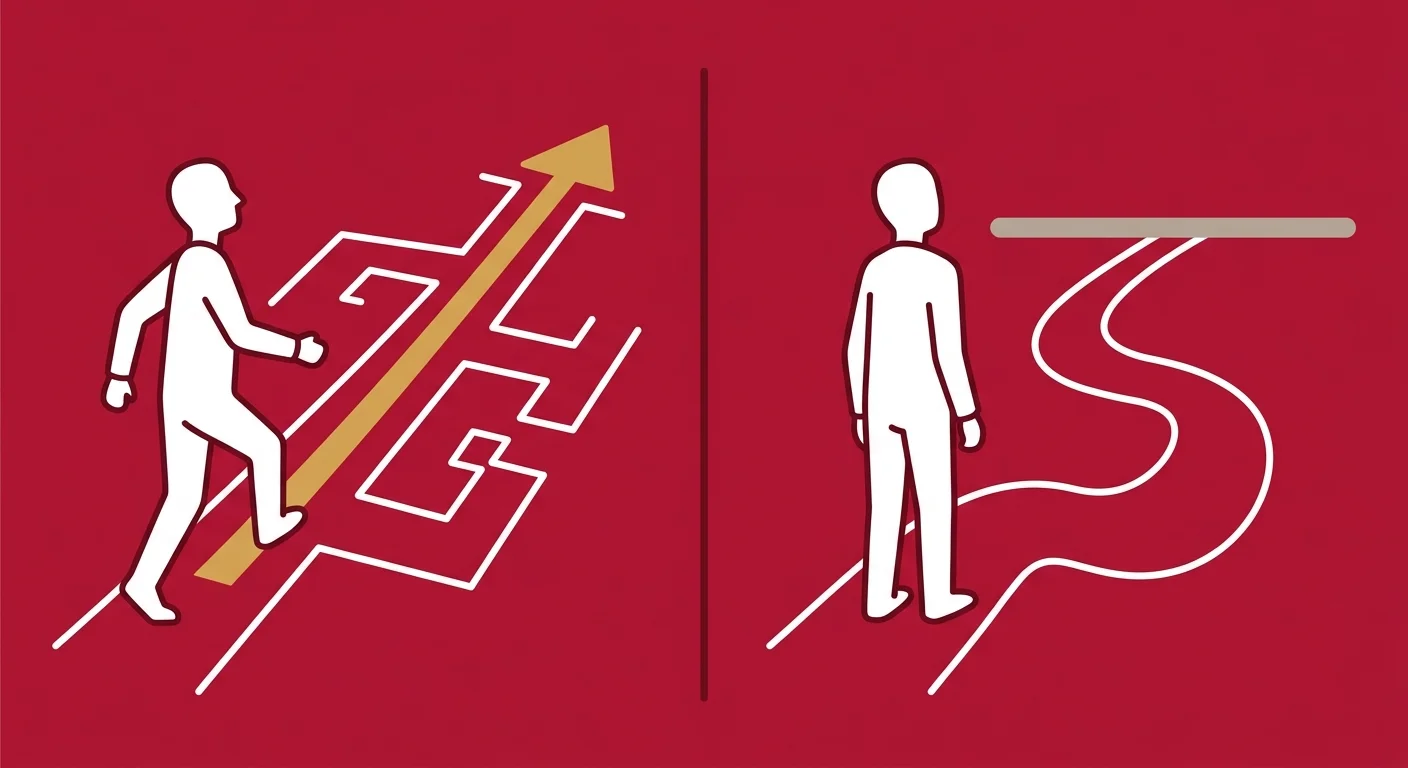
Not every patient who walks in exhausted is the right fit for this approach. Being clear about that upfront is a service — not a rejection.
Between 60% and 80% of primary care visits involve a stress-related component. That's not a fringe problem — that's most of the waiting room.
But a stress-driven symptom picture doesn't automatically make someone a candidate for structural nervous system care. The question is whether the mechanism is structural. If it is, passive approaches will keep producing partial, temporary results. If it isn't, this isn't the right entry point — and knowing that faster saves everyone time.
So let's name both plainly. The patient who gets real results from this approach looks a specific way. So does the one who doesn't.
The Patient Who Gets Real Results From This Approach
The right patient has already tried the obvious things. More sleep. Fewer commitments. Breathing exercises. Yoga. Supplements.
The symptoms kept coming back. Not because they were doing it wrong — because passive rest doesn't reverse a physical spinal joint restriction. The sympathetic response doesn't wind down during sleep when physical pain pathways are still firing.
They're resting correctly. The problem is underneath the rest.
They want to understand what's actually happening. Not a vague "you're stressed" explanation — a real answer about mechanism and why the symptoms keep returning.
They'll follow a care plan that evolves based on how they're responding. Not a standardized sequence handed over before the assessment is finished. They show up. They report what's working and what isn't. They give it a fair trial.
That's not a high bar. But it's the bar.
And critically — they're past the threshold where symptoms are just uncomfortable. Work performance is affected. Sleep architecture is broken. The activities that define their daily life are slipping.
That's the signal the nervous system isn't under temporary load. It's stuck.
That's the patient this approach is built for.
If You're Looking for a Shortcut, This Isn't It
Now the other side. And this part is just as important.
If you're expecting one visit to reset months or years of structural dysregulation, that expectation won't match clinical reality. A tripped breaker doesn't reset by sitting still. Flipping it back takes a targeted, sequential process — not a single event.
If the plan is to try two visits and see what happens — or to replicate a previous provider's exact sequence before an assessment is done — this isn't the model for that.
The assessment drives the care plan here. Not your history with someone else's protocol. That's not a policy. That's how the system works.
At Touch of Wellness Chiropractic, the care plan is built from what you actually report — and it changes when something isn't producing results. That's the standard. But it requires both parties to show up.
If the commitment isn't there to engage a real care plan — or if the goal is the cheapest or fastest option available — this practice isn't the right fit.
That's not a judgment. It's an honest read of what produces results and what doesn't.
Frequently Asked Questions About Nervous System Stress Recovery
Here's what keeps coming up: people rest. They sleep. They pull back on the load. The symptoms return anyway. That's not a mystery — it's a structural problem with a direct answer.
Every question below traces to the same root: a nervous system whose structural drivers haven't been touched. These aren't hypothetical scenarios. They're what surfaces when passive approaches have already been tried — and the symptoms came back anyway.
Why doesn't sleeping or lying down heal a stressed nervous system?
Sleep doesn't reverse a physical spinal joint restriction. That's the part the standard explanation skips.
When restricted joints are sending altered afferent signals to the central nervous system, those signals don't pause because the body is horizontal. The sympathetic response stays elevated during sleep when physical pain pathways are still firing. The nervous system keeps receiving the same low-grade threat input — at 2 a.m., at 6 a.m., at noon — regardless of how long you've been still.
Rest is necessary. It's just not sufficient when the structural driver hasn't been addressed. You're quieting the room. The signal is still running.
What is the difference between passive rest and active nervous system recovery?
Passive rest is stillness. Active recovery is intervention. Those aren't the same thing.
Sleep and relaxation give the body a pause. But they don't change what the nervous system is receiving as input. If restricted joints are sending altered signals to the brain, the sympathetic system responds to those signals around the clock. Rest doesn't interrupt that loop. It runs the loop in a quieter room.
A chiropractic adjustment restores joint motion. That normalizes nociceptive input to the brain. The sympathetic system loses a structural reason to stay elevated — and the autonomic shift that follows is measurable. Post-adjustment indicators show a statistically significant move toward parasympathetic dominance. Parasympathetic activation markers increase within 15 minutes of mechanical spinal intervention.
That's the gap between waiting for something to change and actually changing it.
How do spinal misalignments keep the nervous system in a state of fight-or-flight?
Joint hypomobility alters the signals your mechanoreceptors send to the central nervous system. The brain reads altered input and responds — it doesn't know the difference between a predator and a restricted spinal joint. Both register as threat.
So cortisol stays elevated. Arousal stays elevated. The body stays defended. Over 75% of bodily systems are influenced by autonomic nervous system imbalance during chronic stress states. That's not a narrow effect. That's a system-wide dysregulation driven by an input that hasn't changed.
When the restriction is resolved and normal joint motion is restored, nociceptive input to the brain normalizes. The sympathetic system loses a structural trigger. The fight-or-flight response doesn't need to be talked down — it loses the signal that was sustaining it.
What are the physical signs that my nervous system is chronically overloaded?
Chronic nervous system overload doesn't stay in the nervous system. It shows up everywhere — and rarely with an obvious single cause.
The pattern is consistent: fatigue that sleep doesn't touch, muscle tension that returns no matter how much you stretch, headaches that track with stress load, difficulty concentrating, and that specific combination of wired and exhausted at the same time. Disrupted digestion. Sleep that's technically long enough but doesn't feel restorative.
But discomfort isn't the threshold that matters. Disruption is. When symptoms start affecting work performance, sleep quality, or your ability to show up for what defines your day — the nervous system isn't under temporary load anymore. It's stuck. And that's the signal passive approaches aren't reaching the level where the problem actually lives.
Can chiropractic care help recalibrate my autonomic nervous system?
Yes — and the mechanism isn't theoretical. It's measurable.
Spinal adjustments directly modulate the autonomic nervous system. Post-adjustment indicators show a statistically significant shift toward parasympathetic dominance. Parasympathetic activation markers increase within 15 minutes of mechanical spinal intervention. That's a detectable autonomic state change within a single session — not a slow adaptation that takes weeks to show up.
What drives the shift: the adjusted joint stops sending altered afferent signals to the brain. The sympathetic system loses a structural reason to stay elevated. The parasympathetic system gains ground.
That's recalibration — the direct downstream effect of resolving the restriction that was producing the altered signal.
How long does it take to see results from chiropractic care for nervous system stress?
Any provider who hands you a timeline before finishing the assessment is working from a billing calendar — not your clinical picture. That's not a care plan. That's a template.
Here's what's actually accurate: the autonomic shift from a targeted adjustment is measurable within a single session. The structural drivers of chronic overload — restricted joints sending altered signals to the central nervous system — don't resolve in one visit when they've been building for months. The care plan reflects what's happening in your body, not a standardized sequence pulled off a shelf.
At Touch of Wellness Chiropractic, the plan is built from what you report — and it changes when something isn't producing results. What you can reasonably expect: a clear picture of what's driving your symptoms after the assessment, a care plan with an actual explanation of why, and honest communication when the approach needs to shift. Timelines follow clinical response. Not the other way around.
The Circuit Breaker Has to Be Reset
The circuit breaker didn't trip because you weren't resting enough.
It tripped because structural restriction in the spine was feeding a continuous altered signal into your central nervous system. Stillness doesn't change what that signal is doing.
Passive recovery is waiting in the dark. The breaker is still down.
Flipping it back is a physical act. That's not a motivational metaphor — it's a description of mechanism.
The autonomic nervous system doesn't shift toward parasympathetic dominance because you decide to calm down. It shifts when the structural input driving sympathetic tone is removed. A targeted spinal adjustment at the specific joint producing altered nerve signals is what performs that removal.
Rest doesn't do it. Breathing doesn't do it. Waiting doesn't do it.
If your nervous system has been stuck in chronic overload — and rest keeps delivering the same partial, temporary result — the problem isn't your ability to relax. The wiring underneath hasn't been touched.
At Touch of Wellness Chiropractic, that's where the assessment starts. Not with a protocol. Not with a standardized sequence. With what's actually driving the signal.
The breaker has to be reset. And a tripped breaker doesn't reset itself by sitting still.
Rest didn't fix it. That's not a character flaw — it's a structural problem that passive recovery can't reach. If you want to know what's actually keeping your nervous system stuck, book a diagnostic evaluation.
Copyright Touch of Wellness Chiropractic 2026
1101 W Jackson St, Suite A Morton, IL 61550
Web Design by iTech Valet