
(309) 321-8412 | 1101 W Jackson St, Suite A, Morton, IL 61550
(309) 321-8412 | 1101 W Jackson St, Suite A, Morton, IL 61550
Questions to Ask Your Chiropractor About Nervous System Health
The questions you ask your chiropractor before care begins reveal more than you think. They force a provider to justify their approach beyond a cookie-cutter protocol. They show whether you'll get an individualized systems analysis or a protocol pulled from a filing cabinet.
The nervous system controls and regulates every cell, tissue, and organ in the body. Disruptions at the spinal level affect far more than just pain. A qualified chiropractor assesses how your spine and nervous system function together, identifies the root cause, and builds a care plan from what you actually report — not from a diagnosis code.
Chiropractic adjustments influence the nervous system through measurable effects. Research shows altered central pain processing and changes in motor neuron excitability. Adjustments can affect the autonomic nervous system, which controls involuntary functions like heart rate and digestion. The impact extends beyond musculoskeletal pain into systemic nervous system regulation.
The diagnostic conversation is the first clinical test. A chiropractor who answers with vague reassurances or predetermined timelines is signaling a template-based model. A chiropractor who walks you through individualized assessment and adaptive care planning is signaling systems-based clinical thinking. That difference determines whether you escape the cycle of temporary relief or stay locked in it.
Doctors of Chiropractic complete a minimum of 4,200 hours of classroom, lab, and clinical experience. The World Health Organization provides global guidelines for basic training and safety in chiropractic to ensure a standard of care. Credential rigor establishes baseline competence. The diagnostic conversation establishes whether that competence translates into individualized nervous system care.
Last Updated: May 16, 2026
- • Why Most Patients Never Ask These Questions
- • The Cookie-Cutter Protocol Problem
-
• The 7 Questions That Expose a Cookie-Cutter Practice
- • How will you assess my nervous system specifically?
- • What's driving my symptoms at the root cause level?
- • How will my care plan be built from what I report?
- • What happens if the first approach doesn't produce results?
- • How long should I expect to be in care?
- • How will we track progress beyond pain reduction?
- • What's your clinical background in nervous system care?
- • What the Answers Tell You
-
• Frequently Asked Questions
- • How can a chiropractic adjustment influence my nervous system beyond just back pain?
- • What's the difference between treating symptoms and addressing the root cause of my nervous system issues?
- • My medical doctor says my symptoms are 'unexplained.' How can a chiropractor's assessment differ?
- • If I start a care plan, how will we track the progress of my nervous system's health?
- • What signs indicate that a chiropractor is using a cookie-cutter protocol instead of an individualized plan?
- • Where the Right Questions Lead
Why Most Patients Never Ask These Questions

Most patients walk into a chiropractic office expecting to be told what's wrong. Not to ask.
That expectation was built by decades of traditional medical conditioning. The provider talks. The patient listens.
And the intake process reinforces it. You fill out a form. You point to where it hurts. The chiropractor runs their protocol. Nobody prompts you to ask about their assessment process or challenge their timeline.
Here's the thing: a lot of practices don't want you to ask.
The cookie-cutter model depends on patient passivity. If you start asking how they'll assess your nervous system specifically, or what happens if the first approach doesn't work, you're forcing them to justify a process they haven't customized. That's uncomfortable for a provider running the same sequence on everyone.
So the entire intake experience — rushed, form-driven, no space for questions — moves you into treatment before the conversation gets specific.
But explanation-driven care requires the opposite. It requires you to speak first.
The questions you ask before care begins reveal whether the provider can explain why they're doing what they're doing. Or whether they're just running a protocol because that's what worked for the last twenty patients.
If asking a basic question about root cause analysis or progress tracking makes a chiropractor defensive, that's the clearest signal you'll get that their model isn't individualized.
The Cookie-Cutter Protocol Problem
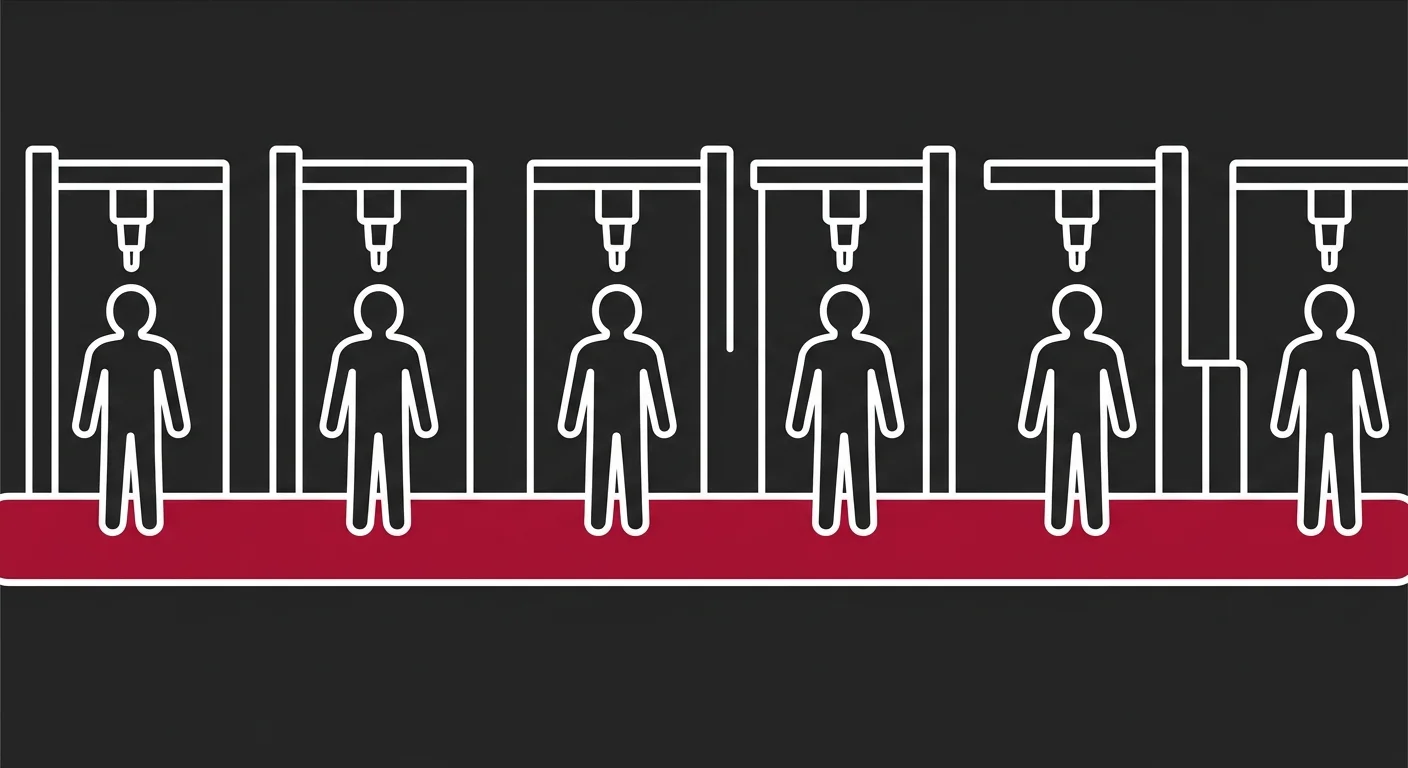
Here's why those questions don't get asked.
Most offices run a protocol that doesn't need your input.
That's the first red flag.
A cookie-cutter protocol is an adjustment sequence applied to every patient regardless of what they report, how they respond, or whether their symptoms change.
Walk in with nerve pain, walk in with a headache, walk in with sciatica — you get the same treatment map.
Your feedback doesn't matter. The protocol doesn't adapt. It just repeats.
What a Cookie-Cutter Protocol Looks Like
You fill out an intake form that asks where it hurts.
The chiropractor runs an exam that looks the same for every patient.
Then you're handed a care plan — a predetermined number of visits over a set timeframe — before the assessment is even complete.
The adjustments themselves follow a fixed sequence. Same spinal segments. Same technique. Same frequency.
Whether you report improvement after the first visit or no change at all, the protocol doesn't shift.
The plan was written before you walked in the door.
And here's how you know it's a template: if you ask what happens when the first approach doesn't work, the answer is vague.
If you ask how progress will be tracked beyond pain scores, there's no clear answer.
The protocol assumes one-size-fits-all. That's easier to scale than individualized chiropractic care built from what you actually report.
Why It Fails Your Nervous System
The nervous system controls and regulates every cell, tissue, and organ in the body. Dysfunction shows up differently in every patient.
One person's spinal misalignment produces radiating leg pain. Another's produces headaches and digestive issues. A third feels nothing for weeks, then can't turn their neck.
That's not randomness. That's biology.
A protocol that ignores those differences isn't treating your nervous system. It's treating a diagnosis code.
Spinal manipulation can elicit neurophysiological effects, including altered central pain processing and reflex muscle responses. But those effects depend on where the adjustment is applied, how the tissue responds, and whether the nervous system is in a state to integrate the change.
A cookie-cutter sequence doesn't account for any of that.
So you get temporary relief — most protocols hit something that helps short-term — but the root cause stays untouched.
The pain comes back. You're told to keep coming.
And the cycle repeats. Not because the protocol was designed to adapt. It was designed to be efficient for the practice, not effective for your nervous system.
| Protocol Approach | What It Assumes | What It Ignores |
|---|---|---|
| Same adjustment sequence for every patient | All spinal dysfunction presents the same way | Individual nervous system response patterns |
| Predetermined visit count before assessment is complete | Recovery timelines are predictable and uniform | Symptom variability and unpredictable healing trajectories |
| Fixed technique regardless of tissue response | One method works for all conditions | Tissue state, inflammation levels, and nervous system readiness |
| No plan adjustment when progress stalls | The protocol will eventually work if repeated | The need to stop, reassess, and pivot when something isn't producing results |
| Progress tracked by pain scores alone | Pain reduction equals nervous system healing | Functional restoration, nervous system regulation, and root cause resolution |
The 7 Questions That Expose a Cookie-Cutter Practice

Here are the questions that force a provider to either show you individualized thinking or reveal they're running a template.
These aren't confrontational. They're diagnostic.
A chiropractor who answers with specifics — real assessment steps, adaptive care planning, measurable progress markers — is showing you systems-based clinical thinking. A chiropractor who dodges, generalizes, or hands you a predetermined timeline is showing you a protocol.
The difference shows up the second you ask.
How will you assess my nervous system specifically?
A cookie-cutter practice runs the same spinal exam on everyone.
They check range of motion. They palpate a few vertebrae. Maybe they take an X-ray. Then they tell you what's wrong based on where you pointed on the intake form.
An individualized assessment asks how your nervous system is functioning as a whole.
That includes autonomic nervous system evaluation — heart rate variability, stress response patterns, sleep disruption. It includes motor control testing to see how your brain is communicating with your muscles.
It includes a detailed symptom history that maps when things started, what makes them worse, and what patterns you've noticed that your primary care doctor dismissed.
If the answer to this question is 'we'll do a full spinal exam,' that's not specific enough.
Ask what nervous system markers they're tracking. Ask how they differentiate between structural misalignment and nervous system dysfunction.
If they can't explain the difference, they're treating your spine in isolation — not the biology of a chiropractic adjustment as a neurophysiological intervention.
What's driving my symptoms at the root cause level?
Most chiropractors will tell you what's wrong with your spine. Subluxation. Misalignment. Disc degeneration.
That's not the root cause. That's the structural finding.
The root cause is why that structural issue developed in the first place. And why it's producing your specific symptoms now.
Spinal manipulation can alter central pain processing and reflex muscle responses, but only if the adjustment addresses the actual source of nervous system disruption.
A protocol that treats the X-ray finding instead of the patient's clinical picture misses the cause entirely.
If the answer to this question is a diagnosis — sciatica, herniated disc, degenerative joint disease — without an explanation of what's driving it, you're about to get symptom management.
Not root cause resolution.
The provider who can connect your symptoms to a nervous system failure pattern is the one who can actually address it.
How will my care plan be built from what I report?
A template-based practice builds your care plan from a diagnosis code and a reimbursement schedule.
You get the standard package. Three visits a week for four weeks, then twice a week for eight weeks, then maintenance forever.
An individualized practice builds your care plan from what you report during the first few visits.
How your body responded to the initial adjustment. Whether your symptoms shifted, stayed the same, or got worse. What changed in your sleep, your stress levels, your ability to move without guarding.
That feedback drives every decision about frequency, technique, and timeline.
If the answer to this question is 'we'll start with a standard treatment plan and adjust as needed,' ask when and how those adjustments happen.
If there's no clear trigger — no specific markers that cause the plan to change — you're not getting adaptive care.
You're getting a protocol with wiggle room built in to keep you coming back.
What happens if the first approach doesn't produce results?
This is the question that separates competent providers from protocol-runners.
A chiropractor running a template will keep doing the same thing and tell you it takes time. A chiropractor practicing individualized care will stop, reassess, and pivot.
The willingness to change course when something isn't working is the marker of clinical competence.
If a treatment isn't producing results after a reasonable trial, continuing it anyway is the definition of failure. Not persistence. Failure.
If the answer to this question is 'sometimes it takes longer than expected,' that's a red flag.
The correct answer includes a specific timeline for reassessment and a named alternative approach.
No chiropractor can guarantee results. But every chiropractor should know when to stop repeating what isn't working.
How long should I expect to be in care?
A fear-based practice tells you on the first visit you'll need months or years of care.
Before the assessment is complete. Before they know how your nervous system responds. Before they've tracked any progress markers.
An honest practice gives you a realistic estimate based on your clinical picture, then updates it as your body responds.
Some patients need a few weeks of intensive care to break the pain cycle. Others need months of intermittent adjustments to retrain nervous system patterns.
The timeline depends on what you're dealing with — not on what the practice needs to bill.
If the answer to this question is a number — six months, a year, ongoing maintenance — before the provider has assessed your progress, you're being sold a package.
The correct answer is 'it depends on how your nervous system responds, and here's how we'll know when you're done.'
How will we track progress beyond pain reduction?
Pain is a symptom. It's not the only marker of nervous system health.
Patients with unexplained nerve symptoms often report that their pain reduced but nothing else changed — they're still exhausted, still can't sleep, still dealing with digestive issues or brain fog.
A protocol-based practice tracks pain on a 1-10 scale and calls it progress.
An individualized practice tracks autonomic function, sleep quality, stress recovery, motor control, and how long improvements last between visits.
Those markers tell you whether the nervous system is actually regulating better — or whether you're just masking symptoms.
If the answer to this question is 'we'll check in on your pain levels,' that's not enough.
Ask what objective measures they're using. Ask how they'll know when your nervous system has stabilized, not just when your pain has temporarily dropped.
If they don't have an answer, they're not tracking the thing they claim to be treating.
What's your clinical background in nervous system care?
All Doctors of Chiropractic complete a minimum of 4,200 hours of classroom, lab, and clinical experience.
That's the baseline. What separates providers is what they've done with that training and how they think about the nervous system clinically.
A provider with an extensive cross-species neurological framework brings a whole-body biological systems lens that most chiropractors don't have. That background—grounded in real-world clinical response data—shapes how they assess root cause, how they interpret patient feedback, and how they adapt care when the first approach doesn't work.
It's not just credentials. It's clinical framework.
If the answer to this question is just a list of certifications, dig deeper.
Ask how their background influences their assessment process. Ask what clinical lens they use to evaluate nervous system dysfunction.
The provider who can connect their training to their methodology is the one who's actually using it to individualize care.
| Question Category | What It Tests | Red Flag Response |
|---|---|---|
| How will you assess my nervous system specifically? | Tests whether the provider evaluates the nervous system as a whole or just runs a standard spinal exam on everyone | 'We'll do a full spinal exam.' No mention of autonomic markers, motor control testing, or symptom pattern mapping. |
| What's driving my symptoms at the root cause level? | Tests whether the provider explains the underlying nervous system failure pattern or just names the structural finding | A diagnosis without an explanation — sciatica, herniated disc, degenerative joint disease — with no connection to why it developed or why it's producing your specific symptoms |
| How will my care plan be built from what I report? | Tests whether the plan adapts based on your body's feedback or follows a predetermined reimbursement schedule | 'We'll start with a standard treatment plan and adjust as needed.' No specific markers or triggers that would cause the plan to change. |
| What happens if the first approach doesn't produce results? | Tests whether the provider has a named alternative approach and a reassessment timeline or just keeps repeating the same protocol | 'Sometimes it takes longer than expected.' No specific reassessment trigger or alternative technique named. |
| How long should I expect to be in care? | Tests whether the timeline is based on your clinical response or on a predetermined package sold before assessment is complete | A specific number — six months, a year, ongoing maintenance — given before the provider has tracked any progress markers |
| How will we track progress beyond pain reduction? | Tests whether the provider measures nervous system regulation or just tracks pain on a scale | 'We'll check in on your pain levels.' No mention of autonomic function, sleep quality, stress recovery, motor control, or how long improvements last between visits. |
| What's your clinical background in nervous system care? | Tests whether the provider has a clinical framework that shapes their assessment and care decisions or just lists certifications | A list of credentials with no explanation of how their training influences their methodology or individualized care approach |
What the Answers Tell You
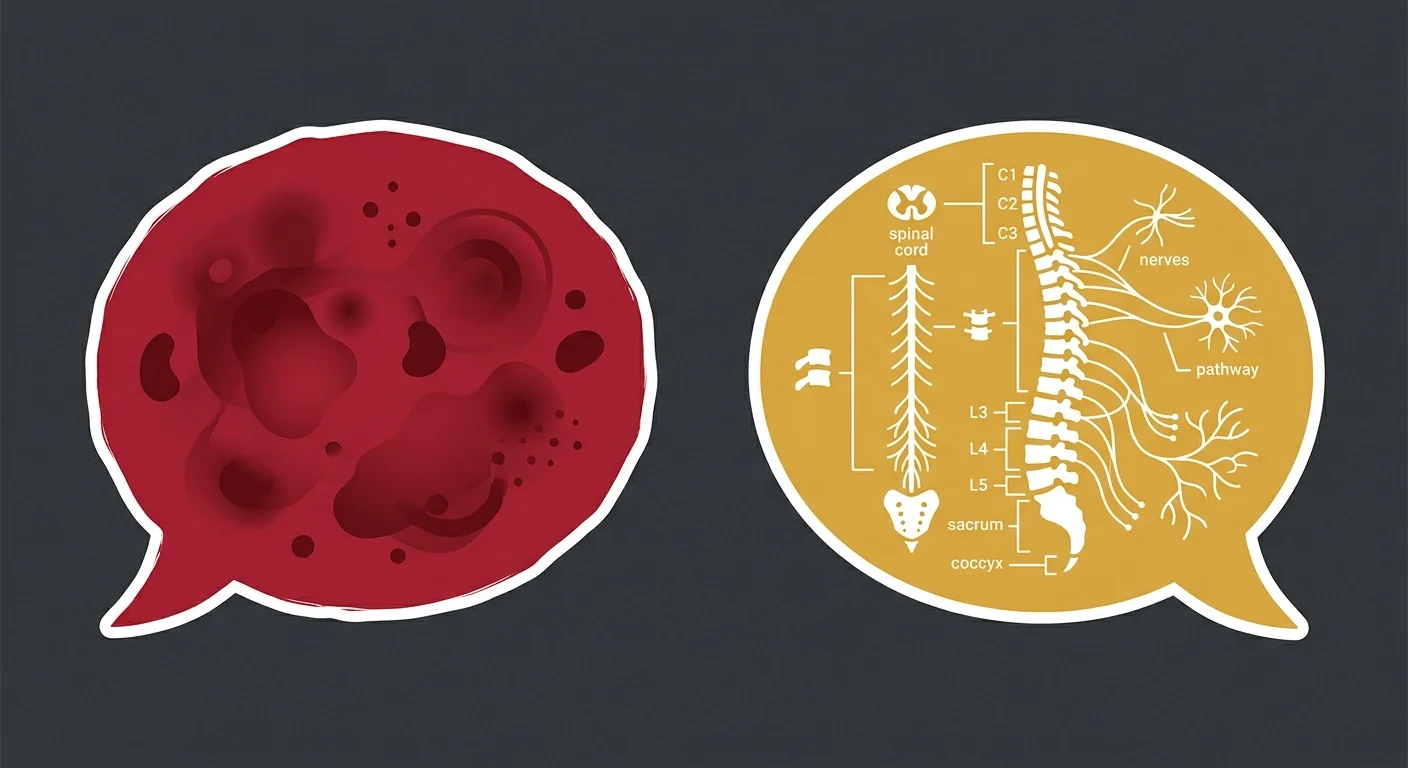
Questions are half the work. The other half is knowing what a real answer sounds like.
A chiropractor running a cookie-cutter protocol has learned to sound individualized without actually being individualized. They use patient-centered language. They nod. They say things like 'we'll tailor your care to your specific needs.'
But listen to the content — not the tone — and you hear templates.
Here's how you tell the difference.
Vague Timeline Deflections
'It depends on how you respond.'
'Every patient is different.'
'We'll know more as we go.'
Those aren't individualized answers. They're avoidance.
A provider who doesn't give you a realistic estimate based on your clinical picture — even a rough one — either doesn't know what they're looking at or doesn't want to commit to a number that might be shorter than their billing cycle needs.
An honest answer includes context. 'Based on what you've described and what I'm seeing in your assessment, most patients with similar presentations need four to six weeks of intensive care to break the pain cycle, then we reassess to see if we continue or taper. That timeline can shift depending on how your nervous system responds in the first two weeks.'
That's specific. It's grounded in clinical experience.
And it builds in checkpoints so you're not locked into a plan before your body has had a chance to show what it needs.
No timeline at all? That's incompetence. A timeline before the assessment is finished? That's a billing calendar, not a care plan.
Protocol-First Language
'We'll start with our standard protocol and adjust from there.'
'Most patients do well with three visits a week for the first month.'
'We use a proven system that works for the majority of our patients.'
Those sentences all say the same thing: your care is being built from a filing cabinet, not from your nervous system.
The protocol exists before you walk in the door. Your assessment just determines which version of the protocol you get assigned.
Protocol-first language assumes your body will fit the template. When it doesn't — when your symptoms don't follow the expected arc, when the standard frequency doesn't produce results, when side effects show up — the provider keeps running the protocol anyway.
Because that's all they know.
The nervous system controls and regulates every cell, tissue, and organ in the body. A protocol that ignores patient feedback isn't treating the nervous system.
It's treating the diagnosis code.
Genuine Individualized Responses
'Here's what I'm seeing in your assessment, and here's what it tells me about how your nervous system is compensating.'
'Your symptoms suggest autonomic dysfunction on top of the structural issue, so we'll address both — and if one pathway isn't producing change within two weeks, we'll pivot to advanced therapy modalities or refer you for co-management.'
'I'll know we're on the right track if your sleep improves and your pain starts shifting location before it reduces — that's a sign your nervous system is starting to regulate differently. If that doesn't happen by visit four, we stop and reassess.'
Those answers show systems thinking. They're built from what you reported, not from what the practice bills.
They name the markers that would trigger a change.
And they acknowledge uncertainty without hiding behind vague reassurances.
A provider who can explain their clinical reasoning in plain language — and who names the conditions under which they'd stop and try something else — is treating your nervous system as a biological system, not a reimbursement category.
That's the difference.
| Answer Type | Example Language | What It Reveals |
|---|---|---|
| The Vague Deflection | "It depends on how you respond." "Every patient is different." "We'll know more as we go." | The provider either doesn't know what they're looking at or is avoiding committing to a timeline that might be shorter than their billing cycle needs. No clinical framework visible. |
| The Protocol-First Answer | "We'll start with our standard protocol and adjust from there." "Most patients do well with three visits a week for the first month." | Your care is being built from a filing cabinet, not from your nervous system. The protocol exists before you walk in the door. Your assessment just determines which version you get assigned. |
| The Fear-Based Timeline | "You'll need six months of care to see real results." "This is a long-term commitment." (Said before assessment is complete.) | You're being sold a package designed to keep you coming back, not a care plan built from your clinical picture. The number serves the practice, not your recovery. |
| The Pain-Only Tracker | "We'll check in on your pain levels each visit." "Rate your pain on a scale of 1-10." | The provider is tracking a symptom, not the nervous system. No autonomic markers, no sleep quality, no stress recovery, no motor control assessment. You're being treated for pain, not nervous system dysfunction. |
| The Credential List | "I'm certified in [technique name]." "I graduated from [school name]." (No connection to methodology.) | Certifications without clinical framework. The provider can't explain how their training shapes their assessment process or why their background matters to your care. Templates dressed up as expertise. |
| The Systems-Based Answer | "Here's what I'm seeing in your assessment, and here's what it tells me about how your nervous system is compensating." "If your sleep improves and pain shifts location before it reduces by visit four, we're on the right track. If not, we stop and reassess." | Clinical reasoning grounded in patient-specific feedback. Named markers for progress and named conditions that would trigger a pivot. The provider is thinking about your nervous system as a biological system, not a reimbursement category. |
| The Honest Estimate | "Based on what you've described, most patients with similar presentations need four to six weeks of intensive care to break the pain cycle, then we reassess. That timeline can shift depending on how your nervous system responds in the first two weeks." | Realistic, grounded in clinical experience, built in checkpoints. The timeline is an estimate, not a commitment. The provider acknowledges uncertainty without hiding behind vague reassurances. |
Frequently Asked Questions
Once you've asked the first set of questions, a few more naturally come up.
These are the ones patients ask after they've realized the assessment is the gate.
You're not just gathering information at this point.
You're testing whether the provider can think beyond the template.
How can a chiropractic adjustment influence my nervous system beyond just back pain?
Research shows that chiropractic adjustments can influence the autonomic nervous system. That's the system controlling heart rate, digestion, and every involuntary function your body runs in the background.
When spinal dysfunction disrupts nervous system signaling, your body compensates. You adapt around the problem.
That compensation shows up as fatigue, poor sleep, digestive issues, brain fog. Symptoms that seem unrelated to back pain but stem from the same root.
Spinal manipulation can alter central pain processing and reflex muscle responses. It's not just moving bones. It's changing how your nervous system interprets input and regulates output.
A chiropractor treating only back pain misses that. A chiropractor assessing nervous system function addresses why the pain exists in the first place.
What's the difference between treating symptoms and addressing the root cause of my nervous system issues?
Treating symptoms means chasing the thing you feel.
Pain medication, muscle relaxers, temporary adjustments that make the area feel better for a few days. The symptom reduces. Nothing else changes. You're back in the same cycle two weeks later.
Addressing the root cause means identifying what's driving the symptom at the nervous system level. Spinal dysfunction, autonomic imbalance, compensation patterns your body built to protect itself.
The care plan targets the mechanism, not just the sensation.
When the root cause resolves, the symptoms resolve with it. And they stay resolved.
My medical doctor says my symptoms are 'unexplained.' How can a chiropractor's assessment differ?
Your medical doctor is trained to diagnose disease.
If your symptoms don't fit a diagnosable pathology, they call it unexplained. That doesn't mean it's not real. It means the lens they're using doesn't see it.
A chiropractor assesses how the nervous system controls and regulates every cell, tissue, and organ in the body. When that system is disrupted, you experience symptoms that traditional medicine can't categorize.
Nervous system dysfunction doesn't always show up on imaging or blood work. It shows up in how your body responds to stress, movement, and recovery.
A chiropractic assessment looks at spinal mechanics, autonomic function, and compensation patterns.
Different lens. Different answers.
If I start a care plan, how will we track the progress of my nervous system's health?
Pain reduction is one marker. It's not the only one.
A practice tracking only pain is measuring symptoms, not nervous system function.
Progress tracking should include sleep quality, stress recovery, how long improvements last between visits, changes in autonomic symptoms like digestion or energy levels. And objective measures like motor control and reflex response.
Those markers tell you whether your nervous system is regulating better. Or whether you're just masking the problem.
If your provider doesn't have a plan for tracking those, they're not treating what they claim to be treating.
What signs indicate that a chiropractor is using a cookie-cutter protocol instead of an individualized plan?
Clear indicators include being handed a pre-written 6-to-12-month treatment timeline before a comprehensive examination is even finished, receiving the exact same spinal adjustment sequence over consecutive visits without real-time clinical evaluation, tracking progress exclusively through subjective 1-10 pain charts while ignoring autonomic markers like sleep and stress recovery, and experiencing defensive deflections when asking a provider to explain their underlying clinical reasoning.
Where the Right Questions Lead
The diagnostic conversation is the first clinical test.
A chiropractor running a cookie-cutter protocol gives you smooth answers that sound individualized but contain zero specifics. A chiropractor practicing root-cause care explains their clinical reasoning in plain language and names the exact markers that trigger a change in approach.
The difference shows up in the first conversation.
And it determines whether you spend the next six months chasing temporary relief or actually restoring function.
Your nervous system runs the whole operation.
When it's disrupted, nothing works right. You feel that every day.
What you don't need is another provider who runs the same protocol and calls it care. What you need is someone who assesses what's actually driving your symptoms, builds a plan from what you report, and changes course when something isn't working.
That starts with asking the right questions.
Because the provider who can't answer them clearly isn't the one who's going to fix what's broken.
About Dr. Karen Hannah, DC: Her clinical lens is built on a cross-species neurological framework. After witnessing a paralyzed kitten recover complete motor function in four days through spinal recalibration, she recognized that the nervous system acts as a live operating system—demanding a whole-body biological systems analysis applied to every case that walks through the door.
That framework shapes how she assesses root cause. How she interprets patient feedback. How she adapts care when the first approach doesn't produce results.
It's not credentials. It's systems thinking applied to every patient who walks through the door.
Individualized care is the clinical standard here. Not a marketing claim.
If you've been dismissed, told to wait and see, or handed a prolonged treatment plan that never explained the why — restoring nervous system function is a different conversation.
Unexplained doesn't mean untreatable.
It means no one's looked hard enough yet.
The diagnostic conversation is the first clinical test. The questions you ask reveal whether the provider you're sitting across from is the one who will pass it.
If you've been dismissed, told your symptoms are unexplained, or handed a protocol that helped for a week and then stopped — that's worth a real conversation. An assessment at Touch of Wellness Chiropractic starts with what you actually report. Not a filing cabinet protocol. Not a prolonged plan written before your evaluation is finished. If you're in Morton, Peoria, or the surrounding area and you want to know what's actually driving your symptoms — not what diagnosis code you fit into — see what an individualized nervous system assessment looks like. Unexplained doesn't mean untreatable. It means no one's asked the right questions yet.
Copyright Touch of Wellness Chiropractic 2026
1101 W Jackson St, Suite A Morton, IL 61550
Web Design by iTech Valet