
(309) 321-8412 | 1101 W Jackson St, Suite A, Morton, IL 61550
(309) 321-8412 | 1101 W Jackson St, Suite A, Morton, IL 61550
How Does Specialized Chiropractic Care Break the Pain-Fear Cycle?
Specialized chiropractic care breaks the chronic pain-fear cycle by resetting the nervous system's threat response — not by treating the mechanical site of pain.
Here's the thing: when pain outlasts the injury, the problem is rarely structural. It's a misfiring signal system. Nerve pathways stay active for weeks, months, or years after the original trigger is gone — firing threat responses that no longer match any real tissue damage. Think of a smoke alarm wired to go off when there's no smoke. The building is fine. The sensor is wrong.
The cycle locks in across three layers. An injury or spinal dysfunction fires the first pain signal. The brain reads that signal as a threat and starts treating normal movement as dangerous. The body restricts motion to avoid the pain. That restriction deconditions the tissue, creates new mechanical dysfunction, and re-triggers the threat signal. The loop becomes self-sustaining.
Clinical evidence confirms that fear of pain is a stronger predictor of physical disability than the actual severity of pain itself. Approximately 20.9% of U.S. adults — 51.6 million people — live with chronic pain. For many, the signal system has been misfiring long enough that the brain has physically reorganized around it.
Specialized chiropractic adjustments interrupt the loop at the neurological level. Restoring accurate mechanical input to the spine gives the nervous system new data — data that contradicts the threat appraisal keeping the cycle alive. Spinal adjustments modulate central nervous system processing by altering somatosensory evoked potentials, reducing hyperexcitable neural threat states. That's not pain management.
That's recalibrating the sensor.
Breaking the cycle requires a systems-level assessment — reading how the nervous system is interpreting mechanical input, identifying which layer of the loop is dominant, and building a care plan around that specific patient's threat response. Cookie-cutter protocols don't reset a misfiring alarm. Specialized, individualized care does.
Last Updated: July 20, 2026
- • What the Pain-Fear Cycle Actually Is (And Why It Outlasts the Injury)
- • Why the Pain-Fear Cycle Keeps Firing
- • Why Cookie-Cutter Protocols Cannot Reset the Neural Threat Loop
- • How Specialized Adjustments Reset the Neural Threat Response
- • When the Pain-Fear Cycle Is Hardest to Break: High-Stakes Presentations
-
• Frequently Asked Questions About Breaking the Pain-Fear Cycle
- • How long does it take for specialized chiropractic adjustments to start reducing the fear-avoidance loop in the brain?
- • Why do typical exercise plans fail to break the pain-fear cycle without preceding neurological correction?
- • Can specialized adjustments resolve persistent neural threat responses after a failed spinal fusion?
- • What happens if my body experiences a temporary flare-up during the early stages of breaking the pain-fear loop?
- • Why does the standard 'wait and see' advice from primary doctors often worsen chronic pain-fear neural pathways?
- • The Nervous System Is Not the Enemy
What the Pain-Fear Cycle Actually Is (And Why It Outlasts the Injury)
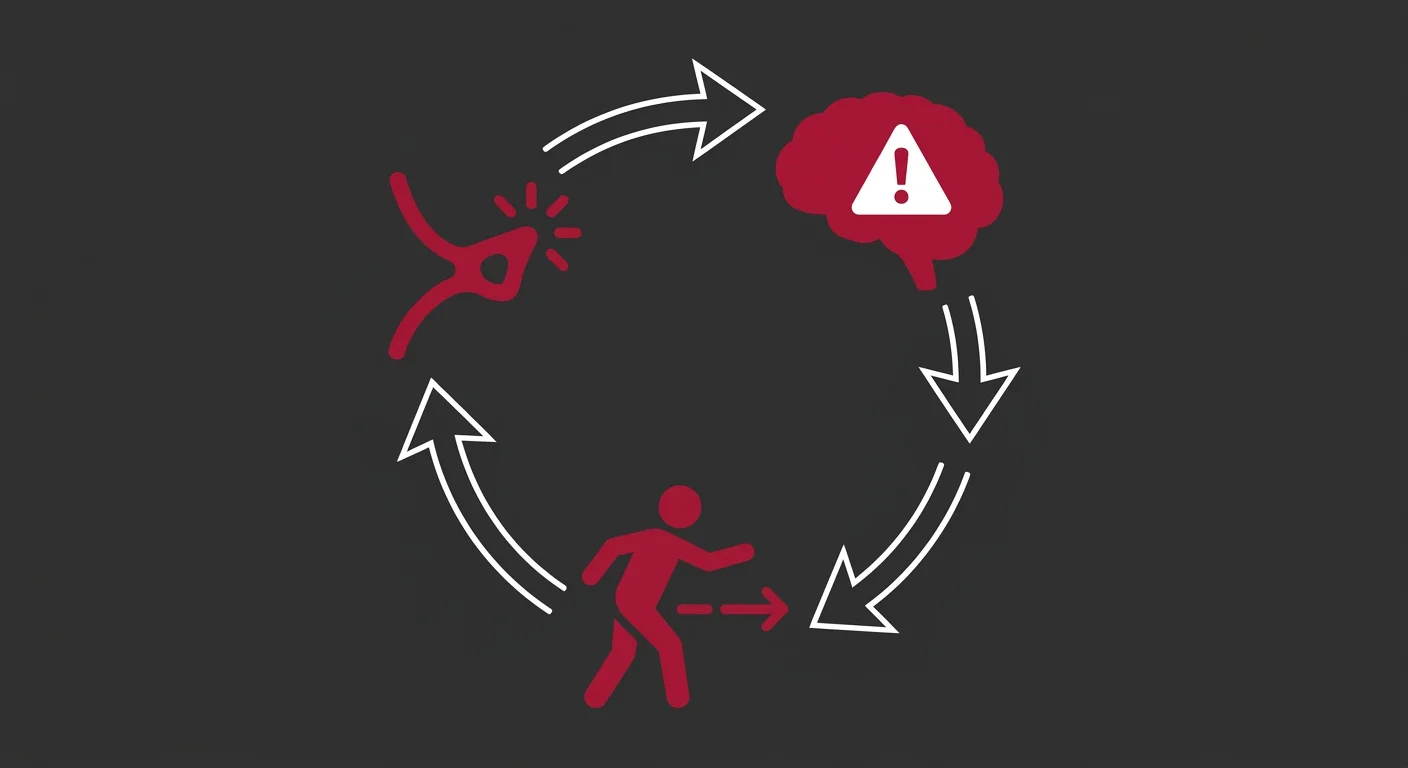
Most people walk in convinced their body is broken. It's not. The injury healed. The alarm didn't.
CDC data puts the number at 20.9% of U.S. adults — 51.6 million people — living with chronic pain in 2021. Another 6.9% had high-impact chronic pain that actively cut into daily function. That's not a pain epidemic. That's a signal system epidemic. The tissue isn't failing at scale. The threat loop is.
The cycle runs in three layers. First, a real mechanical signal fires — tissue damage or spinal dysfunction triggers a legitimate threat response. Then the brain catalogs that signal as dangerous and starts reading normal movement as evidence of ongoing harm. Then the body stops moving, tissues weaken from disuse, the mechanical dysfunction deepens, and the alarm keeps ringing. Even after the fire is out.
The Neurological Loop That Keeps Running
Nerve pathways in chronic pain stay active for weeks, months, or years. That's not a metaphor. The brain physically reorganizes around a threat signal that never got the all-clear.
So when patients describe pain that fires back every time they push through it — or pain with zero remaining structural cause — they're right on both counts. The structure healed. The loop didn't. Neural pathways altered by chronic threat appraisal reset the brain's baseline, and those changes don't self-correct just because the original injury did.
That is the loop that specialized chiropractic care is built to interrupt. Not by smothering the signal. By delivering accurate mechanical data to the nervous system — data that directly contradicts the threat appraisal keeping the cycle alive. At Touch of Wellness Chiropractic, that work starts inside the Chronic Pain Functional Rebirth protocol, which identifies which layer of the cycle is driving the pattern first — because treating the wrong layer produces the wrong result.
Why the Brain Treats Movement as a Threat
Here's the thing — the brain doesn't label movement as dangerous because the patient has a psychological problem. It labels movement as dangerous because it was trained to. The neural threat appraisal layer did exactly what a nervous system is supposed to do. It learned. And it hasn't unlearned.
NIH research on fear and disability confirms it: the cognitive fear of pain is a significantly stronger predictor of physical disability than the actual severity of the pain itself. A patient with moderate structural findings and high fear of movement loses more function than a patient with severe structural findings and low fear. The threat appraisal is the disability driver. The tissue is secondary.
And once that appraisal wires deep enough, avoidance stops being a decision. The behavioral reinforcement layer runs below the threshold of conscious choice. The patient isn't being cautious. The nervous system is executing a threat protocol it no longer knows how to exit. Pushing through the pain doesn't rewrite that program. It just adds data confirming the threat is real.
| Phase of the Loop | What the Nervous System Does | What the Patient Experiences | Clinical Consequence |
|---|---|---|---|
| Mechanical Signal | Detects real tissue damage or spinal dysfunction and fires an accurate threat response to protect the injured area | Sharp, localized pain with a clear cause — the patient knows exactly where it hurts and why | Appropriate short-term guarding; if the signal resolves with the injury, the loop never forms |
| Neural Threat Appraisal | Catalogs movement patterns associated with the original injury as dangerous — begins treating normal mechanical input as evidence of ongoing harm | Pain that seems disproportionate to activity level; fear of specific movements; avoidance of positions that previously caused pain even when tissue has healed | The brain's threat map expands beyond the original site; neural pathways remain active and sensitized long after structural healing is complete |
| Behavioral Reinforcement | Restricts range of motion automatically to prevent perceived re-injury; the nervous system runs a threat protocol without conscious decision-making | Stiffness, compensatory movement patterns, loss of confidence in the body's ability to move without causing damage | Disuse weakens local tissue, creating new mechanical dysfunction — which re-activates the Mechanical Signal layer and restarts the loop |
| Loop Entrenchment | Each cycle of threat appraisal and avoidance deepens the neural architecture supporting the pattern; the brain physically reorganizes around the chronic signal | Pain that returns consistently despite rest, mild activity, or previous treatment; the original injury site may feel healed while the pain pattern persists elsewhere or systemically | Standard structural interventions lose effectiveness because the driver is now neurological, not mechanical — the loop must be interrupted at the signal level, not the symptom level |
Why the Pain-Fear Cycle Keeps Firing
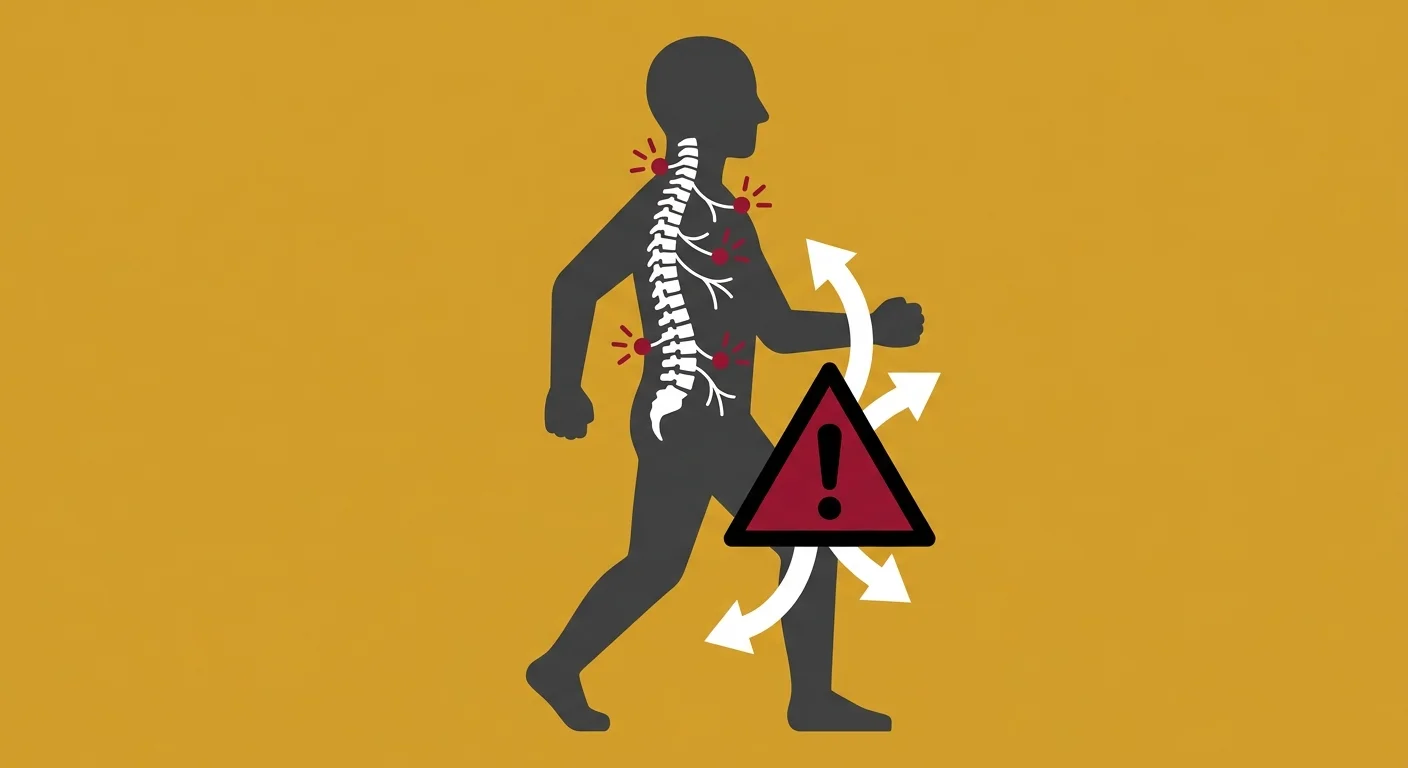
The loop keeps firing because the nervous system is doing its job. It learned a threat. It never got the all-clear.
Here's the thing: once Neural Threat Appraisal locks in, the brain stops waiting for new damage to keep the signal alive. It uses the absence of contradicting input as proof the threat is still real. Every restricted movement reinforces the original warning. Every avoided posture confirms it. Every cautious step tightens the loop.
That's what keeps the cycle running after the tissue heals. The Mechanical Signal has resolved. But the Neural Threat Appraisal layer is still processing old data, and the Behavioral Reinforcement layer is still generating new mechanical dysfunction to feed it. The nervous system isn't broken. It's doing exactly what it was built to do — with catastrophically outdated information.
How Threat Appraisal Deconditions the Body
Threat appraisal doesn't stay in the brain. It lands in the body — in the mechanical patterns the musculoskeletal system uses to protect itself.
When the nervous system classifies movement as dangerous, the body restricts it. That restriction isn't a conscious decision. It is a neurological output — the Behavioral Reinforcement layer executing its threat protocol. And that protocol has a direct physical cost: localized tissue deconditioning and structural weakness accumulate in the muscles and connective tissue surrounding the protected area. The body guarding against pain creates the exact physical conditions that generate more of it.
So by the time a patient looks into recovering from chronic pain after a failed back surgery, there are usually two problems stacked on top of each other: the original structural disruption and the secondary deconditioning that built up during months of protective avoidance. The tissue damage from guarding is real. It shows up on exam. And it feeds directly back into the Mechanical Signal layer — restarting the loop from the bottom up.
The Role of Neuroplasticity in Keeping Pain Alive
Neuroplasticity is the brain's capacity to reorganize itself around repeated input. In a healthy nervous system, that's a survival advantage. In a chronic pain cycle, it's what makes the loop permanent.
Nerve pathways in chronic pain stay active for weeks, months, or years. And during that time, the brain physically remaps itself around the threat signal. Pain stops being a response to input. It becomes embedded in the baseline architecture of how the nervous system processes back pain and sciatica and movement more broadly. That's why rest doesn't reset it. The alarm has been hardwired.
And neuroplasticity compounds the fear directly. Clinical research shows that the cognitive fear of pain is a significantly stronger predictor of physical disability than the actual severity of the pain itself. The more the nervous system reorganizes around threat, the more fear of movement dictates functional limitation — independent of what tissue damage actually remains. The smoke alarm isn't just stuck. It's been recalibrated to treat the smell of coffee as combustion.
| Reinforcing Factor | Mechanism in the Nervous System | Physical Result | Why Standard Interventions Miss It |
|---|---|---|---|
| Neural Threat Appraisal — Avoidance Loop | The brain catalogs movement as dangerous and begins treating normal mechanical input as evidence of ongoing harm — independent of whether structural damage remains | Progressive reduction in movement range and functional capacity; the body stops loading tissues that need mechanical stimulus to stay healthy | Standard pain management addresses the sensation, not the appraisal — the threat classification stays active even when the pain signal is temporarily reduced |
| Behavioral Reinforcement — Protective Guarding | The nervous system executes a threat protocol automatically, restricting mechanical motion below the threshold of conscious decision-making | Localized tissue deconditioning and structural weakness accumulate in the muscles and connective tissue surrounding the guarded area, generating new mechanical dysfunction | Exercise programs prescribed without preceding neurological correction reinforce the avoidance pattern — the brain interprets loading as confirmation of threat, not contradiction of it |
| Neuroplastic Remapping — Hardwired Pain Architecture | Repeated threat signals physically reorganize the nervous system's baseline processing map; the pain response is no longer reactive to input — it becomes embedded in the architecture itself | The nervous system begins generating pain signals in the absence of new structural provocation; rest and time do not reset a pathway that has been structurally reinforced | Rest-based recovery protocols do not provide the accurate contradicting mechanical input required to overwrite the remapped threat pathway — the alarm keeps ringing because nothing has recalibrated the sensor |
| Fear-Disability Compounding — Cognitive Load Amplification | As Neural Threat Appraisal deepens, the cognitive fear of movement becomes an independent driver of functional limitation — operating separately from any remaining tissue pathology | Functional disability expands beyond what structural findings would predict; patients lose capacity in activities far removed from the original injury site | Interventions targeting tissue only — injections, surgery, passive modalities — do not address the appraisal layer driving the functional loss; the disability gap between tissue findings and lived experience widens |
Why Cookie-Cutter Protocols Cannot Reset the Neural Threat Loop
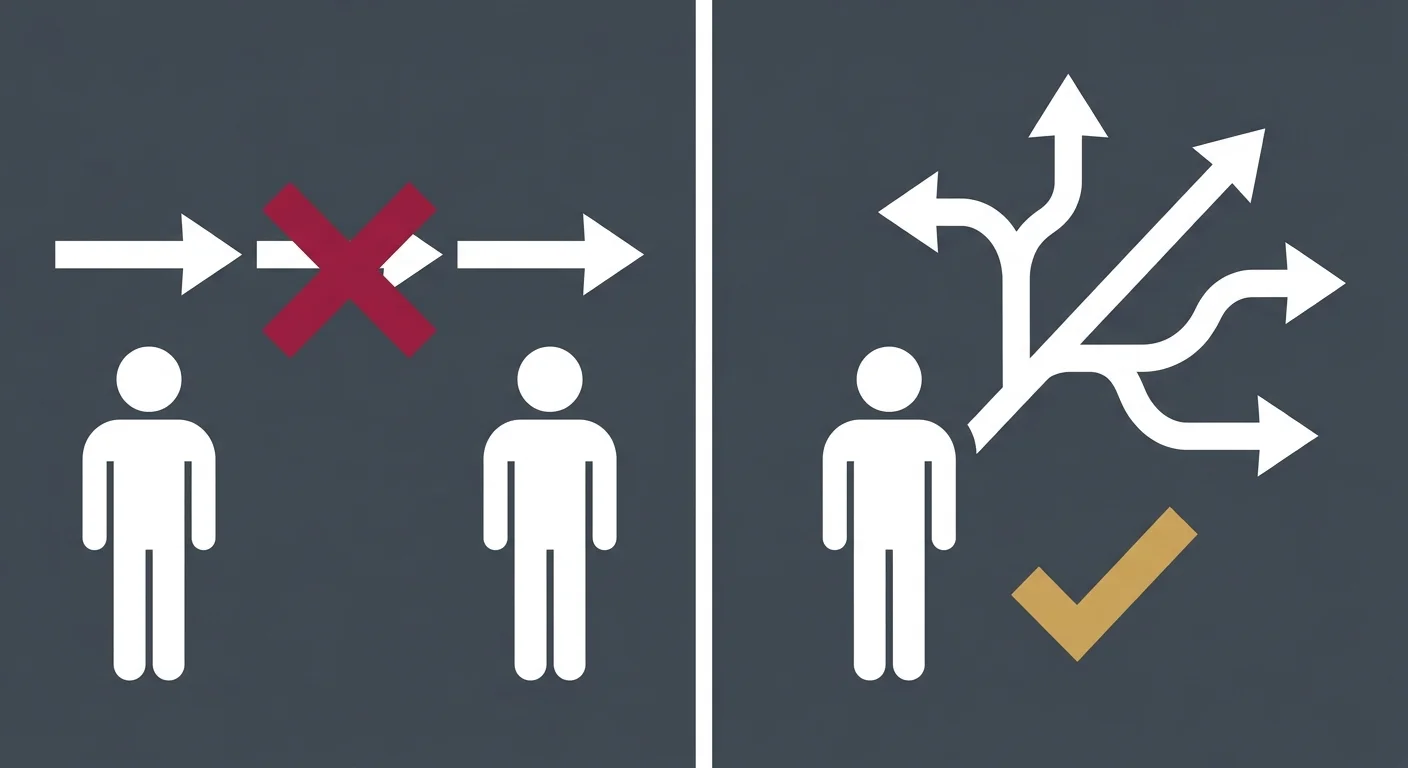
The cookie-cutter protocol doesn't fail because the provider lacks skill. It fails because it was never designed for the problem it's trying to solve.
A standardized adjustment sequence is built for a standardized problem. Same entry point, same sequence, same depth, same frequency — every session, every patient. That model holds up when the presenting problem is purely mechanical. But when the real driver is a misfiring Neural Threat Appraisal layer — one that has reorganized the brain's baseline around a threat signal that no longer maps to real tissue damage — that model hits a structural ceiling it was never designed to clear.
The smoke alarm is not going off because of structural damage. So repeating the same adjustment on the same segments tells the nervous system nothing new. It hears what it has always heard. The alarm keeps ringing.
Why Most Adjustment Templates Fail the Nervous System
Most adjustment templates are built around anatomical location, not neural state. The provider identifies a restricted segment, delivers a specific force vector, documents the response. That is a sound model for acute injury. But a threat loop that has spent months or years embedding itself into the nervous system's baseline architecture is not an acute injury. Treating it like one is how patients end up in the same cycle two years later.
But the deeper problem is what a template-based approach signals to the nervous system. Every session that follows the same sequence — regardless of patient feedback, regardless of which layer of the loop is dominant that week — confirms to the nervous system that nothing has changed. Predictable input does not contradict a threat appraisal. It becomes background noise the brain filters out.
Here's the clinical reality: fear of pain is a significantly stronger predictor of physical disability than the actual severity of the pain itself. A template protocol that addresses only the Mechanical Signal layer — without reading whether Neural Threat Appraisal is the dominant driver — is solving the wrong problem with the right tool. The tissue gets worked. The fear does not move.
That is exactly why so many patients who have had years of standard chiropractic care still report pain returning within days of each visit. And it is why patients who start understanding why the body keeps registering danger after structural healing often describe previous treatment as incomplete — not because the provider was incompetent, but because the template found the segment and missed the loop entirely.
What a Systems-Level Assessment Changes
A systems-level assessment starts from a different question. Not "which segment is restricted?" — but "which layer of the cycle is driving this patient's functional limitation right now?"
That distinction changes everything downstream. If the dominant layer is Mechanical Signal — real structural dysfunction producing accurate threat input — the care plan prioritizes restoring joint mechanics and giving the nervous system clean, non-threatening movement data. If Neural Threat Appraisal has taken over as the primary driver, spinal adjustments have to be calibrated to modulate central nervous system processing, altering somatosensory evoked potentials and reducing the hyperexcitable neural threat states keeping the alarm active. And if Behavioral Reinforcement has created secondary tissue deconditioning — which it will, given enough time — the plan has to rebuild the mechanical integrity that protective avoidance dismantled.
So the care plan is not built from a template. It is built from what the assessment actually reveals about where this specific patient's loop is stuck. And it changes when the loop changes. That willingness to stop, reassess, and pivot is not a clinical luxury. It is the only way to recalibrate a sensor that has been misfiring for years.
| Clinical Scenario | Cookie-Cutter Protocol Response | Systems-Level Assessment Response | Outcome Difference |
|---|---|---|---|
| Patient reports pain returning within days of each visit despite consistent attendance | Repeats the same adjustment sequence on the same spinal segments — documents the visit and schedules the next one | Identifies that Neural Threat Appraisal is the dominant driver; recalibrates the approach to reduce hyperexcitable neural threat states rather than repeat mechanical input | Cookie-cutter response confirms to the nervous system that nothing has changed; systems-level response introduces contradicting input that begins to shift the threat appraisal baseline |
| Patient presents with secondary muscle weakness and tissue deconditioning after months of protective avoidance | Addresses the restricted segment per the standard template; does not account for the deconditioning that protective avoidance has created in surrounding tissue | Assessment identifies Behavioral Reinforcement as an active layer; care plan is built to address both the neural threat loop and the mechanical integrity that avoidance dismantled | Cookie-cutter response leaves secondary deconditioning feeding new Mechanical Signal input back into the loop; systems-level response interrupts the cycle at multiple layers simultaneously |
| Patient has received medical clearance but remains functionally limited by fear of movement | Continues the same adjustment protocol — the structural findings have resolved, so the session follows the standard sequence regardless of functional state | Recognizes that Neural Threat Appraisal has outlasted the structural cause; shifts focus to delivering movement input that directly contradicts the threat signal the nervous system has embedded | Cookie-cutter response produces predictable input the nervous system filters as background noise; systems-level response gives the brain new, non-threatening data it cannot ignore |
| Patient reports that pain feels different week to week — sometimes localized, sometimes diffuse, sometimes absent after activity | Applies the same protocol regardless of which layer is dominant that session — the template does not adapt to shifting neural states | Reads patient feedback as diagnostic data; identifies which layer — Mechanical Signal, Neural Threat Appraisal, or Behavioral Reinforcement — is driving limitation that week and adjusts the care plan accordingly | Cookie-cutter response misses the signal that the loop is shifting; systems-level response uses that shift as a clinical pivot point and recalibrates before the window closes |
How Specialized Adjustments Reset the Neural Threat Response
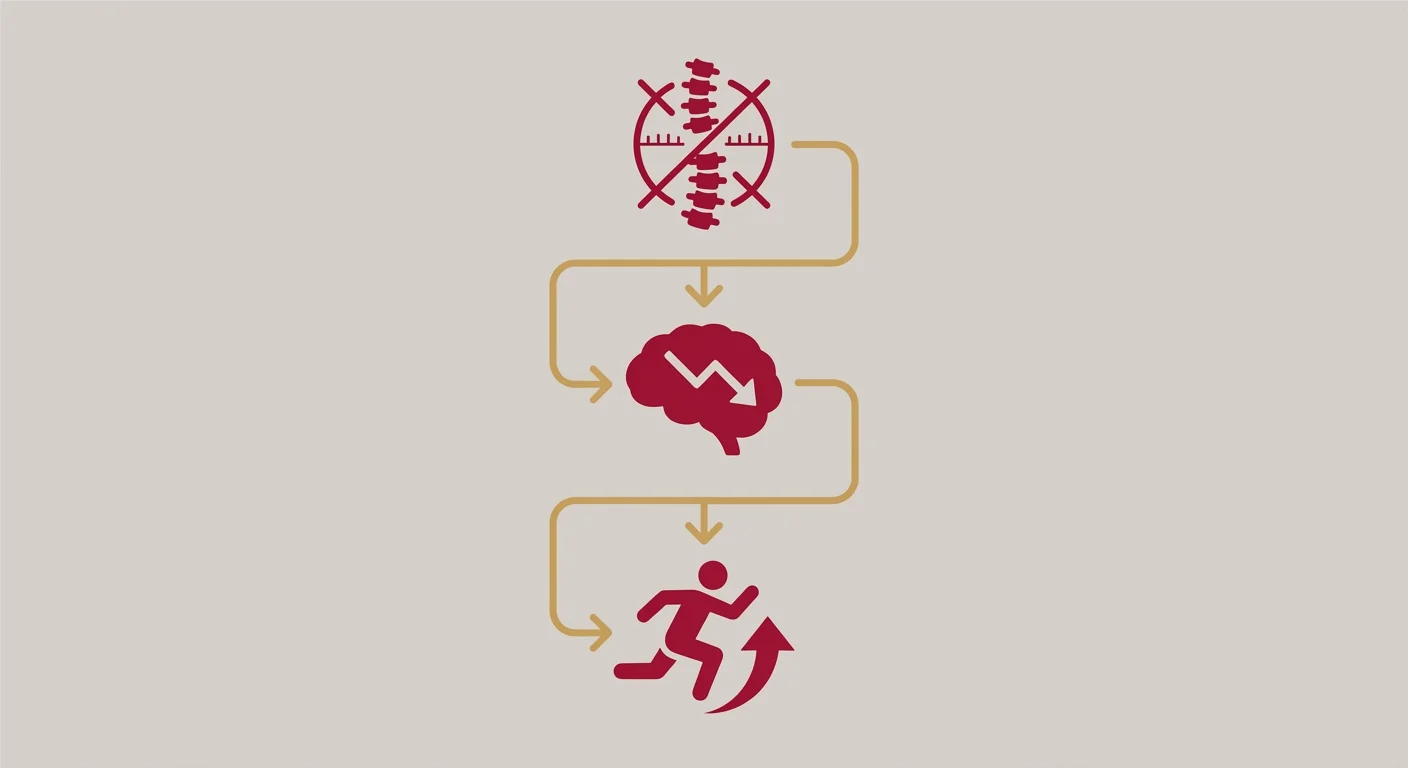
The smoke alarm doesn't reset because you wave a hand under it. It resets when the sensor gets a different signal. One that directly contradicts what it's been processing on loop.
That's the clinical target. Not the segment. Not the restriction. The nervous system's threat appraisal — the hyperexcitable neural states that have kept the alarm active long after the original structural trigger resolved.
Spinal adjustments modulate central nervous system processing by altering somatosensory evoked potentials — delivering new mechanical input to a system that's been filtering out predictable signals as background noise. The adjustment doesn't fix the tissue. It changes what the nervous system believes about the tissue. That's a different problem. And it needs a different tool.
The Three-Layer Reset
Here's the thing — a three-layer reset doesn't happen in one visit. And it doesn't follow a fixed sequence. It follows the loop. Meeting the nervous system exactly where it's stuck, then working upstream and downstream from there.
When Mechanical Signal is the primary driver, the adjustment delivers precise, non-threatening movement data to a joint that's been producing inaccurate threat input. The nervous system gets clean mechanical feedback — sometimes for the first time in years. That data isn't dramatic. But it's different. And different is exactly what a misfiring sensor needs to start updating its threat map.
When Neural Threat Appraisal has taken over as the dominant driver, the calibration shifts. The adjustment targets somatosensory evoked potentials directly — reducing the hyperexcitable neural states that read normal movement as danger. Each session feeds the nervous system evidence that contradicts what it has stored. Not through explanation. Through direct mechanical input the brain can't dismiss.
And when Behavioral Reinforcement has generated secondary tissue deconditioning — which it always does, given enough time under a threat protocol — the care plan rebuilds the mechanical integrity that protective avoidance dismantled. That's why getting back to full function isn't just about reducing pain. It's about reclaiming what the avoidance pattern took away — layer by layer, in the order the nervous system can actually accept it.
What Progress Actually Looks Like
Progress in a neural reset doesn't look like a straight line. That matters. Because patients who expect linear improvement measure the wrong thing — and the wrong measurement restarts the fear loop.
The first sign the reset is working isn't the absence of pain. It's an expansion of what the nervous system tolerates. A movement that triggered a full threat response two weeks ago now produces discomfort instead. A posture that was completely avoided is now accessible with effort. The Neural Threat Appraisal layer is getting contradicting input — and starting, slowly, to update its threat map. Nerve pathways in chronic pain stay active for weeks, months, or years. The rewiring takes repeated, consistent input before the baseline shifts.
So when something isn't producing that kind of movement in tolerance — when pain returns at the same threshold after each visit, when fear doesn't decrease, when the loop tightens instead of loosening — the plan changes. That willingness to stop and reassess isn't a sign the approach failed. It is the approach. The smoke alarm doesn't get recalibrated by running the same protocol on repeat. It gets recalibrated by a provider who reads the sensor, adjusts the input, and keeps reading until the alarm goes quiet.
| Reset Layer | Target in the Nervous System | Specialized Approach Used | Patient-Reported Indicator |
|---|---|---|---|
| Mechanical Signal | Joint mechanoreceptors producing inaccurate threat input to the spinal cord and brainstem | Precise, non-threatening movement input delivered to restricted segments — giving the nervous system clean mechanical data it has been denied | A movement that previously triggered a full threat response now produces manageable discomfort; range of motion expands without fear escalation |
| Neural Threat Appraisal | Hyperexcitable central nervous system states that interpret normal movement as biological danger | Adjustment calibrated to alter somatosensory evoked potentials — feeding the brain direct mechanical evidence that contradicts the stored threat map | Feared movements become accessible; the nervous system stops treating familiar postures as emergencies; pain threshold begins to shift without medication change |
| Behavioral Reinforcement | Secondary tissue deconditioning created by chronic protective avoidance — muscles, fascia, and connective tissue weakened by disuse | Care plan rebuilt around restoring the mechanical integrity that the avoidance pattern dismantled — layer by layer, in the sequence the nervous system can tolerate | Avoided activities re-enter daily function; the patient reports doing something they had stopped doing entirely — without the fear response that previously stopped them |
| All Three Layers — Loop Active | Compounding interaction between structural dysfunction, threat appraisal, and avoidance-driven deconditioning — each layer feeding the others | Assessment-driven sequencing that identifies the dominant layer first, then works upstream and downstream — pivoting the plan when patient feedback shows the loop is not loosening | Progress is non-linear but directional: tolerance expands, fear decreases, avoided movements return — not all at once, but in the order the nervous system allows |
When the Pain-Fear Cycle Is Hardest to Break: High-Stakes Presentations
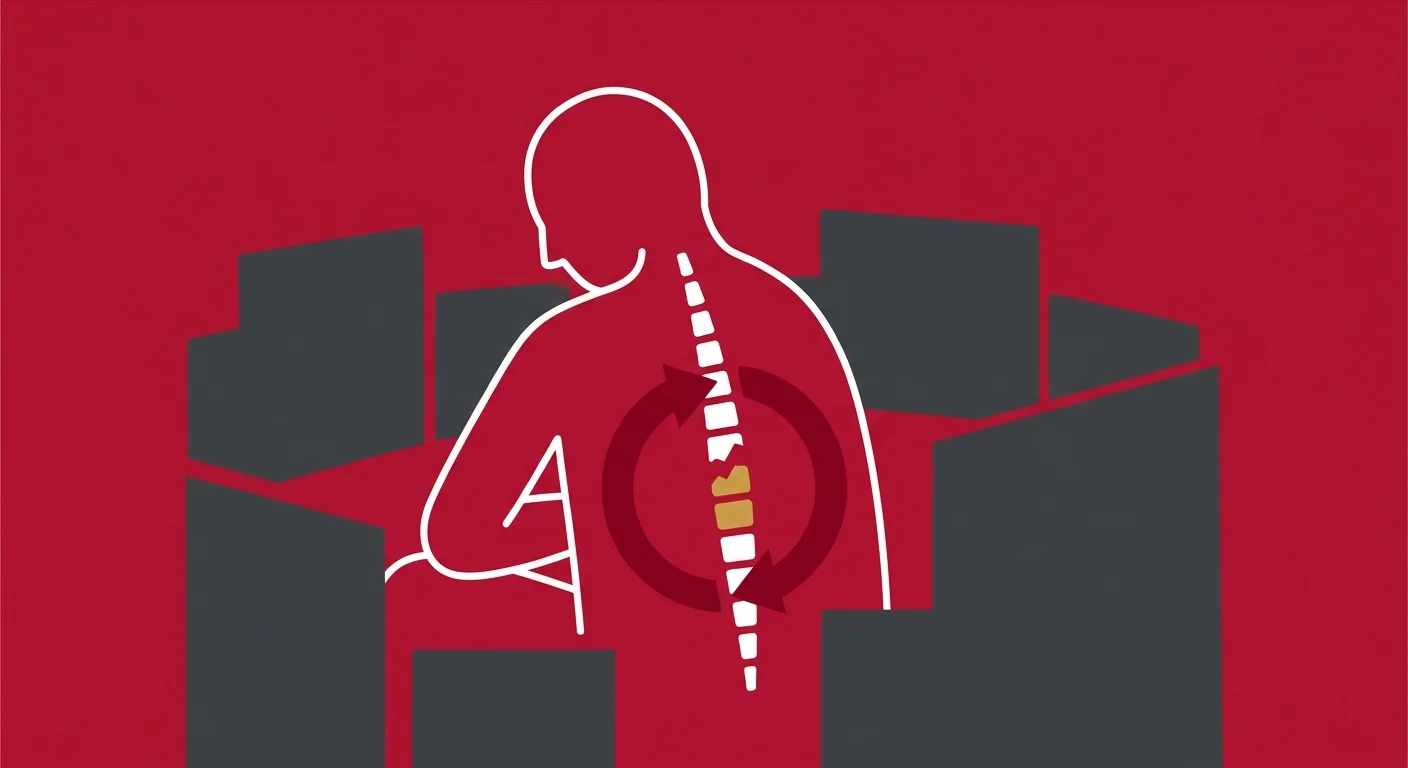
Not every pain-fear loop is the same depth of problem. The three-layer framework holds across cases — but some loops have been reinforced so many times, through so many failed interventions, that a cookie-cutter response doesn't just underperform.
It actively makes things worse.
These are the cases where the smoke alarm wasn't just stuck — it got rewired. By repeated failed interventions. By surgical trauma. By years of being told the pain was in their head. Every layer of the cycle is running. Every layer is feeding the others. And the threat map has been rewritten so thoroughly that standard input doesn't register.
Two presentations are the hardest terrain. Failed back surgery. And the patient who has already decided — before the assessment even starts — that nothing is going to work. Both require a fundamentally different approach. And both are exactly where specialized chiropractic care either delivers or shows its limits.
Failed Back Surgery and the Restarted Loop
Failed Back Surgery Syndrome is not rare. NIH-reviewed research on FBSS documents the condition occurring in up to 40% of patients who undergo lumbar spinal surgery — and what it leaves behind isn't simply unresolved pain. It's a Mechanical Signal layer that has been surgically disrupted, stacked on top of a Neural Threat Appraisal that was already active before the procedure, reinforced by months of protective movement restriction during recovery.
That's three layers running at once — each one feeding the others. The surgery introduced new mechanical dysfunction. The threat appraisal absorbed that trauma as fresh evidence of danger. And the movement restrictions required during recovery accelerated tissue deconditioning in the exact structures the nervous system was already avoiding.
The loop didn't restart. It deepened.
So when a patient who has been through spinal surgery asks whether they can recover from chronic pain after a failed back surgery, the honest answer is yes — but not with a protocol that treats them like a first-presentation acute case. The assessment has to account for surgically altered mechanics, a nervous system that catalogued the procedure as another threat event, and a Behavioral Reinforcement layer that was building for years before the surgery happened.
That's why post-surgical cases require the most precise layer reading of any presentation. The Mechanical Signal layer gets assessed with the surgical changes in mind — not worked around them. The Neural Threat Appraisal gets approached knowing the brain has now added a surgical intervention to its threat history. And the care plan gets built for what the assessment actually reveals — not what a standard post-surgical protocol assumes it should be.
Understanding why the brain still feels pain after medical clearance isn't optional in these cases. That's the whole job.
Who This Approach Is Not For
Here's the thing: this approach is not for everyone. And being clear about that is not a liability.
It is clinical honesty.
Coming in expecting to replicate exactly what a previous provider did means the assessment is a problem before the first session is finished. Needing a single visit to resolve what has been building for years runs directly against the biology of neural rewiring — no clinical skill changes the timeline the nervous system requires. And arriving with the conviction that nothing will work isn't just pessimism. That conviction functions as active Behavioral Reinforcement. The fear of pain predicts functional limitation more powerfully than the pain itself. A patient whose appraisal system is locked on 'this will fail' is feeding that prediction with every session.
At Touch of Wellness Chiropractic, the assessment drives everything — and it requires both parties to show up honestly. Patients who let the clinical findings lead, who understand that a care plan pivots when the loop pivots, who engage the process rather than audit it — those are the cases this approach is built for. The smoke alarm gets recalibrated when the sensor receives new input. That only works if the patient lets the input arrive.
| High-Stakes Presentation | Why the Loop Is Deeper | What Specialized Care Must Address First | Red Flag That Care Plan Needs to Pivot |
|---|---|---|---|
| Failed Back Surgery Syndrome | Surgical trauma added a new threat event to an already-active Neural Threat Appraisal layer. Recovery-mandated movement restriction accelerated Behavioral Reinforcement deconditioning. All three layers are running simultaneously and feeding each other. | Mechanical Signal must be assessed around surgically altered anatomy — not through a standard adjustment template. The nervous system's catalogued threat history must be addressed before the appraisal layer can begin to update. | Pain returns at the same threshold after each session with no expansion of movement tolerance — indicating the Mechanical Signal layer has not yet delivered clean enough input to interrupt the appraisal loop. |
| Years of 'Psychosomatic' Dismissal | Repeated medical dismissal functions as active Behavioral Reinforcement — it confirms to the nervous system that the threat is unresolvable. The Neural Threat Appraisal layer has incorporated provider skepticism as additional evidence of danger. | Trust in the assessment process must be established before mechanical input can be received as non-threatening. The appraisal layer will filter out adjustment input as noise if the patient's threat map classifies the clinical encounter itself as a source of danger. | The patient's threat appraisal remains locked on 'this will fail' regardless of session-by-session progress — a signal that Behavioral Reinforcement is overriding mechanical input and the care plan framing needs to change. |
| Chronic Pain With Deep Behavioral Deconditioning | Extended avoidance patterns have created structural tissue weakness in the exact areas the nervous system is protecting — meaning Behavioral Reinforcement has generated a new, secondary Mechanical Signal source that restarts the loop independently. | Tissue integrity must be rebuilt alongside Neural Threat Appraisal work — not after it. Treating appraisal without addressing the mechanical consequences of long-term avoidance leaves the loop with an active, structural fuel source. | Functional tolerance expands in session but collapses between visits — indicating the Behavioral Reinforcement layer is resetting the gains before the nervous system can consolidate new threat map entries. |
| The Pre-Decided Patient | A closed appraisal system — one that has concluded nothing will work before assessment begins — functions as continuous Behavioral Reinforcement. Every session feeds the 'this will fail' prediction, and the fear of pain becomes a stronger driver of limitation than any mechanical input can counter. | The assessment itself must be the first intervention. If the patient's appraisal system cannot receive clinical findings as credible input, the Mechanical Signal layer has no path through to update the threat map. | Fear-driven avoidance behavior increases rather than decreases across sessions — confirming that the Neural Threat Appraisal layer is not receiving the mechanical evidence as safety signal and the engagement model, not just the care protocol, must be re-evaluated. |
Frequently Asked Questions About Breaking the Pain-Fear Cycle
Here's what changes once the loop makes sense: the questions get sharper. Not 'what is broken' — but 'what does it actually take to reset this.' That shift is the starting line.
So here are those questions. How long. What a flare-up actually means. Why exercise alone won't cut it. What happens when the sensor finally starts receiving new data. The specifics that matter once you understand the smoke alarm isn't going off because the building is on fire.
How long does it take for specialized chiropractic adjustments to start reducing the fear-avoidance loop in the brain?
Any provider who quotes you a session count before the assessment is finished is running a script. That's not reading the sensor. That's selling a schedule.
What the nervous system actually needs is repeated, consistent mechanical input that contradicts the stored threat appraisal. Nerve pathways in chronic pain stay active for weeks, months, or years — and how long they've been running, how many layers of behavioral restriction have stacked on top, and whether the mechanical signal layer was surgically disrupted all shape when the baseline starts to shift.
The first sign the reset is working is not pain elimination. It's an expansion of what the nervous system tolerates. Movements that triggered a full threat response two weeks ago start producing discomfort instead. That's the metric worth watching. When that expansion begins, the recalibration is underway.
Why do typical exercise plans fail to break the pain-fear cycle without preceding neurological correction?
Exercise works at the behavioral reinforcement layer. The nervous system's threat response is running upstream of that — at neural threat appraisal — and exercise can't reach it.
Threat appraisals make the body restrict motion. That restriction drives tissue deconditioning over time. Exercise tries to reverse the deconditioning. But if the appraisal system still classifies movement as dangerous, the brain reads every session as more threat evidence. The patient pushes through. The system interprets effort as injury. The loop tightens.
Specialized adjustments work at the level where the threat signal originates — changing the somatosensory input the brain uses to build its threat map. Until that input changes, exercise is asking the alarm to stand down while the trigger is still live.
Can specialized adjustments resolve persistent neural threat responses after a failed spinal fusion?
Yes. But the approach has to account for what surgery added to the loop — not treat the patient as a standard first-presentation case.
Failed Back Surgery Syndrome occurs in up to 40% of lumbar spinal procedures. What it leaves behind is a mechanical signal layer that's been surgically disrupted, a neural threat appraisal that processed the procedure itself as an additional threat event, and a behavioral reinforcement layer that accelerated during recovery. All three are running simultaneously — each one feeding the others.
The assessment has to be built around surgically altered mechanics, not around what a standard post-surgical protocol assumes. When that layer reading is precise, the nervous system can receive new mechanical input even after significant structural disruption. The alarm can still be recalibrated. But it's the most exacting case type there is — and the care plan has to pivot the moment the sensor stops responding.
What happens if my body experiences a temporary flare-up during the early stages of breaking the pain-fear loop?
A temporary flare-up in the early stages is not the loop winning. It's the nervous system reacting to mechanical input it hasn't received before. That distinction matters.
What happens next is the signal. In a genuine neural reset process, a flare-up is followed by a return to baseline — and over time, that baseline shifts. The threshold that triggered it becomes less reactive. The flare gets shorter, less intense, less frequent. That pattern is movement. The loop is responding.
But if the flare comes back every session at the same intensity with no baseline shift, that's different information. A care plan built to read the sensor changes before repeating what isn't working. A flare-up is data. The question is whether it's progress data or stalled-recalibration data — and reading that difference is the whole job.
Why does the standard 'wait and see' advice from primary doctors often worsen chronic pain-fear neural pathways?
Because waiting is not neutral. It's an active instruction to the nervous system to keep doing exactly what it's already doing.
Chronic pain has already altered neuroplasticity. Nerve pathways stay active for weeks, months, or years — rewriting the brain's baseline architecture around the threat signal. Every week of unaddressed pain is more time the nervous system spends reinforcing the current threat map as its new normal. The fear-avoidance loop doesn't idle while the patient waits. It consolidates.
And for the 6.9% of U.S. adults experiencing high-impact chronic pain — pain that's already limiting daily activity — 'wait and see' is not a conservative approach. It's a prescription for deeper behavioral restriction and more entrenched neural threat appraisal. The smoke alarm does not recalibrate on its own. Left alone, it learns to stay on.
The Nervous System Is Not the Enemy
The nervous system isn't the enemy.
It's doing exactly what it was designed to do — detect threat, protect the body, and keep the alarm running until something convinces it the danger is gone.
The problem was never the alarm. The problem is every provider who ran the same sequence on repeat and gave the nervous system no reason to believe anything had changed.
That's what the three-layer framework is built to address. Mechanical Signal, Neural Threat Appraisal, Behavioral Reinforcement — each one a gear in a loop that feeds itself, each one requiring its own clinical read before a care plan gets written.
Specialized chiropractic care doesn't smother the alarm. It delivers new mechanical input to a nervous system that's been filtering out safe movement for months or years — until the brain receives enough contradicting evidence to update its threat map.
That's not a metaphor. That's the clinical target. And it requires a provider who reads what the nervous system is actually saying — not one who executes a sequence and moves on.
The goal was never pain management. It was always to recalibrate the sensor.
At Touch of Wellness Chiropractic, the assessment drives every decision — and the care plan changes the moment the loop stops responding. Not on a fixed schedule. Not after twelve sessions. The moment the sensor says the input isn't landing, the input changes.
If you've been dismissed, told to wait it out, or handed a long-term treatment timeline before the evaluation was even finished — that isn't care. That's a template running on autopilot while the loop keeps tightening.
The alarm has been going off long enough. The question now is whether you're ready to give the nervous system a reason to go quiet — or whether you keep waiting for the next provider to run the same sequence and expect a different result.
The loop doesn't wait. And the right provider doesn't run the same sequence twice hoping the sensor changes its mind. If you're ready to recalibrate the sensor, let the assessment at Touch of Wellness Chiropractic tell you exactly where the loop is stuck — and what it actually takes to go quiet.
Copyright Touch of Wellness Chiropractic 2026
1101 W Jackson St, Suite A Morton, IL 61550
Web Design by iTech Valet