
(309) 321-8412 | 1101 W Jackson St, Suite A, Morton, IL 61550
(309) 321-8412 | 1101 W Jackson St, Suite A, Morton, IL 61550
Why Standard Neuropathy Medications Only Mask Symptoms
Standard neuropathy medications — primarily anticonvulsants like Gabapentin and Pregabalin (Lyrica), along with antidepressants like Duloxetine (Cymbalta) — reduce pain by suppressing the way your nervous system transmits pain signals. They don't repair damaged nerve tissue. They lower the electrical "volume" in the pain pathway so your brain perceives less burning, tingling, and sharp sensation.
That's the mechanism. And it works — up to a point.
What these medications don't do is address the biological conditions actually driving nerve decay. Neuropathy develops when nerves are under prolonged stress from mechanical compression, reduced blood supply (ischemia), or metabolic failure. When those conditions remain active, nerve deterioration continues — even when the pain signal is being suppressed. The patient feels better. The nerves don't recover.
Clinical guidelines from major medical institutions classify these drugs as symptom management tools, not disease-modifying agents. That means the pain relief is real. But the mechanism producing the pain is still running in the background.
This article covers why that distinction matters, what happens inside the nerve when these medications work (and when they eventually stop), what warning signs indicate the underlying condition is advancing despite treatment, and what a root-cause approach to neuropathy care investigates differently.
Last Updated: April 8, 2026
- The Alarm vs. the Fire: What These Medications Actually Do
- The Supply Chain of Nerve Health
- Dosage Creep, Brain Fog, and the Signs Your Nerves Are Still Declining
- Root Cause vs. Masking: What the Clinical Comparison Actually Looks Like
- Frequently Asked Questions
- Why does my Gabapentin dosage keep increasing over time?
- Can I pursue nerve restoration while still taking my neuropathy medication?
- Do neuropathy drugs carry long-term side effects I should know about?
- What happens if I stop taking my neuropathy medication?
- Is neuropathy always progressive, even on medication?
- Is chiropractic care effective for neuropathy?
- How does chiropractic care compare to surgery for neuropathy?
- The Nervous System Doesn't Get Better When You Ignore the Cause
The Alarm vs. the Fire: What These Medications Actually Do
Most people who've been on neuropathy medication for a while will tell you the same thing. It helped — for a while. Then they needed more. Or the burning came back. Or they feel foggy and exhausted and their nerve pain is technically "managed" but they don't feel managed.
That's not a coincidence. That's the design.
Gabapentin, Lyrica, and their chemical relatives work by quieting the electrical activity in a distressed nerve. The nerve is still damaged. The nerve is still under stress. The signal it's sending to your brain is just quieter now. The alarm is turned down.
That's useful. I'm not going to pretend it isn't — chronic nerve pain is genuinely debilitating, and anything that reduces it gives real function back. But turning down the alarm and addressing the fire are two different things. And a lot of patients are being told they're doing one when they're only doing the other.
If you're wondering why your symptoms keep creeping back, or why your dosage keeps going up, this is why. And it's the reason root-cause chiropractic care starts from a completely different question.
The Pharmaceutical Masking Model
Here's how the pharmaceutical masking model works in practice. You come in with burning feet or tingling hands. You get a prescription. The pain quiets down. Six months later, the same dose isn't doing what it used to. The prescription goes up. A year after that, your symptoms are about the same as when you started — except now you're on a higher dose, you're gaining weight, and you can't think clearly by noon.
That's not a medication failure. That's the model working exactly as designed — because the model was never designed to address the source.
The underlying pathology keeps running. Mechanical compression on a nerve doesn't resolve because the signal it generates is being suppressed. Circulatory insufficiency — the shortage of blood flow literally starving your nerve of oxygen and nutrients — doesn't reverse because your brain is receiving fewer distress calls. Research from the NIH National Institute of Neurological Disorders and Stroke confirms that nerves require consistent oxygen and nutrient delivery via blood supply — a supply chain that no anticonvulsant touches.
I've seen it happen to patients who transferred to this practice. Long-term medication management. No investigation into why the nerve was signaling in the first place. The alarm was quieter. The fire was still going.
That's the model I reject. Not medication as a category. Medication as the finish line.
The Nerve Restoration Protocol at Touch of Wellness Chiropractic is built on a different premise: the first clinical question isn't how to quiet the alarm, but what triggered it.
How Gabapentin and Lyrica Are Clinically Classified
Neither Gabapentin nor Lyrica is classified as a disease-modifying agent for neuropathy. Research published in PMC — NIH on the pharmacological treatment of neuropathic pain consistently documents that a significant percentage of patients achieve less than 50% pain reduction on standard medications — and that these drugs do not reverse the underlying nerve pathology.
Mayo Clinic's guidance on peripheral neuropathy treatment frames them explicitly as tools for "relieving pain." Not restoring nerve function. Relieving pain.
That's an important clinical distinction. Medication manages. Restoration requires a different question: why is this nerve generating distress in the first place?
What that classification means for patients on long-term neuropathy medication:
- No reversal of pathology — The nerve damage generating the pain signal continues whether the signal is suppressed or not
- No ceiling on dosage escalation — Without an endpoint other than pain reduction, doses escalate as tolerance builds and underlying conditions advance
- No restoration of nerve supply — Blood flow, oxygen delivery, and the cellular environment are unaffected by any medication in that table
| Medication | Drug Class | Mechanism | What It Reduces | What It Doesn't Address |
|---|---|---|---|---|
| Gabapentin (Neurontin) | Anticonvulsant | Binds calcium channels; reduces erratic nerve firing | Burning, tingling, pain signal intensity | Compression, blood flow, nerve repair |
| Pregabalin (Lyrica) | Anticonvulsant | Same calcium channel mechanism as Gabapentin | Burning, sharp pain, electric sensations | Root cause of nerve distress |
| Duloxetine (Cymbalta) | SNRI antidepressant | Alters serotonin and norepinephrine in pain pathways | Pain signal intensity | Structural or metabolic nerve damage |
The Supply Chain of Nerve Health

Your nerve isn't suffering because it decided to. It's suffering because something disrupted the supply chain keeping it alive.
Every nerve in your body depends on a consistent delivery of oxygen via blood flow, structural clearance from surrounding tissue, and a metabolic environment stable enough to maintain its myelin sheath — the insulating layer that keeps the signal clean and the nerve functional. Cut off any part of that supply chain long enough, and the nerve deteriorates. Eventually, it signals distress.
That distress signal is what you feel as burning, numbness, tingling, or electric-shock pain. And it's what your medication is turning down — not turning off.
What Medications Leave Untouched
Here's what stays exactly the same whether you're on medication or not.
- Mechanical compression. A vertebral misalignment or disc involvement compressing the nerve pathway doesn't resolve because your Gabapentin dose went up. The pressure is still there. The nerve is still being compressed. The signal is just quieter.
- Circulatory insufficiency. Reduced blood flow to peripheral nerves — one of the primary mechanisms in diabetic neuropathy — isn't improved by any anticonvulsant or antidepressant on the market. The nerve is still being starved of oxygen and nutrients.
- Metabolic dysfunction. Chronically elevated blood sugar, nutritional deficiencies, inflammatory load — the conditions degrading the myelin sheath continue regardless of what's suppressing the pain signal. The process of nerve fiber regeneration depends on what the nerve is being fed — or starved of.
These are the fires. Medication manages the alarm. That's not a small distinction — it's the entire clinical problem.
The Three Root Causes Worth Investigating
For patients coming into this practice from Morton, Peoria, and across central Illinois, neuropathy almost always traces back to one of three drivers — or some combination of all three.
| Root Cause | What's Happening | What Medication Does | What Root-Cause Care Does |
|---|---|---|---|
| Spinal or structural compression | Vertebral misalignment or disc involvement compresses the nerve pathway | Quiets the pain signal from the compressed nerve | Addresses the structural interference generating the signal |
| Vascular compromise | Reduced blood supply starves peripheral nerves of oxygen and nutrients | No effect on blood flow or oxygen delivery | Structural clearance can restore circulatory access to the nerve pathway |
| Metabolic dysfunction | Elevated blood sugar, nutritional deficiency, or inflammation degrades the myelin sheath | No effect on the cellular nerve environment | Metabolic and lifestyle factors addressed alongside structural care |
A chiropractic adjustment doesn't mask pain. It addresses the structural interference that's generating it. That's a different clinical mechanism entirely — and it's why the neuropathy care approach at Touch of Wellness Chiropractic starts with the supply chain, not the signal.
Dosage Creep, Brain Fog, and the Signs Your Nerves Are Still Declining

If medication were working the way the pharmaceutical masking model promises, dosages would stabilize. You'd hit a level that controlled your symptoms, and that level would hold.
That's not most people's experience. Most people end up with more medication over time, not less. That's not incidental. It's a signal.
Why the Dose Keeps Going Up
Two things happen simultaneously in long-term neuropathy medication, and both push dosage in the same direction.
Your nervous system adapts to the suppression. The same dose that quieted the signal at 300mg eventually needs to be 600mg to produce the same effect. That's tolerance — a documented biological response to Gabapentinoids.
At the same time, the underlying condition may be advancing. If nothing has addressed the structural or metabolic driver, the nerve is under increasing distress. The signal it's generating is stronger than it was a year ago. Stronger signal, stronger suppression required. Dosage goes up.
Both mechanisms are real. And they compound each other. A patient can be taking Gabapentin consistently — and genuinely reporting some relief — while their neuropathy is objectively worse than when they started. Dosage creep is almost always the first visible sign that medication-only management isn't holding the line.
Both forces push in the same direction simultaneously:
- Tolerance — The nervous system adapts; the same dose produces diminishing signal reduction over time
- Disease progression — The unaddressed structural or metabolic driver generates a stronger distress signal as the condition advances
- Combined effect — Stronger signal plus reduced drug efficacy means dosage moves in one direction: up
When the Trade-Off Stops Being Worth It
Gabapentinoids carry a side effect profile that most patients aren't fully briefed on at the time of prescription.
| Side Effect | What It Looks Like | Clinical Impact |
|---|---|---|
| Brain fog and cognitive dulling | Difficulty concentrating, mental slowness, word-finding problems | Work performance, decision-making, daily function |
| Weight gain | Increased appetite, fluid retention | Metabolic health, secondary inflammation load |
| Fatigue and sedation | Daytime drowsiness, low energy | Daily activity level, exercise tolerance |
| Balance disruption | Dizziness, coordination changes, unsteadiness | Fall risk, particularly in older adults |
| Physical dependence | Discontinuation syndrome if stopped abruptly | Requires clinical guidance to taper safely |
None of these are reasons to stop medication without clinical guidance. What they are is a reason to ask the question most patients never get asked: is the medication the complete response to your condition — or is something still being left unaddressed while the side effects accumulate?
The One-Adjustment Miracle Seeker Is the Wrong Patient for This Work
I'm going to say something directly, because it helps both of us.
The One-Adjustment Miracle Seeker — the patient who expects complete resolution in a single visit and abandons care within the first week when immediate improvement hasn't occurred — is not going to get what they need here.
Neuropathy that has progressed for months or years doesn't reverse in an afternoon. The conditions that compromised the nerve developed slowly. Addressing those conditions requires a care plan, consistent commitment, and a willingness to track incremental improvement — not wait for a revelation.
If that's not you — if you're willing to engage a real care plan, provide accurate feedback, and let the assessment drive the clinical direction — then this is a different conversation. But if you're looking for a one-visit fix, we're not the right fit. That's not harsh. That's honest.
Root Cause vs. Masking: What the Clinical Comparison Actually Looks Like
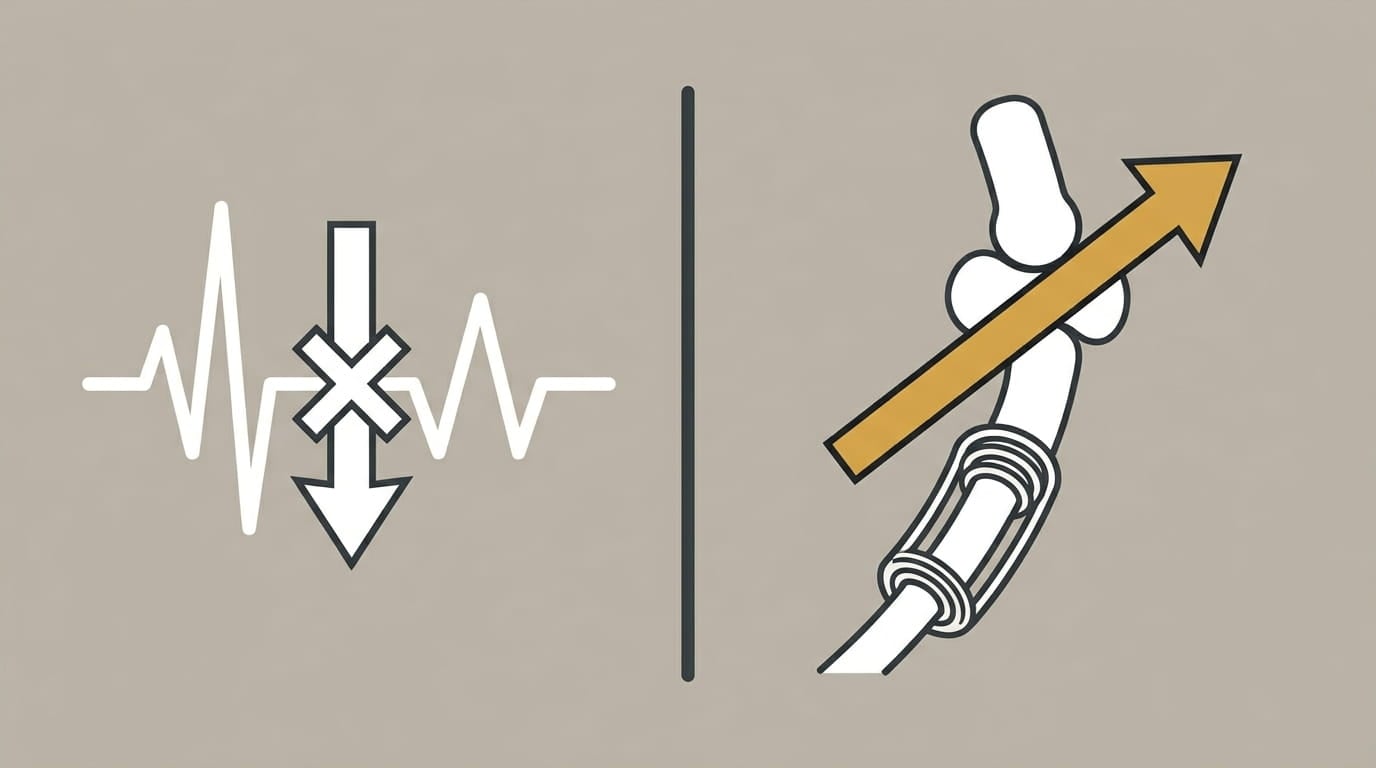
Symptom masking and root-cause care aren't two versions of the same thing. They're two different clinical frameworks with different starting points, different endpoints, and different definitions of what "working" means.
Masking starts at the output — the pain signal — and works backward to suppress it. Root-cause care starts at the input — the biological drivers of nerve distress — and works forward to remove them. One quiets the alarm. The other investigates what triggered it.
What a Root-Cause Evaluation Actually Asks
Research on neuroplasticity and chiropractic care documents that chiropractic adjustments alter central neural function and can support peripheral motor and sensory recovery. Research published via MDPI supports the mechanistic case that structural care addresses a layer of neuropathy that pharmacological management doesn't touch.
At Touch of Wellness Chiropractic, the evaluation for neuropathy doesn't start with "what's your pain level on a scale of one to ten?" It starts with: What's the structural picture? Is there compression at the nerve root level? What's the vascular picture — is there circulatory compromise in the peripheral pathway? What's the metabolic context? Is there spinal involvement that hasn't been examined?
Those questions have different answers for every patient. That's why cookie-cutter protocols don't work here, and why a care plan gets built from what you actually report — not from what a diagnosis code says you should have.
The questions driving a root-cause evaluation:
- Structural assessment — Is there spinal compression or musculoskeletal impingement on the nerve pathway that hasn't been examined?
- Vascular picture — Is there circulatory compromise restricting oxygen and nutrient delivery to the peripheral nerves?
- Metabolic context — Are blood sugar, inflammation, or nutritional factors degrading the nerve environment?
- Clinical history — What has been tried, what produced results, and what has been left uninvestigated?
Symptom Masking vs. Root-Cause Restoration: A Direct Comparison
| Clinical Factor | Pharmaceutical Masking | Root-Cause Restoration |
|---|---|---|
| Starting point | Pain signal (output) | Biological driver (input) |
| Clinical goal | Reduce pain perception | Identify and remove the source of nerve distress |
| Effect on nerve deterioration | None — nerves may continue to decline | Depends on driver; structural and circulatory factors are addressable |
| When does it fail? | When tolerance develops or underlying condition advances | When the underlying driver is irreversible |
| Signs of failure | Dosage creep, worsening symptoms despite medication | Driver is beyond structural correction |
| Realistic outcome | Managed symptoms; stable or increasing doses | Functional recovery, reduced signal distress, improved nerve supply |
The honest answer is that some neuropathy presentations involve irreversible nerve damage — particularly late-stage diabetic neuropathy where the myelin sheath has been substantially degraded. In those cases, symptom management may be the primary tool, and that's not a failure — it's an accurate assessment of what's addressable.
But many patients presenting with neuropathy symptoms haven't reached that point. They're being managed exclusively with medication before anyone has asked whether the driving cause is addressable.
Unexplained doesn't mean untreatable. It means no one has asked the right questions yet.
Frequently Asked Questions
Why does my Gabapentin dosage keep increasing over time?
Dosage creep happens because two mechanisms are running simultaneously.
The nervous system adapts to pharmacological suppression — the same dose that quieted the signal at 300mg eventually requires 600mg to produce the same effect. That's tolerance, and it's a documented biological response to long-term Gabapentinoid use.
At the same time, the underlying condition driving your neuropathy may be advancing. If the structural or metabolic cause hasn't been addressed, the nerve is generating a stronger distress signal than it was a year ago. Stronger signal requires stronger suppression. Both forces push dosage in the same direction. Together, they explain why dosage creep is almost always the first visible sign that medication-only management isn't holding.
Can I pursue nerve restoration while still taking my neuropathy medication?
Yes — and this matters.
Medication and root-cause care aren't mutually exclusive. Medication can provide legitimate bridge support — reducing acute pain enough that a patient can engage a care plan — while a structural or metabolic evaluation identifies what's actually driving the nerve distress.
The goal isn't to replace the medication immediately. The goal is to investigate what the medication is masking and determine whether the underlying factors are addressable. If they are, and the structural cause is resolved, the need for medication often changes naturally over time. That's a conversation to have with the prescribing provider. The point is that structural and circulatory care doesn't require stopping medication first — and waiting on medication while the structural cause advances narrows the window for meaningful recovery.
Do neuropathy drugs carry long-term side effects I should know about?
Gabapentinoids carry a consistent side effect profile that most patients aren't fully informed about at the time of prescription.
The most clinically significant: central nervous system suppression — the source of brain fog, fatigue, and balance disruption — metabolic effects including weight gain and fluid retention, and physical dependence with discontinuation syndrome if stopped abruptly.
None of these are reasons to stop medication without clinical guidance. They are reasons to ask clearly whether medication is the complete response to your condition — or whether something is being left unaddressed while the side effects accumulate month after month.
What happens if I stop taking my neuropathy medication?
The pain returns — because the underlying condition was never addressed.
This is the clearest illustration of the masking mechanism. Medication silences the alarm. When it stops, the alarm resumes — not because the medication failed, but because the fire that triggered it is still burning.
If you've tried reducing or stopping your neuropathy medication and found the pain came back immediately, that's clinical information. It tells you the biological driver is still active and unaddressed. That's the thing worth investigating — not which medication to try next.
Is neuropathy always progressive, even on medication?
Not always — but it can be, and the trajectory depends entirely on whether the underlying cause is being addressed.
Medication doesn't change the rate of nerve deterioration. Structural compression on a nerve root continues to generate damage regardless of Gabapentin dosing. Vascular compromise continues to starve peripheral nerves of oxygen. The rate of progression depends on what's driving the condition — not what's suppressing the signal.
For patients with well-managed diabetic neuropathy and stable metabolic control, progression may slow or plateau on appropriate medical management. For patients with structural drivers — spinal involvement, musculoskeletal compression — medication quiets the output while the input continues unchecked. Understanding why neuropathy treatment isn't working in Morton often starts with that question.
Is chiropractic care effective for neuropathy?
Chiropractic care isn't a repair mechanism for severely damaged nerve tissue. But it is a structural and functional intervention for the conditions that produce nerve damage in the first place.
Research documents that chiropractic adjustments alter central neural function and can support peripheral motor and sensory recovery — particularly where spinal compression is contributing to nerve distress. Whether that applies to a specific neuropathy presentation depends on what's driving it.
If spinal involvement or musculoskeletal compression is part of the picture, addressing it directly is a different clinical strategy than managing the pain signal pharmacologically. If nerve damage is primarily metabolic in origin, the approach needs to reflect that. That's what an evaluation answers — not a protocol applied before the assessment is complete.
How does chiropractic care compare to surgery for neuropathy?
Surgical intervention for neuropathy is generally reserved for severe structural compression — spinal stenosis, significant disc herniation — where conservative care has been exhausted and nerve function is at serious risk.
Chiropractic care addresses structural compression earlier in that process, before surgery enters the conversation. For many patients, resolving mechanical drivers through chiropractic adjustment eliminates the structural component without requiring surgical intervention. For patients already weighing those options, understanding nerve restoration versus surgical intervention for neuropathy is worth working through carefully before the decision is made.
The Nervous System Doesn't Get Better When You Ignore the Cause
Medications have a real role in neuropathy care. Managing severe pain while an underlying cause is being investigated is defensible medicine — and sometimes the bridge that makes everything else possible.
But medication as the endpoint — the full clinical response to a condition that may be progressing behind the quieter alarm — is not the same as treatment.
The patients who transfer to this practice on long-term neuropathy medication are almost always in one of two situations. Dosage creep has caught up with them, and their quality of life is declining despite being "managed." Or the original cause of their neuropathy — often a structural factor that was never examined — is still present and still doing damage. The pain was quieter. The nerve wasn't recovering.
Real answers are more valuable than comfortable ones. If your nerve symptoms have only ever been addressed at the level of signal suppression — and no one has investigated the structural, circulatory, or metabolic drivers generating that signal — the fire is still burning. The alarm is quieter. But silencing the smoke detector doesn't put out the fire. It just makes it easier to miss.
That's the question worth asking. And the time to ask it is before the window for functional restoration closes.
If you've been taking neuropathy medication for months — and your symptoms are still present, still progressing, or requiring more medication to stay quiet — that's a signal worth paying attention to.
An evaluation at Touch of Wellness Chiropractic starts with the question that standard management skips: what's actually driving the nerve distress? Not which dosage to adjust. What's generating the signal in the first place.
If spinal involvement, vascular compromise, or structural compression have never been part of your neuropathy conversation, they're worth examining.
Find out what your nerve health evaluation looks like.
Nerve damage has a window. The longer the underlying cause remains unaddressed, the narrower the opportunity for meaningful functional recovery becomes. That's not pressure — it's biology.
Results may vary.
Copyright Touch of Wellness Chiropractic 2026
1101 W Jackson St, Suite A Morton, IL 61550
Web Design by iTech Valet