
(309) 321-8412 | 1101 W Jackson St, Suite A, Morton, IL 61550
(309) 321-8412 | 1101 W Jackson St, Suite A, Morton, IL 61550
How to Differentiate Between a Migraine, TMD, and a Cervicogenic Headache
Three conditions. Overlapping symptoms. Completely different sources.
Migraine, temporomandibular disorder (TMD), and cervicogenic headache each produce head pain, jaw tension, and neck discomfort — and that is exactly why they are so routinely misdiagnosed. The symptoms look like the same door. The origins are not.
Three doors, one hallway.
Migraine is a neurological disorder with a genetic basis. It affects over 10% of the global population and originates in the brain itself — driven by cortical spreading depression and changes in brainstem activity. The result is throbbing, often one-sided head pain with nausea, light sensitivity, and sound sensitivity. Aura, visual disturbances, and a recognizable prodrome phase are the features that set true migraine apart.
TMD is a disorder of the temporomandibular joint and the muscles that surround it. It affects roughly 5% to 12% of the population, with younger women disproportionately impacted. The pain centers on the jaw, temple, and face — but it does not stay there. Up to 90% of patients diagnosed with TMD also report co-occurring headaches. That is the number dental-only management consistently fails to account for.
Cervicogenic headache does not start in the head at all. It originates in the upper cervical spine — specifically the C1, C2, and C3 spinal nerves — and travels through the trigeminocervical nucleus, a neurological relay that processes pain from both the upper neck and the trigeminal nerve, which also innervates the jaw and face. That anatomical overlap is why cervicogenic headaches account for an estimated 15% to 20% of all chronic and recurrent headache types, yet remain among the most underdiagnosed conditions in headache care.
Differentiating between these three requires assessing the direction of pain referral, the presence or absence of neurological features, how neck movement affects symptoms, and what prior treatment has and has not done. These conditions co-exist. Frequently. But the structural driver — particularly in the upper cervical spine — is the variable most consistently missed when a single specialist is working from a single diagnostic frame.
Last Updated: August 25, 2026
- • Why These Three Headache Types Keep Getting Confused
- • What a Migraine Actually Is — and What It Is Not
- • What TMD Is and Why the Jaw Is Rarely the Whole Story
- • What a Cervicogenic Headache Is and Where It Actually Comes From
- • How the Three Conditions Compare Side by Side
- • What Clinical Assessment Actually Looks Like for These Headaches
-
• Frequently Asked Questions
- • How do I know if my headache is a migraine or coming from my neck?
- • Can a problem with my jaw actually cause a cervicogenic headache?
- • Why do mouthguards often fail to relieve TMD-related headaches?
- • What specific tests will a chiropractor perform to differentiate these headaches?
- • Is it safe to get a chiropractic adjustment if I have an active migraine?
- • Stop Treating the Door When the Hallway Is the Problem
Why These Three Headache Types Keep Getting Confused
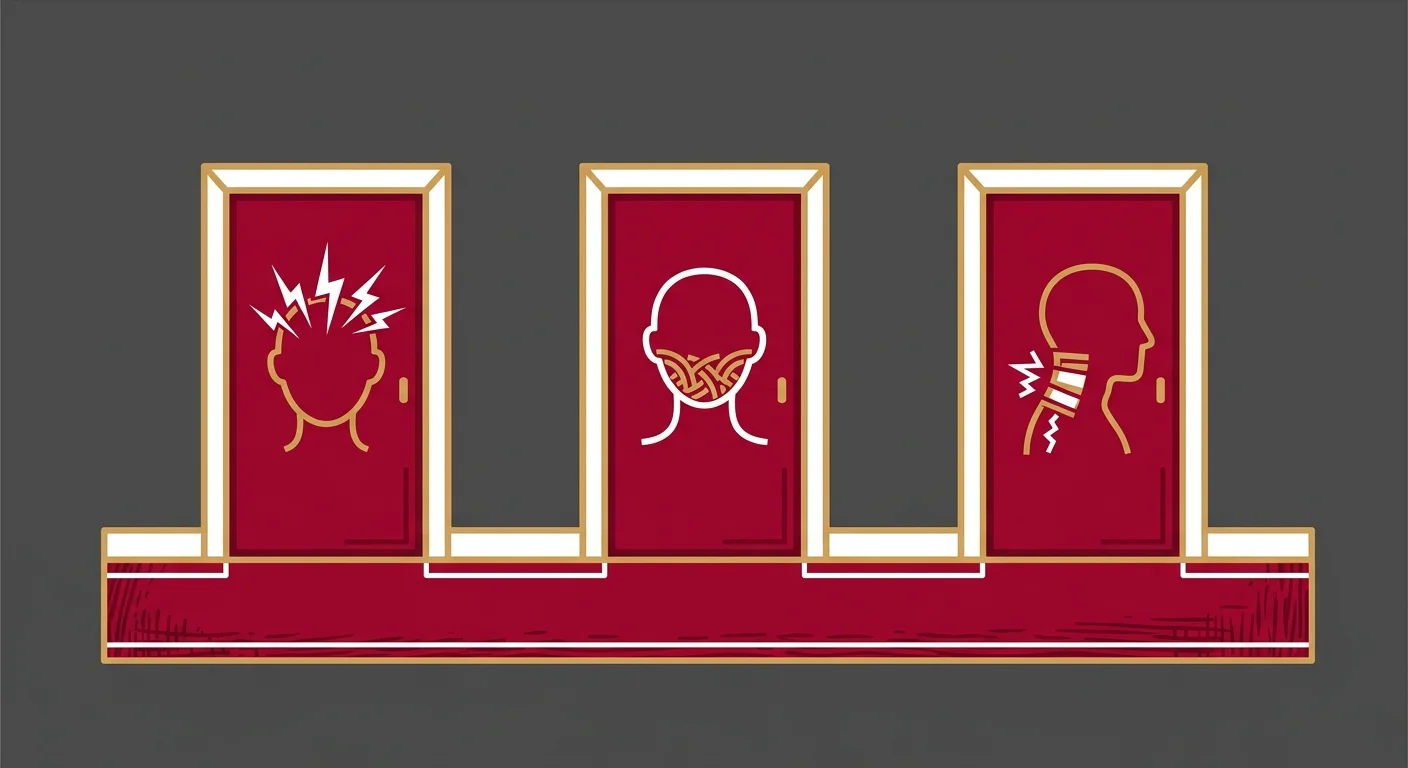
This isn't a labeling problem.
These three conditions share the same anatomical corridor. The pain lands in the same places — behind the eye, across the temple, at the base of the skull — because the neck, jaw, and trigeminal nerve are all running signal through the same switchboard. When the switchboard is the problem, every door in the hallway looks guilty.
Cervicogenic headaches account for 15% to 20% of all chronic and recurrent headache types(https://pubmed.ncbi.nlm.nih.gov/14588366/), yet they get diagnosed as migraines at a rate that should embarrass the specialty. The pain lands in the same zip code — behind the eye, across the forehead — and that's enough for most providers to stop asking questions.
TMD radiates the same way. And when up to 90% of TMD patients report co-occurring headaches, you're not looking at coincidence. You're looking at a symptom cluster so densely overlapping that any diagnosis built on pain location alone will collapse the moment treatment starts.
Why the Cookie-Cutter Diagnosis Fails
The cookie-cutter approach starts at the symptom and works backward.
That's pattern-matching, not diagnosis. And when three different conditions produce the same pattern, that method breaks every time — predictably, and at the patient's expense.
A dentist sees jaw pain and reaches for a mouthguard. A neurologist sees photophobia and reaches for a migraine protocol. Both moves are defensible within a narrow specialty frame.
But neither provider is looking at the upper cervical spine — the shared anatomical corridor connecting the temporomandibular joint, the trigeminal nerve, and every headache referral pathway driving all three conditions. That corridor doesn't belong to any specialty. So no single specialty checks it.
Patients who've exhausted dental splints without lasting relief aren't treatment failures. They're patients whose upper neck was never assessed.
The same pattern shows up consistently with desk workers experiencing co-occurring tension headaches — people who cycle through specialist after specialist, collecting diagnoses that don't resolve anything.
That's not a failure of any individual provider. It's what happens when a fragmented system meets a condition that doesn't respect specialty boundaries.
| Symptom | Migraine | TMD Headache | Cervicogenic Headache |
|---|---|---|---|
| Pain location | Unilateral or bilateral; behind the eye, temple, or forehead | Jaw, temple, face, and ear — radiates upward into the head | Base of skull, radiating forward to the eye, temple, or forehead from the neck |
| Pain character | Throbbing, pulsating — worsens with movement and light | Aching, pressure-like — often worse with chewing or jaw clenching | Dull, non-throbbing — worsens with specific neck positions or prolonged postures |
| Neurological features | Aura, photophobia, phonophobia, nausea — hallmark signs | Absent — no classic neurological aura or visual disturbances | Absent — no aura, though referred eye discomfort is common |
| Relationship to neck movement | Not triggered by neck position — though neck tension is common during attacks | Indirect — jaw and neck muscles are anatomically linked, tension escalates symptoms | Direct — specific neck movements reproduce or intensify the headache immediately |
| Relationship to jaw mechanics | No direct jaw involvement — migraine is a brain-based disorder | Central — jaw clicking, locking, or limited range of motion are defining features | Indirect — upper cervical dysfunction can create referred tension into the jaw area |
| Typical specialist seen | Neurologist — medication management and trigger identification | Dentist or oral surgeon — mouthguard, occlusal adjustment, or splint therapy | Often misrouted to neurology or dentistry before the cervical spine is assessed |
| Why the diagnosis gets missed | Photophobia and throbbing pain can be mimicked by both TMD and cervicogenic referral | Referred headache pain masks the jaw origin — patients report 'headaches,' not jaw problems | No visible structural cause at the head level — pain source is in the neck, not where it's felt |
| Response to dental treatment | No improvement — migraine is neurological, not structural | Partial — mouthguards address jaw loading but miss cervical and muscular drivers | No improvement — the jaw is not the source; the upper cervical spine is |
What a Migraine Actually Is — and What It Is Not
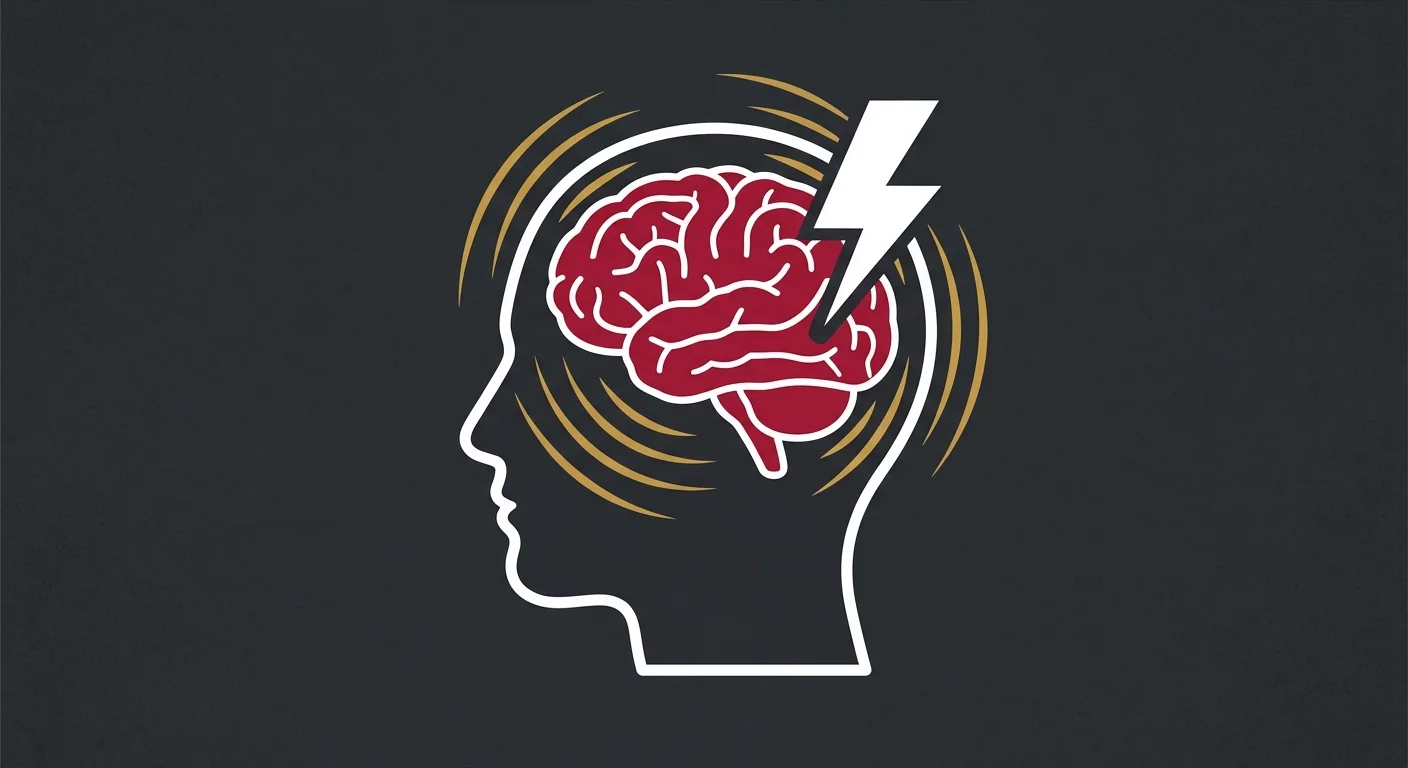
Migraine isn't a bad headache. It's a genetic neurological disorder — and that boundary is exactly where most diagnoses go wrong. NIH research is unambiguous on this point. Calling it a headache is like calling a seizure a bad mood.
Migraine affects over 10% of people worldwide. That scale turns it into the most overused label in chronic headache care — not because it's rare, but because its symptoms rhyme with conditions that have completely different origins. Desk workers experiencing co-occurring tension headaches show up constantly carrying a migraine label that was never confirmed neurologically. The pain pattern matched. The diagnosis stuck. Nobody looked deeper.
How to Recognize Migraine by Its Neurological Signature
True migraine has a neurological signature. The pain originates inside the brain — from cortical spreading depression and trigeminal nerve activation. No spinal misalignment triggers it. No cervical pressure replicates it. If someone's telling you your neck is causing your migraine, those are two different conversations.
The hallmark features are specific: unilateral throbbing pain, photophobia, phonophobia, nausea. Some patients get an aura before the headache phase hits — visual disturbances, sensory changes, brief speech disruption. These aren't vague descriptors. They're a defined neurological pattern with a genetic basis. And none of them show up reliably in cervicogenic headaches or TMD.
Here's the clinical line that actually matters: migraine doesn't worsen with neck movement. It doesn't originate from a fixed point at the skull base or upper cervical spine. It doesn't improve when cervical pressure is released. If all three of those hold for a patient's headaches, migraine drops fast on the differential. What's left is either TMD, a cervicogenic source — or both running at the same time.
| Diagnostic Marker | Present in Migraine | Present in Cervicogenic Headache | Present in TMD Headache |
|---|---|---|---|
| Throbbing, pulsating pain quality | Yes — hallmark feature | Uncommon — pain is typically dull, aching, or pressure-like | Uncommon — pain is typically dull or aching, localized to jaw and temple |
| Unilateral (one-sided) head pain | Yes — common, though bilateral occurs | Yes — often one-sided, same side as the affected cervical level | Yes — often one-sided, same side as the affected joint |
| Nausea or vomiting | Yes — defining feature | Rare | Rare |
| Photophobia and phonophobia | Yes — defining features | Occasionally present as secondary sensitivity | Occasionally present as secondary sensitivity |
| Prodrome phase (fatigue, mood shifts, food cravings before onset) | Yes — distinctive pre-headache warning phase | No | No |
| Pain worsens or reproduces with neck movement | No — position-independent | Yes — definitive differentiator | Sometimes — if cervical involvement is co-occurring |
| Pain worsens or reproduces with jaw movement or chewing | No | Sometimes — if TMD is co-occurring | Yes — definitive differentiator |
| Pain radiates from the back of the skull or upper neck forward | No — originates centrally, radiates outward | Yes — defining referral pattern from C1–C3 | Sometimes — referred pain can track from jaw toward temple and ear |
| Tender points in the upper cervical spine on palpation | No | Yes — consistent clinical finding | Sometimes — especially if cervical dysfunction is co-occurring |
| Jaw clicking, popping, or limited jaw opening | No | No — unless TMD is co-occurring | Yes — defining feature |
| Genetic or family history component | Yes — strong hereditary pattern | No established genetic link | No established genetic link |
| Responds to upper cervical chiropractic adjustment | No — neurochemical origin is not structurally addressable | Yes — primary treatment target | Partially — if cervical dysfunction is contributing |
What TMD Is and Why the Jaw Is Rarely the Whole Story
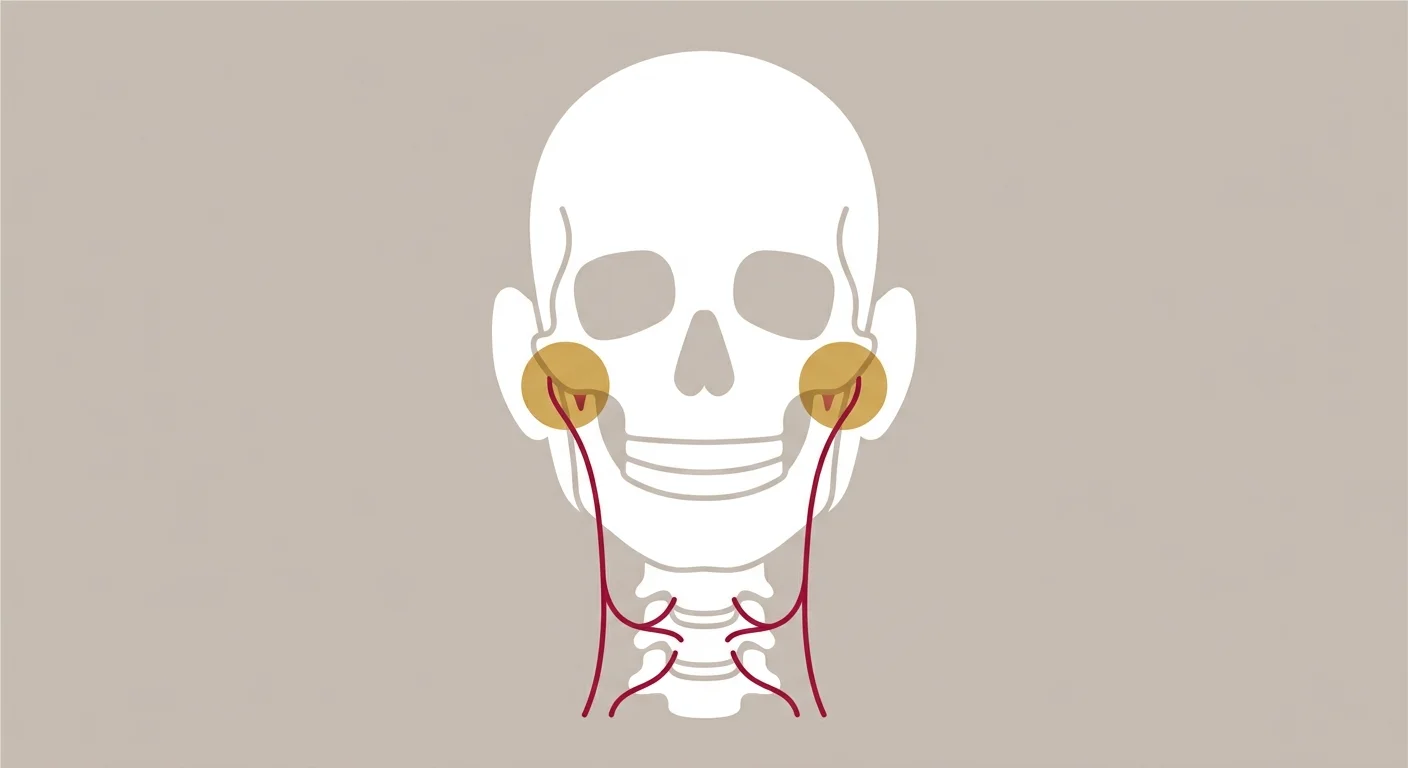
Migraine lives in the brain. TMD lives in the joint, the disc, and the muscles that drive your jaw — and those are completely different problems with completely different drivers.
Temporomandibular disorder is a structural and muscular condition. It's rooted in dysfunction of the temporomandibular joint and the surrounding muscles of mastication. And it's more common than most people realize — roughly 5% to 12% of the population carries it, according to NIH population data. Younger women are disproportionately affected, but the condition doesn't discriminate by profession, posture, or stress level.
The joint is the entry point. The system is the story.
Here's why managing TMD in isolation is clinically indefensible: up to 90% of patients diagnosed with TMD report co-occurring headaches.
That's not a coincidence of demographics. That's the jaw's muscular and joint dysfunction radiating pain upward through a shared neurological architecture — one that connects the temporomandibular joint to the upper cervical spine and the trigeminal nerve system.
A mouthguard offloads the joint. It doesn't touch that architecture. And that's exactly why so many patients with a TMD diagnosis keep getting headaches after the dental work is done.
The Jaw-Neck Connection Most Providers Miss
The temporomandibular joint doesn't operate in isolation. The muscles driving it — the masseter, the temporalis, the pterygoids — share neurological territory with the upper cervical musculature.
So chronic jaw strain doesn't stay local. It travels up the chain. That's not a theory. That's anatomy.
Most providers aren't ignorant of this connection. They're just not required by their specialty to act on it.
A dentist's diagnostic frame stops at the joint. That's the scope. That's the training. There's no fault in that — but there's a real clinical cost when the upper cervical spine is the driver and nobody in the patient's care history has ever assessed it.
Knowing what to expect during your first chiropractic exam for headaches and TMJ changes the conversation before it starts. When a patient already understands the neck is part of the picture, they know what questions to ask — and that changes what gets examined before any treatment begins.
That's where systems-based chiropractic adjustments change what's possible. When the upper cervical spine is assessed alongside the jaw, the referral pattern becomes traceable — not just managed around.
Patients who've cycled through dental appliances for years without lasting relief aren't treatment failures. They're patients whose care plan was built around one door when the actual driver was sitting in the hallway the whole time.
That's the gap. And closing it starts with looking at the right part of the system.
| TMD Symptom | Jaw-Isolated Explanation | Cervical Spine Connection |
|---|---|---|
| Jaw pain and clicking at the joint | Disc displacement or condylar misalignment within the temporomandibular joint itself | Upper cervical muscle tension alters jaw mechanics and loading patterns, creating joint stress that originates above the dental arch |
| Headache radiating from the jaw or temple | Referred pain from the masseter or temporalis muscles under chronic strain | The trigeminal nerve shares neurological territory with C1–C3 spinal nerves, so upper cervical dysfunction produces identical referral patterns without any jaw pathology present |
| Facial pain and pressure around the cheekbone | Pterygoid muscle hypertonicity or joint inflammation | Suboccipital muscle tension from cervical misalignment compresses shared nerve pathways, generating facial pain even when the joint itself is structurally intact |
| Ear fullness or ringing without audiological cause | Traction on the eustachian tube or auriculotemporal nerve from joint dysfunction | Cervical spine dysfunction at C1–C2 affects blood flow and nerve signaling to the inner ear region through the same anatomical corridor as jaw movement |
| Neck stiffness accompanying jaw symptoms | Secondary postural compensation from guarding the painful jaw | Primary cervical spine dysfunction driving both the neck restriction and the jaw symptoms simultaneously — the neck isn't compensating; it's the origin |
| Symptoms that worsen under stress | Bruxism and jaw clenching triggered by elevated cortisol and muscle tension | Sympathetic nervous system overload driven by upper cervical dysfunction amplifies jaw and facial muscle hypertonicity independent of any psychological stressor |
| Limited mouth opening or morning stiffness | Joint capsule inflammation or disc adhesion reducing condylar range of motion | Restricted upper cervical mobility reduces the functional range of the entire craniomandibular complex — treating the jaw without addressing the neck leaves the structural restriction in place |
What a Cervicogenic Headache Is and Where It Actually Comes From
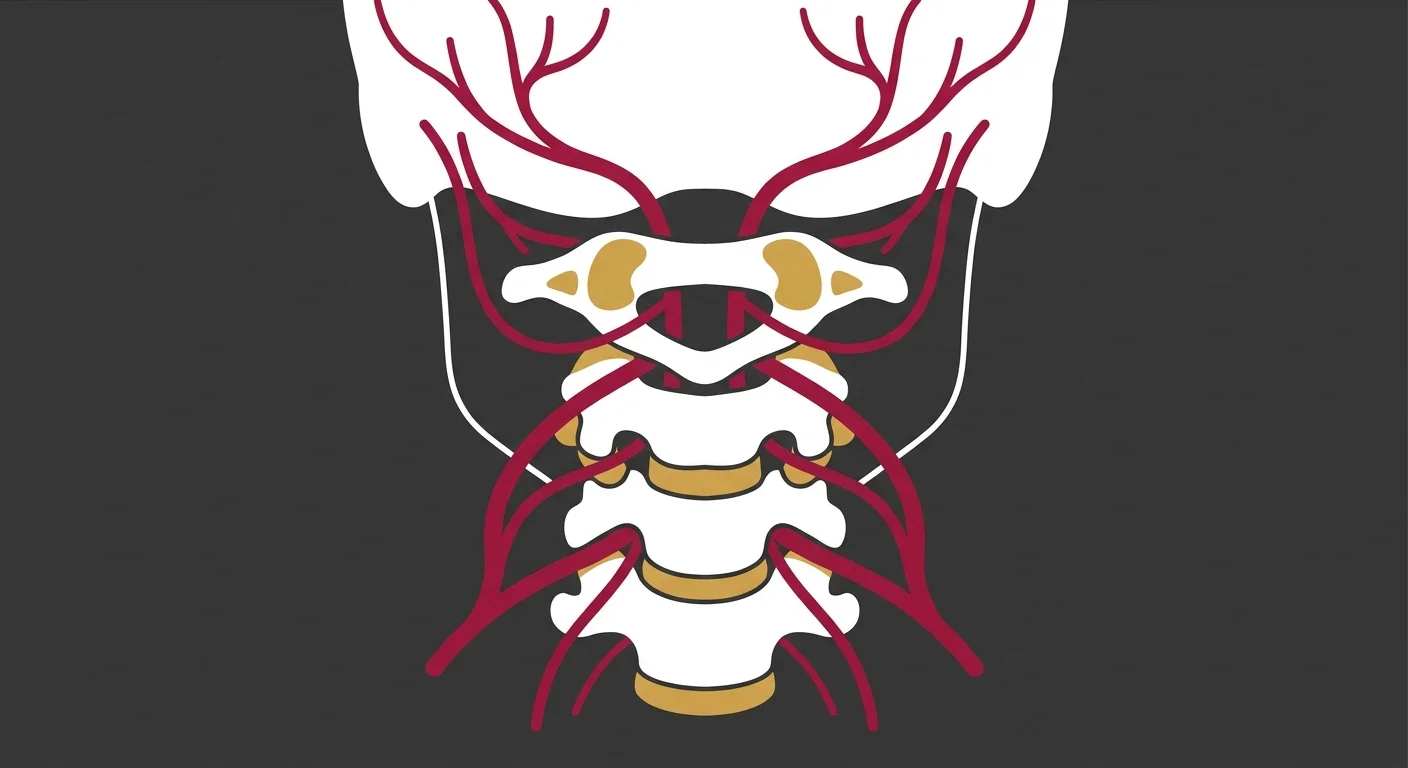
Cervicogenic headache is neither a brain disorder nor a joint disorder.
It's a referred pain condition — meaning the pain you feel behind your eye or across your temple isn't starting there. It's starting in your upper cervical spine and traveling forward through a shared neurological relay.
That's the distinction that changes everything.
Cervicogenic headaches account for 15% to 20% of all chronic and recurrent headache types — and they're misidentified as migraine at an alarming rate.
The pain location is identical. The neurological signature is completely different.
Patients who've spent years managing what they've been told is migraine — without ever getting lasting relief — are often dealing with a structural driver that no neurological protocol will ever resolve. If jaw discomfort and head pain seem to show up together, understanding upper cervical alignment and jaw symptoms is the clinical thread that reframes the entire picture.
The Trigeminocervical Pathway That Explains Referred Head Pain
So why does pain from your neck show up behind your eye?
The trigeminocervical nucleus is a relay structure in the brainstem. Pain signals from the upper cervical spine — C1, C2, and C3 — converge there with signals from the trigeminal nerve. That nerve covers the jaw, the face, the forehead, the eye socket.
When C1, C2, or C3 are irritated — from joint dysfunction, muscular tension, or postural compression — the pain doesn't stay in the neck. It borrows the trigeminal nerve's referral map. And it shows up exactly where migraine shows up.
The trigeminocervical nucleus can't distinguish between a signal coming from the jaw and one coming from C2. It processes both — and refers both forward.
This is why cervicogenic headache patients describe pain behind the eye, across the forehead, at the temple — with no neck pain at all.
The neck is the source. The head is the screen.
But there's one differentiator that makes cervicogenic headache identifiable — when someone knows to look for it.
Movement provocation. Rotate the head. Apply manual pressure to the upper cervical joints. Hold a static neck posture. In a cervicogenic headache, any of those will reproduce or worsen the pain. True migraine doesn't respond that way. TMD responds to jaw loading — not cervical movement.
Cervicogenic headache responds to the neck every time. Because that's where it's coming from.
That single clinical test rules in or rules out more diagnoses than any imaging study ordered by a specialist who never assessed the spine.
| Cervicogenic Headache Feature | Clinical Description | How It Differs From Migraine |
|---|---|---|
| Origin of pain | Pain is referred from the upper cervical spine — specifically the C1, C2, and C3 vertebral segments — and travels forward through the trigeminocervical relay system | Migraine originates in the brain itself through neurochemical and genetic mechanisms; there is no structural spinal source driving the pain |
| Pain location | Felt at the temple, behind the eye, across the forehead, or at the base of the skull — often on one side, with no neck pain present at the symptom site | Migraine also produces unilateral head and eye pain, making symptom location alone an unreliable differentiator between the two conditions |
| Movement provocation | Head rotation, sustained neck posture, or manual pressure applied to the upper cervical joints reproduces or worsens the headache — this is the defining clinical test | True migraine does not respond to cervical movement or positional change; pain intensity is independent of neck position |
| Neurological mechanism | The trigeminocervical nucleus processes pain signals from the upper cervical nerves and the trigeminal nerve simultaneously, routing cervical dysfunction into the face and head | Migraine is driven by cortical spreading depression and trigeminovascular sensitization — a central neurological process, not a referred structural one |
| Response to chiropractic adjustment | Responds directly to chiropractic adjustment of the upper cervical spine — addressing the structural source reduces or eliminates the referred pain signal | Chiropractic adjustment does not resolve the neurochemical drivers of migraine; cervical care addresses structural contributors that amplify frequency, not the migraine mechanism itself |
| Most common misdiagnosis route | Labeled as migraine because pain location is identical — the cervical source is never assessed, and the patient is managed neurologically without ever addressing the structural driver | Migraine is frequently over-diagnosed in patients whose headaches are actually structural; the neurological label closes the door on spinal assessment before it opens |
How the Three Conditions Compare Side by Side
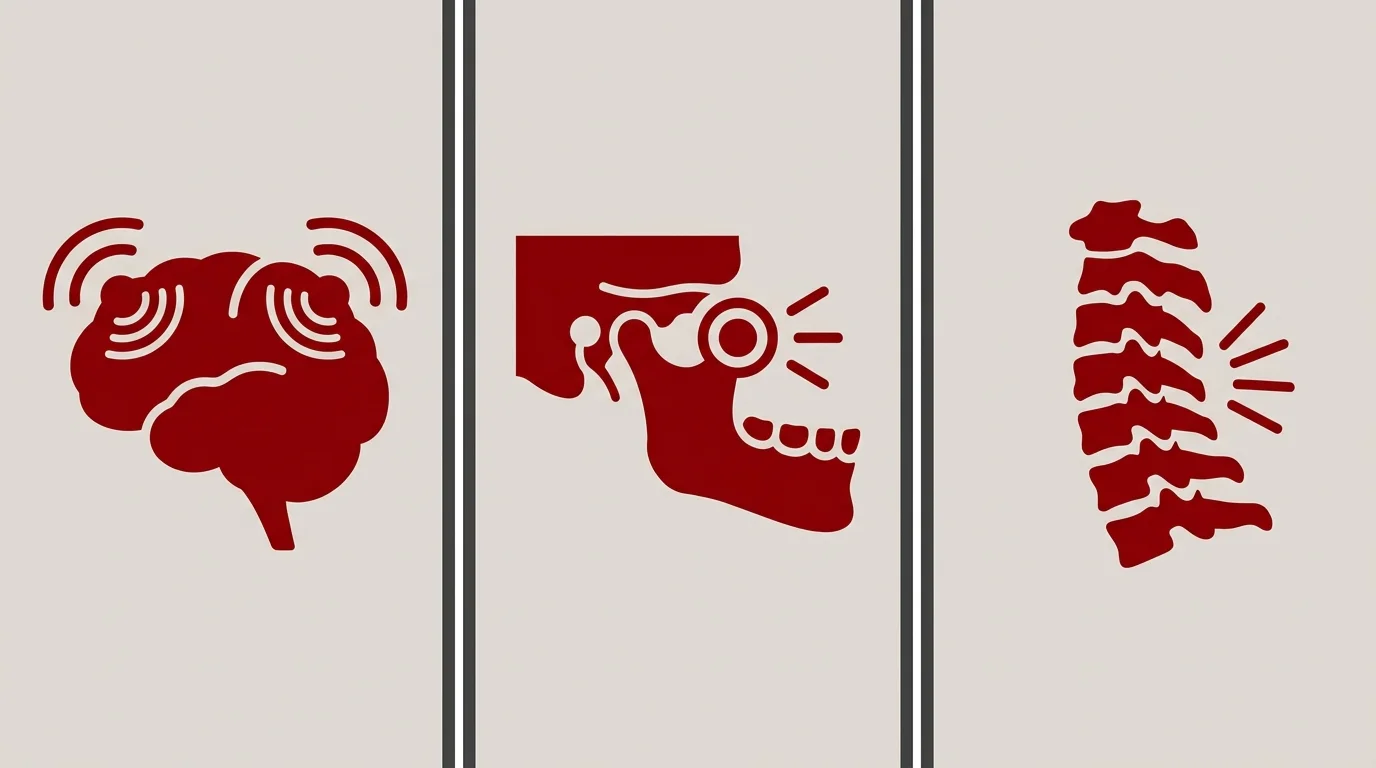
Here's the real problem. At the symptom level, these three conditions are nearly indistinguishable.
Pain behind the eye. Pressure across the forehead. Tension that wraps from the skull base forward. A patient can walk into three different offices and walk out with three different diagnoses — all of them technically defensible. None of them complete.
That's not a diagnosis problem. That's a source problem.
Symptom management buys time. Source identification ends the cycle. And the only place these three conditions actually separate from each other is at the source — which is exactly where most assessments stop.
The Symptoms That Overlap — and the Ones That Do Not
The overlap that fools experienced clinicians comes down to three shared features: unilateral head pain, referral into the eye socket and forehead, and symptoms that worsen under sustained posture — screen work, driving, hours at a desk.
Now add the population numbers. Migraine affects over 10% of the global population. Cervicogenic headache accounts for 15% to 20% of all chronic and recurrent headache types. TMD affects 5% to 12% of the population.
Some patients are carrying all three at once. And none of their providers are talking to each other.
But the divergence is real. And it's what makes the right diagnosis achievable.
Migraine doesn't shift with neck movement. It doesn't track jaw loading. It produces aura, nausea, and prodromal warning signals that the other two conditions simply don't generate.
TMD announces itself through jaw mechanics — clicking, restricted opening, pain on chewing. Its headache pattern follows the jaw's tension map, not the cervical spine's referral routes.
Cervicogenic headache responds to the neck. Every time. Movement provocation reproduces it. Sustained posture worsens it. Upper cervical pressure locates it.
Three conditions. One overlapping corridor. Same hallway — completely different sources.
Who Is Most Likely Getting the Wrong Diagnosis Right Now
The patients carrying the wrong diagnosis right now aren't edge cases. They fit the standard demographic profile for each condition. They just haven't had their full structural picture assessed.
TMD disproportionately affects younger women. In that population, jaw symptoms combined with recurring head pain get routed directly to dentistry. The upper cervical spine never enters the diagnostic frame.
That's not the dentist's fault. That's what happens when the specialty boundary is also the assessment boundary.
Cervicogenic headache patients are being diagnosed as migraine patients at a rate that should alarm anyone who's ever handed a patient a prescription that didn't work.
The pain location is identical. The aura criteria are absent. So the clinical default becomes migraine — and the structural driver in the upper cervical spine goes untouched for years.
Cervicogenic headache alone represents up to 20% of chronic headache presentations. In any busy headache practice, roughly one in five patients is walking out with a neurological protocol for a structural problem.
The patients who've been through the neurologist, the dentist, the ENT — without lasting relief — aren't treatment-resistant.
They're structurally misrouted.
The connection running through their symptoms is the upper cervical spine and the trigeminocervical system attached to it. In most cases, nobody has assessed it — not because providers are incompetent, but because no single specialty required them to cross that line.
That's what a fragmented system produces when the answer lives at the intersection of multiple specialty boundaries. Touch of Wellness Chiropractic is built to assess exactly that intersection — because that's where the answer has been the whole time.
| Condition | Primary Pain Source | Headache Location | Key Associated Symptoms | Who It Affects Most |
|---|---|---|---|---|
| Migraine | Neurological — originates in the brain and central nervous system; genetic predisposition drives attack threshold | Unilateral or bilateral; classically behind one eye or across one temple; can shift sides between episodes | Aura (visual disturbance, sensory changes), nausea, vomiting, photophobia, phonophobia, prodromal symptoms (mood changes, food cravings) hours before onset | Affects a broad cross-section of the population; strong hereditary pattern; more common in females of reproductive age |
| TMD (Temporomandibular Disorder) | Structural and muscular — originates at the temporomandibular joint and surrounding jaw musculature (masseter, temporalis, pterygoids) | Temples, jaw angle, and cheek; pain follows the jaw's muscular tension map rather than cervical referral routes; can radiate toward the ear | Jaw clicking or popping, limited mouth opening, pain on chewing or clenching, ear fullness, facial muscle tenderness; headache pattern worsens with jaw loading | Disproportionately affects younger women; frequently presents in patients with high stress loads, teeth-grinding habits, or occlusal imbalances |
| Cervicogenic Headache | Structural — referred pain from the upper cervical spine (C1, C2, C3) transmitted forward through the trigeminocervical nucleus | Behind the eye, across the forehead, and at the temple — identical in location to migraine but originating in the neck; no aura, no nausea | Neck stiffness or restricted range of motion, pain reproducible with cervical movement or sustained posture, shoulder and upper back tension; no prodromal phase | Common in desk workers, drivers, and anyone sustaining prolonged forward head posture; frequently misidentified as migraine because pain location overlaps completely |
What Clinical Assessment Actually Looks Like for These Headaches
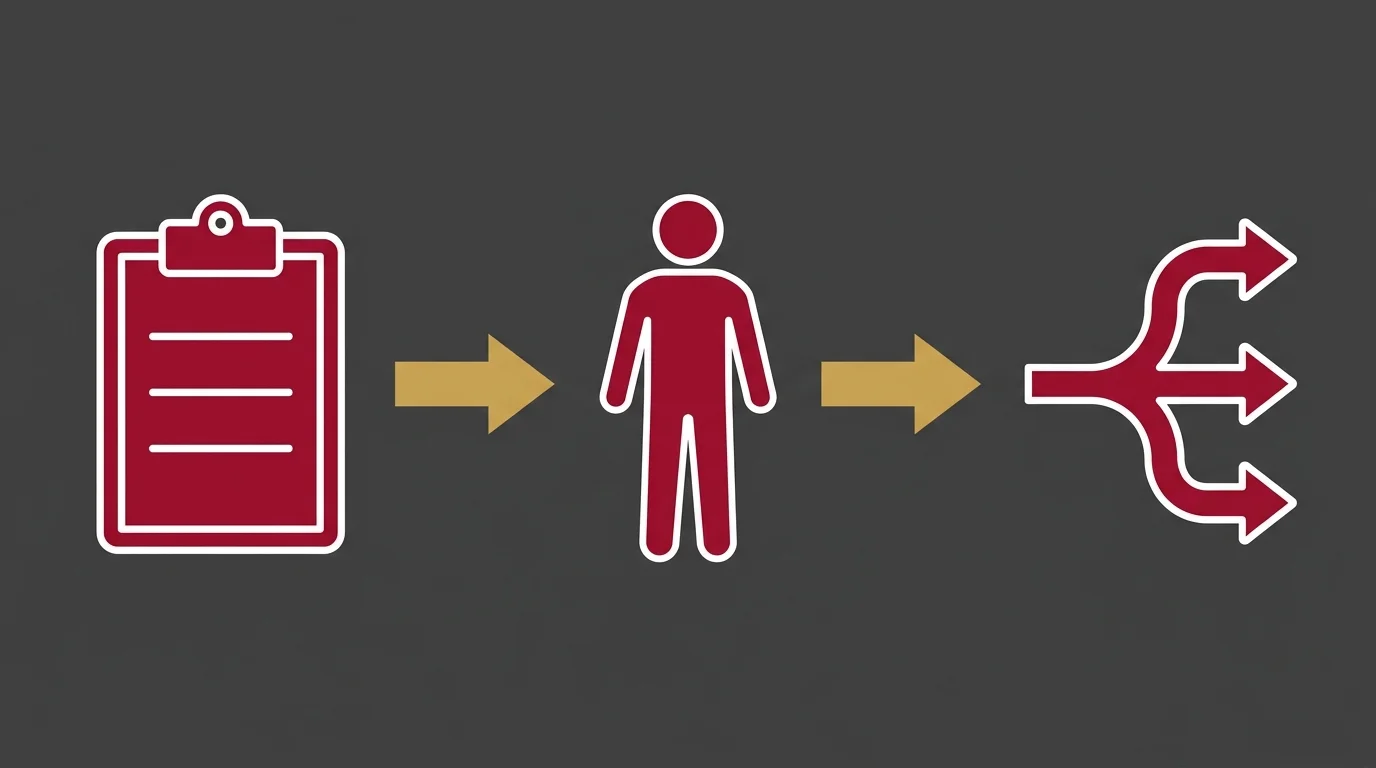
Most patients who walk in here have had plenty of imaging. What they haven't had is movement testing.
That's the gap.
An MRI doesn't tell you which headache type is driving symptoms. What does: load the cervical spine, challenge the jaw, watch how the pain responds. The diagnosis lives in the body's reaction — not the scan.
A real assessment covers three structural systems at the same time: the upper cervical joints, the temporomandibular joint mechanics, and the neurological referral pattern connecting them.
That's what separates a diagnostic evaluation from a symptom intake. At Touch of Wellness Chiropractic, it's the starting point for every patient — before a single treatment decision is made. Advanced soft tissue modalities only enter the picture after that structural assessment is complete.
You can't build the right care plan until you've assessed the hallway those symptoms are running through.
The Tests That Separate These Conditions in Practice
Movement provocation is the first test that draws the line between cervicogenic headache, migraine, and TMD.
The upper cervical spine goes through rotation, lateral flexion, and sustained flexion — and the examiner watches what happens to the headache. Does it reproduce? Worsen? Stay the same?
Cervicogenic headache responds every time. The source is in the C1, C2, and C3 structures being directly loaded. Migraine doesn't change. TMD doesn't change unless jaw loading is added separately. That one test tells you more than most specialist intake forms ever ask.
Manual palpation of the upper cervical joints is next. Direct pressure on the C1-C2 articulation or the surrounding suboccipital musculature in a cervicogenic patient doesn't just find tenderness.
It recreates the exact headache the patient came in with.
That's not incidental. That's the trigeminocervical system confirming its role — the signal originates in the neck, travels forward through the trigeminal pathway, and manual contact at the source reproduces the pain at the symptom site. Spinal manipulative therapy targeting these structures produces statistically significant reductions in headache frequency — which only works because the structural source is what's being addressed, not just where it hurts. What to expect during your first chiropractic exam is worth understanding before you ever step through the door.
Jaw loading tests run alongside the cervical assessment. Mandibular range of motion, joint sounds on opening and closing, whether resisted jaw movements reproduce the patient's head pain — all of it gets checked.
A positive jaw loading test points toward TMD as a primary or contributing driver. A negative one — where cervical provocation is positive and jaw provocation is not — points toward the upper cervical spine as the dominant source.
When both tests are positive, that's the clinical picture most specialists never see. Because they're only running one of them.
That's the assessment that changes the care plan. And it's the conversation that starts before any treatment begins.
| Assessment Method | What It Reveals | Which Condition It Targets |
|---|---|---|
| Cervical movement provocation | Whether the headache is reproduced or worsened by rotating, laterally flexing, or sustaining flexion postures in the upper neck — the definitive test for cervicogenic involvement | Cervicogenic headache (primary); rules out migraine and TMD as sole drivers |
| Manual palpation of upper cervical joints | Whether direct pressure on C1-C2 articulations and suboccipital structures recreates the patient's exact headache pattern — confirms the trigeminocervical referral pathway | Cervicogenic headache (primary) |
| Jaw loading and mandibular range of motion | Whether resisted jaw movements, opening and closing mechanics, or lateral deviation reproduce the patient's head pain — identifies TMD as a primary or contributing source | TMD (primary); helps isolate jaw-driven referral from cervical referral |
| Joint sound assessment on jaw opening and closing | Whether clicking, popping, or crepitus accompanies mandibular movement — signals internal derangement or articular disc displacement within the temporomandibular joint | TMD (primary) |
| Sustained posture challenge | Whether holding a static desk posture, downward gaze, or forward head position worsens symptoms over time — differentiates postural-structural loading from neurochemical migraine triggers | Cervicogenic headache and TMD (distinguishes both from migraine) |
| Neurological symptom screening | Whether the patient reports aura, prodromal visual disturbances, nausea, phonophobia, or photophobia — symptoms that are structurally absent in cervicogenic and TMD presentations | Migraine (primary); used to rule migraine in when structural provocation tests are negative |
| Combined cervical and jaw provocation | Whether both movement testing and jaw loading produce symptoms simultaneously — identifies the clinical picture where cervicogenic dysfunction and TMD are co-occurring rather than competing diagnoses | Mixed presentations (cervicogenic headache + TMD comorbidity) |
Frequently Asked Questions
The clinical picture is clear. What patients want to know is more personal — why the mouthguard didn't work, why the diagnosis didn't stick, and what a real next step looks like.
These are the questions that come up in almost every first assessment at Touch of Wellness Chiropractic. They deserve straight answers.
How do I know if my headache is a migraine or coming from my neck?
The single most reliable differentiator is neck movement.
Rotate your head. Flex it laterally. Hold a sustained forward posture. If your headache gets worse — or is reproduced — the source is structural, not neurological.
Migraine doesn't respond to cervical loading. It doesn't worsen when you turn your head. It generates aura, nausea, and light sensitivity that a cervicogenic headache simply doesn't produce.
So ask yourself one question: does moving your neck do anything to this pain? If yes, the neck is involved. That's a structural problem. No prescription resolves a structural problem.
Can a problem with my jaw actually cause a cervicogenic headache?
Yes — and it's one of the most under-assessed connections in chronic headache care.
The temporomandibular joint sits anatomically adjacent to the upper cervical spine. Jaw dysfunction creates muscular tension patterns that refer directly into the head. Up to 90% of patients diagnosed with TMD report co-occurring headaches. That's not coincidence. That's anatomy.
What makes this complicated: jaw dysfunction and upper cervical dysfunction frequently co-exist. The jaw loads the system from one direction. The neck loads it from the other.
Treat one without assessing the other, and partial results are all you'll ever get.
Why do mouthguards often fail to relieve TMD-related headaches?
A mouthguard addresses what the jaw is doing at night. It doesn't address why.
For many TMD patients, the driver is upper cervical tension — suboccipital muscles locked up, the C1-C2 articulation restricted, the jaw compensating for mechanical imbalance coming from above.
The mouthguard protects the teeth. It doesn't touch the structural load.
That's why patients wear them for years and still wake up with jaw pain and headaches. The jaw isn't the origin — it's the output. Managing the output while the driver runs unchecked isn't care. It's a workaround.
What specific tests will a chiropractor perform to differentiate these headaches?
The two tests that matter most are movement provocation and manual palpation of the upper cervical joints.
Movement provocation takes the neck through rotation, lateral flexion, and sustained flexion — the goal is to reproduce the patient's headache by loading the structures generating it. Manual palpation applies direct pressure to the C1-C2 articulation and suboccipital region. In a cervicogenic patient, this doesn't just find tenderness. It recreates the headache exactly.
Jaw loading tests run alongside: mandibular range of motion, joint sounds, and resisted jaw movements that establish whether the jaw is a primary driver or a secondary one.
Cervicogenic headache accounts for 15% to 20% of all chronic and recurrent headache types — these are cases that imaging never would have caught. Spinal adjustments targeting the structures that test positive produce statistically significant reductions in headache frequency, because the assessment found the actual source, not just the symptom site.
Is it safe to get a chiropractic adjustment if I have an active migraine?
During an active migraine, the goal isn't to introduce new mechanical input. Let the acute neurological event resolve first.
What a chiropractic assessment can establish — during or immediately after a migraine cycle — is whether upper cervical dysfunction is a contributing trigger. If it is, addressing that structural driver between episodes is what reduces their frequency over time.
The adjustment doesn't target the migraine. It targets the structural load the nervous system is carrying.
Reduce that load consistently, and the pattern changes. That's not a promise of a cure — that's how structural care works.
Stop Treating the Door When the Hallway Is the Problem
Three doors, one hallway.
The patients who've spent years cycling through specialists weren't unlucky. They were assessed at the door and never walked down the corridor.
The neurologist looked at the migraine. The dentist looked at the jaw. Nobody looked at the upper cervical spine sitting directly between those two systems — the structure that was driving referral patterns into both of them the entire time.
That's the gap this differentiation is designed to close.
Migraine, TMD, and cervicogenic headache don't just overlap at the symptom level. They share anatomical real estate. The trigeminocervical nucleus doesn't know which specialist's office you came from — it processes signals from the jaw and from C2 the same way and refers them forward the same way.
Treating the symptom site without identifying the structural source isn't incomplete care. It's the wrong address entirely.
If your headaches haven't responded to the protocols you've already tried — the mouthguard, the medication, the injections — the answer isn't that you're treatment-resistant.
The hallway hasn't been assessed yet.
At Touch of Wellness Chiropractic, that structural assessment — upper cervical joints, jaw mechanics, and the neurological referral pattern connecting them — is where every care plan starts. Not after a referral chain. Not after the fourth specialist. At the beginning, where the answer actually lives.
Three doors, one hallway. The question isn't which door your pain came through. It's whether anyone has looked at what's running between them.
If no one has looked at your upper neck as part of this — not just your jaw, not just your prescriptions — you don't have a full picture yet. That's exactly where the conversation at Touch of Wellness Chiropractic starts.
Copyright Touch of Wellness Chiropractic 2026
1101 W Jackson St, Suite A Morton, IL 61550
Web Design by iTech Valet