
(309) 321-8412 | 1101 W Jackson St, Suite A, Morton, IL 61550
(309) 321-8412 | 1101 W Jackson St, Suite A, Morton, IL 61550
Equine Gait Abnormalities: How to Recognize Spinal Pain Before Lameness Occurs
Equine gait abnormalities are not performance problems. They are spinal warnings — and most horses are already deep into dysfunction before lameness is ever officially called.
Back pain frequently precedes measurable lameness. It shows up first as compensatory movement patterns that owners read as attitude, laziness, or poor training. The signs are there. They are being misread.
Shortened stride length and reduced pelvic impulsion are among the first physical signals that something is wrong in the spine. Behavioral changes follow — resistance to saddling, head tossing, and bucking are not training failures. They are pain signals tied directly to discomfort in the vertebral column.
The horse's spine is not a collection of isolated joints. It is one continuous system of load transfer. When a joint loses mobility — a subluxation — the segments above and below compensate. That compensation changes how the horse moves at every point downstream. What looks like a hind limb problem often begins at the thoracic spine. What reads as behavioral resistance is often the horse reporting exactly where it hurts.
Chiropractic adjustment addresses these restrictions directly. Spinal mobilization produces significant increases in lateral bending and range of motion in the equine thoracic spine. At the tissue level, it reduces local muscle spasm and the neural pain signaling that locks compensatory patterns in place.
Animal chiropractic requires precise spinal assessment and targeted adjustments. It must be performed under veterinary professional oversight or by a practitioner certified through the American Veterinary Chiropractic Association (AVCA). That certification is not a formality. It is the clinical line between a precise, evidence-informed assessment and guesswork.
Recognizing spinal pain before lameness occurs means one thing: the chance to restore the chain while it is still correctable — before compensation becomes permanent structural injury.
Last Updated: August 18, 2026
- • What a Normal Equine Kinetic Chain Actually Looks Like
- • The Pre-Lameness Window: Behavioral Signals That Precede Gait Breakdown
- • Why Most Gait Problems Start in the Spine, Not the Leg
- • Why Treating the Leg Without Checking the Spine Is a Clinical Dead End
- • How AVCA-Certified Animal Chiropractic Evaluates the Equine Spine
-
• Frequently Asked Questions
- • How can I tell if my horse has spinal pain before they go lame?
- • What behavioral signs point to an equine spinal subluxation?
- • Can animal chiropractic care correct uneven gaits in horses?
- • How does masking pain with Bute affect equine spinal health long-term?
- • Is equine animal chiropractic care safe for performance horses?
- • How many sessions does it take to see gait improvement after a spinal assessment?
- • The Kinetic Chain Restored: What Early Intervention Actually Changes
What a Normal Equine Kinetic Chain Actually Looks Like
Most owners describe a gait problem by pointing to where they see it. A short step behind. A dip in the hip. A head bob on the left lead.
But those are downstream expressions. The actual disruption starts somewhere else entirely.
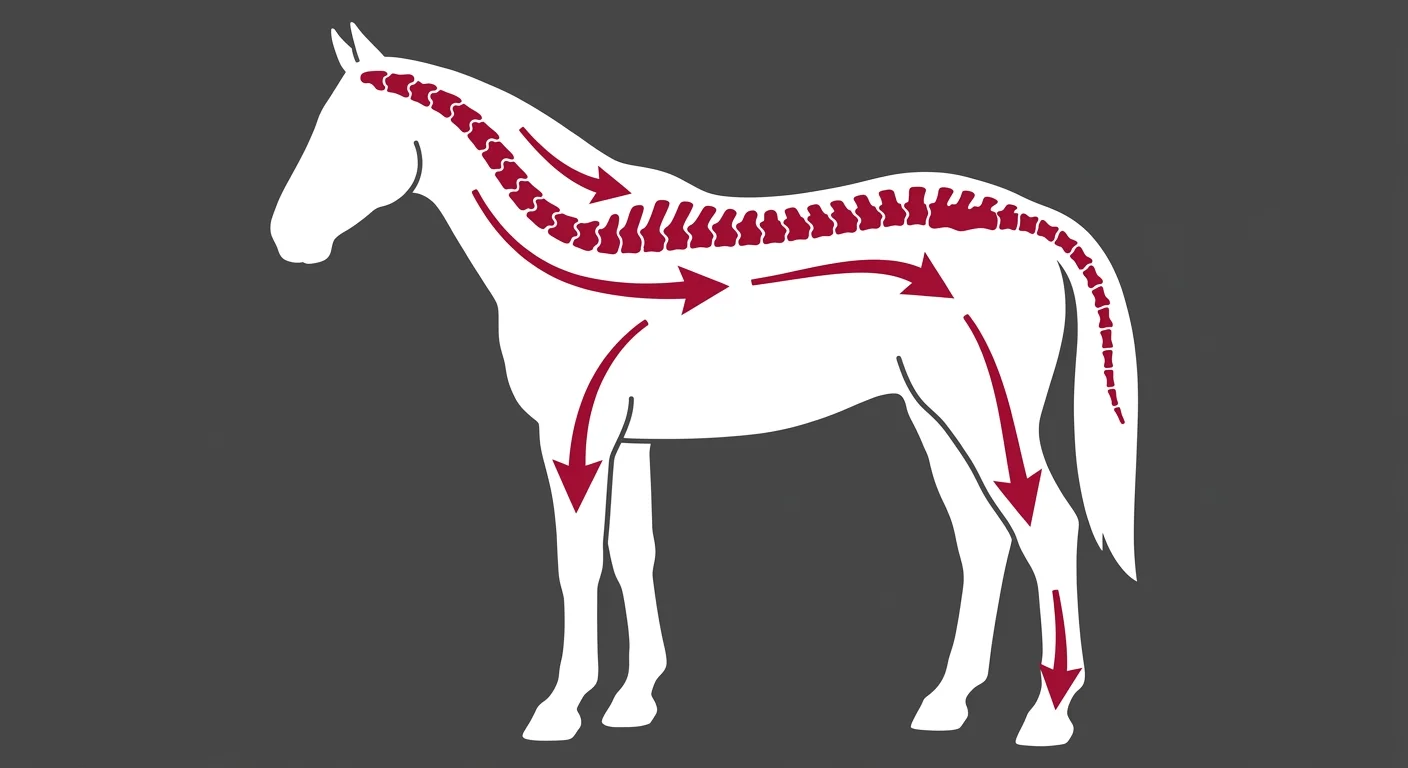
A horse's spine — poll to sacrum — is one continuous load-transfer system. Every stride demands that it flex, extend, and rotate in precise, coordinated sequence.
When every joint moves freely, the whole horse moves freely. Force generated by the hindquarters travels forward through the lumbar spine, through the thoracic vertebrae, through the neck — releasing as forward propulsion. That's the kinetic chain doing exactly what it was built to do.
But the chain only works when every link is mobile.
One restricted joint — one subluxation — interrupts the transfer. The segments around it compensate. Then the segments around those compensate. What starts as a single stuck joint in the thoracic spine becomes a whole-body movement pattern built around protecting that restriction.
How the Spine Distributes Load Across the Horse's Body
The horse's spine isn't a passive structure. It's an active load manager.
At every stride, the thoracolumbar junction absorbs and redirects the mechanical force of hindquarter engagement. The sacroiliac joint translates that force into forward movement. The cervical spine counterbalances the head and neck to stabilize the entire system.
When those structures move without restriction, the horse distributes load symmetrically. Both sides of the spine share the work equally. The topline muscles fire in sequence — not in compensation.
Research on spinal mobility in the equine thoracic spine confirms this directly. Significant increases in lateral bending and range of motion follow when restrictions are addressed. That finding matters because it tells you what's possible when the chain is actually intact.
So when we talk about a normal kinetic chain, we're describing something specific. Even load distribution from hindquarters to forehand. Symmetrical lateral bend through the thoracic and lumbar spine. Free sacroiliac movement that lets the pelvis swing without hitching.
That's the baseline. And it's measurable — not assumed. AVCA-certified assessment standards exist specifically to evaluate whether a horse is holding that baseline through trained clinical observation.
What Unrestricted Spinal Movement Produces in the Saddle and on the Ground
Under saddle, unrestricted spinal movement has a specific look. The horse accepts contact without bracing. Both hind legs step under with equal engagement. Lateral work happens without argument.
The topline stays soft. The rhythm stays consistent. Transitions don't become negotiations.
On the ground, you see it in even hoof wear, symmetrical muscling across the hindquarters and shoulders, and a walk that shows full, unhurried pelvic swing.
None of those things happen when the chain is restricted. And when they're missing, the chain is already telling you something — long before clinical lameness gives you an official diagnosis to work from.
| Spinal Region | Primary Biomechanical Role | Effect on Gait When Restricted |
|---|---|---|
| Poll and cervical spine | Counterbalances head and neck weight; stabilizes the entire kinetic chain from the front end | Stiffness on one rein, resistance to flexion, head tossing under saddle, and shortened reach through the shoulder on the restricted side |
| Thoracic spine | Transmits hindquarter engagement forward; primary region of lateral bending under saddle | Reduced lateral suppleness, back tightness, resistance to collection, and a flat or choppy stride through the middle of the body |
| Thoracolumbar junction | Absorbs and redirects mechanical force generated by the hindquarters into forward propulsion | Reluctance to round the back, avoidance of engagement, inconsistent rhythm in trot and canter, and difficulty maintaining impulsion |
| Lumbar spine | Connects hindquarter power to the thoracic chain; supports pelvic flexion and extension during each stride | Hip hike or asymmetrical pelvic movement, shortened hind stride on the affected side, and difficulty with uphill transitions |
| Sacroiliac joint | Translates hindquarter thrust into forward movement; primary junction between pelvis and spine | Bunny-hopping at the canter, cross-firing, dragging a hind toe, and uneven hoof wear between left and right hind |
The Pre-Lameness Window: Behavioral Signals That Precede Gait Breakdown
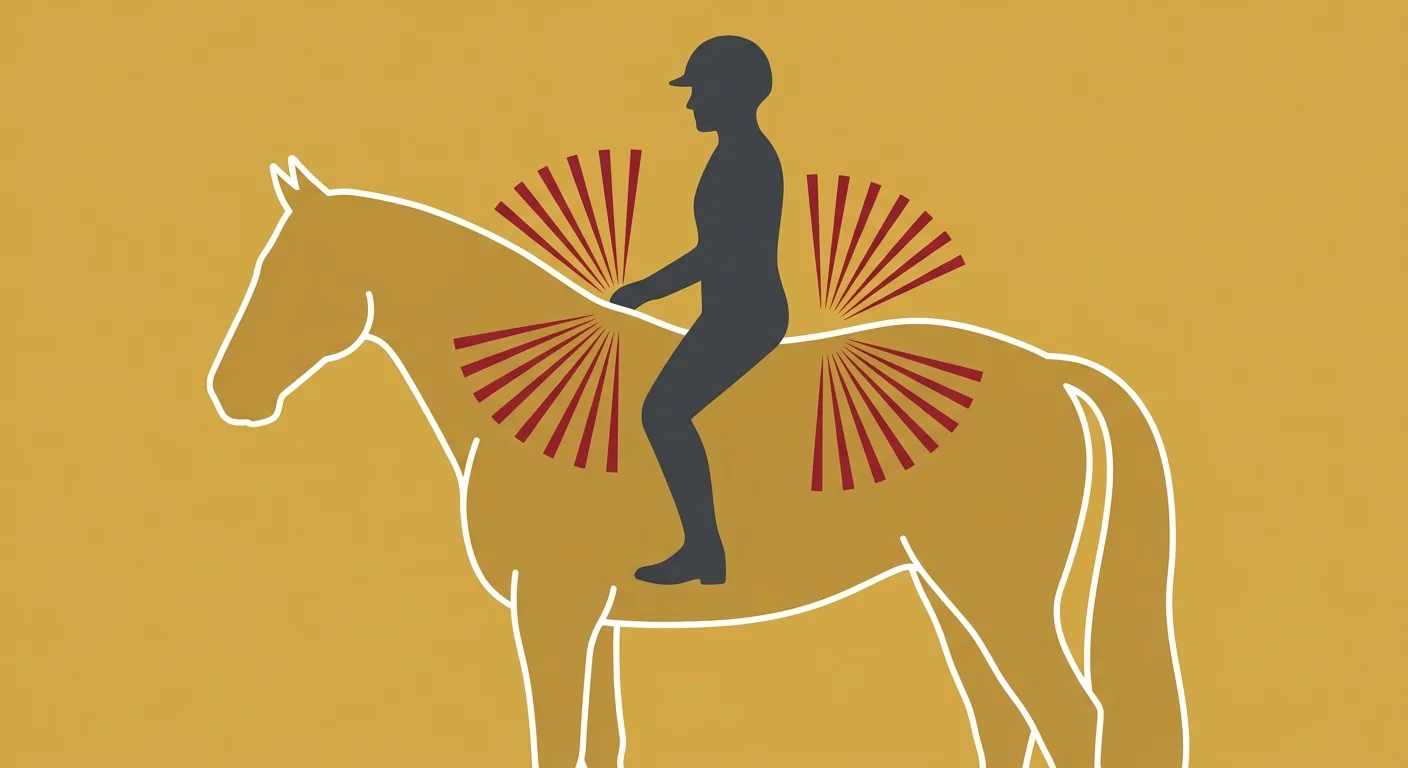
The first break in the chain isn't a limp. It's a behavior.
Before any stride shortens. Before any veterinarian grades anything. The horse is already telling you — through resistance, through tension, through the kind of inconsistency that gets labeled attitude or a rough training week.
That's the pre-lameness window. It exists in every case.
And it matters because NIH research on equine pain confirms that back pain is already driving compensatory biomechanical shifts — weight redistribution, subtle asymmetry — long before measurable lameness gives a veterinarian something to grade. The horse isn't performing poorly. The chain is already reorganizing around a restriction.
Here's the thing: that window isn't invisible. It's being read through the wrong frame.
Owners and trainers aren't wrong to notice the behavior. They're wrong about where it's coming from.
Resistance, Head Tossing, and Saddle Sensitivity as Spinal Indicators
Resistance to saddling is one of the most consistent early signals of spinal pain.
A horse that pins its ears during girthing, shifts away from the saddle, or tenses through the back the moment weight is applied isn't being difficult. It's reporting pain — at the contact points closest to the restricted joint.
Head tossing and choppy transitions follow the same logic.
When spinal restriction limits the horse's ability to lift through the back, it braces through the neck instead. The head toss isn't defiance. It's the horse searching for a compensatory position — one that takes pressure off the restricted segment.
Colorado State University Extension confirms that behavioral changes and performance declines are frequently tied to physical discomfort in the vertebral column — not to gaps in training or handler error.
Saddle sensitivity points directly at thoracic spinal dysfunction. That's where the saddle sits. That's where the pressure lands. And that's where a subluxation makes contact-based discomfort intolerable.
Why Most Owners Mistake Spinal Pain for a Training or Attitude Problem
Most owners don't see a pain signal. They see a behavior problem.
That reframe — attitude, laziness, a training gap — is the most common reason spinal dysfunction goes unaddressed until the horse is clinically lame.
The horse can't tell you its thoracic spine is restricted. So it tells you through the only vocabulary it has — resistance, avoidance, inconsistency.
A horse that was moving forward freely last month and is now backing off contact, dropping behind the leg, or refusing lateral work hasn't developed a bad attitude. Something in the chain changed.
This misread costs horses time they don't have.
Every training session spent pushing through that resistance reinforces the compensatory pattern. When muscles learn to protect a restriction instead of correct it, you're no longer dealing with a subluxation. You're dealing with a structural adaptation that took months to build.
That same misread is what drives owners toward long-term Bute usage in horses — masking the pain signal while the underlying restriction keeps driving compensation.
Why the Cookie-Cutter Lameness Workup Misses Preclinical Spinal Pain
A standard lameness workup was built to grade lameness that's already present. It evaluates what's observable.
It was not built to catch preclinical spinal dysfunction — the kind producing behavioral signals without yet producing measurable gait asymmetry.
So a horse in the pre-lameness window will often pass a standard flexion test. It trots out sound on a straight line. The workup concludes negative.
The behavioral signals continue. And because the test came back clean, the behavior gets re-filed as a training issue — and the window closes a little further.
That's the gap a systems-level assessment fills.
Spinal palpation, range of motion evaluation, and hands-on assessment of joint mobility examine the chain directly — not just its downstream output. A horse that trots out sound can still carry a restricted thoracic joint that is already reorganizing every subsequent link in the chain.
Finding that restriction before the chain breaks down entirely is exactly what AVCA-certified animal chiropractic assessment is designed to do.
| Behavioral Signal | Common Misdiagnosis | Likely Spinal Origin |
|---|---|---|
| Resistance to saddling or girthing | Attitude problem or saddle fit issue | Thoracic spinal restriction at the primary saddle contact zone |
| Head tossing under contact | Dental issue or bit incompatibility | Cervical or cranial thoracic subluxation limiting the horse's ability to lift through the back |
| Bucking or crow-hopping during transitions | Evasion or training gap | Lumbar or thoracolumbar restriction creating pain spikes during collection and downward transitions |
| Inconsistent engagement from one hind leg | Weak hindquarters or lack of impulsion training | Sacroiliac dysfunction disrupting symmetrical pelvic drive and load transfer |
| Dropping behind the leg or refusing lateral work | Laziness or lack of forward training | Mid-thoracic restriction limiting spinal lateral flexion required for lateral movements |
| Uneven topline muscling or one-sided stiffness | Unbalanced riding or conformation fault | Chronic compensation pattern protecting a unilateral vertebral restriction — often mid-back or lumbosacral |
Why Most Gait Problems Start in the Spine, Not the Leg
The leg gets blamed. That's where the limp shows up, so that's where the attention goes.
But the leg is almost never where the problem starts.
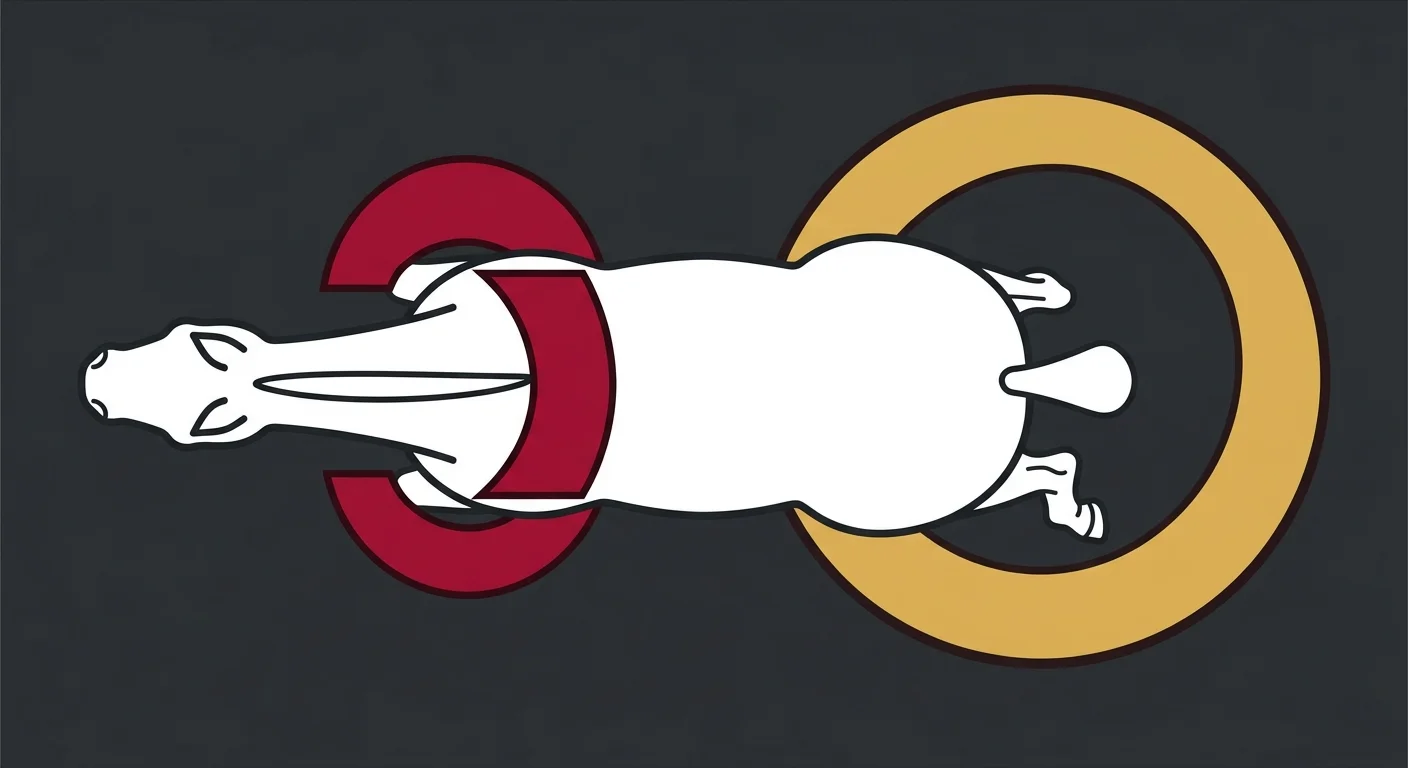
Here's how every stride actually works. The thoracolumbar junction absorbs the force. The sacroiliac joint redirects it. The cervical spine counterbalances to keep everything stable. That's the chain — and it runs that sequence thousands of times a day.
When one segment loses mobility, the restriction doesn't stay local. It travels. Every link downstream inherits the compensation. The limbs are the last stop.
That distinction determines everything.
A limb-focused diagnosis examines the endpoint. A spinal assessment examines the chain — and finds where the breakdown actually started.
How Spinal Restriction Creates Compensatory Lameness Downstream
Compensatory lameness doesn't begin in a tendon. It doesn't begin in a joint capsule.
It begins when the spine stops distributing load symmetrically. One restricted thoracic joint forces the segments around it to pick up the slack. Those segments shift the load. The hindquarters lose equal engagement. The opposite diagonal forelimb absorbs more impact than it was designed to handle.
The horse is protecting the restriction. The limbs are paying the bill.
That compensation is what eventually grades as lameness. But it was a spinal problem first.
Research from the University of Illinois College of Veterinary Medicine confirms that equine back pain drives compensatory biomechanical shifts — weight redistribution, subtle asymmetry — long before measurable lameness gives a veterinarian something to grade.
By the time a flexion test catches it, the compensatory pattern has been running for weeks.
So the question isn't whether the horse is lame. The question is what's driving it — and whether the chosen treatment addresses that origin or just dims the signal.
Owners weighing joint injections and NSAIDs against spinal assessment are really asking: which approach works on the chain, and which one quiets the output while the chain keeps breaking?
Treating the limb when the spine is the origin doesn't resolve the compensation. It reduces how loudly the horse reports it. The restriction stays. The pattern continues. And the next grade of lameness is already building.
Stride Length Changes: The First Measurable Sign of Spinal Dysfunction
Shortened stride isn't subtle once you know what you're watching. It's the first measurable sign that the kinetic chain has already reorganized around a restriction.
The University of Minnesota Extension identifies shortened stride length and reduced pelvic impulsion as primary indicators of spinal pain — showing up before lameness is visible to the naked eye.
The horse isn't guarding a limb. It's guarding the spinal segment where full extension has become painful.
Once that shortened stride becomes habitual, the problem changes shape.
The neuromuscular system learns to fire around the restriction. Muscles stop recruiting at full length. The topline flattens. The hindquarters lose impulsion. What started as one restricted joint has restructured how the horse moves through its entire body.
That's the window animal chiropractic assessment is built to close — before the compensatory pattern becomes the movement pattern, and before the chance to restore the chain disappears into structural adaptation.
| Gait Observation | Apparent Cause | Actual Spinal Source | What Gets Missed Without Spine Evaluation |
|---|---|---|---|
| Shortened stride on one rein | One-sidedness or training resistance | Restricted thoracic or lumbar joint limiting full spinal extension | Compensatory shortening becomes habitual before any limb pathology is present |
| Loss of pelvic impulsion and hindquarter engagement | Weakness or fatigue in the hindquarters | Sacroiliac restriction reducing load transfer through the lumbosacral junction | Reduced propulsion gets misread as fitness or conditioning deficit rather than a mobility limitation |
| Diagonal asymmetry at the trot | Forelimb or hindlimb unsoundness | Thoracolumbar restriction forcing uneven load distribution across diagonal limb pairs | The limb absorbing excess impact is treated while the spinal origin of the imbalance goes unaddressed |
| Reluctance to collect or work through the back | Lack of training, evasion, or suppleness deficit | Cervical or mid-thoracic restriction preventing the horse from lifting and rounding through the topline | The rider increases training pressure on a horse that is physically unable to comply without pain |
| Uneven hoof wear or muscle asymmetry across the topline | Conformation or footing issues | Chronic spinal restriction causing the horse to consistently favor one side under load | Structural adaptation in the musculature becomes the new baseline, masking the original restriction |
Why Treating the Leg Without Checking the Spine Is a Clinical Dead End
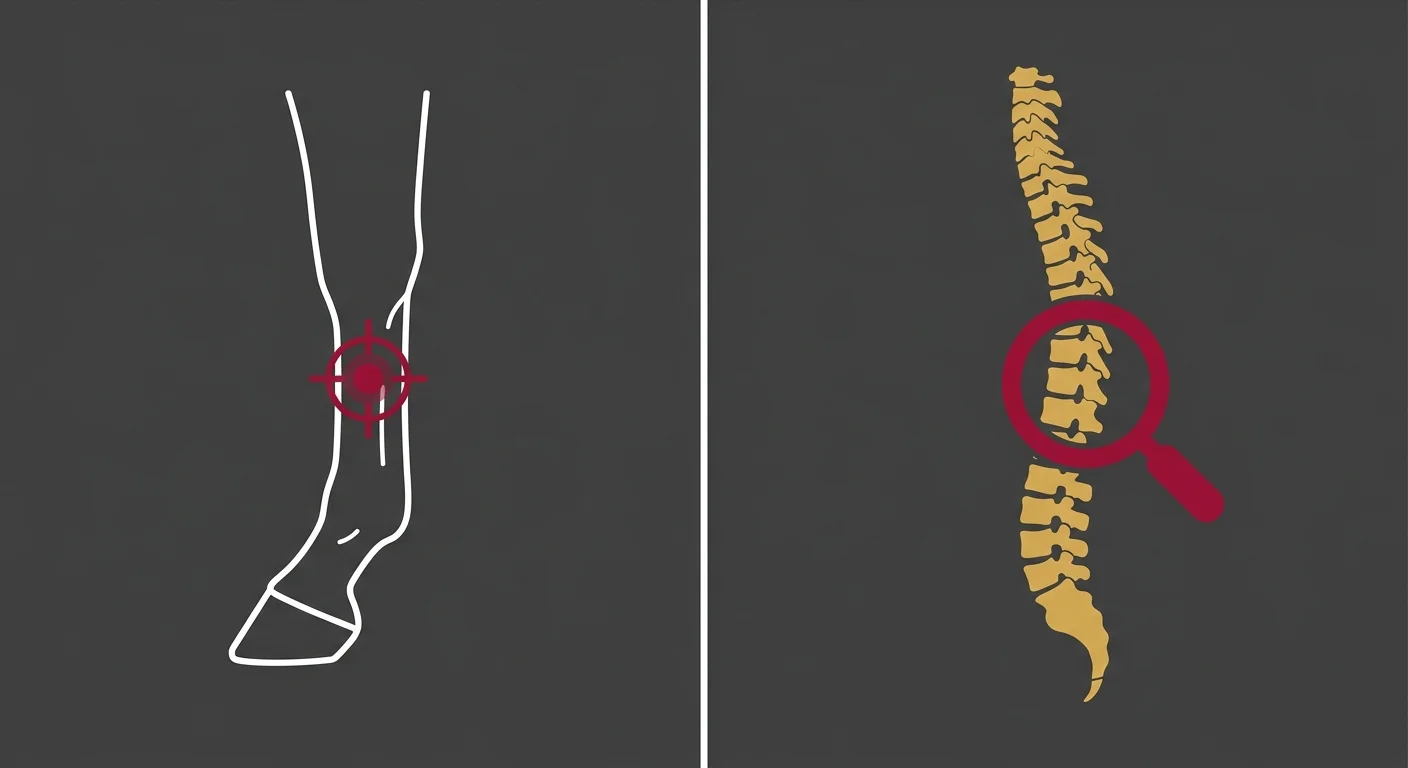
The leg is where the limp shows up. It is almost never where the problem starts.
When a horse comes up lame on the same leg for the third time in a season, the working assumption is that the leg has a problem. So the leg gets injected, rested, re-evaluated. It improves — until it doesn't.
That cycle is not bad veterinary care. It is accurate care applied to the wrong location. The leg is absorbing the consequence of a spinal restriction that was never identified.
Back pain reorganizes how a horse moves long before any vet can grade a lameness. The horse shifts weight. Carries subtle asymmetry. Loads the limbs unevenly. And the leg that fails the flexion test is usually the one that's been absorbing that extra load for weeks.
Treat the limb and leave the spinal restriction in place, and nothing about that load distribution changes. The same leg takes the same disproportionate force. The same lameness comes back.
What Standard Lameness Exams Evaluate — and What They Skip
Here's what a standard lameness exam is built to do: find dysfunction that's already producing measurable asymmetry. Flexion tests, trot-outs, hoof testers, nerve blocks — every tool in that workup starts at the limb and works inward.
That's not a flaw. It's a design. What those tools don't do is evaluate the spinal segments that are driving the compensation upstream.
So a horse with a restricted thoracic joint trots out clean. Flexion tests come back negative. The vet clears the horse — and that call is correct, given the tools in the room.
But the spinal restriction is still there. Still reorganizing the kinetic chain. Still loading one diagonal harder than the other. The exam answered its own question perfectly. It just wasn't asking the right one.
That gap is exactly what collaborative care between veterinarians and AVCA-certified practitioners closes. Spinal palpation and range of motion assessment examine the chain at its origin — not just the downstream output the lameness exam grades.
AVCA certification exists because identifying and correcting spinal restrictions in a horse requires a level of clinical precision that isn't built into a standard veterinary workup. These aren't redundant evaluations. They're looking at different parts of the same system.
The Recurrence Pattern: When the Same Leg Keeps Coming Up Lame
Recurrent lameness in the same limb is one of the clearest signs that the spine was never part of the evaluation.
The limb gets treated. The horse returns to work. The compensatory loading pattern picks up exactly where it left off — because the restriction that created that pattern was never addressed. Weeks or months later, the same leg comes up lame again.
That's not bad luck. That's the kinetic chain telling you the same thing it's been telling you since the first behavioral signal — the origin is upstream.
Rest cycles don't fix vertebral restrictions. Neither do limb injections. The behavioral changes and performance declines tied to spinal dysfunction don't resolve when the leg gets a break. They resolve when the restriction driving the compensation is identified and corrected.
Leave the spine out of the evaluation, and the leg will keep coming up lame. The window to restore the chain keeps closing.
| Evaluation Approach | What It Assesses | What It Does Not Assess | Clinical Risk if Spine Is Skipped |
|---|---|---|---|
| Standard Lameness Examination (flexion tests, trot-outs, nerve blocks) | Observable gait asymmetry, localized joint dysfunction, graded lameness in visible movement | Spinal segment mobility, thoracolumbar restriction, sacroiliac joint function, upstream load distribution | Limb is treated as the origin; spinal restriction continues driving compensatory loading; same lameness recurs in the same leg |
| Hoof and Lower Limb Evaluation (hoof testers, radiographs, ultrasound of distal structures) | Structural integrity of the hoof capsule, coffin joint, navicular region, and soft tissue of the lower limb | Thoracic and lumbar joint mobility, pelvic symmetry, cervical range of motion, kinetic chain origin of disproportionate limb loading | Repeated injections or corrective shoeing address the consequence; the chain restriction that shifted load onto that limb remains unresolved |
| Isolated Joint Injection Protocol | Local inflammation and pain response within the targeted joint; short-term reduction of observable lameness grade | Whether the joint is inflamed because of a local problem or because it is absorbing disproportionate force from a spinal restriction upstream | Pain signal is quieted; compensatory loading pattern continues; the injected joint re-inflames under the same uneven force distribution |
| NSAID / Bute Management Protocol | Systemic pain reduction; temporary suppression of behavioral and gait indicators of discomfort | The spinal subluxation or restriction generating the pain signal; whether the kinetic chain is distributing load symmetrically | Horse returns to work with restriction intact; behavioral signals masked; pre-lameness window closes without intervention; structural deterioration continues unseen |
| AVCA-Certified Animal Chiropractic Assessment (spinal palpation, range of motion evaluation, joint mobility assessment) | Segment-by-segment mobility of the equine spine, sacroiliac function, cervical range of motion, muscular asymmetry along the topline | Acute structural injuries requiring surgical or pharmacological management; does not replace veterinary diagnosis of fractures or significant joint pathology | When integrated early, identifies the chain origin before compensatory patterns become habitual — enabling intervention before limb structures absorb irreversible load |
| Collaborative Evaluation (veterinary lameness exam + AVCA-certified spinal assessment) | Both the downstream output (observable lameness) and the upstream origin (spinal restriction driving compensation) | Nothing structural is missed from either direction — limb and spine are both part of the evaluation | Lowest clinical risk; the full kinetic chain is assessed; intervention targets the correct location; recurrence pattern is interrupted at the source |
How AVCA-Certified Animal Chiropractic Evaluates the Equine Spine
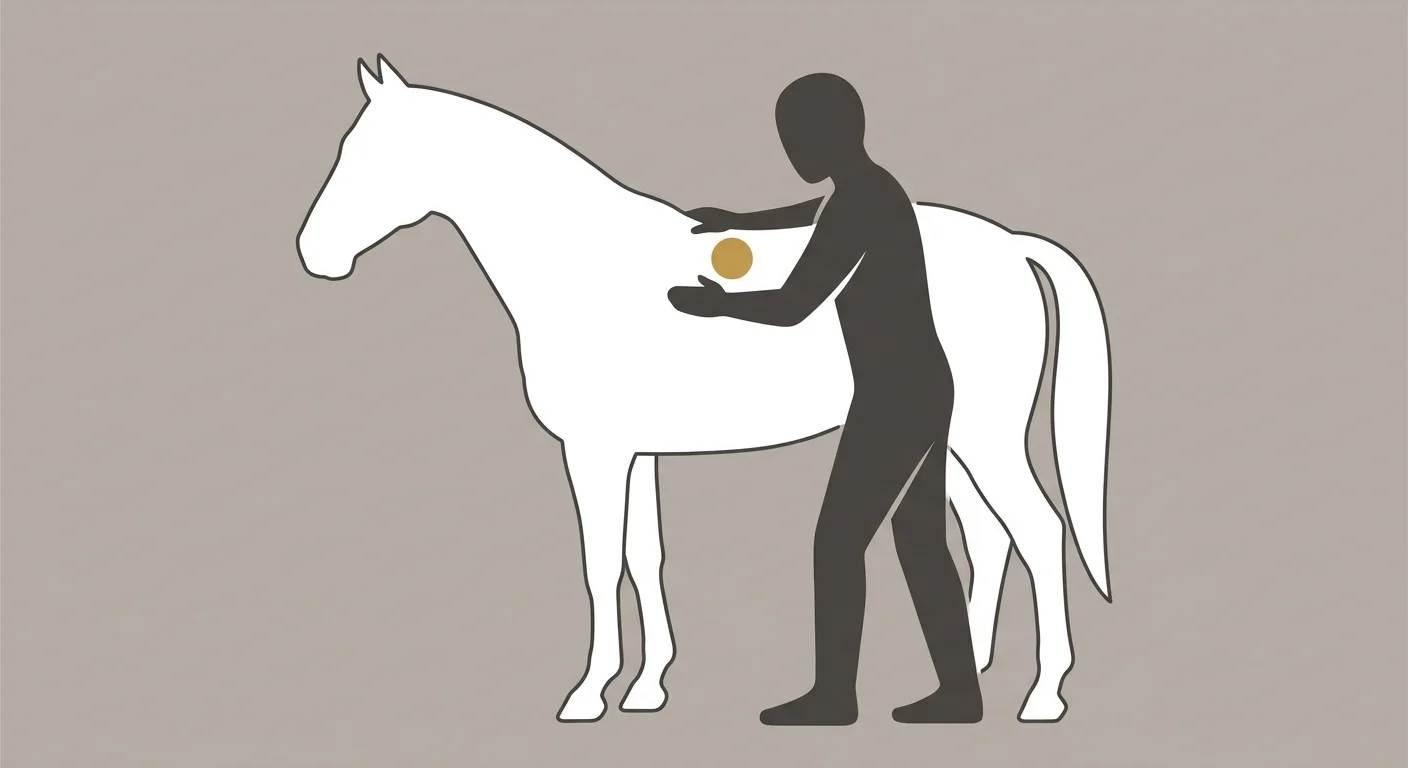
Standard evaluations start at the limb. That's the wrong starting point. The real question is: where in the chain is the restriction — and how many links downstream has the compensation already traveled?
AVCA-certified animal chiropractic care is built around exactly that question. The evaluation starts at the spine — palpating each vertebral segment for restricted motion, asymmetric muscle tension, and localized pain response. Not at the limb. AVCA certification exists because that kind of precision demands it. This is a specialized clinical modality, and the standards governing it reflect that.
That credential isn't a formality. Equine spinal tissue responds to pressure differently than limb tissue — and the margin between therapeutic contact and injury is narrow. AVCA certification exists because that margin is real and the stakes are high. This is a joint-by-joint mobility evaluation of the entire axial skeleton, performed by someone trained to find restrictions that show no measurable lameness yet. The precision is the point.
What the Spinal Assessment Actually Measures
Here's the thing: the assessment isn't measuring pain directly. It's measuring motion. Every vertebral segment has a normal range of motion relative to its neighbors. When a segment is restricted, it moves differently under palpation. It resists. It recruits surrounding musculature defensively. Or it produces a localized pain response the horse can't hide — even when nothing shows up on a trot-out.
Spinal mobilization addresses exactly that. Research confirms it produces a significant increase in lateral bending of the equine thoracic spine — which means the assessment isn't just locating restrictions. It's establishing a measurable baseline. When treatment restores normal motion, that baseline changes. And that change is how you know it's working.
And motion assessment reveals what behavioral observation can only suggest. A horse that pins its ears at saddling is telling you something is wrong. Spinal palpation tells you exactly where — which thoracic segment, which sacroiliac joint, which cervical level is loaded and restricted. The behavioral signal leads you to the chain. The assessment finds the link.
What Changes After Restricted Joints Are Restored to Normal Motion
When a restricted joint is restored to normal motion, the compensation pattern that built around it loses its anchor. The segments that were overloading to protect the restriction can move through their full range again. The hindquarters re-engage. The topline lengthens. The stride stops being a managed workaround and starts being what the horse is actually capable of. Manual therapy reduces reflex muscle contraction and improves joint motion symmetry throughout the equine axial skeleton — the research confirms it.
That's what finding the restriction early makes possible. Restore one link, and every link downstream gets its load redistributed. The horse isn't just moving more comfortably. It's moving the way it was built to move — full chain engaged, load distributed evenly, the spine doing the job it was designed to do. That's what it means to restore the chain.
| Assessment Component | What It Identifies | Why Standard Lameness Exams Omit It |
|---|---|---|
| Vertebral segment palpation | Restricted joint motion, asymmetric tension, and localized pain response at specific spinal levels | Lameness exams evaluate limb mechanics and observable gait asymmetry — spinal segments produce no measurable lameness until compensation is advanced |
| Range of motion assessment | How far each vertebral segment moves relative to its neighbors — and which segments resist normal motion | Flexion tests isolate limb joints; they do not evaluate the axial skeleton's joint-by-joint mobility pattern |
| Muscle tension mapping | Asymmetric recruitment patterns and defensive bracing that indicate where the spine has reorganized around a restriction | Standard exams grade visible muscle atrophy or swelling — subclinical tension and compensatory bracing are not part of the scoring criteria |
| Kinetic chain origin tracing | The upstream spinal restriction driving downstream limb loading — where the compensation begins, not where it lands | Lameness grading identifies which limb is affected; it does not trace load redistribution back to its spinal source |
| Pain response mapping under palpation | Segment-specific discomfort that the horse cannot suppress — ear pinning, guarding, or localized muscle flinch under direct contact | Hoof testers and nerve blocks isolate distal limb pain; vertebral pain responses require direct spinal contact to surface |
| Post-adjustment motion baseline | Measurable change in spinal mobility following adjustment — confirming the restriction was present and that treatment restored normal motion | Standard lameness re-evaluations measure limb symmetry at trot; they do not establish or track spinal range of motion as a treatment outcome |
Frequently Asked Questions
Horse owners asking the right questions deserve straight answers. Here's what actually gets asked — and what the answer is.
These questions come up after a horse passes a lameness exam and keeps showing behavioral signals anyway. After the same leg comes up lame a second time. After a horse that used to jump clean starts refusing fences. Standard veterinary workups aren't built to catch what's happening before the threshold — and by the time the diagnosis arrives, the window for early intervention has already been open and closing.
How can I tell if my horse has spinal pain before they go lame?
Start with the stride. Shortened stride length and reduced pelvic impulsion are early markers of spinal dysfunction. The horse isn't dragging a leg. It's protecting a restriction. Resistance to saddling, head tossing, and reluctance to bend consistently in one direction show up next. These behavioral changes appear before clinical lameness is measurable. That's the window.
What behavioral signs point to an equine spinal subluxation?
Resistance to saddle pressure is one of the most consistent early signals. So is pinning the ears during grooming over the back. Bucking at transitions points to localized discomfort in the vertebral column. Head tossing when asked to flex or bend is another. These aren't attitude problems. The horse is telling you exactly where it hurts.
Can animal chiropractic care correct uneven gaits in horses?
Yes — when the cause is a spinal restriction. Spinal mobilization restores lateral bending and joint motion symmetry throughout the axial skeleton. When a restricted segment is corrected, the compensation pattern that produced the uneven gait loses its anchor. The hindquarters re-engage. The stride evens out. But that correction only holds when the restriction driving it is identified and addressed directly — not managed around.
How does masking pain with Bute affect equine spinal health long-term?
Bute reduces pain signals without restoring the joint mobility producing them. The restriction stays. The kinetic chain keeps compensating. The horse returns to work under the same loading pattern that created the problem. Over time, the muscles adapt. The neuromuscular system learns a modified firing pattern around the subluxation. What started as a reversible restriction becomes a structural adaptation. The Bute just made it quieter.
Is equine animal chiropractic care safe for performance horses?
Yes — when the practitioner is AVCA-certified animal chiropractic care trained specifically in equine spinal tissue. Spinal mobilization is well-documented to reduce muscle spasm and improve joint motion symmetry without damaging surrounding tissue. But the margin between therapeutic contact and harm is narrow. That's exactly why certification exists — not as a credential to display, but as evidence that someone understands where that margin is. For performance horses, the precision requirement is higher. A certified evaluation protects the horse. It also protects every competition entry, every season plan, and every dollar riding on that animal staying sound.
How many sessions does it take to see gait improvement after a spinal assessment?
The honest answer is: it depends on how long the restriction has been present and how far the compensation has spread. A horse caught early — before muscles have adapted and the neuromuscular firing pattern has reorganized — responds faster than one that's been compensating through a full season of work. Spinal mobilization produces measurable increases in equine thoracic range of motion. The assessment establishes a baseline. Progress gets tracked against that baseline. Not against a fixed session count, not against a timeline someone invented before the evaluation happened.
The Kinetic Chain Restored: What Early Intervention Actually Changes
Here's what actually changes when a restriction is found before lameness sets in: the compensation never becomes permanent.
The muscles don't adapt to the restriction. The neuromuscular system doesn't rewire around a segment that was never moving right. The horse doesn't spend an entire season reorganizing its gait around one stuck joint.
The chain stays intact. And an intact chain distributes load the way it was built to — evenly, poll to hindquarters, every link carrying its share.
That's the real gap between early intervention and late intervention.
Late intervention treats the limb that finally failed. Early intervention finds the segment that was making the limb fail — before the failure becomes the diagnosis.
At Touch of Wellness Chiropractic, AVCA-certified animal chiropractic care starts at the spine. Not the leg. The assessment moves joint by joint through the axial skeleton, identifies the restriction driving the compensation, and restores normal motion before the downstream effects become structural damage.
The behavioral signals, the shortened stride, the muscle asymmetry — those aren't problems to manage around. They're the chain telling you exactly where the restriction lives.
Restore the link, and everything downstream shifts. The hindquarters re-engage. The topline lengthens. The stride stops being a managed workaround and becomes what the horse is actually built to do.
That's what catching it early makes possible. Not just a horse that moves more comfortably — a horse that moves the way it was designed to move.
Restore the chain. That's not a treatment philosophy. It's the only question worth asking before the compensation hardens — and before the window to ask it closes for good.
That window doesn't stay open. The longer the compensation runs, the harder the reset — and your horse isn't waiting on a diagnosis to keep reorganizing around the problem.
Copyright Touch of Wellness Chiropractic 2026
1101 W Jackson St, Suite A Morton, IL 61550
Web Design by iTech Valet