
Cold laser therapy supports tissue recovery after injury by increasing cellular energy production, while ice packs slow recovery by suppressing the inflammatory response the body needs to repair damaged tissue. Inflammation is not a malfunction. It is the body's dispatch signal, sending repair cells and healing factors to the injury site to begin rebuilding damaged fibers. Icing constricts blood vessels at the injury site. This reduces blood flow and limits the delivery of the repair cells and growth factors inflammation is meant to bring. The numbing sensation ice provides masks pain, but it does not accelerate healing underneath the surface. It delays it, because it interrupts a process the tissue depends on to regenerate. Cold laser therapy works through a different mechanism entirely. Specific wavelengths of light penetrate tissue and are absorbed by mitochondria, the energy-producing structures inside cells. This absorption increases the production of adenosine triphosphate, the molecule cells use as fuel for repair and regeneration. Rather than interrupting the body's response to injury, cold laser therapy supports the cellular machinery already working to rebuild damaged tissue. Following a chiropractic adjustment, tissue around the treated area often needs support to recover from both the original injury and the corrective movement itself. Applying cold laser therapy at this stage gives cells additional energy to complete repair processes more efficiently. The distinction between these two approaches comes down to whether inflammation is treated as a problem to suppress or a process to support. One approach slows the body's own repair timeline. The other gives it more resources to work with.
What Actually Happens Inside Injured Tissue After a Strain or Sprain
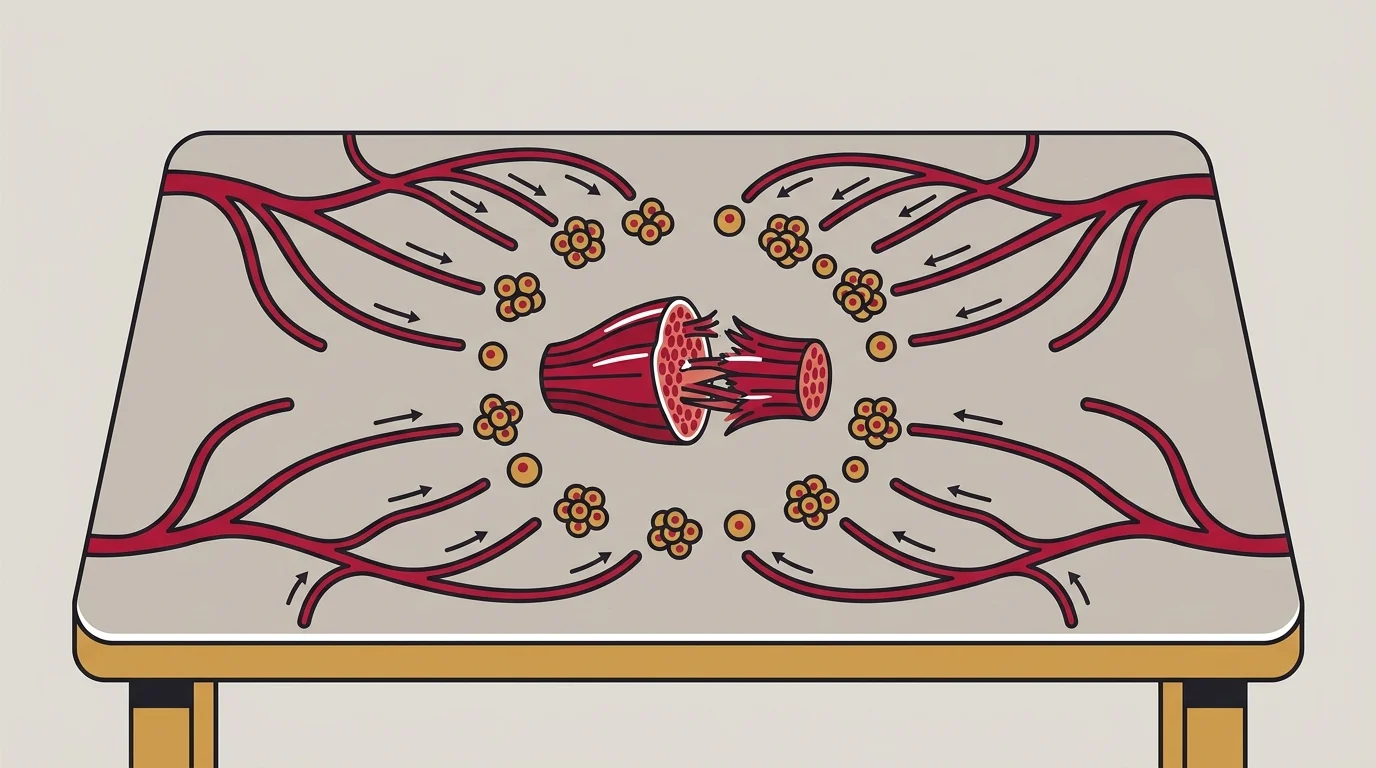
A strain or a sprain sets off the same biological event inside the tissue every time. Blood vessels open wide, immune cells rush in, and fluid pools around the damaged fibers. This is the response the body has run for as long as tissue has needed repairing.
For decades, the standard advice for any acute sprain or strain has been to grab an ice pack. That reflex rests on an assumption most people never question: that inflammation itself is the enemy, a problem to be suppressed as quickly as possible.
The Inflammatory Cascade as a Repair Signal
But what if that core assumption is wrong? A growing body of evidence suggests that inflammation is a necessary and productive phase of healing, not a malfunction to shut down.
Think of it like a construction crew arriving at a job site. The swelling, the warmth, the redness — these are the crew showing up with materials and equipment, not an alarm demanding to be silenced.
Why the Body Sends Fluid and Cells to the Site
The fluid that gathers at an injury site carries plasma proteins, clotting factors, and immune cells toward the damaged fibers. Each one has a specific job in clearing debris and preparing the area for rebuilding.
None of this is accidental. Once you understand what these cells and signals are actually doing, it changes how an injury should be supported in the hours and days that follow. For a closer look at how light-based therapies work with this same biology, see the evidence base for photobiomodulation.
Why the Standard Ice Pack Habit Fails to Support Real Recovery
Every injury kicks off the same biological sequence. Blood vessels widen, immune cells show up, and fluid pools around the damaged fibers. That's the body running its own repair schedule.
And the instinctive response to that sequence usually works against it. Reaching for cold fights the exact timeline the tissue is trying to follow.
| Physiological Response | Effect During Cooling | Effect During Rewarming |
|---|---|---|
| Skin blood vessel constriction | Significant reduction in vessel constriction at the cooled site | Reduction persists throughout the rewarming period after skin temperature returns toward normal |
| Delayed onset muscle soreness after high-intensity exercise | Cryotherapy leaves soreness elevated relative to photobiomodulation | Photobiomodulation therapy reduced delayed onset muscle soreness by −25.69% compared with cryotherapy |
The Cold Pack Reflex Nobody Questions
For decades, the standard advice for any sprain or strain has been the same: grab an ice pack. That habit rests on an assumption almost nobody stops to question.
The assumption is that inflammation itself is the enemy, something to shut down fast. But a growing body of evidence points the other way. Think of it as a construction crew arriving at a job site. The swelling is the crew showing up with equipment, not an alarm demanding to be silenced.
How Cooling Tissue Actually Suppresses the Repair Cascade
Cooling the skin over an injury does more than dull the surface. It narrows the blood vessels feeding the area, and that narrowing does not let go once the skin warms back up. Work available through PubMed indicates icing produces a reduction in skin blood vessel constriction that persists throughout the rewarming period after the skin temperature returns toward normal.
Applied to localized cooling around a joint like the knee, that means blood flow stays restricted well past the point where the ice pack comes off. The cost shows up in muscle recovery after high-intensity exercise, where photobiomodulation therapy outperformed cryotherapy by reducing delayed onset muscle soreness by 25.69%. As published academic reference reports, photobiomodulation therapy reduced delayed onset muscle soreness by −25.69% compared with cryotherapy in a meta-analysis of four randomized trials. Giving cells more energy to work with beats cutting off their supply lines, which is the same logic behind pairing cold laser therapy with a Chiropractic Adjustment Supports Recovery once the adjustment is complete.
What Photobiomodulation Does at the Cellular Level
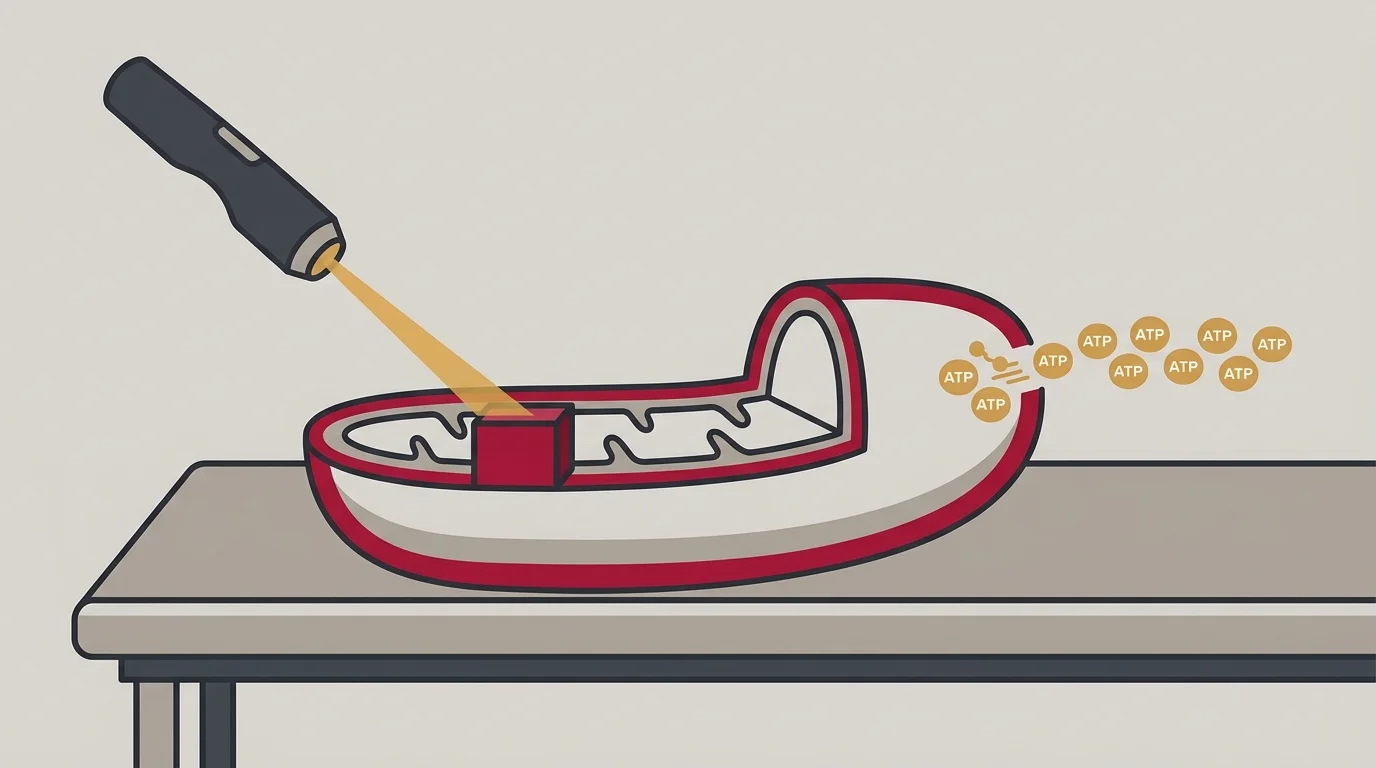
So if cooling shuts repair down, what does the opposite? It happens deep inside the cell. Cold laser therapy goes to work at the mitochondria, the structures that generate a cell's energy.
| Wavelength | Mitochondrial Effect Measured | Tissue or Cell Type Studied |
|---|---|---|
| 750 nm | Reduced mitochondrial oxygen consumption by 24–25% | Intact isolated mitochondria |
| 950 nm | Reduced mitochondrial oxygen consumption by 24–25% | Intact isolated mitochondria |
| 750 nm and 950 nm combined | Reduced mitochondrial respiration by 34% | Intact isolated mitochondria |
| 808 nm | Improved oxygen consumption and ATP production, dependent on Complex IV of the electron transport chain | Isolated fly and mouse mitochondria |
The Mitochondrial Response to Specific Light Wavelengths
Specific wavelengths of light change how mitochondria behave. Near-infrared light changes how much oxygen mitochondria consume, and pairing two wavelengths deepens that effect. Work available through the journal Nature indicates near-infrared light at 750 nm and 950 nm reduces mitochondrial oxygen consumption by 24–25%, while simultaneous irradiation with both wavelengths reduces it by 34% — a laboratory finding rather than a study in people. That reduction reflects a shift in efficiency, not a shutdown of cellular activity. For more on how this same light-based mechanism reduces swelling after injury, see Acute Inflammation and Swelling Reduction.
This response was measured in intact isolated mitochondria under controlled conditions. It shows mitochondria respond to light in ways that depend on the exact wavelength applied, not light in general.
Complex IV and the ATP Production Chain
Separate work on isolated fly and mouse mitochondria found that 808 nm light lifted both oxygen consumption and ATP production. As PLOS reports, 808 nm light exposure can improve oxygen consumption and ATP production in isolated mitochondria in a wavelength-specific manner dependent on Complex IV of the electron transport chain — a laboratory finding rather than a study in people. The gain traced back to Complex IV of the electron transport chain, the exact spot where the light is absorbed. Cold laser therapy, then, is a fundamental shift: away from suppressing symptoms and toward accelerating the body's own repair at the cellular level.
How Cold Laser Therapy Fits Into a Post-Adjustment Recovery Architecture
Cold laser therapy and a chiropractic adjustment address different parts of the same recovery event. The adjustment restores proper joint motion. Cold laser therapy gives the surrounding tissue more energy to rebuild while that motion resets.
Sequencing Care Around an Adjustment
So the laser goes on right after the adjustment, while cellular activity in the area is already running hot. That timing feeds the tissue more resources exactly when repair demand peaks — instead of sending the construction crew home early with an ice pack.
Where Laser Application Targets the Tissue
And the laser is aimed at the specific tissue the injury and the adjustment touched. This isn't some catch-all protocol run the same way on every patient. For a closer look at what a visit actually involves, see in-office chiropractic treatment options. Neuropathy care protocols run 8 to 12 weeks.
Reading the Research Without Getting Lost in the Numbers
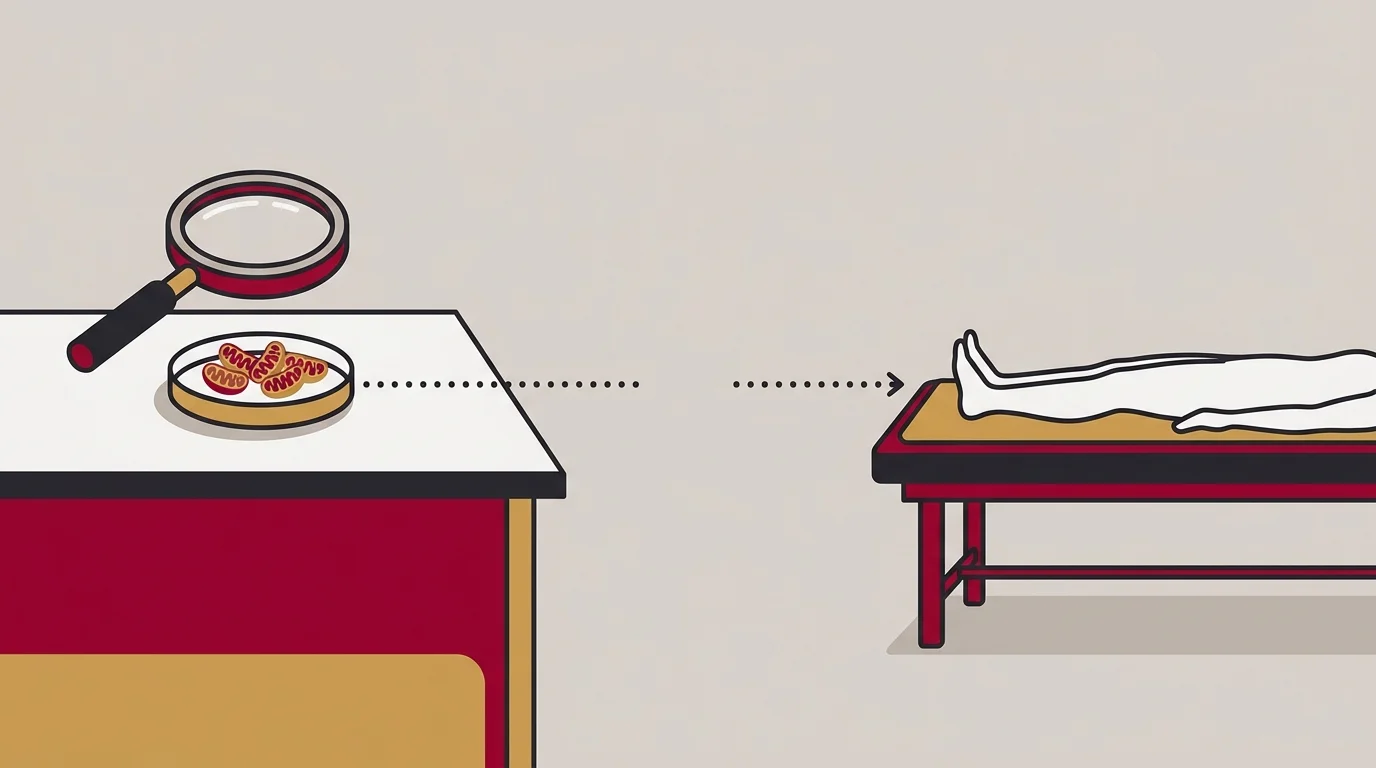
A percentage cut in mitochondrial respiration sounds precise. But precision isn't the same thing as relevance. What matters is always the same: what got measured, and where.
| Study Focus | What Was Measured | What It Does Not Show |
|---|---|---|
| Isolated mitochondria exposed to near-infrared light | How efficiently mitochondria consume oxygen at a specific wavelength | Whether an injury heals faster in a living, moving body |
| Fly and mouse mitochondria exposed to 808 nm light | Changes in oxygen consumption and ATP production at the cellular level | How that cellular change translates into pain relief or joint function |
| Skin cooling and blood vessel response | How long blood vessel constriction lasts after skin temperature returns to normal | Whether that constriction meaningfully slows tissue repair in every case |
| Muscle soreness after high-intensity exercise | Reported soreness levels comparing two recovery methods in trained subjects | Whether the same comparison holds for a chiropractic patient recovering from a sprain |
What a Percentage Reduction in Mitochondrial Respiration Actually Means
A percentage drop in mitochondrial oxygen consumption describes a shift in cellular efficiency, not tissue damage or improvement. It tells researchers how the machinery responded to a specific wavelength under specific conditions. That is useful groundwork, but it is not a claim about how fast an injury heals.
Distinguishing Isolated Cell Studies From Whole-Body Outcomes
Isolated cell studies happen in a controlled lab, cut off from a living, moving body. A whole-body outcome pulls in blood flow, nerve signaling, and movement a petri dish can't copy. Read research well and you ask which of those two a number really describes before you apply it to a real injury.
Frequently Asked Questions
A handful of questions come up over and over once patients hear this. Here are the straight answers.
Is inflammation after an injury actually a bad thing?
No. Swelling and warmth mean the repair crew has already shown up and gone to work. Shut that response down too soon and you only slow the rebuild.
If ice only numbs the pain, what is a better alternative for actual healing?
Cold laser therapy right after a chiropractic adjustment. It hands cells more energy to rebuild instead of just quieting the pain.
How many cold laser therapy sessions are needed for a typical soft tissue injury?
That depends on the tissue and how the body responds, so a specific number isn't offered here. What matters is the tissue getting consistent support while it rebuilds, not a fixed count applied to everyone the same way.
Can cold laser therapy be used at the same time as a chiropractic adjustment?
Yes. The laser goes on right after the adjustment, while activity in the area is already running hot. That timing is deliberate, not an accident.
Why was icing ever recommended if it delays healing?
It made sense before the biology of inflammation was well understood. Cold felt like it was helping because it numbed the area, even while it was slowing the repair happening underneath.
Is there any situation where an ice pack is still the right choice?
There are moments when numbing sharp, acute pain matters more than anything else. But as a go-to recovery plan for tissue trying to rebuild, ice works against the process instead of for it.
Where the Evidence Actually Points
The evidence points one way. Shut inflammation down and the construction crew slows to a crawl. Hand those cells more energy and they work faster.
A chiropractic adjustment restores motion. Cold laser therapy then feeds the tissue what it needs to rebuild around that motion. That pairing treats recovery as a process to support, not a symptom to numb.
Real answers, real care, real outcomes start with treating the body's own repair signals as the ally they are. If tissue recovery is what you are trying to support, not just quiet, schedule a visit at Touch of Wellness Chiropractic.