
(309) 321-8412 | 1101 W Jackson St, Suite A, Morton, IL 61550
(309) 321-8412 | 1101 W Jackson St, Suite A, Morton, IL 61550
Can Restoring C1-C2 Alignment Stop Recurring Tension Headaches?
Yes. Restoring C1-C2 alignment can stop recurring tension headaches — when those headaches are driven by upper cervical joint dysfunction.
For a significant number of chronic sufferers, that is exactly what is happening.
Tension headaches present as a dull, aching pain or a squeezing band of pressure around the cranium. They affect approximately 15.9% of U.S. adults aged 18 and over within any given three-month window. Most reach for a pain reliever, get temporary relief, and repeat the cycle. The cycle persists because the cause is structural, not chemical.
The C1 and C2 vertebrae sit at the top of the cervical spine, directly beneath the skull. When these segments lose normal mobility or alignment, they create dysfunction at the trigeminocervical nucleus — where cervical nerve signals and trigeminal nerve signals converge. That convergence means pain generated at C1-C2 does not stay in the neck. It refers upward into the forehead, temples, and orbital region, producing symptoms that feel indistinguishable from a classic tension headache.
Chiropractic adjustment targeting the upper cervical spine is clinically supported as a non-pharmacological approach for both acute and chronic tension-type headaches. Clinical trials show that manual therapy directed at the upper cervical spine can reduce tension-type headache frequency by over 50% in symptomatic patients. The flexion-rotation test — a specific clinical assessment targeting the C1-C2 segment — carries a reported sensitivity of 91% and specificity of 90% for identifying upper cervical joint dysfunction in headache patients.
Not every tension headache originates from C1-C2 dysfunction. But for patients whose headaches keep returning despite standard care, upper cervical restriction is a documented and frequently overlooked cause. Addressing it means restoring proper joint mobility at C1-C2 — decompressing the nerves that have been routing a continuous pain signal into the head. That is what it means to stop the cycle at its source.
Last Updated: August 25, 2026
- • What a Tension Headache Is Actually Telling You
- • Why Most Tension Headaches Keep Coming Back
- • How C1-C2 Dysfunction Drives Headache Pain
- • What Restoring C1-C2 Alignment Involves
-
• Frequently Asked Questions
- • How does a C1-C2 misalignment trigger a tension headache?
- • What is the difference between a tension headache and a cervicogenic headache?
- • How many chiropractic adjustments does it take to restore C1-C2 alignment?
- • Can dental TMJ treatment fail if the upper neck is misaligned?
- • Is the flexion-rotation test the standard way to diagnose upper cervical restriction?
- • The Switch That's Been Stuck
What a Tension Headache Is Actually Telling You
Most people describe a tension headache the same way. A band of pressure around the skull. A dull ache parked behind the eyes that won't quit. That description is accurate. And it's exactly why millions of people stay stuck.
Here's the thing: a symptom description tells you what you're feeling. It doesn't tell you why it keeps coming back. And when the cause is mechanical — when there's a structural disruption at the top of the cervical spine acting like a stuck circuit breaker — no amount of correctly naming the symptom gets you any closer to fixing it.
That's the real problem with how tension headaches get handled. The standard explanation stops at the output. What's actually happening in the body requires looking at the system running the whole operation — and that system starts in the cervical spine.
The Standard Definition — and What It Leaves Out
Clinically, a tension headache is defined by two hallmark sensations: a dull, aching pain or a squeezing band of pressure wrapped around the cranium. That's the definition from the medical literature. It tells you how a tension headache feels. It says nothing about where it originates.
The standard definition is a description of output. It isn't a diagnosis of cause. Patients who've worked through dental splints, massage, and over-the-counter pain relievers without lasting relief have already learned this the hard way — all of those tools address the output too. And when dental splints fail to resolve cervicogenic headaches, the culprit usually isn't the jaw. It's the upper cervical spine.
That gap — between what a symptom feels like and where it originates — is what keeps patients cycling through temporary relief. Individualized chiropractic care starts where the standard definition stops: with an assessment of the structures generating the pain signal in the first place.
Why the CDC Numbers Understate the Problem
According to CDC data, approximately 15.9% of U.S. adults aged 18 and over reported experiencing a severe headache or migraine within any given three-month window. That's roughly one in six adults — not as an occasional event, but as a recurring pattern reported inside a compressed timeframe.
But that figure only captures what people classify as severe enough to report. It doesn't count the persistent, daily-grade tension headaches patients describe as manageable but never fully gone — the ones they've stopped mentioning to their doctors because they've accepted them as normal. The real burden of recurring, structurally-driven head pain runs higher than any survey can measure.
| Headache Type | Primary Location | Typical Trigger | Standard Treatment | Structural Component Assessed? |
|---|---|---|---|---|
| Tension-Type Headache | Band around the skull, forehead, and temples | Muscle tension, stress, fatigue | Over-the-counter pain relievers, rest | No — cause is assumed chemical or stress-related |
| Cervicogenic Headache | Base of skull, one side of head, behind one eye | Neck movement, sustained posture, prolonged sitting | Pain medication, massage, physical therapy | Rarely — upper cervical joint restriction frequently missed |
| TMJ-Referred Headache | Temples, jaw, cheek, and ear region | Jaw clenching, chewing, dental occlusion issues | Dental splint, bite adjustment | No — cervical spine contribution typically not evaluated |
| C1-C2 Dysfunction Headache | Forehead, temples, orbital region, and base of skull | Upper cervical joint restriction, loss of normal C1-C2 mobility | Chiropractic adjustment targeting upper cervical spine | Yes — flexion-rotation test and clinical assessment of C1-C2 segment |
| Mixed-Origin Headache | Variable — shifting location across forehead, temples, and neck | Combination of postural, muscular, and structural factors | Fragmented — each provider treats their piece only | Rarely — no single provider assesses the full structural picture |
Why Most Tension Headaches Keep Coming Back
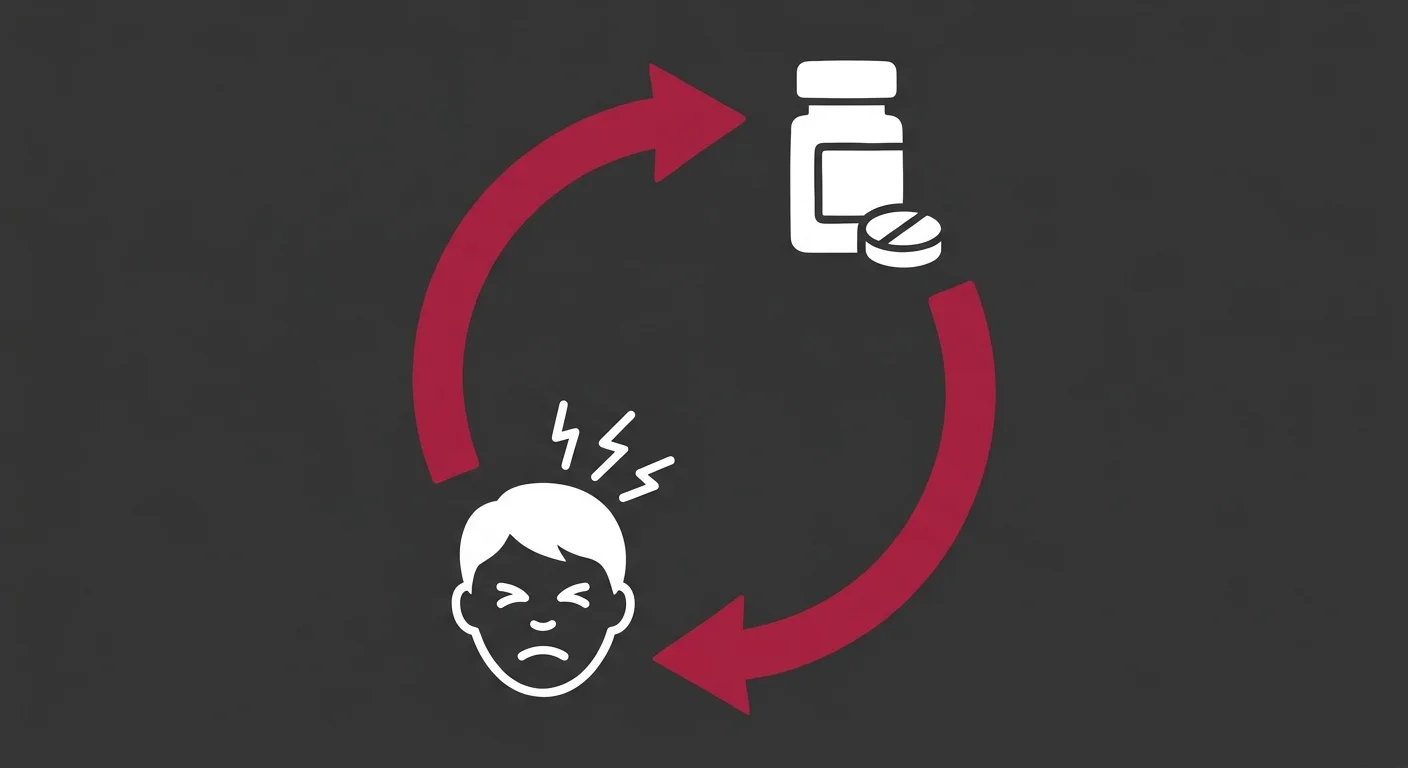
They know what it feels like. They've described it to three different providers. And it keeps coming back anyway.
The treatment isn't touching the cause. It's managing the episode.
A pain reliever knocks the current headache down. A hot pack loosens the muscles that tightened around the problem. Neither one touches the structure generating the signal.
When that structure is a restricted C1-C2 joint, the signal doesn't stop. It fires again as soon as the medication clears.
That's what separates a recurring structural headache from the occasional stress headache that clears on its own.
The stuck circuit breaker doesn't reset between episodes. It keeps routing pain upward — into the forehead, temples, and orbital region — until something changes mechanically at C1-C2.
Nothing changes until someone looks there.
Why the Cookie-Cutter Protocol Fails Headache Patients
Here's what the standard headache protocol looks like: muscle relaxants, ice or heat on the upper trapezius, a postural correction handout printed from a treatment template.
Rinse. Repeat. Bill.
Those tools aren't useless. Some of them deliver real short-term relief.
But they're applied identically — regardless of what's actually driving the headache. A patient whose pain originates from upper cervical joint restriction gets the exact same protocol as a patient whose headaches are entirely stress-driven.
Same template. Different cause. Predictably inconsistent results.
Chiropractic adjustment targeting the upper cervical spine is clinically supported for both acute and chronic tension-type headaches. But that finding only matters if someone actually confirms upper cervical restriction is present before they start adjusting.
Without an individualized intake — without asking where the headache actually originates — no protocol is care.
It's guesswork with good intentions.
And the template never accounts for what happens after the patient walks out.
Keeping alignment after an adjustment requires real awareness of how the neck and jaw are loaded during daily activity. Patients who haven't been coached on post-adjustment ergonomics for the neck and jaw undo the structural work within days — sometimes hours.
The cookie-cutter protocol doesn't account for that. It never did.
The Dental-Only Trap: When TMJ Treatment Misses the Neck
The dental-only approach starts with a reasonable premise: if jaw joint dysfunction is contributing to head pain, a splint reduces the load and relieves the symptom.
Sometimes it does.
But sometimes the jaw isn't the primary driver — and the splint is treating the wrong joint entirely.
When C1-C2 dysfunction is present, the trigeminocervical nucleus is already receiving aberrant input from the upper cervical spine. That input refers pain directly into the forehead, temples, and orbital region — the same areas that flare in TMJ-associated headaches.
A splint that offloads the jaw does nothing to interrupt a pain signal originating two segments above it.
The source and the symptom location aren't in the same place.
That's the dental-only trap. The jaw gets treated because the jaw hurts.
But if the neck is feeding pain into the same region, the splint and the headache coexist indefinitely.
Addressing both requires an assessment that includes the cervical spine — not just the bite.
| Common Headache Approach | What It Targets | What It Skips | Why Headaches Return |
|---|---|---|---|
| Over-the-counter pain relievers | The pain signal after it fires | The structural source generating the signal | C1-C2 restriction keeps sending referred pain upward — the next episode is already loading |
| Muscle relaxants and heat therapy | Soft tissue tension around the affected area | The joint restriction causing the muscles to guard in the first place | Muscles re-tighten because the underlying mechanical problem is still present |
| Dental splint (jaw-only TMJ treatment) | Load on the jaw joint | Upper cervical nerve input feeding pain into the same region | A splint can't interrupt a pain signal originating two spinal segments above the jaw |
| Standard postural correction exercises | Global posture and upper trapezius load | Restricted C1-C2 mobility that posture work doesn't reach | Correcting posture doesn't restore joint mobility at the segment driving referred pain |
| Cookie-cutter chiropractic protocol | General cervical tension using the same sequence on every patient | Whether upper cervical restriction is actually present and which segment is restricted | Applying the same template regardless of cause produces unpredictable, inconsistent results |
How C1-C2 Dysfunction Drives Headache Pain
Now for the part most headache protocols never get to.
What does C1-C2 restriction actually do to the nervous system once it's stuck?
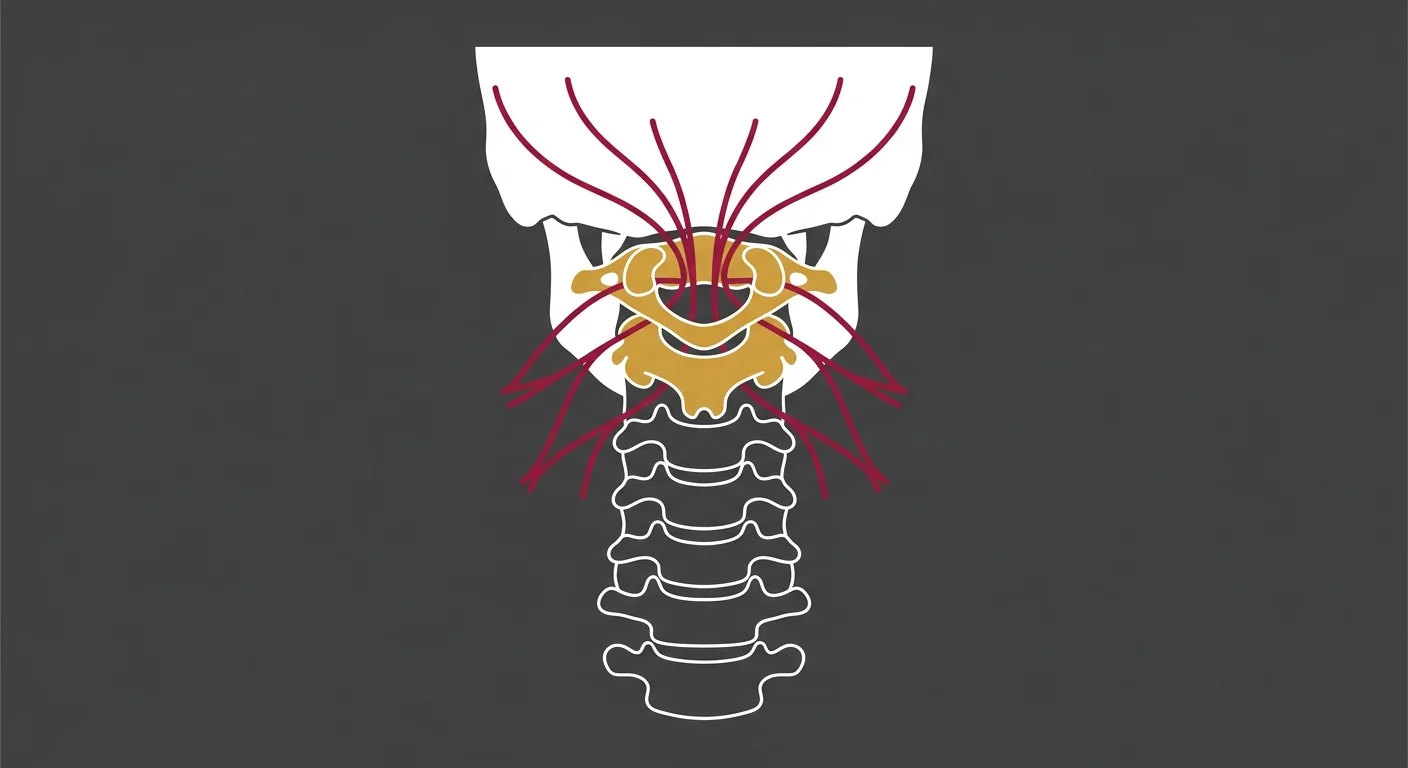
C1 and C2 sit at the very top of the cervical spine, directly beneath the skull.
That placement matters. It puts them at the exact junction where the spinal cord meets the brainstem — the spot where the nervous system routes pain signals for the entire head and face.
When those segments lose proper mobility, the junction doesn't just get stiff. It gets stuck. And a stuck junction sends pain somewhere it was never supposed to go.
That's the circuit breaker made anatomical.
The C1-C2 segment is the body's pain-routing switch for the head and face. When restriction locks it in place, signals that should stay local to the neck get misdirected upward — into the skull, behind the eyes, across the temples.
No pill resets that switch. No splint reaches it. Only restoring mechanical function at the joint itself changes what the switch is doing.
The Trigeminocervical Pathway: Where Neck Pain Becomes Head Pain
Here's the mechanism.
The upper cervical spine and the trigeminal nerve share a common relay station in the brainstem — the trigeminocervical nucleus. The trigeminal nerve handles sensation across most of the face and head. Sensory signals from C1 and C2 feed into that same nucleus, alongside trigeminal signals.
The brainstem doesn't always sort them cleanly.
When C1-C2 dysfunction is present, the cervical signals feeding into that nucleus are abnormal. The trigeminocervical nucleus reads them as pain — then routes that pain outward along the trigeminal pathways it knows: the forehead, the temples, the area behind the eyes.
That's why a restriction in the neck produces a headache that feels like it's coming from inside the skull.
Same relay station. Same output. Different source.
This is why treating the head doesn't fix the headache when the neck is driving it.
The pain isn't generated in the forehead. It's referred there. Targeting the output — with a pain reliever, a cold pack, a mouth splint — leaves the input signal running unchecked.
The trigeminocervical pathway keeps firing because the structure feeding it hasn't changed.
Reading the Signs: How C1-C2 Restriction Is Identified
Confirming C1-C2 restriction isn't a general neck exam. It requires a specific clinical tool.
The flexion-rotation test is the most validated assessment for this purpose — it isolates rotation at the C1-C2 segment specifically. NIH-published research reports a clinical sensitivity of 91% and specificity of 90% for detecting upper cervical joint dysfunction in headache patients.
That's not a screening tool with marginal accuracy. That's a clinically reliable indicator.
The test itself is straightforward. The neck goes into full flexion, then rotation is assessed to each side.
Restricted rotation — especially when it reproduces the patient's familiar headache symptoms — points directly at C1-C2 as a likely driver.
And yet most standard headache evaluations don't include this step. That's why upper cervical restrictions go unidentified for months, sometimes years, while patients cycle through treatments that never get close to the source.
At Touch of Wellness Chiropractic, the assessment drives everything that follows.
If the flexion-rotation test and clinical intake point to C1-C2 restriction, that's where care is directed. If the findings don't support cervical involvement, that changes the conversation too.
Dr. Karen Hannah doesn't run a template. She runs an evaluation. The difference between those two things is the difference between temporary relief and an actual answer.
| Clinical Marker | What It Indicates | Assessment Method | Relevance to Headache Pattern |
|---|---|---|---|
| Restricted C1-C2 rotation | Upper cervical joint dysfunction limiting normal segmental mobility | Flexion-rotation test (FRT) isolating the C1-C2 segment | Directly correlates with recurring headache patterns when rotation reproduces familiar symptoms |
| FRT clinical sensitivity: 91% | High probability that a positive test correctly identifies C1-C2 joint dysfunction in headache patients | Flexion-rotation test assessed bilaterally in full cervical flexion | Confirms C1-C2 restriction as a likely headache contributor when rotation is limited and symptoms are reproduced |
| FRT clinical specificity: 90% | High probability that a negative test correctly rules out C1-C2 joint dysfunction as the headache driver | Flexion-rotation test assessed bilaterally in full cervical flexion | Rules in or out cervical involvement before directing care — prevents misguided treatment of an uninvolved structure |
| Trigeminocervical nucleus convergence | Aberrant sensory input from C1-C2 afferents mixes with trigeminal nerve signals at a shared brainstem relay station | Clinical history, symptom location mapping, and upper cervical assessment | Explains why neck restriction produces headache pain perceived in the forehead, temples, and orbital region — not the neck itself |
| Referred pain to forehead, temples, and orbital region | C1-C2 dysfunction misdirects pain signals upward along trigeminal pathways — not generated locally in the skull | Symptom location mapping correlated with FRT findings and upper cervical palpation | Identifies when headache origin is cervical rather than cranial — changing which structure must be treated to stop the pattern |
What Restoring C1-C2 Alignment Involves
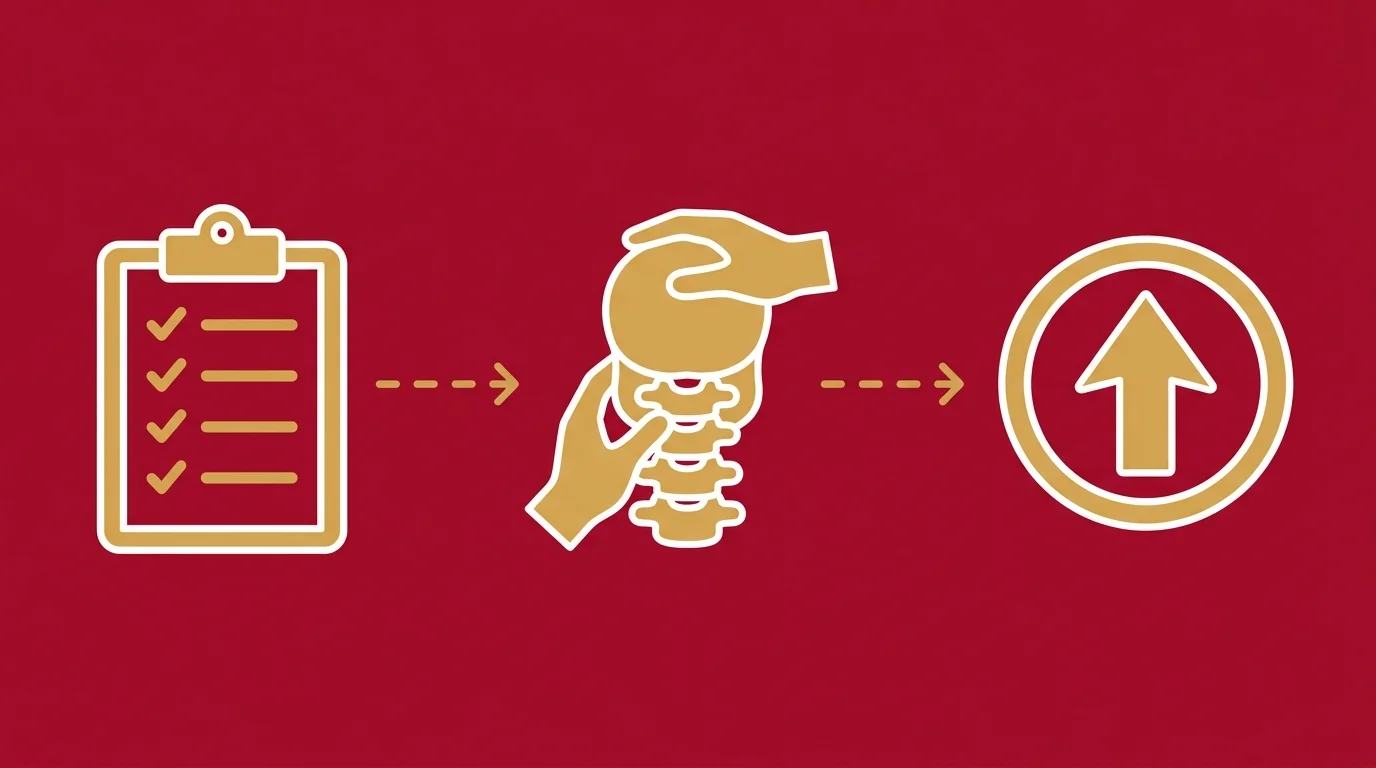
Once the assessment confirms C1-C2 restriction, the work changes.
Not complicated. Precise.
The goal is one thing: restore mechanical motion to the segments that lost it. When that happens, the nervous system's pain-routing switch can return to neutral.
Here's the thing: restoring alignment at C1-C2 isn't a single dramatic event.
It's a clinical process. A structured series of specific chiropractic adjustments targeting the upper cervical segments — informed at every step by what the patient actually reports.
Not a formula. A conversation between the findings and the care plan.
Supportive modalities can accelerate that process. Cold laser therapy addresses soft-tissue inflammation in the surrounding structures. Shockwave therapy can reduce chronic muscular tension patterns that have formed around a long-restricted joint.
But those tools support the correction. They don't replace it.
The chiropractic adjustment is still what moves the joint.
The Assessment Before the Adjustment
The assessment comes first. Not as a formality — because it's the only way to know whether C1-C2 is actually involved.
Patients who understand what that first chiropractic exam actually covers quickly see why the initial intake runs longer than a general neck checkup.
That evaluation determines whether upper cervical restriction is the driver — or just one piece of a more complex picture. Everything after it depends on what the assessment finds.
The flexion-rotation test is the primary diagnostic tool at this stage. It isolates C1-C2 rotation specifically — not general cervical mobility, but motion at that exact segment.
It's clinically validated with a sensitivity of 91% and specificity of 90% for detecting upper cervical joint dysfunction in headache patients.
When restricted rotation reproduces the patient's familiar headache pattern, that's a direct clinical indicator. Not a suggestion. A finding.
What that test tells the clinician shapes everything that follows.
If restriction is confirmed and it correlates with the patient's headache presentation, care targets the upper cervical spine directly. If the test doesn't support C1-C2 involvement, the direction changes entirely.
The assessment isn't a formality. It's the decision point.
What the Clinical Evidence Actually Shows
The clinical evidence on this isn't ambiguous. NIH clinical trial data shows that manual therapy targeting the upper cervical spine can reduce tension-type headache frequency by over 50% in symptomatic patients.
That's not a modest effect.
That's a meaningful reduction in a condition most patients have been told is simply managed — not resolved. The difference between those two words is the difference between cycling through episodes and actually stopping them.
Cervical chiropractic adjustment is clinically supported for both acute and chronic tension-type headaches — without a prescription.
That distinction matters. The alternative is a medication cycle that manages episodes without ever touching the structural source generating them.
One addresses the output. The other addresses the switch.
But the evidence only applies when the care matches the finding.
A chiropractic adjustment isn't a headache treatment you apply broadly and hope for results. It's a structural correction — precise by design.
Its value depends entirely on whether the assessment confirmed C1-C2 restriction as the driver. Without that confirmation, it's still guesswork. Better-intentioned guesswork, maybe. Still guesswork.
Who This Approach Is — and Is Not — For
This approach isn't for everyone.
That's not a caveat. That's a fact worth saying out loud.
Patients who arrive expecting the exact sequence their last provider used — and who need that replicated before the evaluation is even finished — aren't going to get what they need here.
The assessment drives the care plan. Every time.
If that's a problem before the first appointment starts, that's important information for both parties. Patients who won't commit to a full clinical picture produce partial results — not because the approach failed, but because it was never fully engaged.
But for patients who've cycled through medications, dental splints, and postural protocols without lasting relief — and who are willing to start with what the assessment actually finds — this is a different conversation.
The pain-routing switch that's been misdirecting signals into the skull for months doesn't stay stuck forever. It responds when the right pressure is applied to the right structure, at the right segment, based on what the clinical picture actually shows.
Post-adjustment ergonomics extends that correction — but first, the correction has to happen. And that starts with a real assessment, not a template.
| Care Phase | What Happens | Clinical Goal | Realistic Timeline |
|---|---|---|---|
| Initial Assessment | Flexion-rotation test and clinical intake identify whether C1-C2 restriction is present and correlates with the headache pattern | Confirm upper cervical involvement before any care is directed — no assumption, no template | First appointment — assessment drives everything that follows |
| Upper Cervical Adjustment | Specific chiropractic adjustments target the C1-C2 segments to restore mechanical motion and reduce aberrant nerve input into the trigeminocervical nucleus | Reset the structural source of referred pain — not the output, but the signal generating it | Across a series of visits, informed by what the patient reports after each session |
| Supportive Modality Integration | Cold laser therapy and shockwave therapy address soft-tissue inflammation and chronic muscular tension patterns surrounding the restricted joint | Reduce the secondary tissue changes that entrench restriction and slow the adjustment's progress | Concurrent with the adjustment sequence — supportive, not primary |
| Response Evaluation | Clinical findings and patient-reported outcomes are reassessed as care progresses — the plan changes if the response changes | Confirm the correction is holding and the headache pattern is shifting in the direction the clinical picture predicts | Ongoing throughout care — no fixed endpoint applied before results are observed |
| Post-Adjustment Maintenance | Ergonomic and positional habits are addressed to prevent the joint from re-loading into restriction between and after appointments | Protect the alignment gains and reduce the structural stress that contributed to C1-C2 dysfunction in the first place | Built into the care plan as relief becomes consistent and visits decrease in frequency |
Frequently Asked Questions
Now for the questions that actually come up — not in textbooks, but in the room, from people who've already tried the standard answers.
These are the questions that follow a diagnosis of stress, or jaw tension, or posture. Here's what the clinical evidence actually says.
How does a C1-C2 misalignment trigger a tension headache?
C1 and C2 sit at the base of the skull. When they lose proper motion, they start generating abnormal sensory input. That input feeds directly into the trigeminocervical nucleus — the same relay station that processes pain signals from your face and head. The nucleus can't always sort the signals by origin. So it does what it knows: it refers the cervical input outward along familiar pathways. The forehead. The temples. Behind the eyes. The headache you feel in your skull isn't starting there. It's arriving there from the neck.
What is the difference between a tension headache and a cervicogenic headache?
A tension headache is defined clinically by how it feels — a dull, aching pain or a squeezing band of pressure around the cranium. A cervicogenic headache is defined by where it originates — the cervical spine. The overlap is significant. Both can feel like pressure. Both can be bilateral. But the source is different. Cervicogenic headaches won't respond to anything that doesn't address the neck. Tension-type headaches with a cervical driver behave exactly the same way.
How many chiropractic adjustments does it take to restore C1-C2 alignment?
There's no fixed number. That's not a dodge — it's how clinical reality works. The timeline depends on how long the restriction has been present, how the nervous system responds, and what the assessment reveals visit by visit. Clinical trials show manual therapy targeting the upper cervical spine can cut tension-type headache frequency by over 50% in symptomatic patients. But that result only holds when care is matched to the actual clinical finding. A preset sequence won't get you there. A matched care plan will.
Can dental TMJ treatment fail if the upper neck is misaligned?
Yes. A mouth splint addresses how the jaw sits. It doesn't address what's happening one segment above it. If C1-C2 restriction is present, the same trigeminocervical pathway driving the headache is also feeding jaw tension and referred facial pain. A dental appliance can reduce bite load. It can't restore cervical joint motion. Patients who've followed every dental recommendation and still have symptoms often haven't had the upper neck assessed at all. That's not a failure of the dentist. It's a gap in the evaluation.
Is the flexion-rotation test the standard way to diagnose upper cervical restriction?
It's the most clinically validated tool for this exact segment. The flexion-rotation test isolates rotation at C1-C2 — not general neck mobility, but motion at that specific junction. NIH-published research reports a sensitivity of 91% and specificity of 90% for detecting upper cervical joint dysfunction in headache patients. That's a targeted clinical indicator — not a general screen. Most standard headache evaluations don't include it. Which is exactly why upper cervical restriction goes unidentified for months, sometimes years, while patients cycle through treatments that never touch the source.
The Switch That's Been Stuck
The switch has been stuck.
Not as a metaphor. As a mechanical fact.
When C1-C2 loses proper motion, the trigeminocervical nucleus keeps receiving aberrant input — and it keeps routing that input outward into the head, the temples, the orbital region. Every pill manages the episode. Every splint addresses the jaw. Every postural protocol corrects the posture.
None of them touch the switch.
Restoring C1-C2 alignment isn't a theory. It's the structural correction that changes what the nervous system's pain-routing switch is actually doing.
When the assessment confirms that restriction at those segments is driving the headache pattern, targeted chiropractic adjustments to the upper cervical spine are what move those segments back toward neutral. The clinical evidence is direct on this. Manual therapy directed at the upper cervical spine produces meaningful reductions in headache frequency that symptom management alone can't replicate.
That's the difference between cycling through episodes and addressing the source. One manages the output. The other changes what the system is doing at the level that matters.
If recurring tension headaches have followed you through every standard recommendation — and still haven't resolved — the real question is whether the source has ever been properly identified.
Not described. Not medicated. Identified.
At Touch of Wellness Chiropractic, the assessment is where that process starts. Not a symptom checklist. Not a protocol you've already run. A clinical picture built from what you actually report — and what the upper cervical spine actually shows. Because nothing in the standard playbook is designed to flip the switch.
That gap doesn't close on its own. If recurring tension headaches have followed you through every standard recommendation without resolving, there's a good chance the upper cervical spine was never part of the conversation — and that's exactly where the answer lives.
Book a chiropractic assessment at Touch of Wellness Chiropractic
Copyright Touch of Wellness Chiropractic 2026
1101 W Jackson St, Suite A Morton, IL 61550
Web Design by iTech Valet